
Why apples are good for you, and which types to choose
Apples can be a practical part of a balanced diet, especially when eaten whole with the skin. This guide explains their benefits, how varieties differ and what to record when tracking them.
What an apple adds to your diet
A whole apple provides carbohydrate, water and fibre, along with small amounts of vitamins and minerals. Its carbohydrate includes natural sugar, which contributes energy and sweetness. The exact nutritional content varies with the apple's size, variety and ripeness.
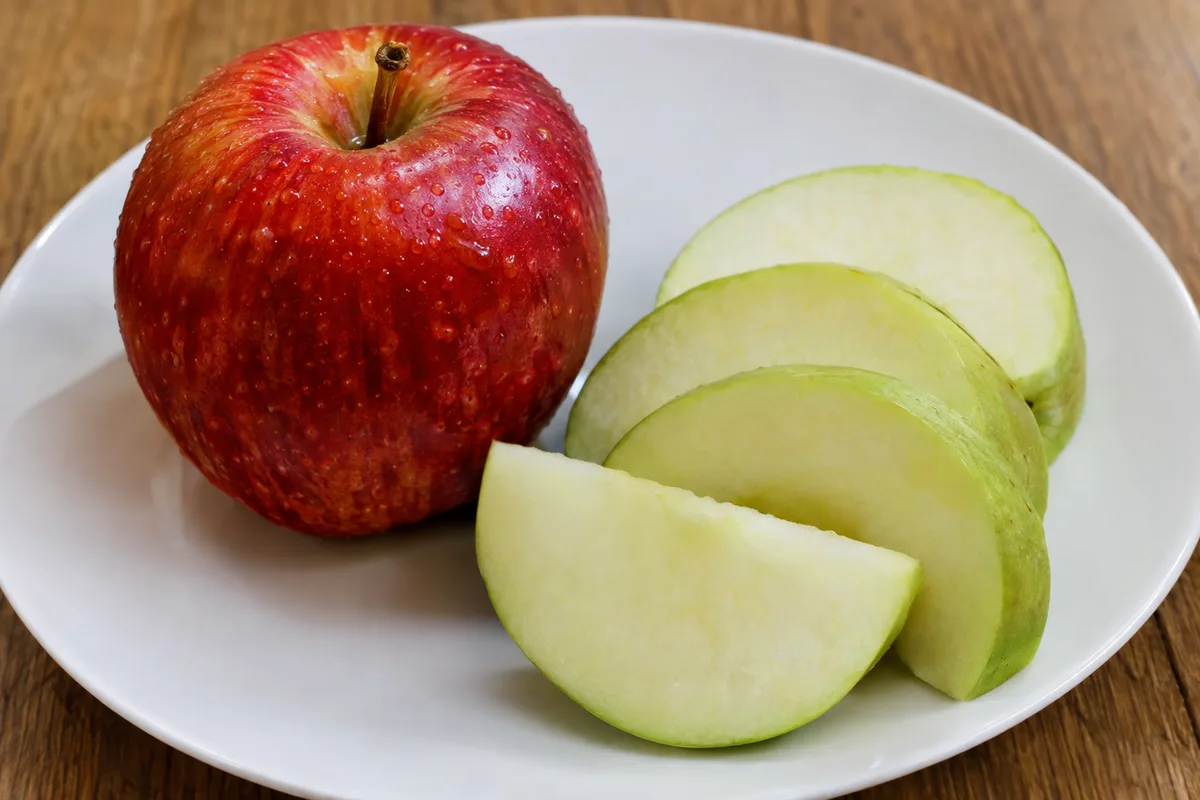
The fibre in an apple can support comfortable digestion and helps make the fruit more filling than apple juice. Much of this fibre and many of the apple's colourful plant compounds are found in or just beneath the skin. Eating the skin therefore keeps more of the whole fruit intact.
Apples are useful rather than magical. They can contribute to a varied diet, but no single fruit supplies everything your body needs. It is still worth eating different fruits and vegetables across the week.
- Carbohydrate for energy
- Fibre from the flesh and skin
- Water that contributes to fluid intake
- Vitamins, minerals and colourful plant compounds
Is there one healthiest type?
There is no single apple variety that is healthiest for everyone. Red, green, yellow and russet apples differ slightly in fibre, natural sugar, acidity and plant compounds. These differences are usually less important than choosing an apple you enjoy and will actually eat.
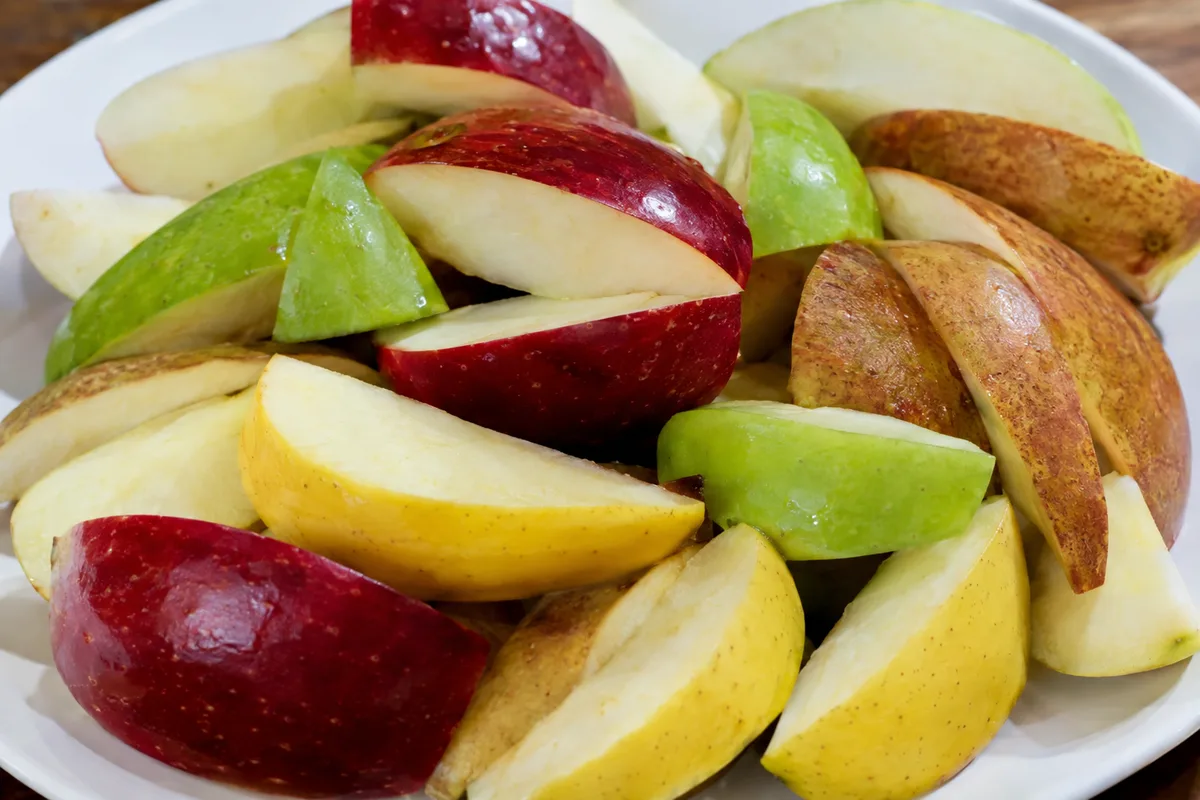
Darker red skins contain different colour compounds from green or yellow skins, but that does not make one colour the universal winner. A sharp green apple is not automatically much lower in sugar simply because it tastes less sweet. Acidity, aroma, ripeness and texture all affect how sweetness is perceived.
Variety can still be useful when it changes how you use the fruit. Crisp apples work well in lunches and salads, while softer or sharper types may suit cooking. Keeping the skin on generally matters more than chasing a particular named variety.
- Red apples offer red skin pigments and often a sweet flavour
- Green apples are commonly crisp and tart
- Yellow apples can be mild, fragrant and sweet
- Russet apples have a rough skin and a rich, nutty flavour
Whole, sliced, cooked or juiced
A whole or sliced apple is usually the most filling form because its fibre remains in place and it takes time to chew. Cutting it up does not remove its benefits, although exposed flesh may turn brown. A little lemon juice can slow that colour change if you are preparing slices ahead.
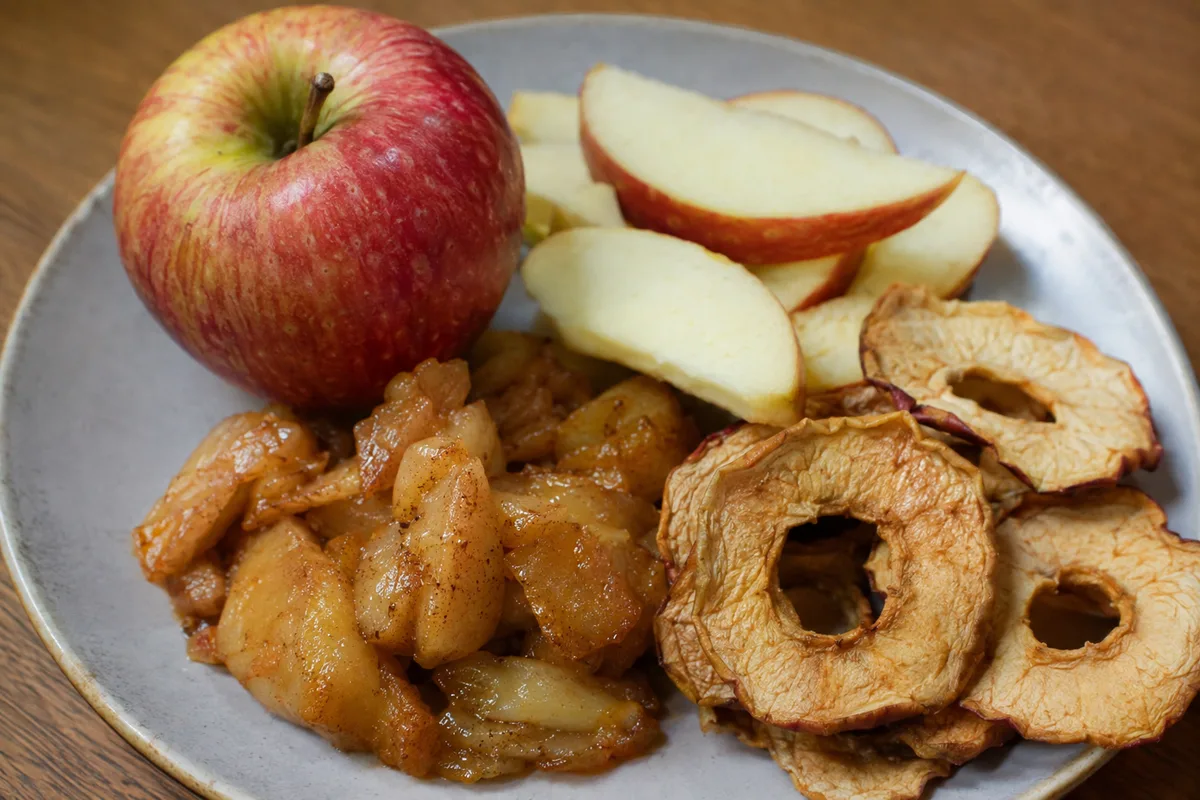
Cooking softens apples and changes their texture, but cooked fruit can still contribute fibre. What matters is what is added during cooking, such as sugar, syrup, pastry or large amounts of fat. When tracking a cooked apple dish, record those additions as well as the fruit.
Apple juice contains less fibre than a whole apple and is easier to drink quickly. Dried apple is more concentrated because much of its water has been removed, so a small portion can contain more carbohydrate than the same volume of fresh fruit. Check the label and log the form you actually had rather than recording every apple product as fresh apple.
- Choose whole apples when you want more chewing and fibre
- Keep the skin on if you enjoy its texture
- Record sweeteners and toppings in cooked dishes
- Track juice and dried apple separately from fresh fruit
How apples can make meals more satisfying
An apple makes a convenient snack on its own, but pairing it with protein or fat may help the snack feel more substantial. The right combination depends on your appetite, preferences and the rest of your day. Your food log can show whether an apple alone keeps you satisfied or whether a pairing works better.
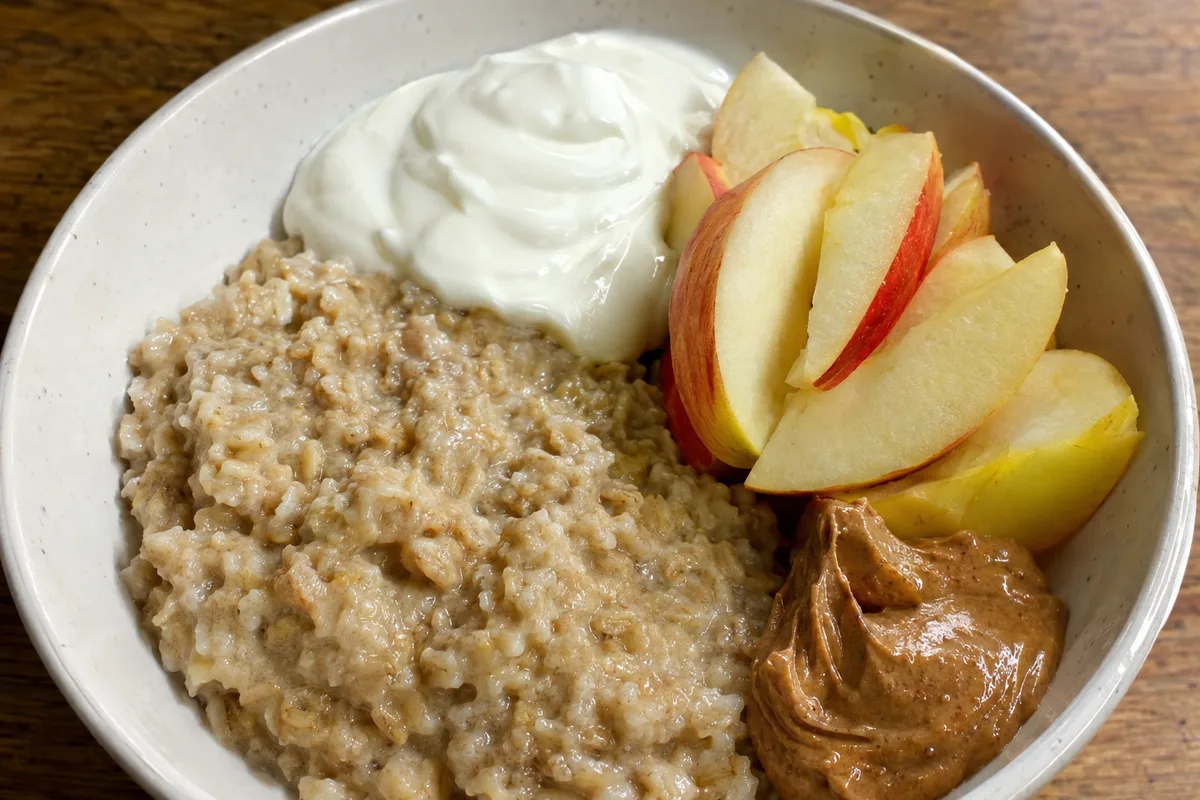
Apples also bring sweetness, crunch and acidity to meals. This can make simple foods more enjoyable without relying only on sauces or added sugar. Choose combinations that fit your dietary needs and track each part separately if you want an accurate picture of the meal.
Portion needs vary from person to person, so there is no ideal apple size or snack formula. Use hunger, fullness and your usual eating pattern as practical guides. If you track nutrients, compare similar serving descriptions rather than assuming every apple is the same size.
- Apple slices with plain yoghurt
- Chopped apple stirred into porridge
- Apple wedges with nut or seed butter
- Diced apple in a grain or leafy salad
- Baked apple with cinnamon and yoghurt
Choosing, storing and preparing apples
Look for apples that feel firm and have no large soft or damaged areas. Surface marks and unusual shapes do not necessarily affect the flesh or flavour. Pick the texture and level of sweetness you prefer rather than judging quality by a perfectly shiny skin.
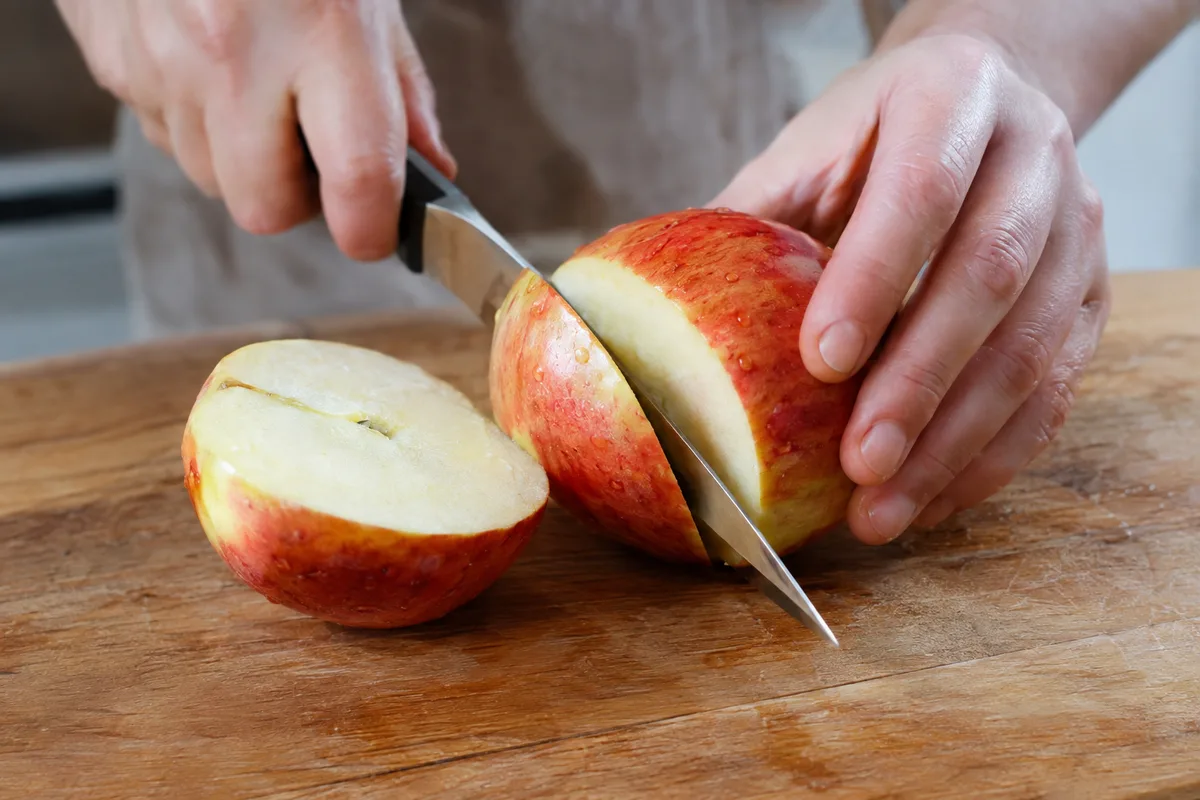
Wash apples under running water and rub the surface before eating or cutting them. There is no need to peel them unless you dislike the skin or need a softer texture. Remove damaged flesh and discard the core and seeds.
Cool storage helps apples stay crisp for longer, while a fruit bowl keeps them easy to see and reach. If an apple begins to soften, it can still work well grated into porridge or cooked into an unsweetened compote. Using apples in different ways can reduce waste and add variety to your food log.
- Choose firm fruit without large soft patches
- Wash and rub the skin under running water
- Store cool for a crisper texture
- Use softer apples in porridge or cooked dishes
Tracking apples accurately without overthinking it
Food databases may list apples by piece, weight, cup or variety. Choose the entry that best matches what you ate, including whether it was fresh, cooked, dried or juiced. If you do not know the exact variety, a general fresh apple entry is a sensible option.
The core is not normally eaten, so an entry based on edible weight may differ from the weight of the whole fruit. You do not need perfect precision for an apple to be worth logging. Consistency in how you record similar foods is often more useful than switching between several unmatched entries.
Pay attention to the full dish when apples are served with other ingredients. Pastry, sweeteners, yoghurt, nuts and spreads can change the overall energy and nutrient balance. Record them separately when the details matter to your tracking goals.
- Select the correct form of apple
- Use a general entry when the variety is unknown
- Match the serving description as closely as practical
- Include toppings, fillings and cooking ingredients