
Why Potatoes Can Raise Blood Glucose Faster Than Sugar
A potato does not contain more sugar than table sugar, yet its starch can sometimes reach the bloodstream as glucose more quickly. Understanding digestion helps explain why the comparison is not as simple as it sounds.
Starch is made from glucose
Most of the carbohydrate in potatoes is starch. Starch consists of many glucose units joined together, and digestion breaks those links so the glucose can be absorbed.
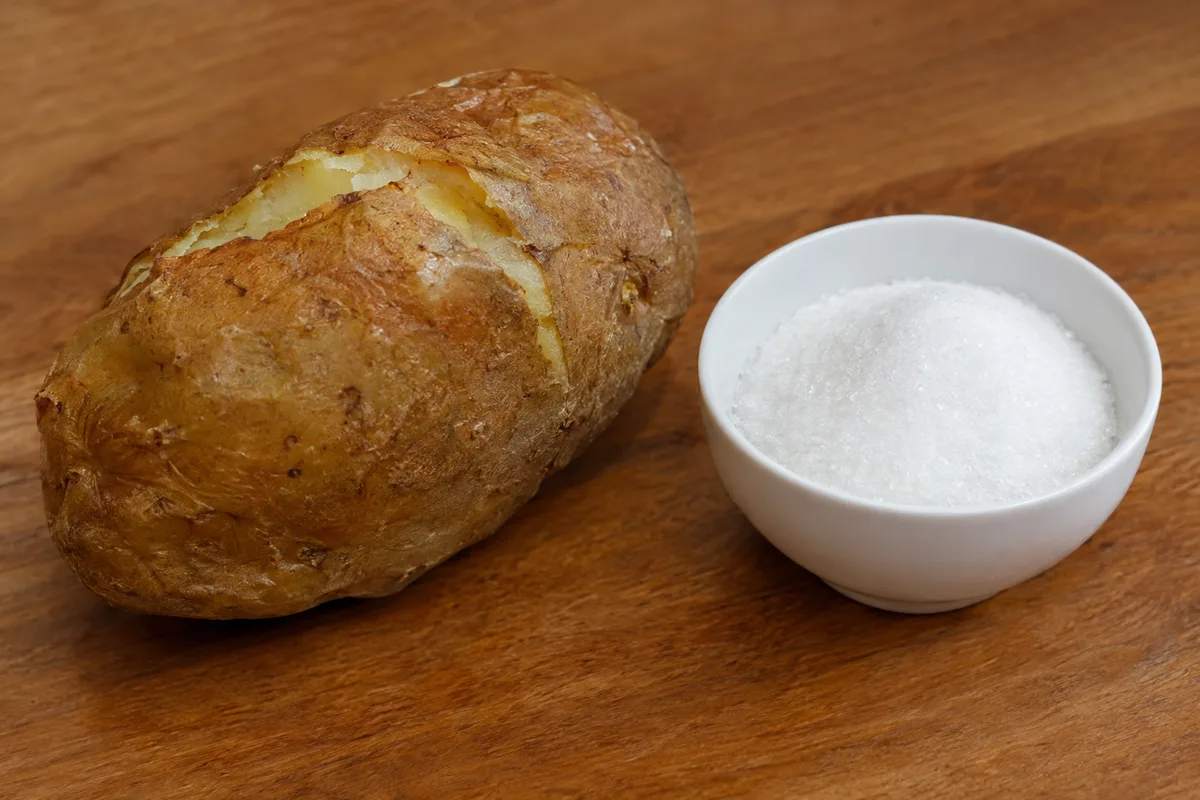
Table sugar contains two smaller parts: glucose and fructose. The glucose part enters the bloodstream as glucose, while the fructose part follows a different route, so table sugar may produce a slower immediate rise than rapidly digested potato starch.
Cooking changes the speed of digestion
Heat and water soften a potato and make its starch easier for digestive enzymes to reach. Mashing also breaks down its physical structure, which can make the carbohydrate available more quickly.
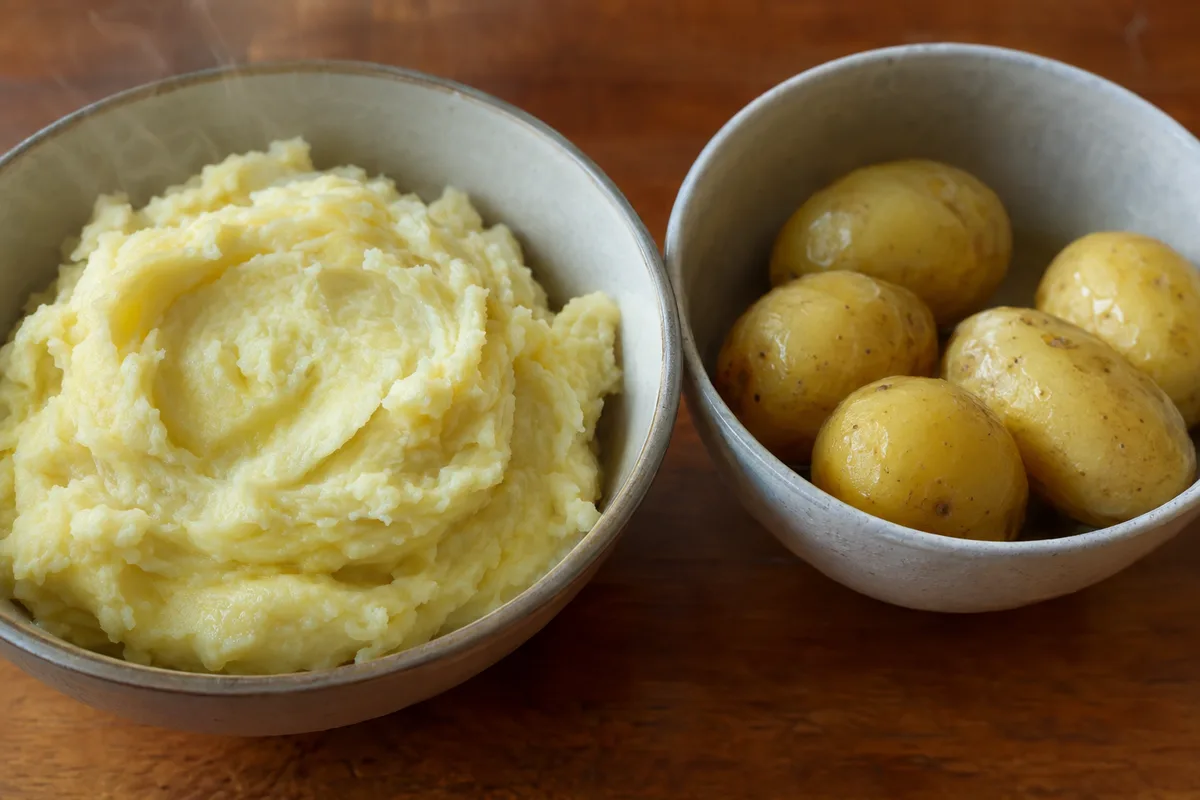
Cooling a cooked potato changes some of its starch into a form that is harder to digest. Reheating may keep part of that change, although the effect depends on the potato, cooking method and individual digestion.
The comparison depends on the serving
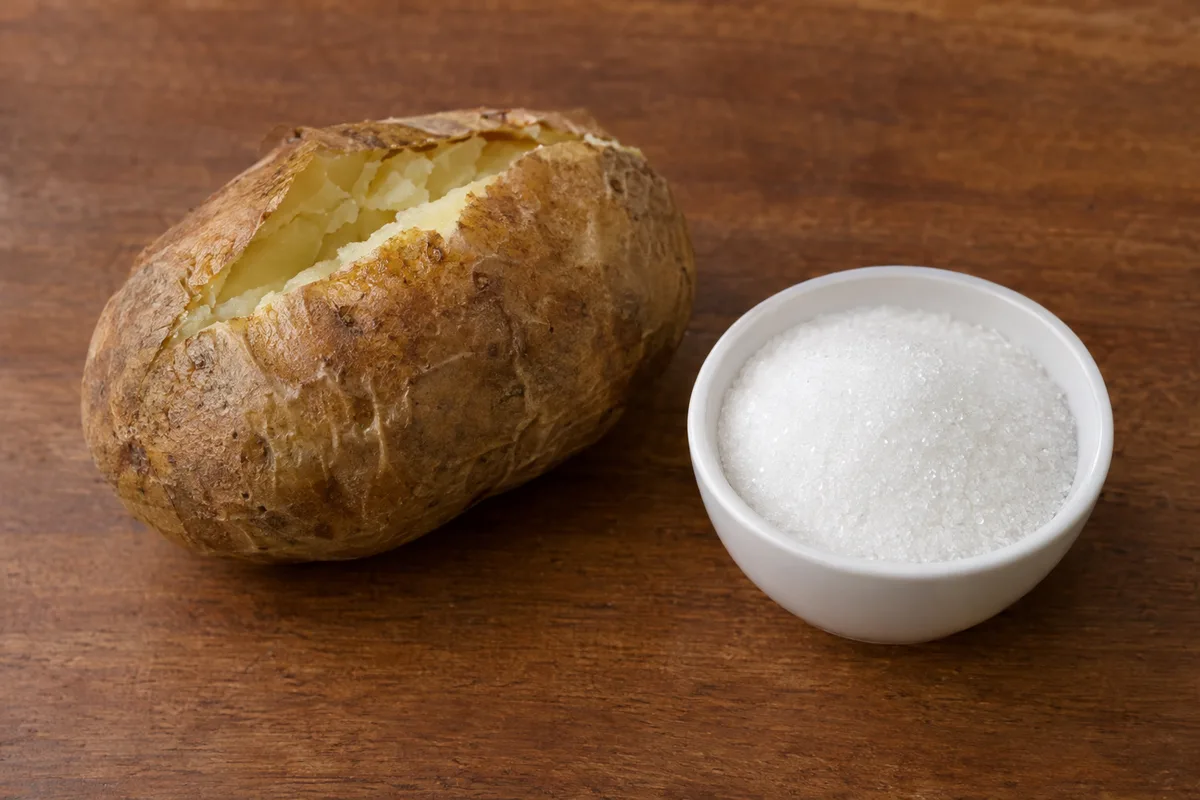
A faster carbohydrate is not automatically the one that has the biggest overall effect. The amount eaten matters, so comparing equal weights of potato and sugar is different from comparing portions containing the same amount of carbohydrate.
Your food log can help you compare similar servings and preparation methods rather than treating every potato dish as identical. Boiled potatoes, mash and chips differ in structure, water content and added fat, so their carbohydrate density and digestion may vary.
Meals work as a whole
Potatoes are often eaten alongside protein, fat, fibre and other foods. These can slow how quickly the meal leaves the stomach and change the shape of the glucose response.
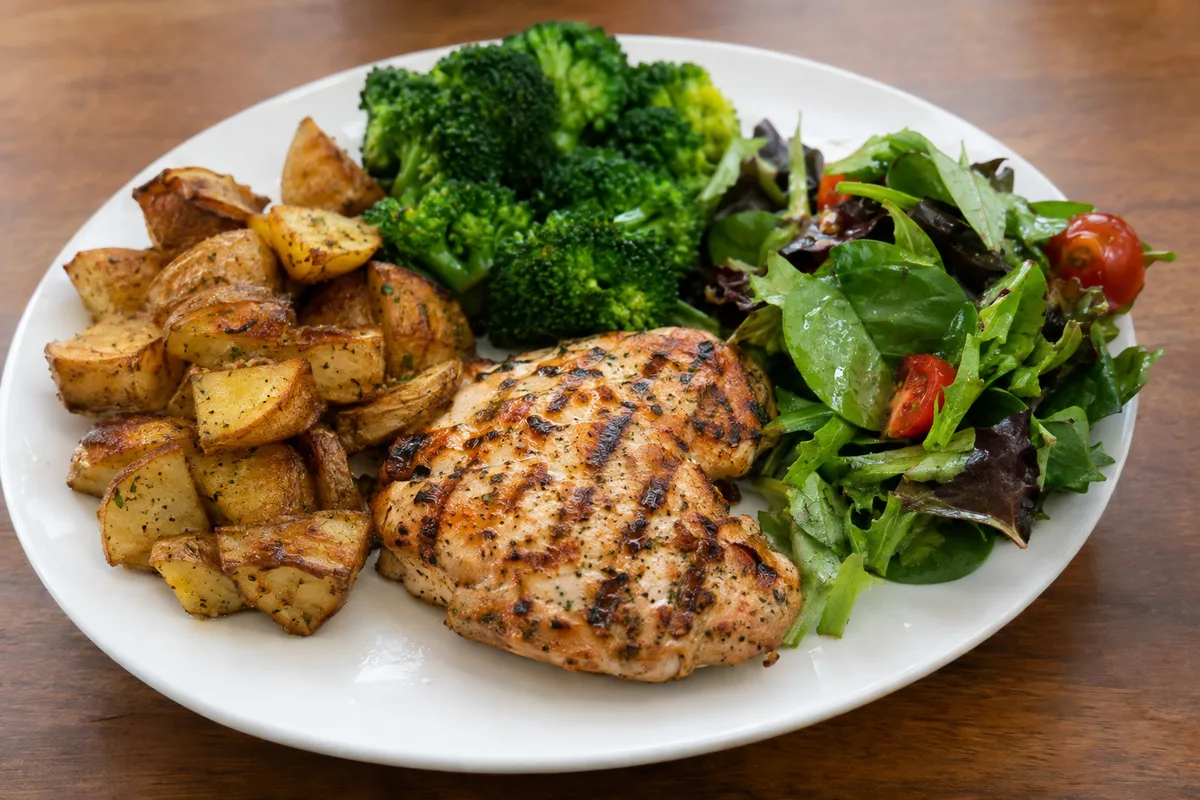
Personal responses also vary with activity, timing, sleep and the rest of the meal. When tracking, note the cooking method, portion and accompaniments so the entry gives you more useful context than the word “potato” alone.