
Whole Milk vs Skimmed Milk: What Changes?
Whole and skimmed milk come from the same starting point, but most of the fat is removed from skimmed milk. The better choice depends on your preferences, portions and the rest of what you eat.
The main difference is fat
Whole milk keeps its natural milk fat, while skimmed milk has most of that fat removed. Because fat provides about 9 kcal per gram, skimmed milk usually contains fewer calories for the same volume.
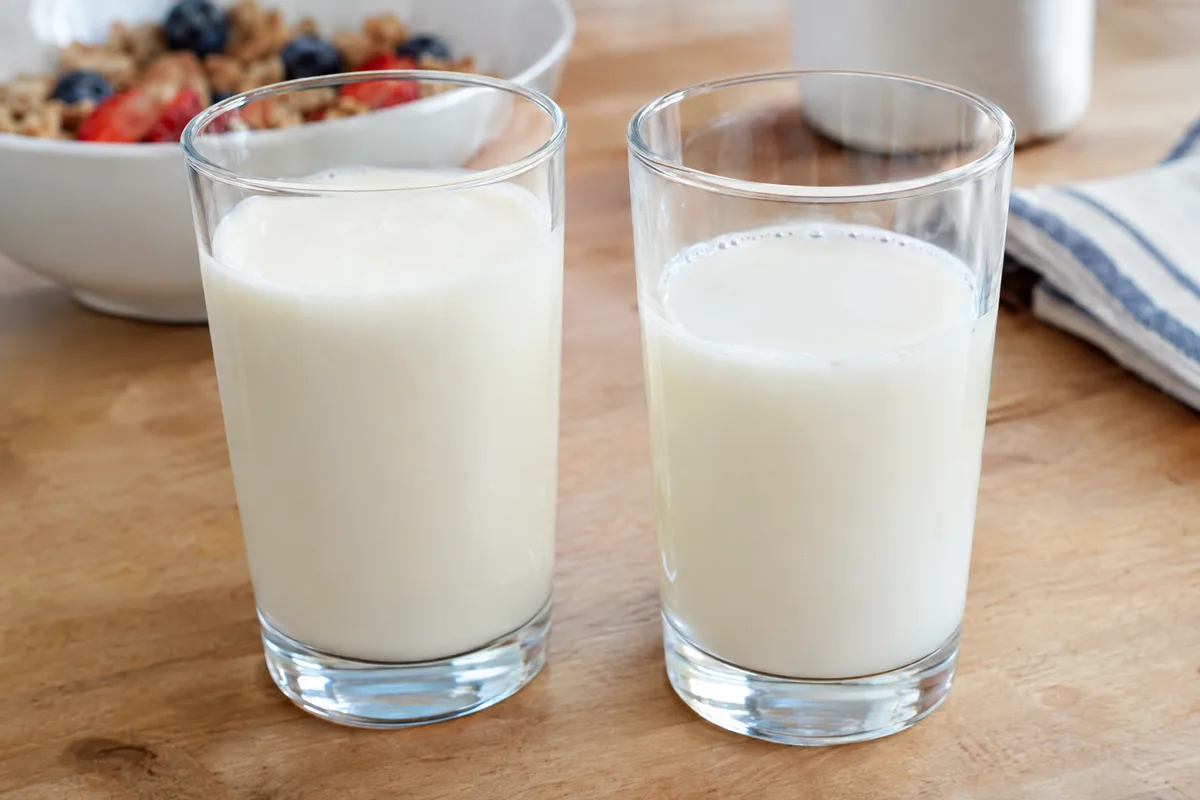
The carbohydrate in milk comes mainly from its natural milk sugar, and the protein content is generally similar across the two types. Check the label on your usual carton, as exact values can vary by brand and processing.
Taste and texture matter
Whole milk tends to taste richer and feel creamier because of its higher fat content. Skimmed milk is lighter and may seem thinner, especially in tea, coffee or cereal.
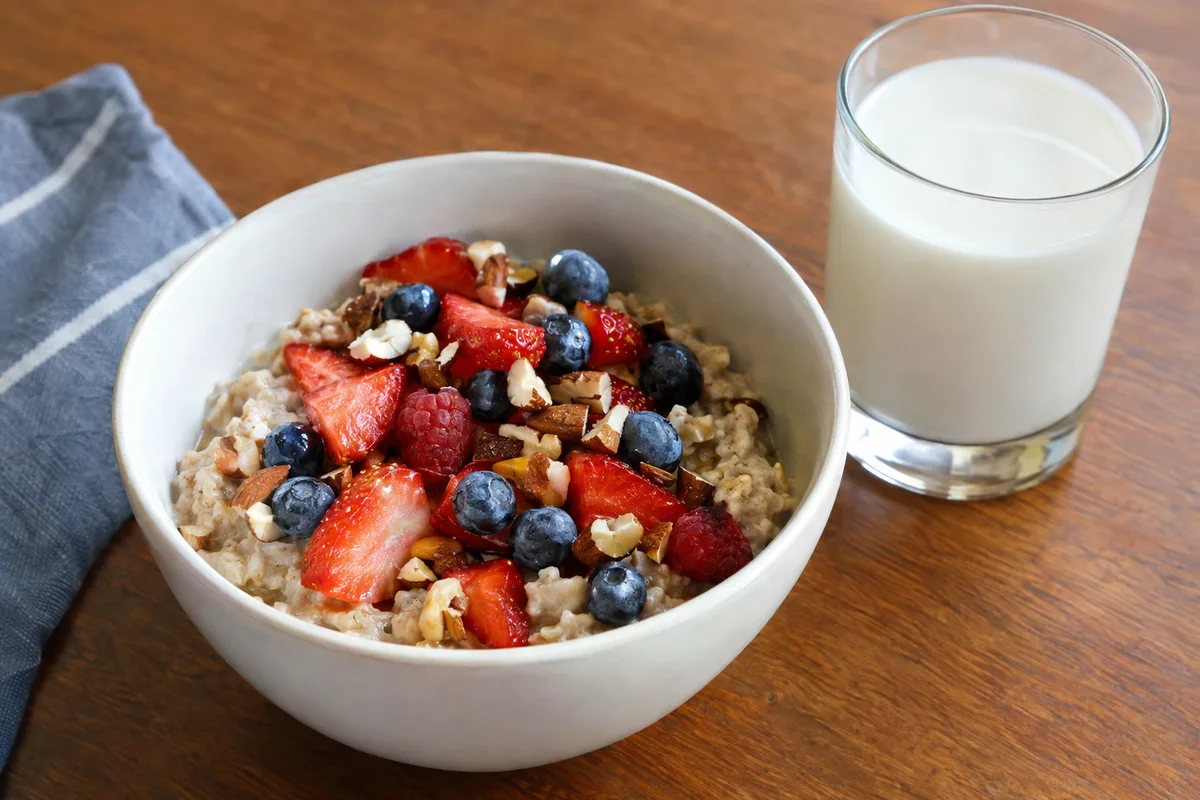
Your preferred texture can affect how satisfied you feel with a meal or snack. If skimmed milk leads you to add other ingredients for richness, log those too when comparing the overall choice.
Compare nutrients on the label
Both options provide protein and a range of vitamins and minerals, but their labels may not be identical. Some vitamins are associated with the fat portion, while others may be added during production.
Use the nutrition panel to compare calories, fat, protein and carbohydrate per serving or per standard volume. Also check the serving size you actually pour, rather than assuming it matches the label example.
Choose according to your wider food log
Skimmed milk can reduce calories and fat without greatly changing the protein in your drink or meal. Whole milk may suit you better when you value a creamier taste or want more energy from the same volume.
There is no single best option for every person. Look at how each one fits your usual intake, then choose the version you enjoy and can track consistently.