
Fresh milk and powdered milk: what changes nutritionally?
Removing water from milk concentrates its nutrients, while adding water back makes it more comparable with fresh milk. Here is what to check when logging protein, carbohydrate, fat, vitamins and minerals.
The main difference is water
Powdered milk is made by removing most of the water from milk. This makes the dry powder much more concentrated than fresh milk by weight. Once it is mixed with the stated amount of water, its nutritional profile can be broadly similar to the type of fresh milk from which it was made.
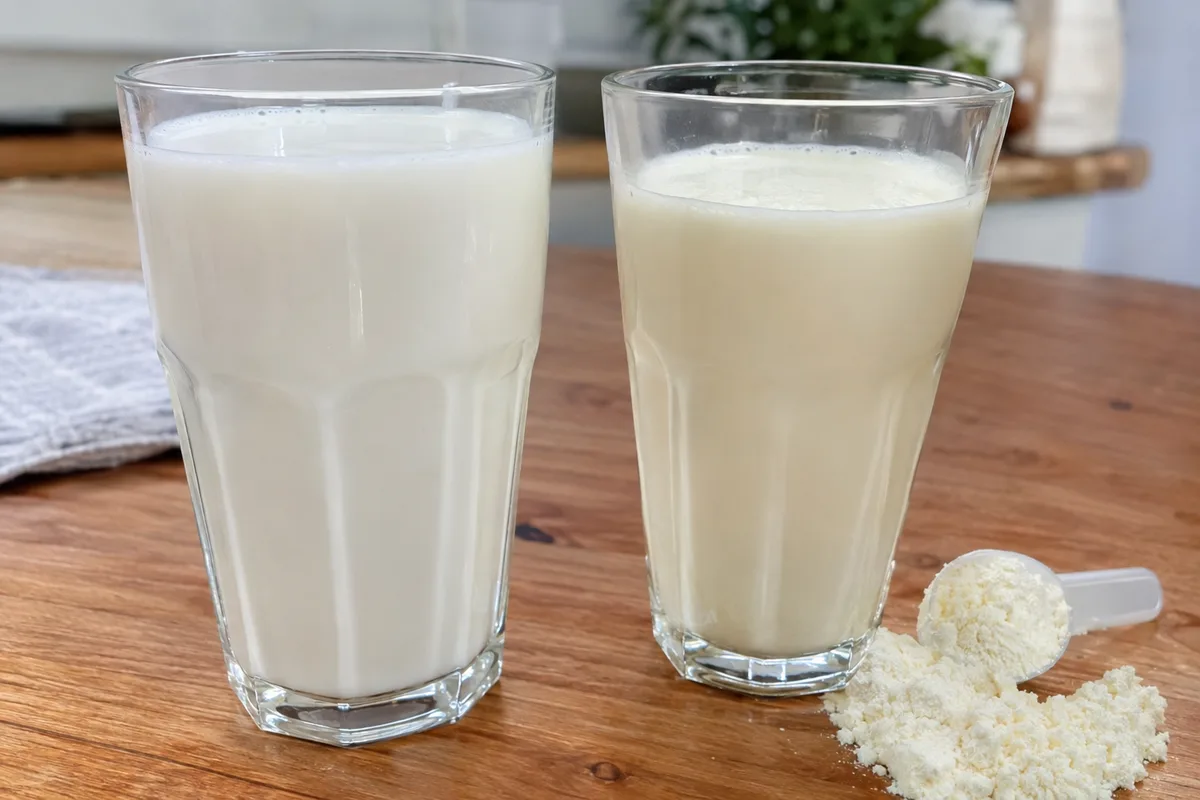
A spoonful of dry powder and the same volume of fresh milk are not equivalent servings. The powder contains more milk solids because it has not yet been diluted. For a fair comparison, look at prepared powdered milk alongside the same volume of fresh milk.
- Compare prepared milk with fresh milk, not dry powder with fresh milk
- Check how much powder and water make one prepared serving
- Keep the milk type consistent, such as whole with whole or skimmed with skimmed
Protein, carbohydrate and fat
Drying milk does not remove its main protein or its natural milk carbohydrate. When the powder is prepared as directed, the amounts are usually close to those in a comparable fresh milk. Exact values depend on the original milk and the manufacturer's recipe.
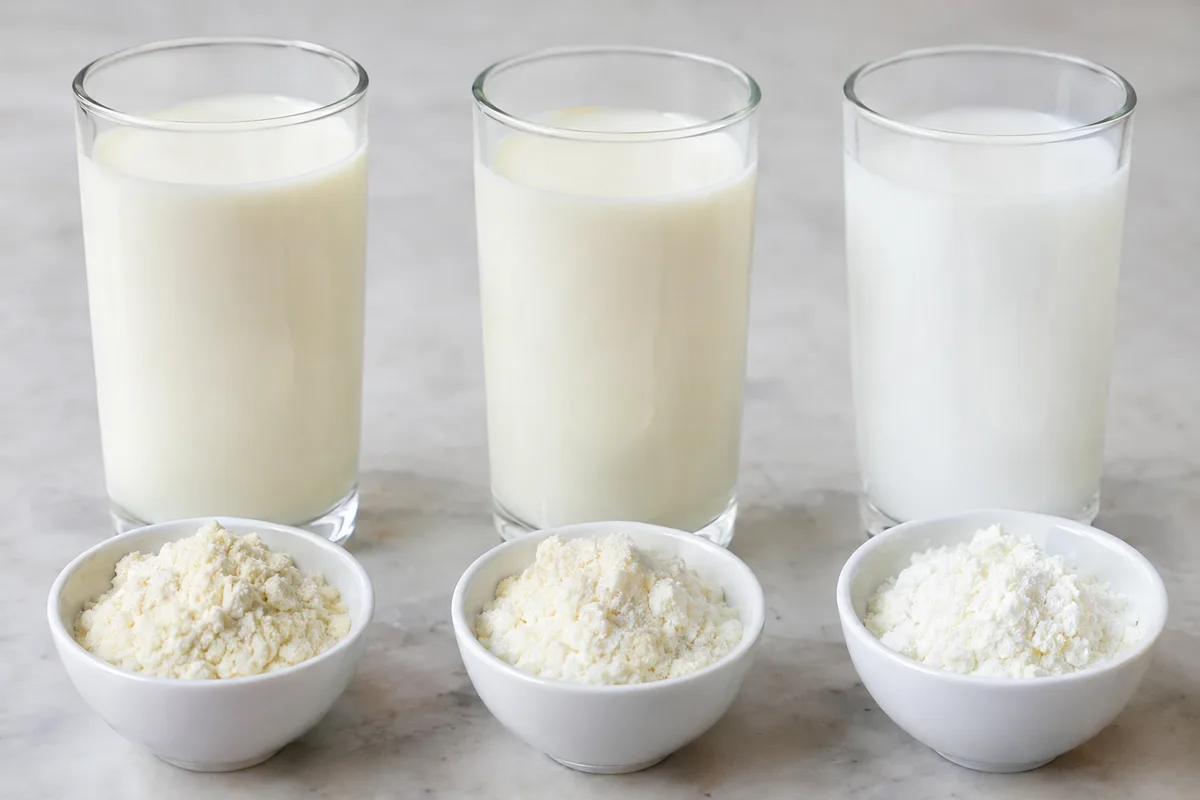
Fat content can differ more noticeably because milk powder may be made from whole, semi-skimmed or skimmed milk. Some products also contain added ingredients that change the carbohydrate or fat total. The nutrition label is therefore more useful than assuming every milk powder is the same.
- Protein depends mainly on the amount of milk solids in the prepared drink
- Natural milk carbohydrate generally remains after drying
- Fat varies according to whether the powder is whole, reduced-fat or skimmed
- Added ingredients can change the final totals
Vitamins and minerals
Minerals such as calcium are not easily removed by the drying process. Prepared powdered milk can therefore provide similar mineral amounts to comparable fresh milk. The exact amount still depends on how much powder is used and whether anything has been added.
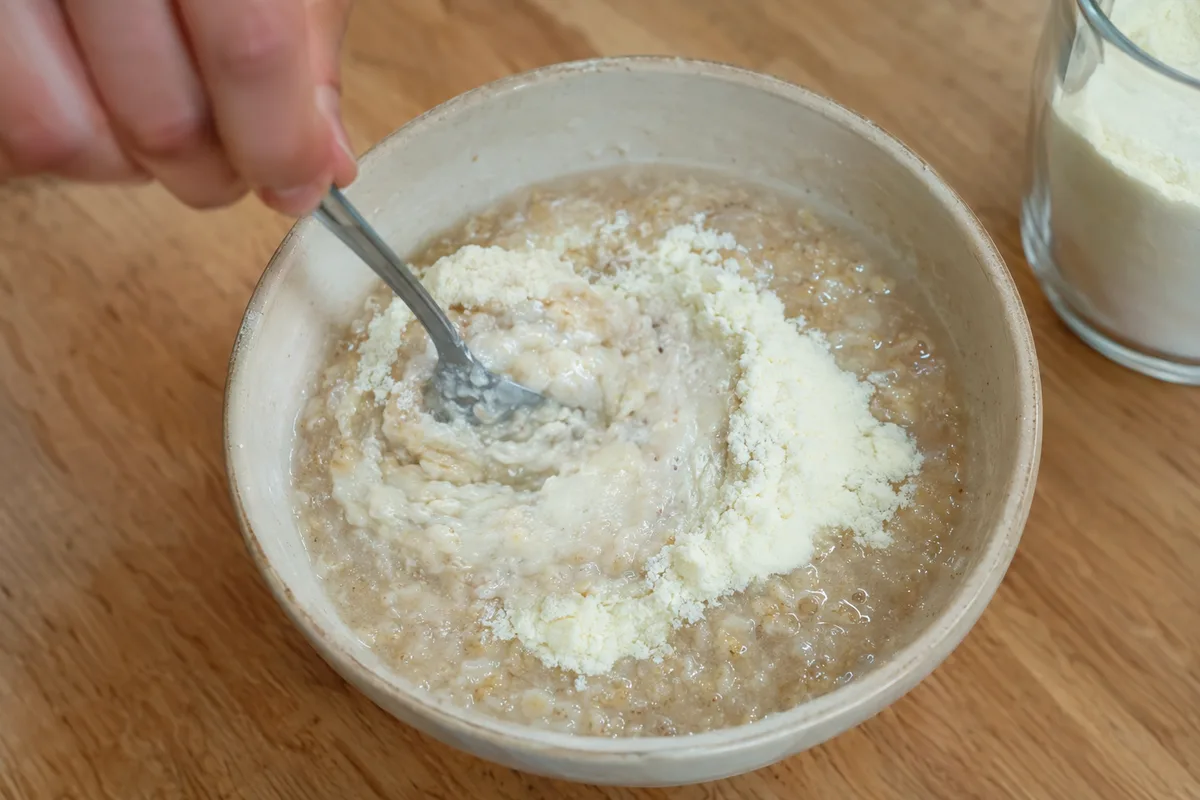
Some vitamins are more sensitive to heat and storage than minerals. Drying may reduce certain heat-sensitive vitamins, while other nutrients may be added during manufacturing. Fresh milk can also have added vitamins, so the label is the clearest way to compare them.
- Compare calcium and other listed minerals per prepared serving
- Look for added vitamins in the ingredients and nutrition information
- Check whether the values refer to dry powder or prepared milk
- Do not assume that a longer nutrient list means the product is automatically a better fit
The type of milk matters more than the format
Whole fresh milk and skimmed milk powder are not direct nutritional matches. Their different fat levels affect their energy content and may also influence the amounts of fat-soluble vitamins. The same applies when comparing skimmed fresh milk with whole milk powder.
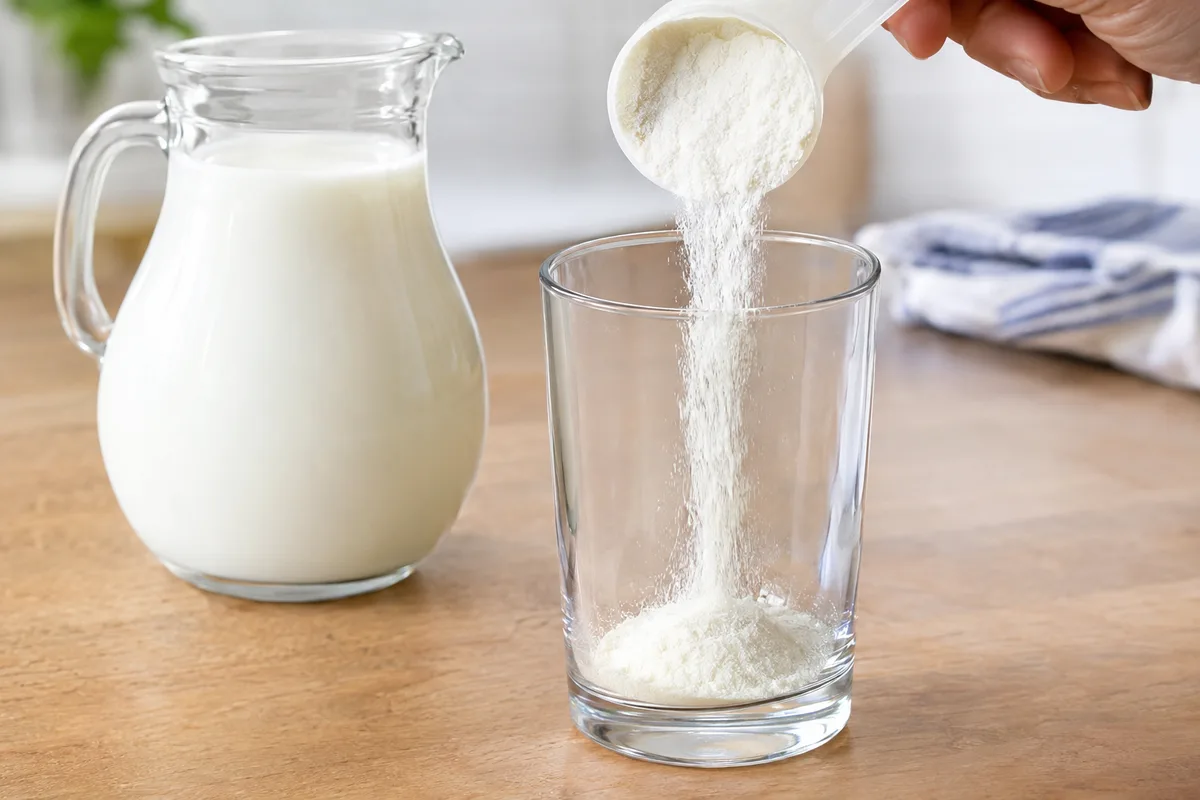
Flavoured or sweetened milk powders are another separate category. They may contain sugar, flavourings or other ingredients that are not present in plain fresh milk. If you want a like-for-like comparison, choose products with similar fat levels and no added flavouring.
- Match whole milk with whole milk powder
- Match reduced-fat milk with a powder of a similar fat level
- Compare plain products separately from flavoured or sweetened ones
- Read the ingredients as well as the nutrition panel
How to log powdered milk accurately
First check whether the label gives values for dry powder, prepared milk or both. Logging a prepared drink as dry powder can make the entry look far more concentrated than it really is. Logging only the powder may be appropriate when it is stirred directly into porridge, yoghurt or another food.
Use the amount you actually consumed rather than the suggested serving if they differ. Include the powder itself when it is added to a recipe, but do not add nutrition for plain water. If you prepare the drink more strongly or weakly than directed, adjust the powder amount in your log.
- For a drink, record the amount of powder used or select a verified prepared-milk entry
- For cooking, log the dry powder added to the full recipe
- Divide a shared recipe by the portion you ate
- Check that the entry matches the product's whole, reduced-fat or skimmed form
- Update your usual entry if the preparation instructions change
Choosing between fresh and powdered milk
Neither format is automatically more nutritious. A correctly prepared plain milk powder may be close to comparable fresh milk for protein, carbohydrate and minerals, while fat and vitamin levels can vary. Your usual portion and the specific label determine what appears in your food log.
Fresh milk is ready to use, whereas powder can be stored dry and mixed when needed. Storage time and instructions depend on the product, especially after the pack is opened or the milk is prepared. Follow the packaging directions and use clean water and utensils when mixing it.
Taste and texture may also guide your choice. Heat processing and storage can give powdered milk a different flavour from fresh milk without making it nutritionally unsuitable. For tracking, consistency in preparation matters more than which format you prefer.
- Choose the format that suits how you cook and drink milk
- Compare labels using the same prepared volume
- Store and prepare each product according to its directions
- Base your log on your actual portion and mixing method