
Are udon noodles a healthy choice?
Udon noodles mainly provide carbohydrate, but their overall nutritional value depends on the rest of the bowl. Here is how to track them accurately and build a more balanced udon meal.
What udon noodles bring to a meal
Udon are thick Japanese noodles usually made from wheat flour, water and salt. Their main nutritional contribution is carbohydrate, which the body can use for energy. Plain udon generally contain some protein but little fat and fibre.
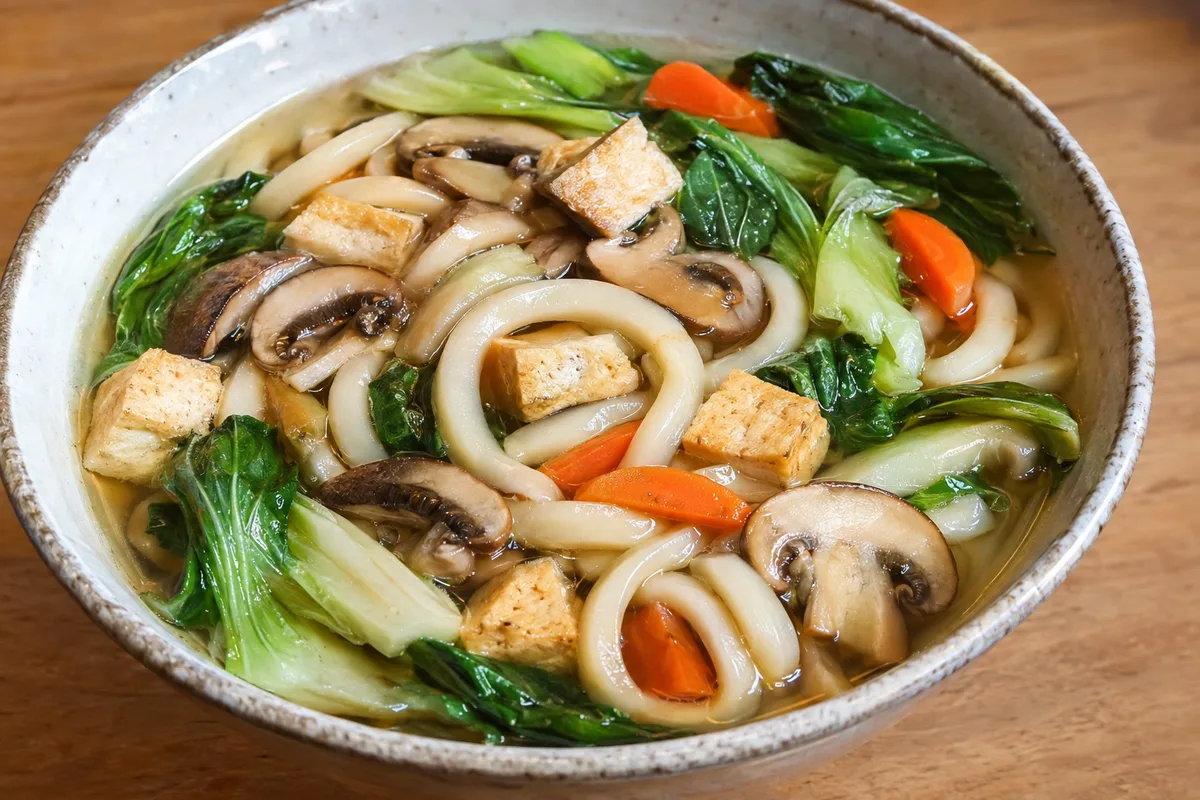
This does not make udon good or bad on their own. They can form the carbohydrate part of a balanced meal, much like rice, bread or other noodles. The portion, toppings, cooking method and broth determine what the complete bowl offers.
Udon can be particularly satisfying because their thick, chewy texture makes a bowl feel substantial. However, a large serving of noodles without many other ingredients may not keep everyone satisfied for long. Adding protein, vegetables and some fat usually creates a more rounded meal.
- Carbohydrate from the noodles
- A modest amount of protein
- Usually little fibre unless a higher-fibre variety is used
- Salt in the noodles and often in the broth
Fresh, dried and ready-to-cook udon
Udon are sold fresh, frozen, dried or in soft ready-to-cook packets. Water content changes their weight, so equal weights of dried and cooked noodles do not represent equal portions. This matters when you log what you eat.
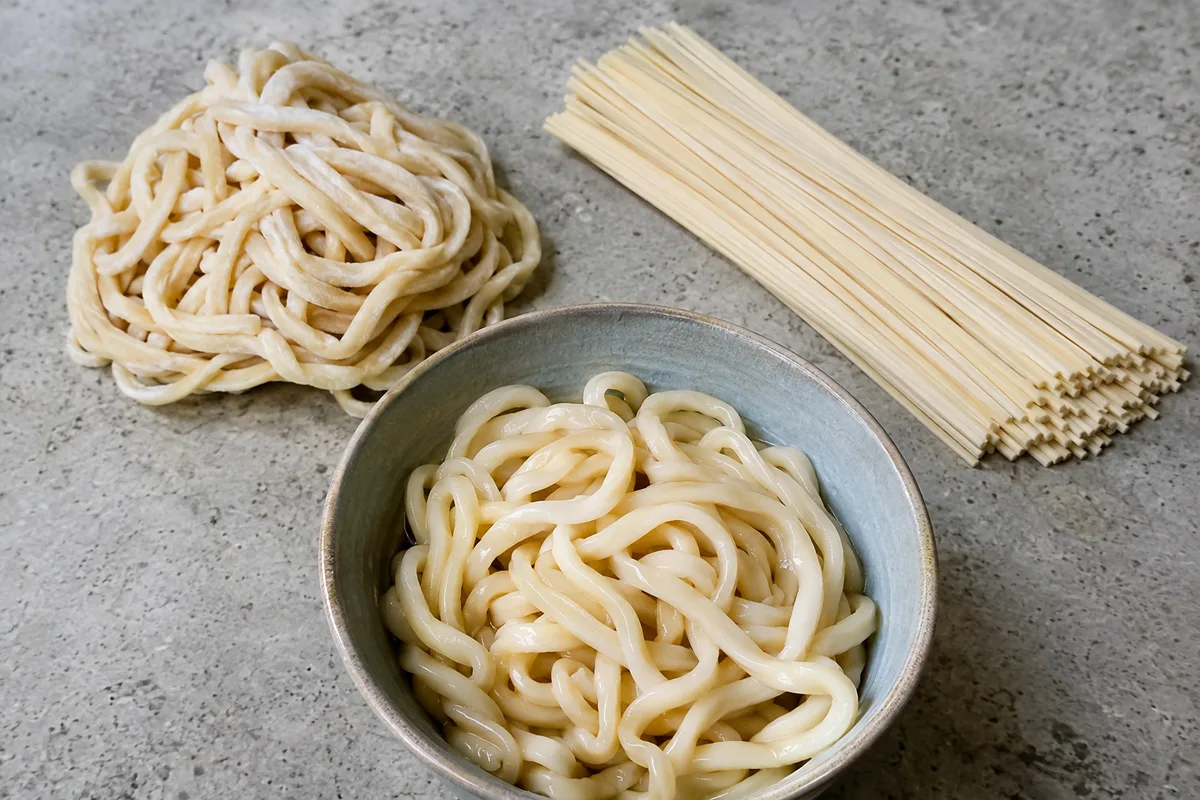
Check whether the nutrition information refers to the product as sold or after cooking. A dried portion absorbs water and becomes heavier, while the energy in the noodles does not increase simply because water was added. For the closest match, log the form and weight you actually measured.
Ingredient lists and nutrition panels can also vary between products. Some noodles contain more salt, while others include additional starches or different flours. Use the label from your own packet rather than relying on a generic database entry when possible.
- Match fresh noodles with a fresh-noodle entry
- Match dried noodles with a dry-weight entry
- Check whether a packet includes a separate sauce or seasoning
- Log broth and toppings as well as the noodles
The broth can change the bowl
Udon is often served in a savoury broth made with ingredients such as stock, soy sauce or miso. These bring plenty of flavour, but they can also add a notable amount of salt. The exact amount depends on the recipe, packet or restaurant.
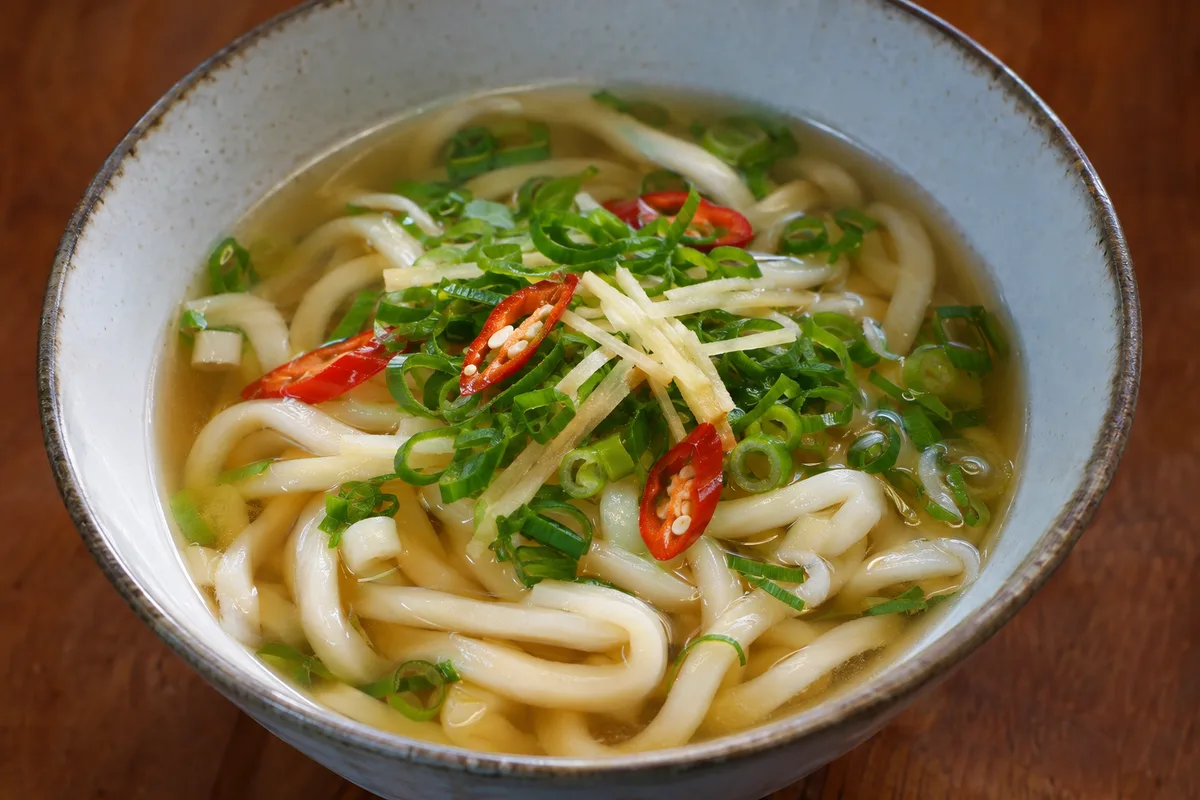
You do not have to avoid broth to enjoy udon. Using less concentrated seasoning, adding extra water or leaving some broth in the bowl can reduce how much salt you consume. Taste before adding more soy sauce or other salty condiments.
For tracking, count packaged soup bases, oils and sauces separately when the label provides that information. Restaurant broth is harder to estimate, so choose the closest entry and treat it as an informed approximation. Consistency is often more useful than chasing a perfect number that is not available.
- Dilute concentrated soup base to suit your taste
- Add ginger, chilli, garlic or spring onion for flavour
- Use citrus juice or rice vinegar for brightness
- Keep extra soy sauce optional rather than automatic
How to build a balanced udon bowl
A bowl based mostly on noodles and broth can be short on fibre and protein. Adding a clear protein source and a generous range of vegetables makes the meal more balanced. A little fat can also contribute flavour and satisfaction.
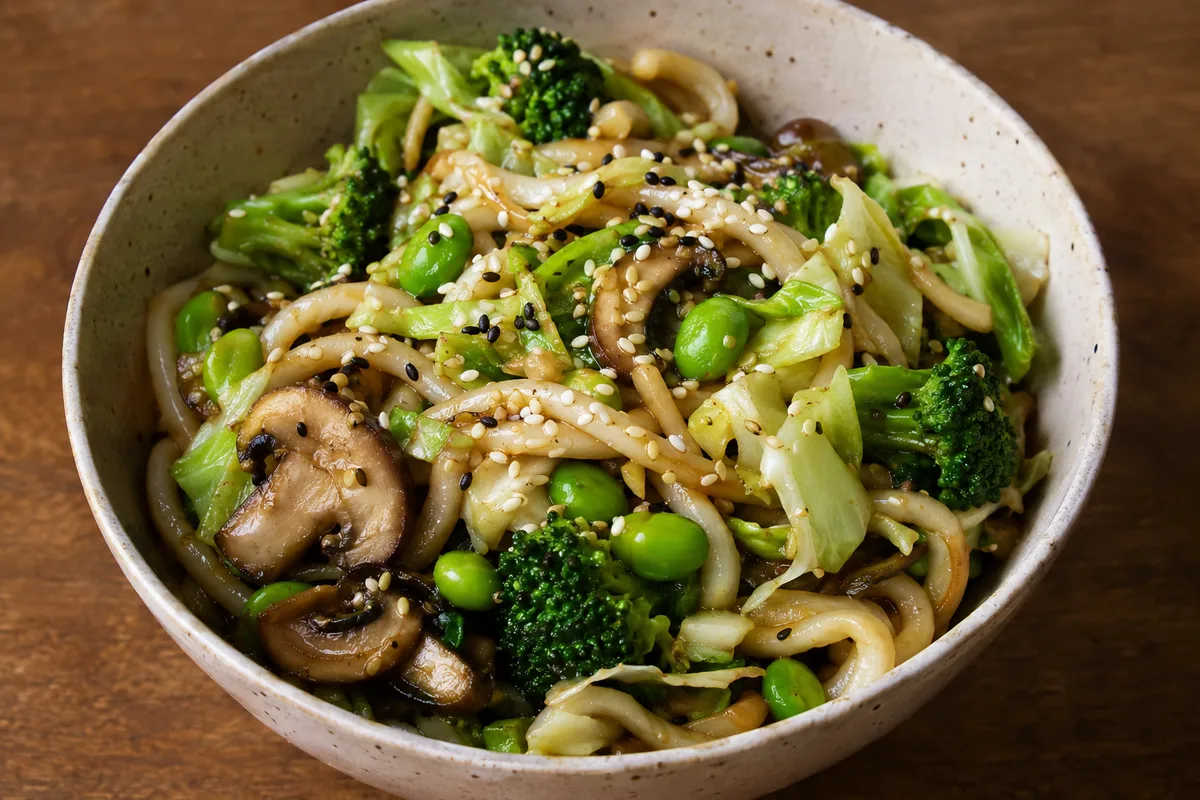
There is no single correct ratio because appetite and energy needs differ from person to person. Start with the noodle portion that suits your usual intake, then make room for vegetables and protein. Track each main ingredient if you want to understand which parts contribute most to the meal.
Cooking method matters too. Grilled, steamed, simmered or lightly stir-fried toppings usually make oils easier to judge than heavily battered additions. If you use oil, measure or estimate it separately because it may not be obvious once mixed into the bowl.
- Protein: tofu, egg, chicken, prawns or edamame
- Vegetables: pak choi, mushrooms, carrots, cabbage or broccoli
- Flavour: spring onion, coriander, ginger, chilli or sesame seeds
- Fat: sesame oil, nuts, seeds or the natural fat in a protein topping
Simple ways to add more fibre
Traditional udon made with refined wheat flour is not usually a high-fibre food. Fibre can come from the ingredients served alongside the noodles instead. Vegetables, beans, edamame, nuts and seeds can all help.
Some products use wholegrain flour or a mixture of flours, but colour alone is not a reliable guide. Read the ingredients and fibre line on the nutrition panel if fibre matters to your tracking. Compare products on the same basis, such as per cooked portion or per stated serving.
You can also use slightly fewer noodles and add more vegetables without turning the meal into a completely different dish. Mushrooms and shredded cabbage work well because they blend into the bowl and hold the sauce or broth. Choose a change that still leaves the meal enjoyable and satisfying.
- Stir shredded cabbage into hot noodles
- Add mushrooms and pak choi to the broth
- Top the bowl with edamame
- Finish with sesame seeds or chopped nuts
So, are udon noodles healthy?
Udon noodles can be part of a balanced way of eating. They provide carbohydrate and work well as a base for vegetables and protein, but plain refined udon offer relatively little fibre. The broth and toppings often matter as much as the noodles themselves.
When tracking an udon meal, pay attention to whether the noodles were weighed dry, fresh or cooked. Include oils, sauces, soup bases and toppings where practical. For meals prepared elsewhere, a reasonable estimate is enough.
The best choice depends on your appetite, preferences and the rest of your day. A useful everyday bowl combines a suitable portion of udon with colourful vegetables, a protein source and flavourings that do not rely only on salt. There is no need to label the noodles themselves as either virtuous or unhealthy.
- Choose a portion that fits your own needs
- Add vegetables for fibre and variety
- Include a clear source of protein
- Check salty broths and sauces
- Log the noodle form you actually used