
How Lean Beef Can Fit Into a Healthy Diet
Lean beef can be one part of a balanced eating pattern rather than the centre of every meal. The cut, portion, cooking method and foods served with it all shape how it fits into your day.
What makes beef lean
Lean beef has less visible and internal fat than fattier cuts. Look for cuts described as lean, choose mince with a lower fat content, and trim visible fat before or after cooking.
Names and fat levels vary between cuts and retailers, so check the label rather than relying only on the name. If you track your food, log the specific cut and whether its listed weight is raw or cooked.
What lean beef contributes
Beef provides protein, which supports the maintenance and repair of body tissues. It also contains nutrients including iron, zinc and vitamin B12.
Choosing a leaner cut keeps the protein while reducing the amount of fat compared with a fattier cut. The exact nutrient content depends on the cut, portion and preparation method.
Build a balanced plate
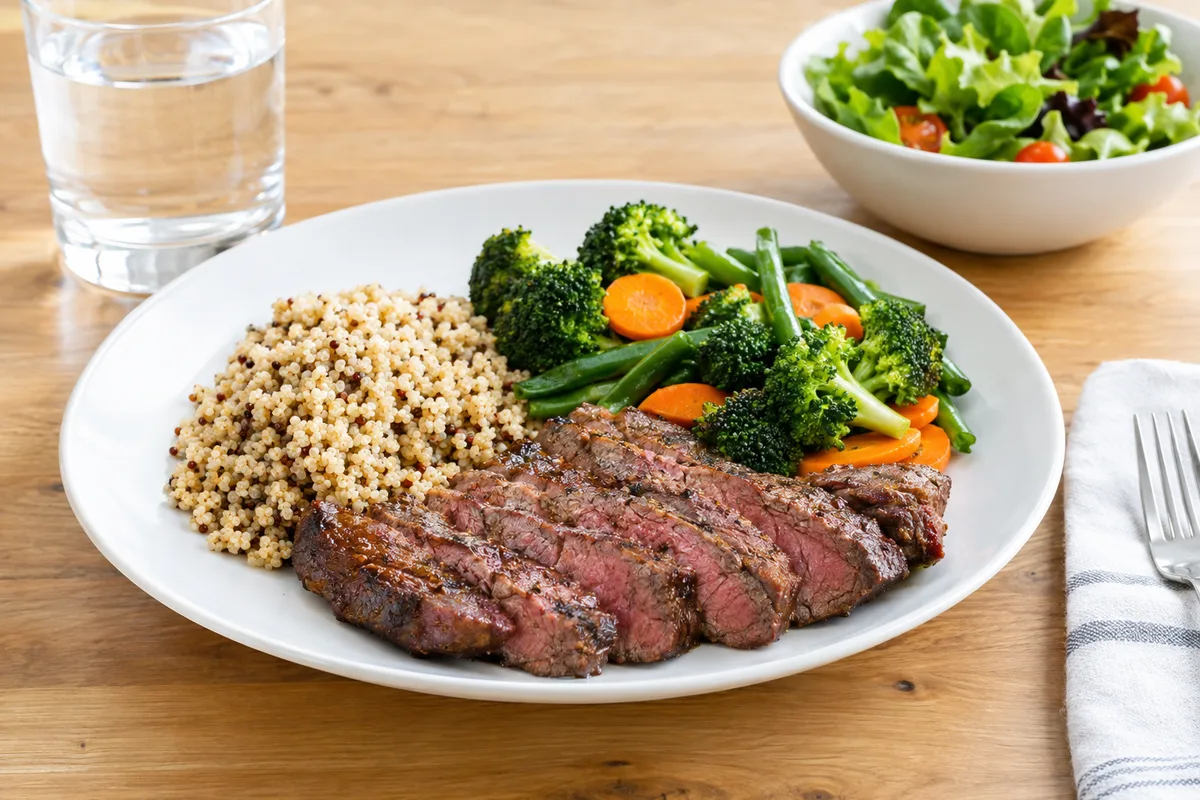
Treat lean beef as one part of the meal and leave room for vegetables, wholegrains, pulses or other fibre-rich foods. This adds variety and helps the meal provide more than protein alone.
Balance is also about the wider pattern of what you eat. You can alternate beef with fish, poultry, eggs, beans, lentils and other protein sources across your meals.
Cook and track it clearly
Grilling, baking, roasting or stir-frying with a modest amount of oil can keep added fat easier to track. Sauces, butter, oil and toppings count separately, even when the beef itself is lean.
Use the same weighing method each time so your food log stays consistent. A kitchen scale can help, but the suitable portion depends on your appetite, needs and the rest of the meal.