
Foods High in Fructose and How to Track Them
Fructose occurs naturally in fruit and is also used in many sweeteners and packaged foods. This guide explains the main sources, how portions change the amount and what to record in your food log.
What counts as a high-fructose food
Fructose is a type of carbohydrate that tastes sweet. It occurs naturally in fruit, some vegetables and honey, and it can also be added to manufactured foods. There is no single everyday cut-off that neatly separates high-fructose foods from low-fructose ones.
The amount you eat matters as much as the food itself. A small portion of a sweeter fruit may provide less fructose than a large serving of a fruit with a lower concentration. Ripeness, variety and processing can also change the final amount.
Fructose may appear alone or joined to glucose in ordinary table sugar. This means a food does not need the word “fructose” on its label to contribute fructose. When tracking, check the ingredients as well as the total carbohydrate and sugar figures.
Fruits that are often richer in fructose
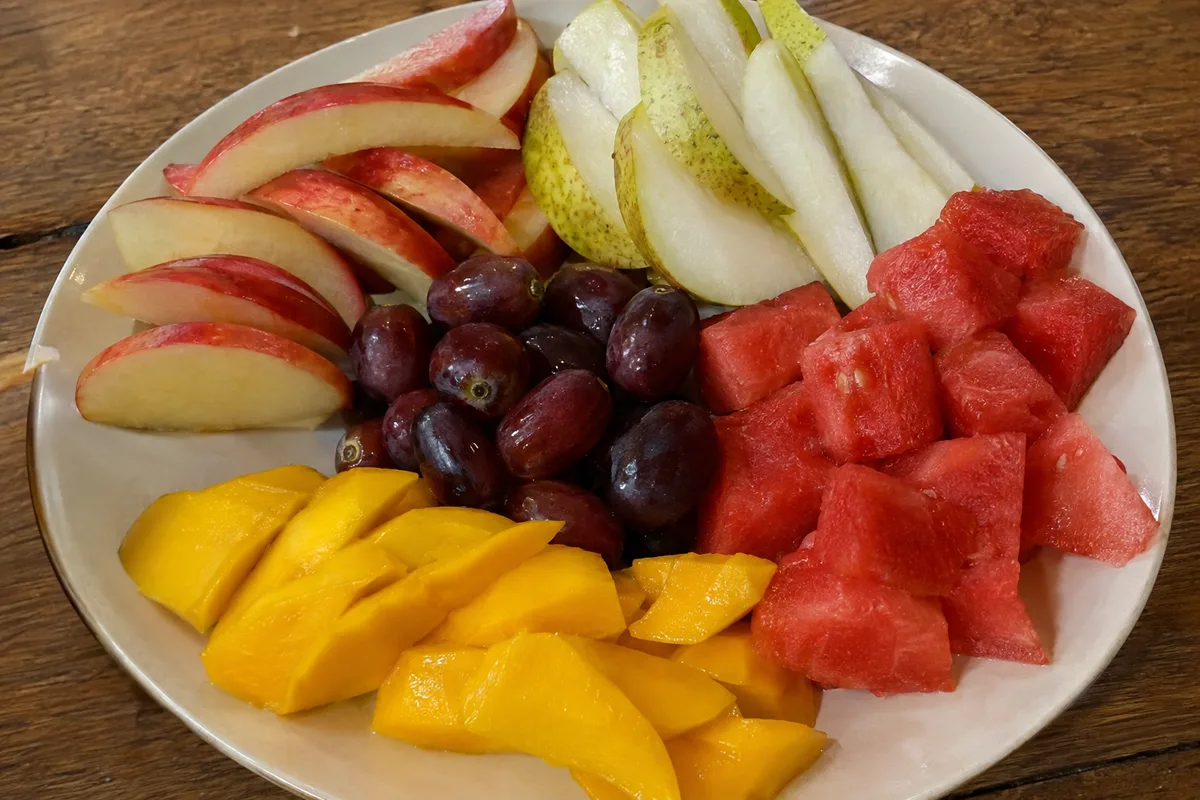
Fruit is one of the best-known natural sources of fructose. Apples, pears, mangoes, grapes and watermelon are common examples that can make a noticeable contribution, particularly in larger portions. The exact amount varies by variety, size and ripeness.
Whole fruit also contains water, fibre and other nutrients, so its fructose content is only one part of the picture. Logging the actual portion gives you more useful information than marking every piece of fruit as a standard serving. If possible, choose the specific fruit and form listed in your tracker.
- Apples and apple products
- Pears and pear products
- Mangoes
- Grapes
- Watermelon
Dried fruit and concentrated fruit products
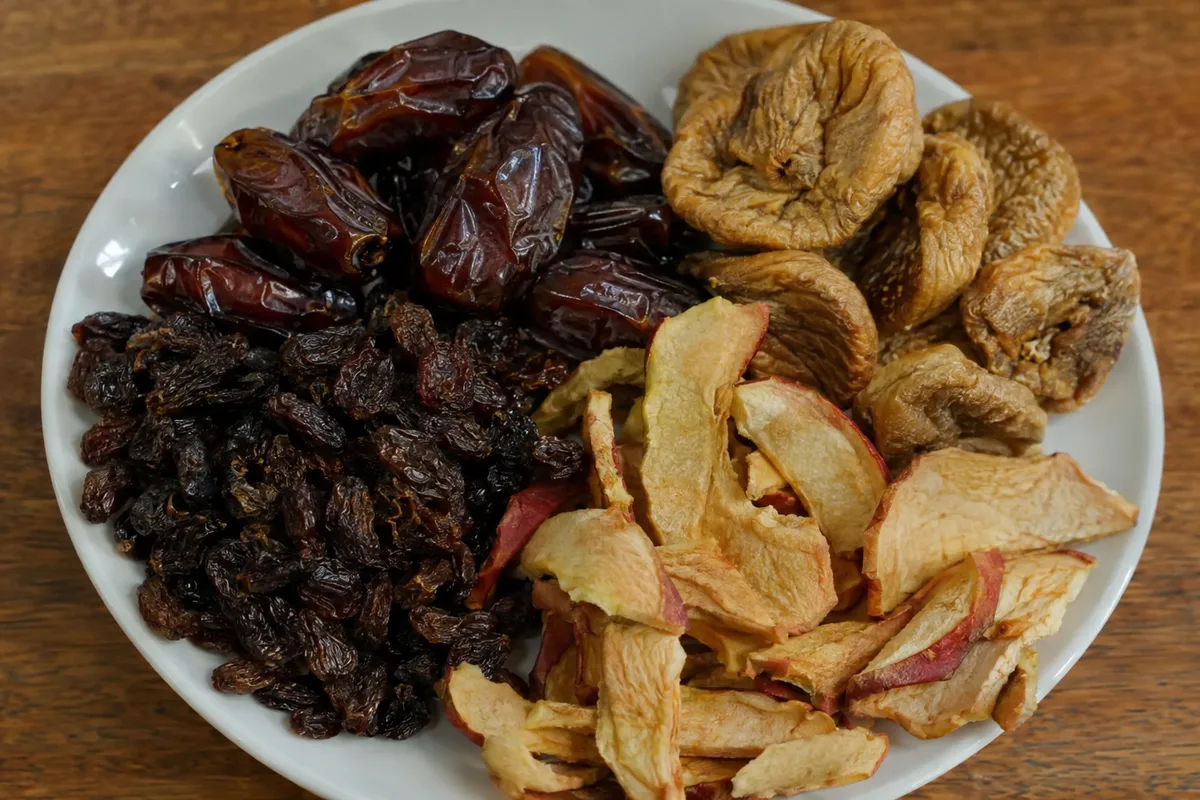
Removing water from fruit makes its natural sugars more concentrated by weight. Dried fruit can therefore add up quickly when eaten by the handful or mixed into cereal, baking and snack bars. A small-looking portion may represent several pieces of fresh fruit.
Fruit purée, fruit juice concentrate and fruit-based spreads can also be concentrated sources. Some contain added sweeteners, while others rely only on concentrated fruit sugars. Check the ingredient list rather than assuming that a fruit-based product has the same composition as whole fruit.
- Raisins and other dried grapes
- Dried dates and figs
- Dried apple or pear pieces
- Fruit purées and fruit-based spreads
- Fruit juice concentrates
Sweeteners and packaged foods
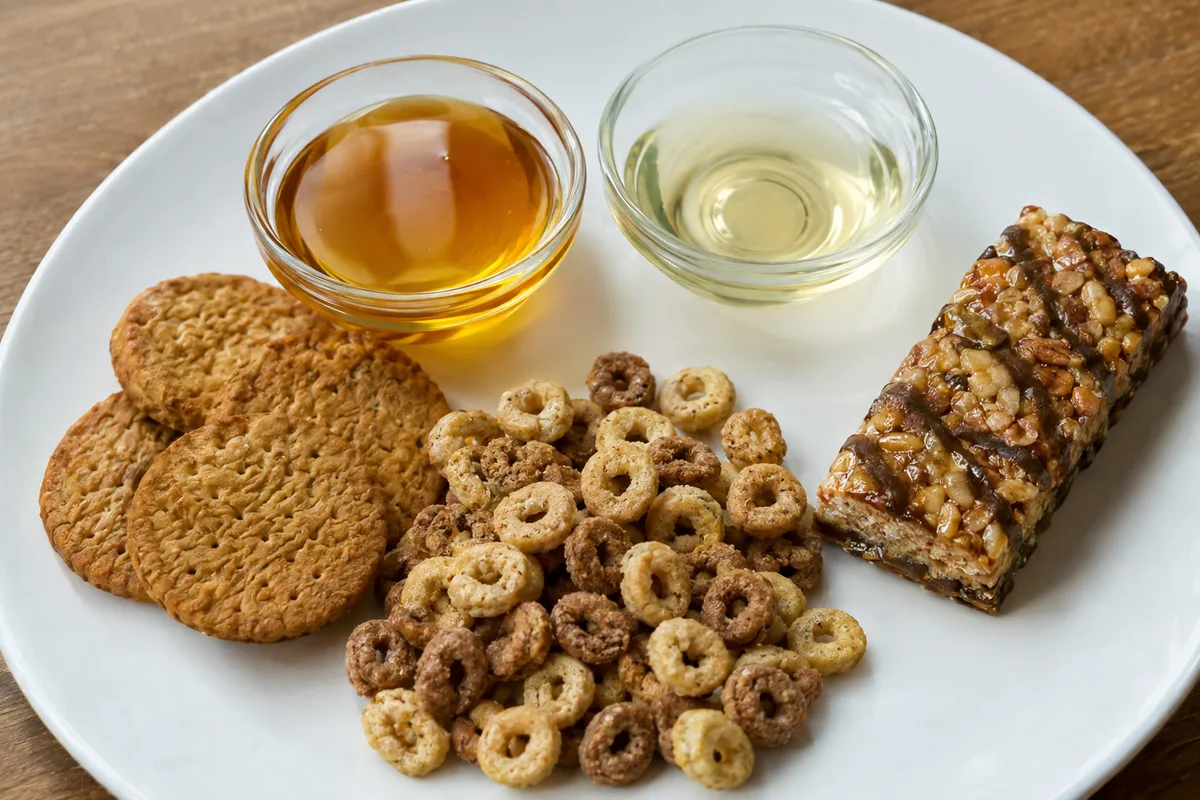
Honey, agave syrup and products made with added fructose can be significant sources. Table sugar also contributes fructose because it is made from glucose and fructose joined together. Different sweeteners may have different proportions, so the product and serving size both matter.
Packaged foods can contain sweeteners under several names. In Britain, labels may mention glucose-fructose syrup or fructose-glucose syrup, depending on which sugar is present in the greater amount. Fruit juice concentrate, honey and ordinary sugar may also appear in foods that do not taste intensely sweet.
Look beyond desserts when checking labels. Sauces, flavoured yoghurt, breakfast cereals and snack bars may all contain one or more sweetening ingredients. The exact fructose amount is rarely stated separately, so use the closest verified entry in your tracker and record the portion.
- Honey and agave syrup
- Foods made with glucose-fructose or fructose-glucose syrup
- Sweets, biscuits and sweet bakery foods
- Sweetened cereals and snack bars
- Sweet sauces and flavoured dairy foods
Drinks can provide concentrated servings
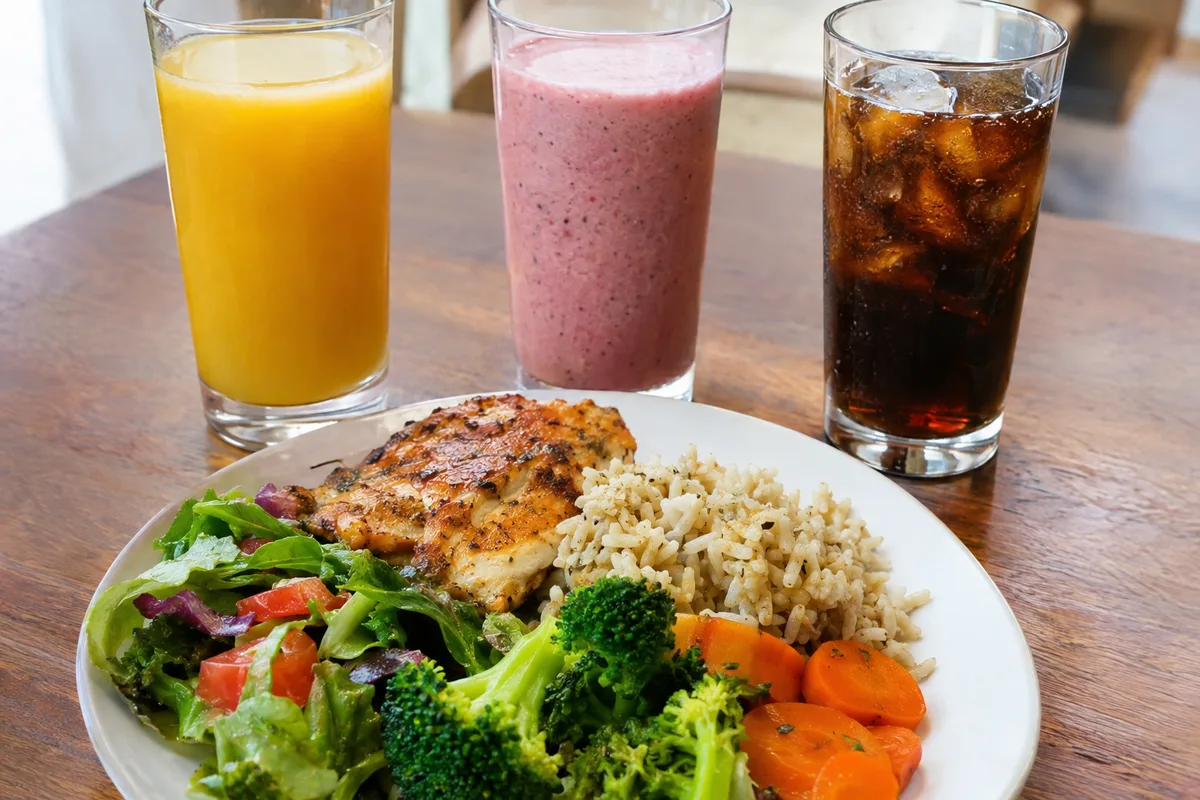
Fruit juice contains sugars from the fruit but usually much less fibre than the whole fruit. It is also easy to drink more fruit than you would normally eat in one sitting. Smoothies vary because some retain more of the whole fruit, while others include juice, concentrates or added sweeteners.
Sweetened soft drinks and flavoured drinks may use sugar or syrups that contribute fructose. The label may give total sugars without separating fructose from glucose. Record the full volume you drank and select the exact drink where possible.
Unsweetened does not always mean free from fructose. Pure fruit juice has no added sugar but still contains naturally occurring fruit sugars. In a food log, “no added sugar” and “no sugar” should not be treated as the same description.
- Apple, pear, grape and mango juice
- Fruit juice blends
- Fruit smoothies made with juice or concentrate
- Sugar-sweetened soft drinks
- Sweetened flavoured waters and tea drinks
How to track fructose more accurately
Start by recording the exact food rather than using a broad entry such as “fruit” or “sweetener”. Note whether it was fresh, dried, juiced, puréed or made into syrup, as these forms are not interchangeable. Measure the portion in the way that is practical for you and stay consistent.
For packaged products, use the nutrition label and ingredient list together. Total sugars include fructose along with other sugars, so they do not reveal the fructose amount on their own. If your tracker does not show fructose separately, recording the correct product and serving still improves the quality of your log.
You do not need to avoid every food containing fructose. Your reason for tracking, your usual portions and the rest of your diet all affect what is useful to monitor. Look for repeated patterns across meals rather than judging a food from one entry.
- Choose the correct fruit variety or packaged product
- Record whether the food was fresh, dried, juiced or concentrated
- Enter the portion actually eaten or drunk
- Check labels for syrups, sugar, honey and fruit concentrates
- Review patterns across several meals