
Which foods are high in carbohydrates?
Carbohydrates are found in far more than bread, pasta and sweets. This guide explains the main sources, what food labels mean and how to record them consistently.
What counts as a high-carbohydrate food?
Carbohydrate is a nutrient found mainly in plant foods, milk, yoghurt and foods made with added sugar. Your body can use it as a source of energy, while some carbohydrate foods also provide fibre, vitamins and minerals. Foods that contain a large amount of starch or sugar are usually described as high in carbohydrates.
The amount you eat matters as much as the type of food. A small spoonful of rice contributes less carbohydrate than a large bowl, even though both are the same food. When you track a meal, check the portion rather than deciding from the food name alone.
High in carbohydrate does not automatically mean unsuitable or lacking in nutrition. Porridge oats, lentils and sweets all provide carbohydrate, but they differ greatly in fibre, protein and other nutrients. Looking at the whole food gives you more useful information than looking at carbohydrate alone.
- Starch, found in grains, potatoes and pulses
- Naturally occurring sugars, found in fruit and milk
- Added sugars, found in many sweet foods and drinks
- Fibre, a type of carbohydrate that may be recorded separately
Bread, grains and starchy foods
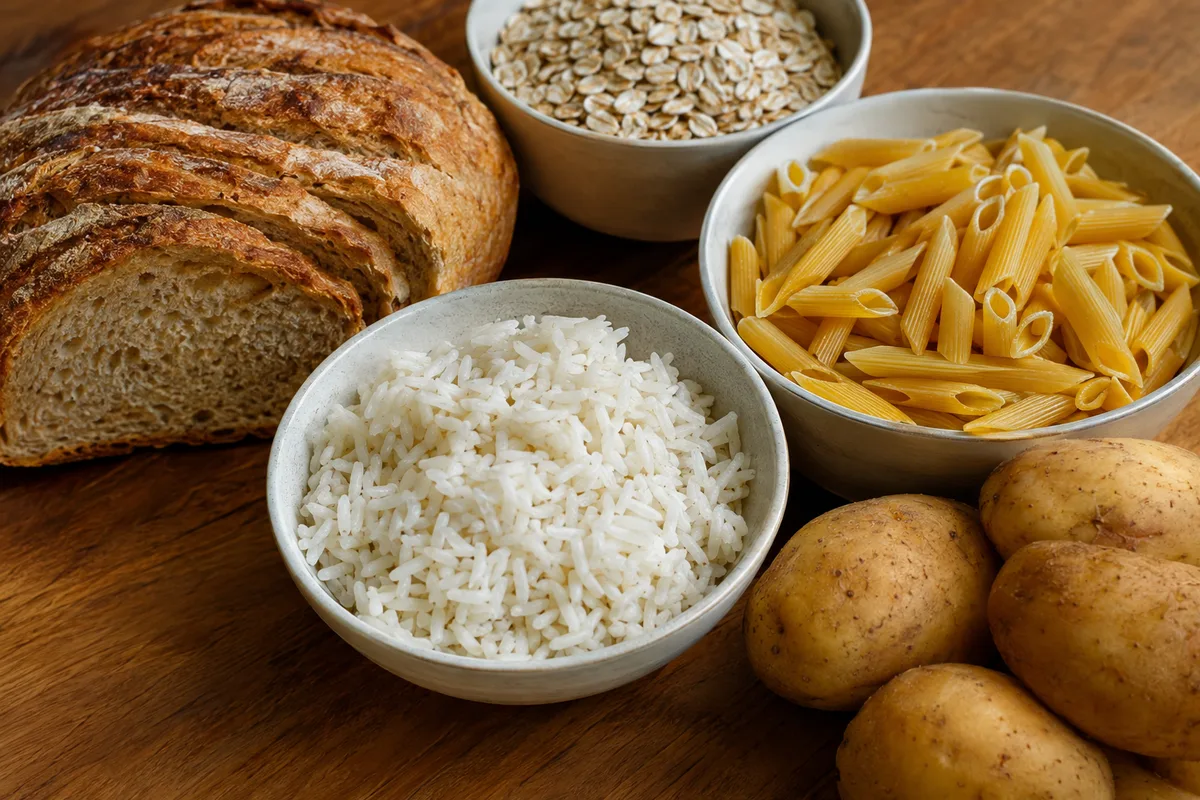
Bread, rice, pasta, noodles and breakfast cereals are common concentrated sources of carbohydrate. Flour-based foods such as wraps, crackers, pastries and pizza bases also belong in this group. Dry or dense foods can provide a substantial amount in a fairly small portion.
Potatoes, sweet potatoes, cassava and similar starchy vegetables are also rich in carbohydrate. Cooking does not remove their carbohydrate, although it can change their weight by adding or removing water. This is why cooked and uncooked entries in a food tracker may show different values.
Wholegrain versions often contain more fibre than refined versions, but both still contain carbohydrate. Fibre can help make a meal more filling and adds variety to the diet. Choose the tracker entry that matches the exact form you ate, such as cooked brown rice rather than dry white rice.
- Bread, rolls, wraps and pitta
- Rice, pasta, noodles and couscous
- Oats, breakfast cereals and other grains
- Potatoes, sweet potatoes and cassava
- Crackers, pastries and flour-based bases
Fruit, pulses and dairy foods
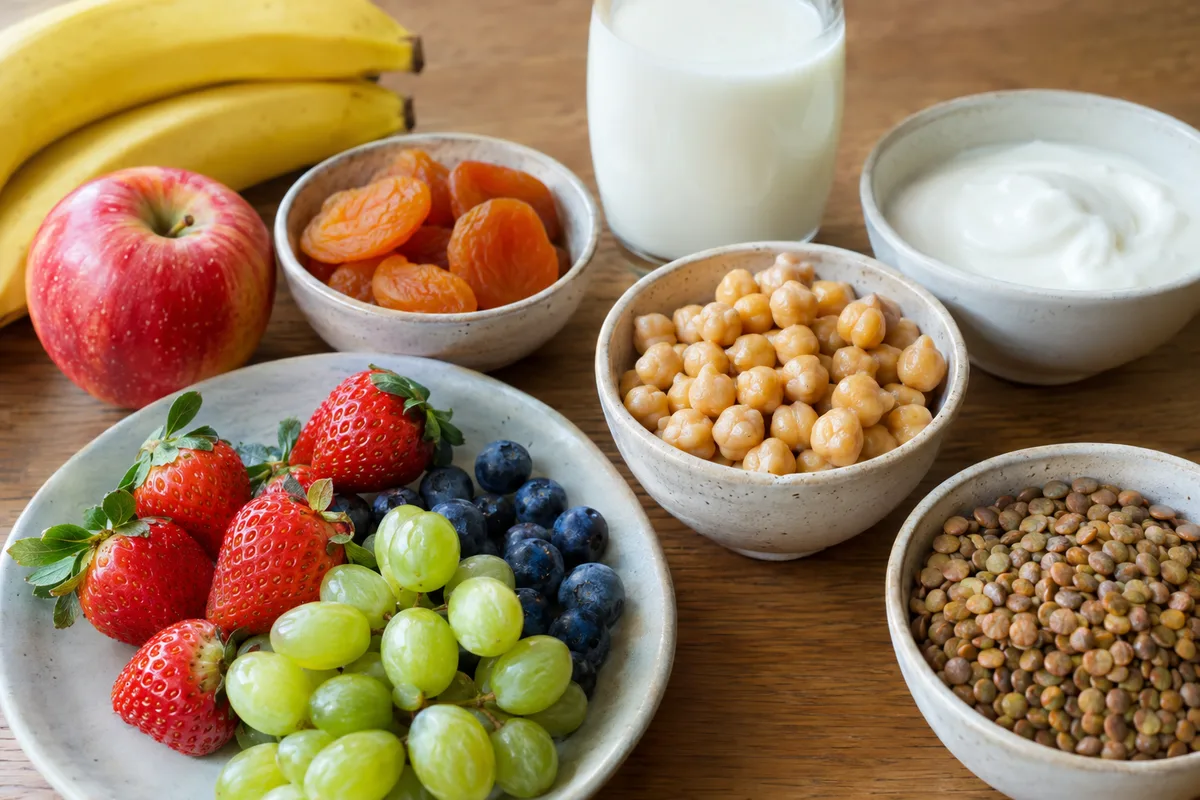
Fruit contains carbohydrate mainly as naturally occurring sugars, alongside water and fibre. Dried fruit is more concentrated because much of its water has been removed. Juice and smoothies can also supply carbohydrate quickly because they are easy to drink in a larger amount.

Beans, lentils, chickpeas and peas contain starch as well as fibre and protein. They can therefore be high in carbohydrate while still contributing several other nutrients. When tracking canned pulses, note whether the entry refers to the drained weight.
Milk and yoghurt contain a naturally occurring milk sugar. Flavoured varieties may also contain added sugar, so their carbohydrate content can differ from plain versions. Cheese generally contains much less carbohydrate, although the exact amount depends on the type.
- Bananas, grapes, mangoes and other fruit
- Raisins, dates and other dried fruit
- Beans, lentils, chickpeas and peas
- Milk and plain yoghurt
- Flavoured yoghurt and milk drinks
Sugary foods and drinks
Table sugar, honey, syrups, sweets and many desserts are high in carbohydrate because sugar itself is a carbohydrate. Cakes, biscuits and pastries often combine sugar with flour, so both ingredients contribute. Their fat content may also make them energy dense, even when the portion looks modest.

Sweetened soft drinks, sweetened tea or coffee, and some flavoured drinks can contain a noticeable amount of carbohydrate. Drinks may be missed during tracking because they are separate from the plate. Record additions such as sugar, syrup or sweetened milk as well as the main drink.
Labels may use several ingredient names for forms of sugar. You do not need to identify each one to track the food accurately, because the nutrition panel gives the combined carbohydrate value. The ingredients list can still show whether sugars appear prominently in the recipe.
- Sugar, honey and syrups
- Sweets, chocolate bars and sweet spreads
- Cakes, biscuits and puddings
- Sweetened soft drinks and flavoured drinks
- Sweetened hot drinks
How to read carbohydrate on a food label
On a typical UK nutrition label, the carbohydrate figure includes starches and sugars, while fibre is listed separately. The line marked “of which sugars” is part of the carbohydrate total, not an extra amount to add. It includes both naturally occurring and added sugars.
Check whether the figures are given per portion, per item or per 100 grams. A manufacturer's suggested portion may not match the amount you ate. Use the value that fits your actual portion and make sure your tracker uses the same unit.
Food-tracking databases can contain entries from different countries, and labelling rules may not be identical. Some entries may combine fibre with carbohydrate, while UK labels generally show fibre separately. Consistency matters, so favour verified label information and avoid switching between entries for the same food.
- Match the label value to the portion eaten
- Do not add “of which sugars” to total carbohydrate
- Check whether fibre is listed separately
- Distinguish cooked weight from dry weight
- Use the same reliable entry each time
Putting carbohydrate foods into a balanced meal
A high-carbohydrate food can form one part of a varied meal rather than filling the entire plate. You might pair rice, bread or potatoes with a protein-rich food and plenty of vegetables. Adding foods with fibre, protein or fat can also make the meal more satisfying.
Your preferred carbohydrate amount depends on your appetite, activity, routine and personal goals. There is no single portion that suits everyone. Tracking helps you see how different meals fit your own pattern without labelling a food as automatically good or bad.
Look for patterns across your meals rather than judging one entry in isolation. If most of your carbohydrate comes from foods with little fibre or variety, you could swap some portions for wholegrains, fruit, pulses or starchy vegetables. Make changes that remain practical and enjoyable for you.
- Porridge with fruit and plain yoghurt
- Rice with beans and mixed vegetables
- Wholegrain toast with eggs and tomatoes
- Potatoes with fish and green vegetables
- Pasta with lentils and a vegetable sauce