
Which nut has the most protein?
The answer depends on whether you include peanuts, which are legumes rather than tree nuts. This guide explains the ranking and how to compare useful portions in your food tracker.
The short answer
Peanuts generally provide the most protein among foods commonly eaten and tracked as nuts. Botanically, however, peanuts are legumes because they grow in pods rather than on trees. If you include them in the everyday nut category, they are usually the highest-protein choice.
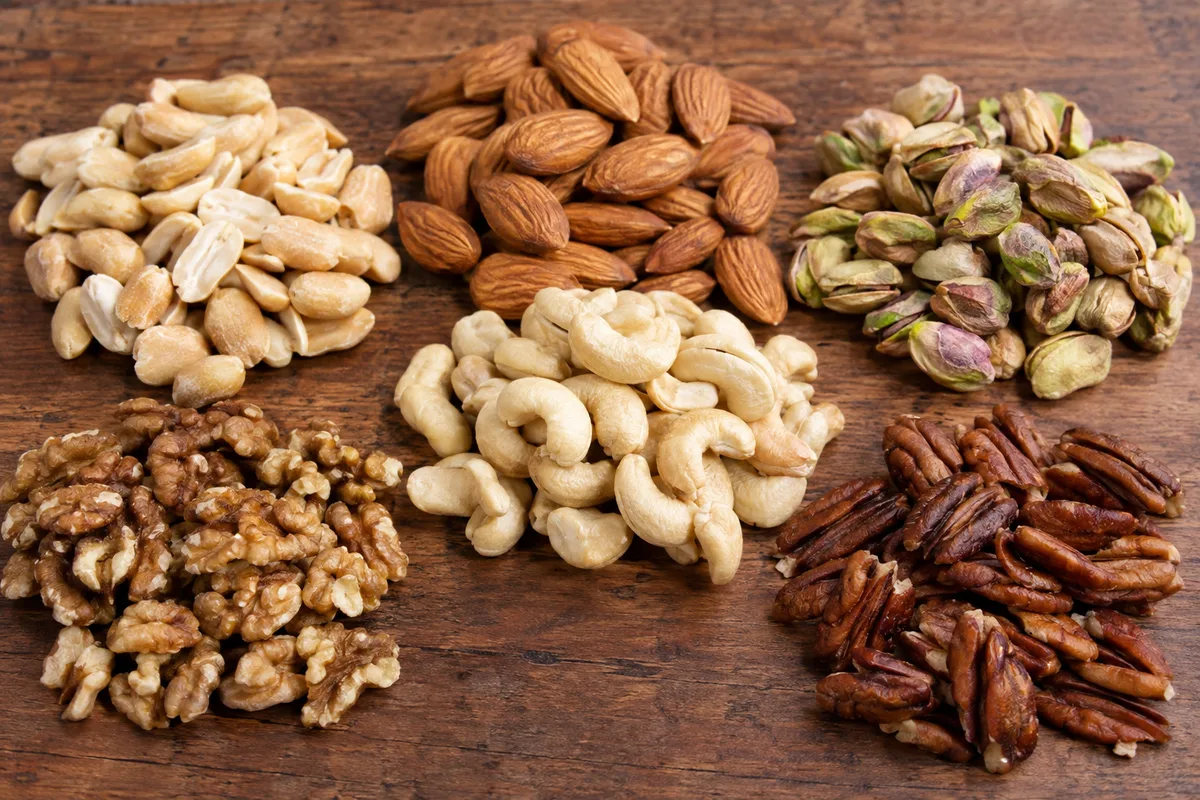
Among tree nuts, almonds generally contain the most protein, with pistachios close behind. Cashews also contribute a useful amount, while walnuts, hazelnuts and pecans usually contain less protein for the same weight. Exact values can vary slightly between varieties and nutrition databases.
- Highest among foods commonly called nuts: peanuts
- Highest among tree nuts: almonds
- Another relatively high-protein tree nut: pistachios
- Lower-protein choices by weight include walnuts and pecans
Compare nuts by weight first
The clearest comparison uses the same weight of each nut. Looking at protein per 100 grams shows how protein-dense each option is without portion size affecting the result. You do not need to eat that amount; it is simply a standard basis for comparison.
A handful is less precise because nut sizes and hand sizes differ. A spoonful of chopped nuts can also pack differently from whole nuts. If you already track your food, weigh the portion you actually eat and use the matching label or database entry.
- Choose entries for the same weight
- Match raw, roasted or flavoured versions correctly
- Check whether shells are excluded from the listed weight
- Log the edible portion rather than estimating a handful
Preparation can change the numbers
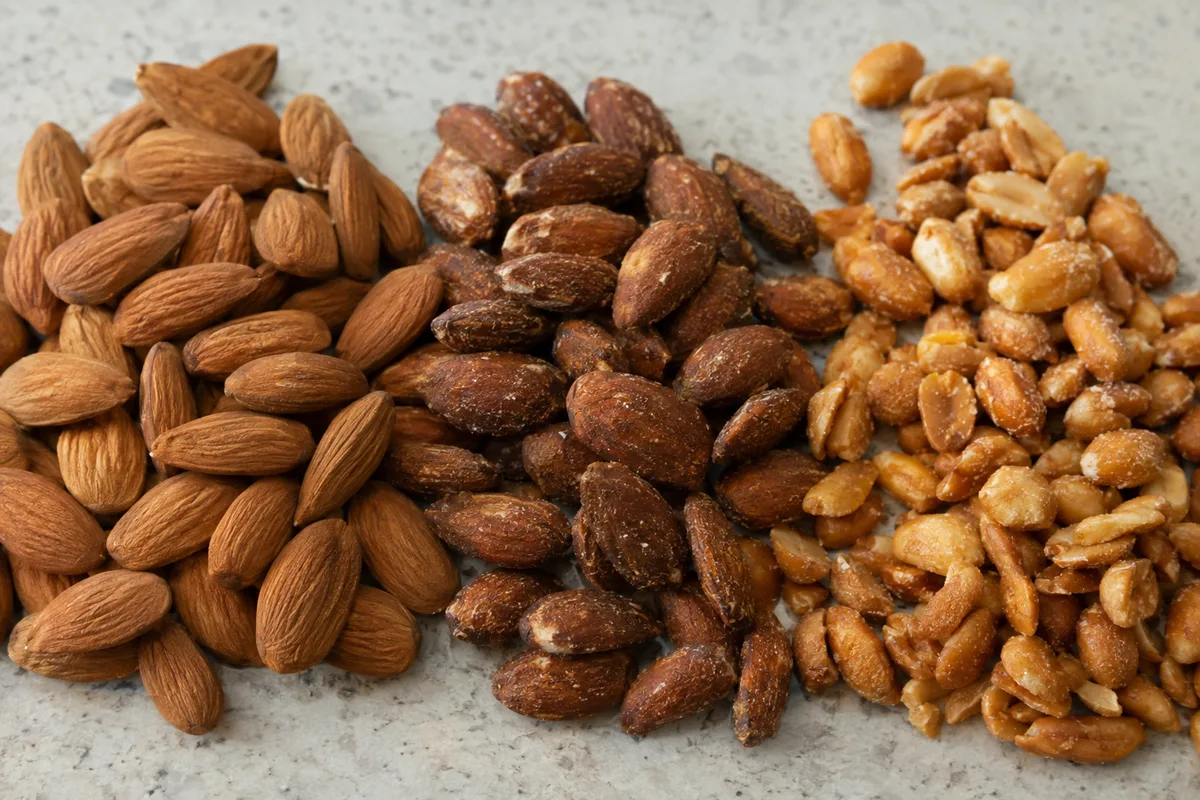
Dry roasting removes some moisture, so the nutrients may appear slightly more concentrated by weight. Oil-roasted nuts can contain added fat, while coated or flavoured products may include sugar, starch or other ingredients. Those additions can reduce the proportion of protein in a given serving.
Nut butter follows the same general ranking, but the ingredient list matters. A product made only from peanuts or almonds is easier to compare with the whole nut than a spread containing extra oils or sweeteners. Use the nutrition label for the exact food you ate rather than replacing it with a generic whole-nut entry.
- Raw nuts
- Dry-roasted nuts
- Oil-roasted nuts
- Flavoured or coated nuts
- Nut butter with or without added ingredients
Protein is only part of the choice
Nuts contain fat as well as protein, so they can add a substantial amount of energy in a compact portion. Fat provides about 9 kcal per gram, while protein and carbohydrate each provide about 4 kcal per gram. This is why two nuts with similar protein can still differ in total energy.
The best option therefore depends on what you want from the meal or snack. Peanuts or almonds may suit a protein-focused choice, while another nut may be your favourite for flavour, texture or variety. Your overall food log gives more context than the ranking alone.
- Protein in the portion
- Total energy
- Fat and carbohydrate
- Fibre
- Salt or added sugar
How to add them to meals
Nuts can raise the protein content of a meal, but the amount depends on the portion. Adding them to a dish is often more satisfying than eating them without considering the rest of the meal. They also bring crunch, richness and flavour.
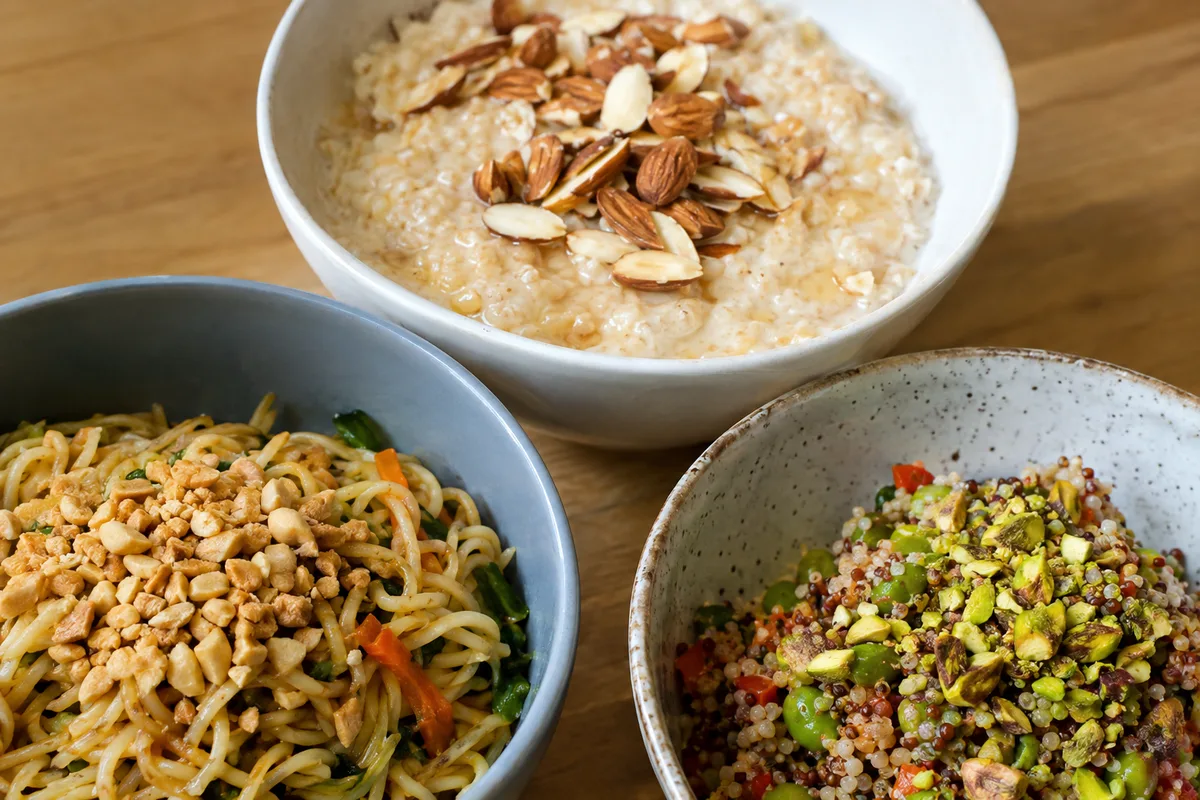
Choose the nut according to the food around it. Peanuts work well in savoury noodle dishes, almonds suit porridge and yoghurt, and pistachios can add texture to salads or grain bowls. Track the quantity used, including any extra handfuls eaten while preparing the meal.
- Stir chopped peanuts into noodles or a vegetable dish
- Add almonds to porridge or yoghurt
- Scatter pistachios over a salad or grain bowl
- Spread peanut or almond butter on toast
- Mix chopped nuts into fruit and yoghurt
A practical answer for your tracker
If your tracker groups peanuts with nuts, peanuts are usually the highest-protein answer. If you want a true tree nut, choose almonds, with pistachios as another close option. The precise gap depends on the food entry, variety and preparation.
Check protein per 100 grams when comparing products, then return to the portion you plan to eat. Make sure the database description matches the food in front of you. That gives you a more useful answer than relying on a general ranking alone.
- Decide whether peanuts count for your comparison
- Compare like with like per 100 grams
- Select the correct raw, roasted or butter entry
- Enter the portion you actually ate