
How to Reach 100g of Protein a Day
Reaching 100g of protein can feel simpler when you spread it across the day. Your food diary and nutrition labels can help you build a routine around foods you already enjoy.
Break the target into smaller parts
Instead of trying to find one very high-protein meal, divide 100g across your usual meals and snacks. For example, four eating occasions containing around 25g each would add up to the daily target, but the best split depends on your routine.
Look at your current food log before changing anything. Note which meals already contain a useful amount of protein, then focus on the parts of the day where the total tends to be lower.
Build each meal around a protein source
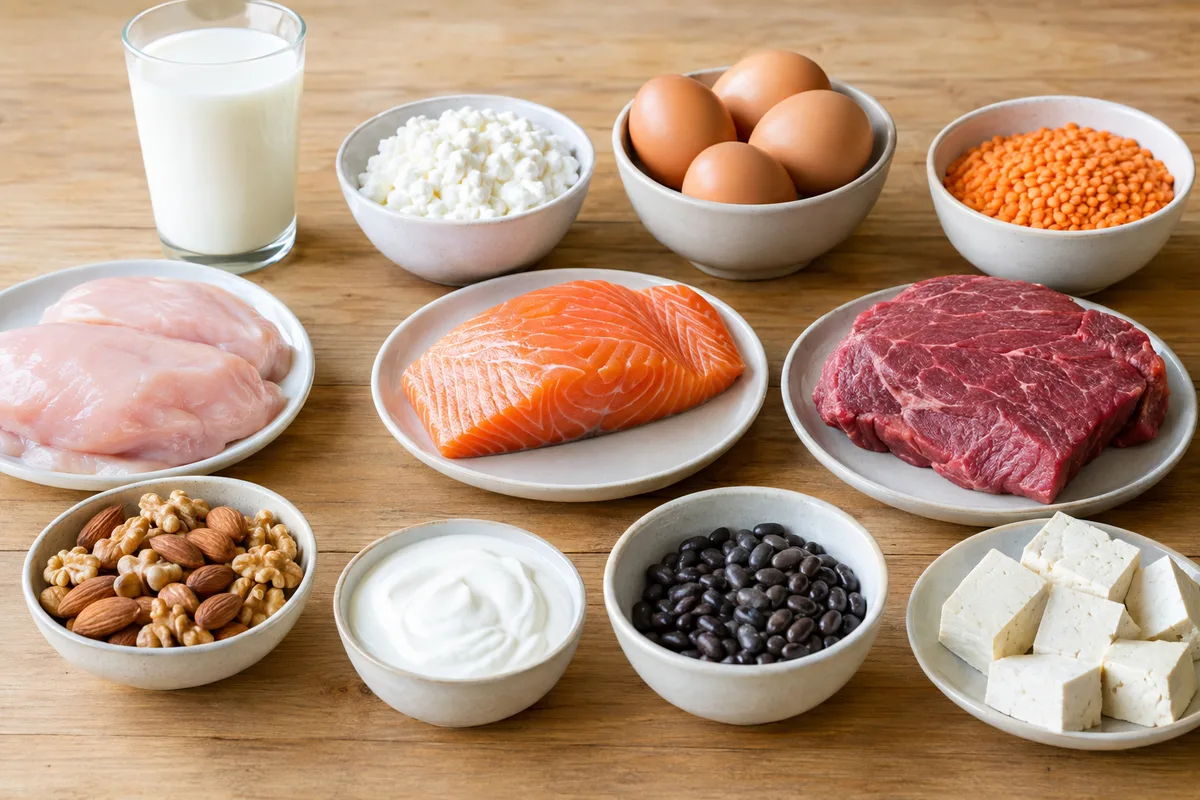
Choose a main protein source for each meal, such as eggs, yoghurt, cottage cheese, fish, poultry, lean meat, tofu, tempeh, beans or lentils. Portion size and protein content vary, so use the packet label or your tracking app rather than relying on a fixed estimate.
Mixed dishes can contribute too, but their protein may be harder to judge by eye. Log each main ingredient separately when cooking at home, especially if a recipe includes several smaller protein sources.
Use snacks to close the gap
Check your running total during the day rather than waiting until the evening. If you are below your planned amount, a protein-containing snack can narrow the gap without requiring a much larger final meal.
Suitable options might include yoghurt, cottage cheese, eggs, roasted pulses or a smaller portion of leftovers. The amount needed depends on what you have already eaten, so let your food log guide the choice and portion.
Make tracking more accurate and practical
Compare the serving size on the label with the amount you actually eat. Weighing or measuring unfamiliar portions for a while can help, while saved meals and recipes can make repeated entries quicker.
Treat 100g as a daily planning target rather than a requirement to hit perfectly at every meal. Review several days of logs, adjust portions or food choices gradually, and choose a pattern that also leaves room for fruit, vegetables, fibre-rich carbohydrates and fats.