
How to Do a Farmer Carry with Strong, Steady Technique
The farmer carry involves walking while holding a weight at each side, with your body tall and controlled. This guide explains the technique, what the movement trains and how to adapt it to your ability and surroundings.
What a farmer carry involves
A farmer carry is a loaded walk performed while holding a weight in each hand. The weights stay beside your thighs as you walk for a chosen distance or length of time. Dumbbells and kettlebells are common choices, but two evenly loaded bags can also work.
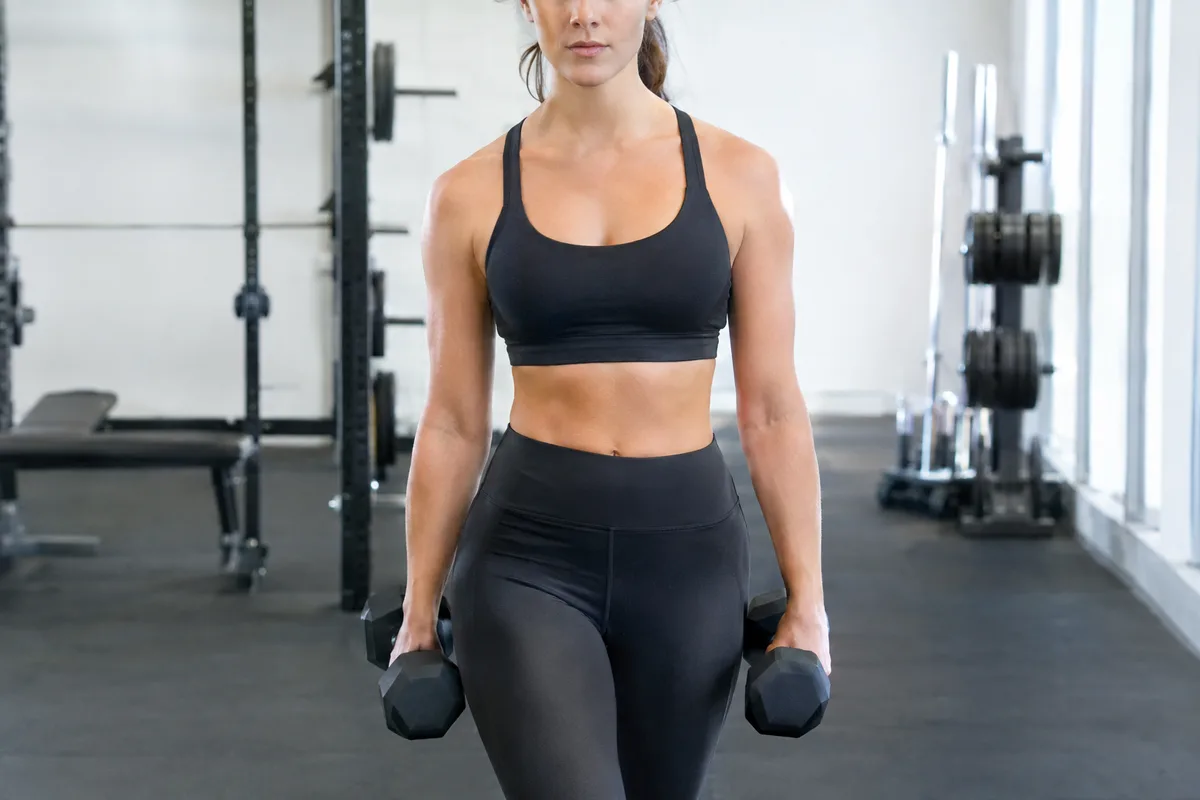
The exercise challenges your grip while asking your trunk, shoulders, hips and legs to keep you steady. It is not simply a test of how much weight you can hold. Posture, breathing and smooth steps matter throughout the movement.
Farmer carries can fit into a strength session, a general movement programme or a short exercise circuit. The suitable load and distance depend on your experience, technique and available space. Start with a combination that lets you remain controlled from the lift to the final set-down.
- Grip and forearm strength
- Trunk control while moving
- Shoulder and upper-back stability
- Steady walking under load
Set up before you start walking
Place two matching weights on the floor beside your feet, leaving enough room to stand naturally between them. Choose a clear, level route with space to turn or stop safely. Keep the first attempt light enough that you can practise the entire movement without rushing.
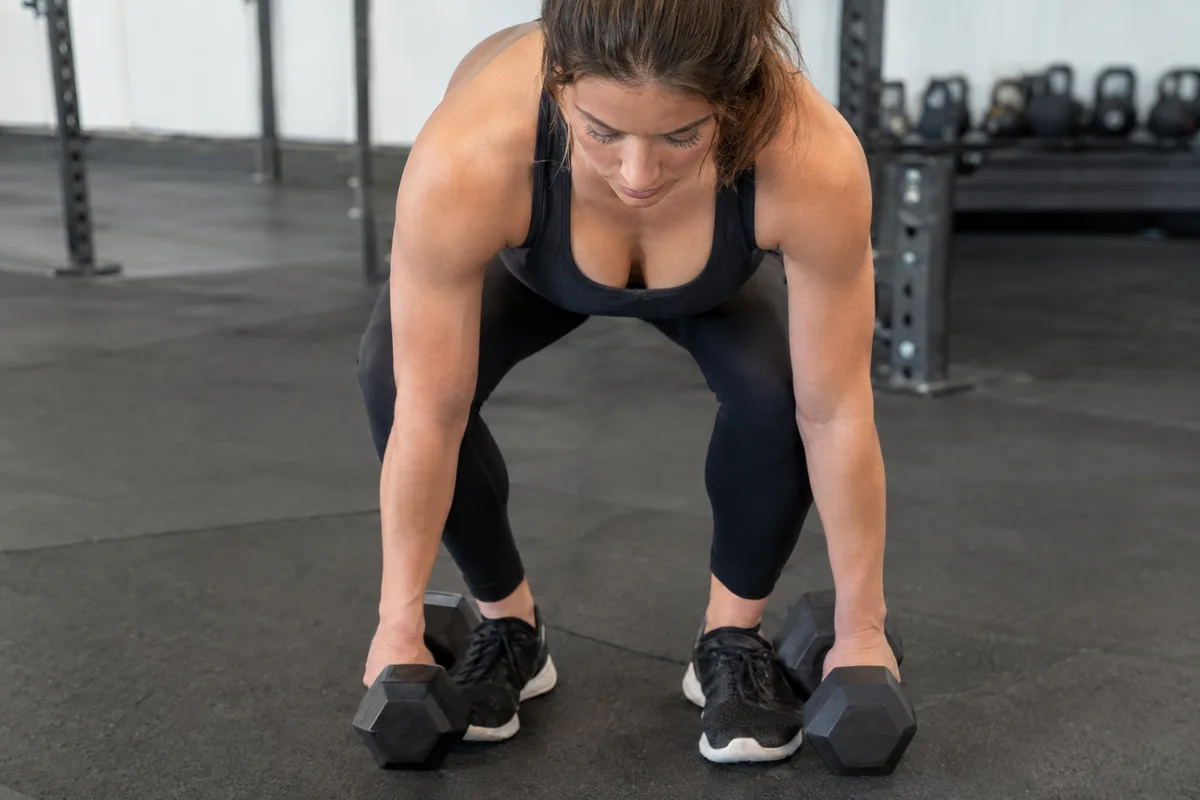
Stand with your feet around hip-width apart and the weights close to your sides. Bend at your hips and knees, then take a secure grip with your arms straight. Brace your middle, press through your feet and stand up without twisting or jerking.
Once upright, let the weights hang beside your thighs rather than drifting forwards. Keep your shoulders level, your chest natural and your gaze ahead. Avoid forcing an exaggerated upright pose or pulling your shoulders hard towards your ears.
- Clear obstacles from the walking route
- Use evenly matched loads for the standard version
- Keep each weight close before lifting
- Stand fully balanced before taking the first step
How to perform each carry
Begin walking with short, natural steps. Keep your ribs stacked over your hips and resist leaning backwards, forwards or to either side. The weights should remain quiet beside you rather than swinging with every stride.
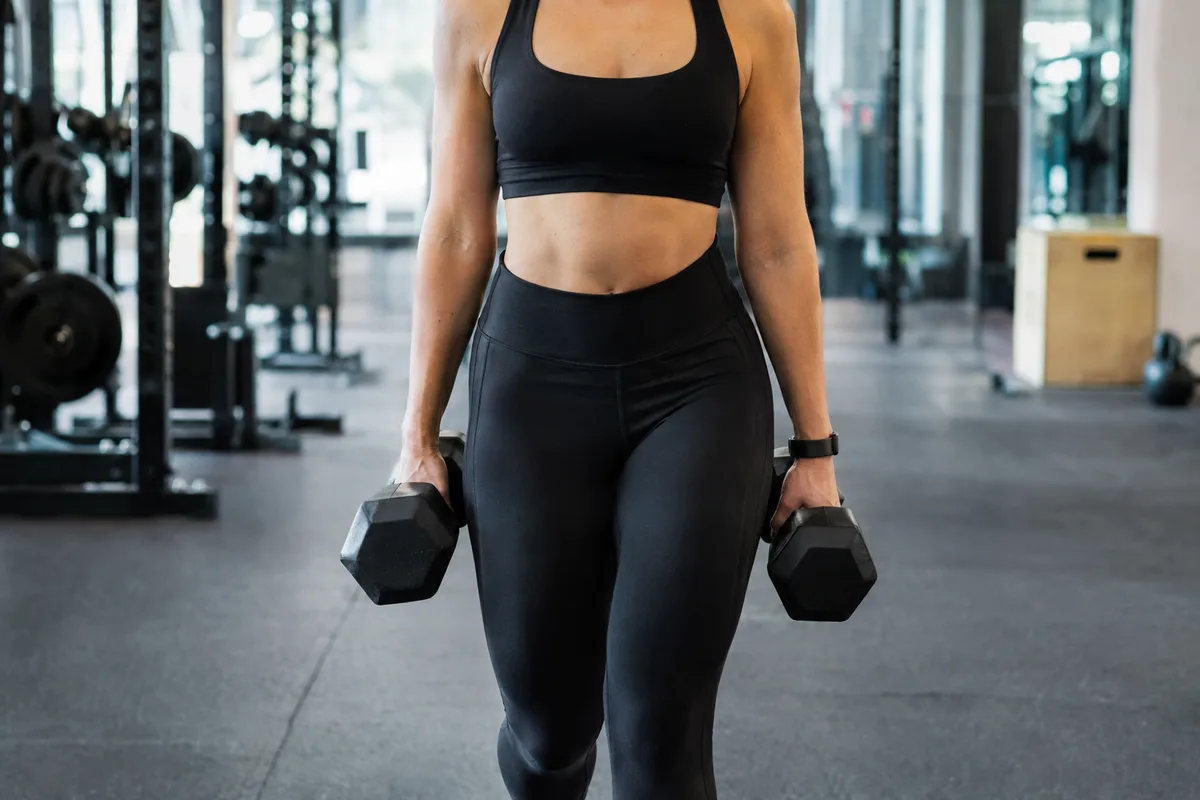
Breathe steadily instead of holding your breath for the whole carry. Maintain a firm grip, but do not let that tension pull your shoulders upwards. Walk at a controlled pace that allows you to stop without stumbling.
At the end, come to a complete stop before lowering the weights. Push your hips back, bend your knees and place both weights down with control. Rest long enough to begin the next carry with the same stable technique.
- Stand tall without arching your lower back
- Look ahead rather than down at the weights
- Take even, controlled steps
- Stop before your grip or posture breaks down
Technique errors to watch for
Using too much weight often turns the carry into a hurried shuffle. You may also see the body leaning back, the shoulders rising or the weights knocking against the legs. Reduce the load or shorten the route if you cannot keep your normal walking pattern.
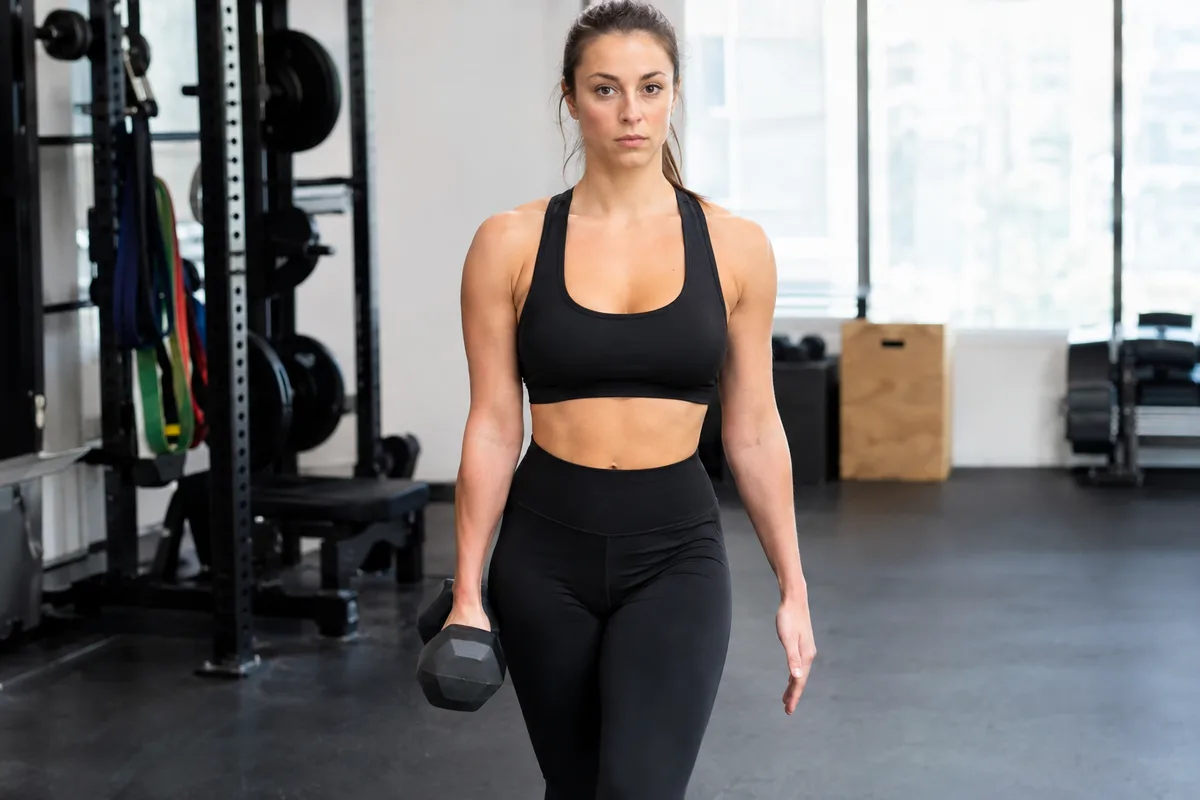
Long strides can make balance harder and increase unwanted swinging. Very tiny, rapid steps can also signal that the load is controlling the movement. Aim for compact but natural steps, with each foot placed deliberately.
Grip fatigue is expected, but it should not force you to drop the weights. End the set while you can still stop and lower them safely. If you feel sharp or sudden pain, stop the movement rather than trying to finish the route.
- Rushing to cover the distance
- Shrugging the shoulders towards the ears
- Leaning back to counter the load
- Allowing the weights to swing
- Dropping the weights at the finish
Farmer carry variations
Changing how you hold the load alters the balance challenge. A suitcase carry uses one weight at one side, so your trunk must resist bending towards it. Keep your shoulders level and repeat the same distance or time on the other side.
A front-rack carry places the weights near the fronts of your shoulders with your elbows angled slightly forwards. An overhead carry holds the load above you and requires more shoulder control, so it suits those who can reach that position comfortably. Both versions need lighter loads than many lifters use for a standard farmer carry.
You can also adjust the walking pattern without changing the hold. A marching carry uses deliberate knee lifts while you stay mostly in one place, making it useful when space is limited. Whichever variation you choose, control should determine the load rather than the desire to make it look difficult.
- Suitcase carry with one weight
- Front-rack carry at the shoulders
- Overhead carry with straight, controlled arms
- Marching carry in a small space
Adding carries to your programme
Carries can come after your main strength exercises or form part of a simple circuit. Measure a set by distance, time or a fixed number of lengths, but use one method consistently so that your notes remain useful. The right amount depends on your grip, current training and the weight selected.
Progress only when each set looks and feels controlled. You might add a little distance, extend the working time or increase the load, but change one factor at a time. This makes it easier to see what affected your technique and recovery.
Record the variation, load, distance or time, and any notes about posture or grip. Just as food tracking gives context to what you eat, training notes show how the same exercise changes over time. A heavier carry is not automatically better if your steps, breathing or set-down become less controlled.
- Choose one carry variation
- Set a distance, time or number of lengths
- Keep the route and technique consistent
- Record the load and how the set felt
- Progress one factor at a time