
Rosemary health benefits: what this herb can add to your diet
Rosemary can make meals more aromatic without adding much energy in the usual culinary amounts. Its benefits come mainly from flavour, small amounts of nutrients and naturally occurring plant compounds.
What rosemary brings to a meal
Rosemary is an aromatic herb used fresh or dried. It contains fibre, micronutrients and plant compounds, but a normal sprinkle is small, so it is unlikely to change your daily nutrient totals by much.
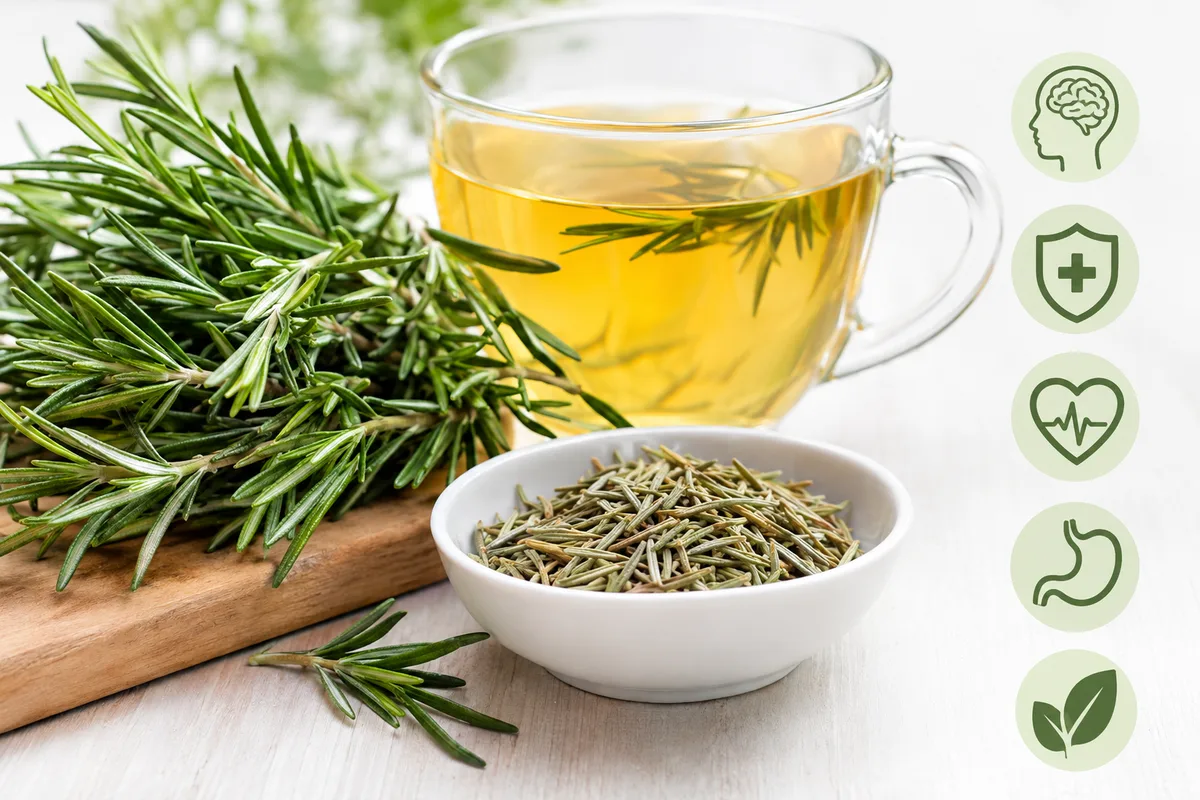
Its clearest practical benefit is flavour. The strong, savoury aroma can make vegetables, grains, beans and home-cooked dishes more satisfying without relying solely on salt, sugar or rich sauces.
Plant compounds and antioxidants
Rosemary contains polyphenols and other compounds that can act as antioxidants. Antioxidants help protect cells from everyday damage, but rosemary should be viewed as one small part of a varied eating pattern rather than a shortcut to better health.
Research does not mean that adding a pinch of rosemary will produce a noticeable result on its own. The form, portion and overall diet matter, and findings from concentrated extracts do not directly describe the effects of ordinary culinary use.
How to track rosemary accurately
If you already log your food, fresh or dried rosemary may appear as separate entries. Choose the form you actually used and record the measured amount when practical, as dried rosemary is more concentrated by volume than fresh sprigs.
For a small garnish, the energy contribution will usually be minor, although the exact number depends on the amount and database entry. If rosemary is mixed into oil, butter or a dressing, track those ingredients separately because they contribute more energy than the herb itself.
Getting useful flavour from it
Rosemary works well in slow-cooked dishes and with roasted vegetables, pulses and grains. Crushing or chopping the leaves releases more aroma, so a modest amount can spread through the whole dish.
Culinary rosemary is not the same as a concentrated oil, capsule or extract. More concentrated forms are not automatically more beneficial, and their contents cannot be logged or judged in the same way as a herb used in cooking.