
A Simple Guide to When Fruit Is in Season
Fruit seasons can help you choose produce at its best for flavour and variety. Exact timings change with the weather, growing region, storage and imports.
What being in season means
A fruit is in season when it is naturally ready to harvest in the place where it was grown. In-season fruit may have travelled a shorter distance and often has a fresher flavour, although this varies by grower and shop.
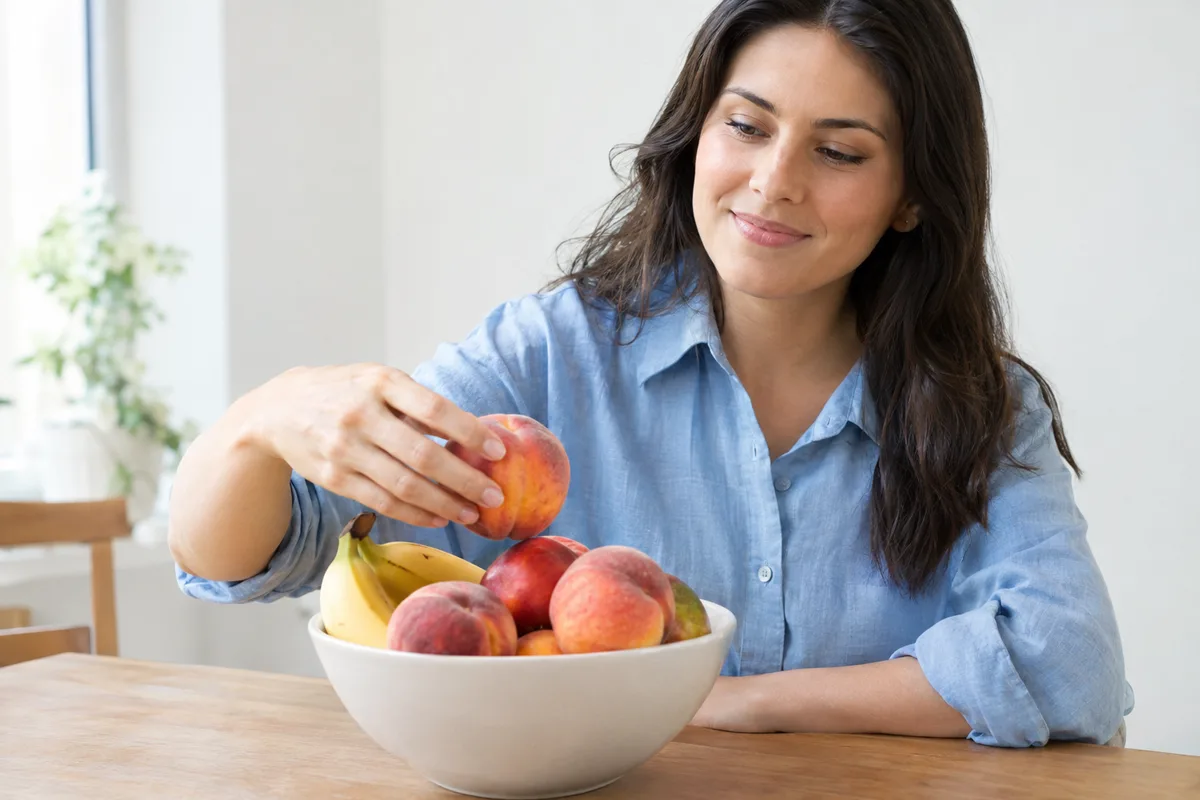
Supermarkets also sell fruit outside its local season through imports, cold storage and protected growing. This means availability on a shelf does not always show what is currently being harvested nearby.
Spring and summer fruit
In the UK, spring brings the start of the rhubarb season, followed by early strawberries towards the end of the season. Rhubarb is used like a fruit in cooking, although it is botanically a vegetable.
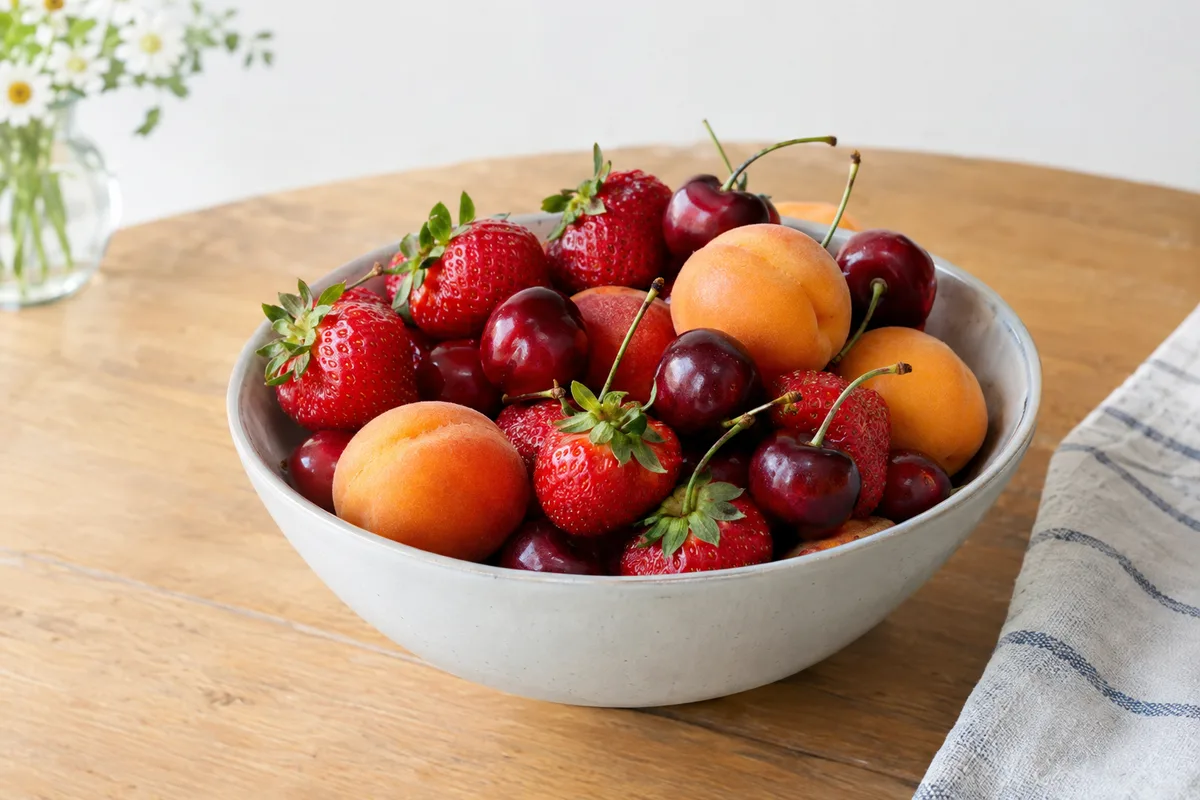
Summer usually offers the widest local choice, including strawberries, raspberries, blackberries, blueberries, cherries, currants, gooseberries and plums. Apricots, peaches, nectarines and melons may also be plentiful, but much of this fruit is grown in warmer regions.
Autumn and winter fruit
Autumn is the main UK season for apples, pears, plums, damsons, blackberries and some later raspberries. Quince also appears in autumn, while stored apples and pears can remain available well beyond harvest.
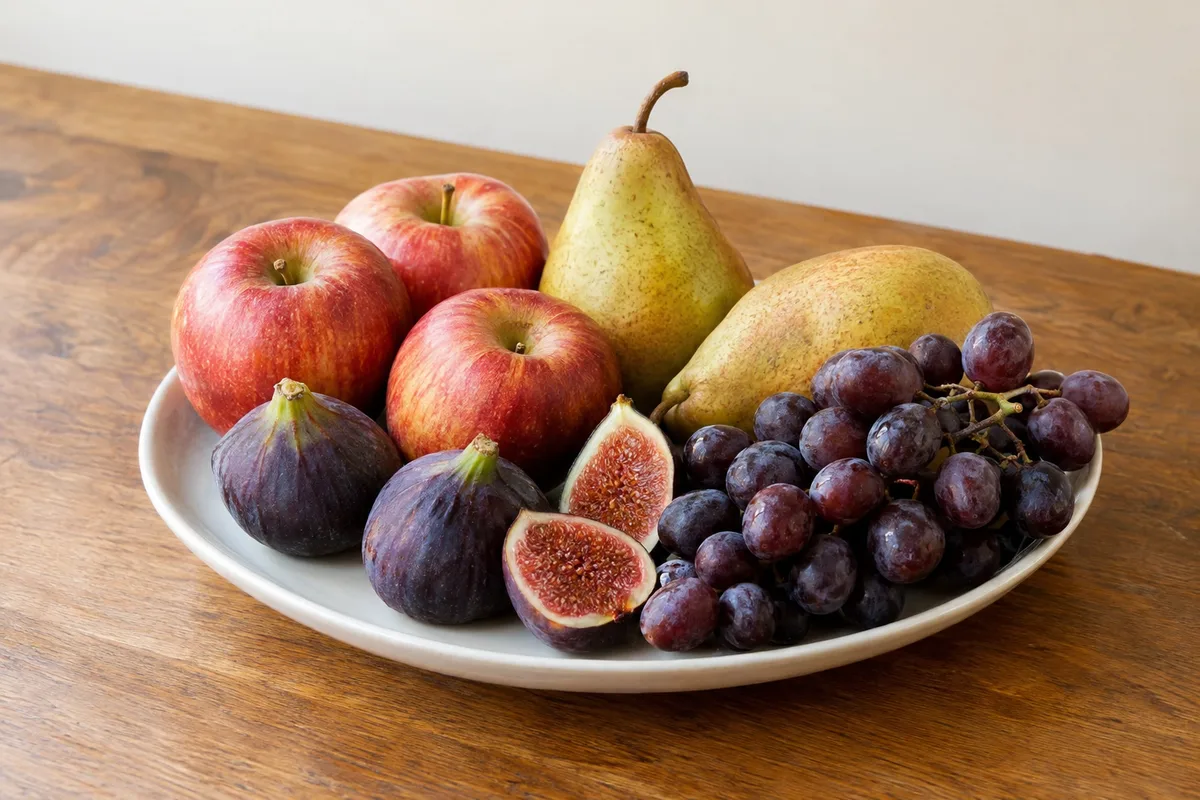
Local winter choices are narrower, but stored apples and pears may still be easy to find. Citrus fruit such as oranges, mandarins, lemons and grapefruit comes into season in warmer countries during winter, so seasonality depends on where the fruit was grown.
Using seasonality in your food log
When planning your week, check labels or market signs for the country of origin and choose one or two fruits that are currently abundant. Rotating your choices through the year can add different flavours, textures and sources of fibre without changing how you track them.

Log the amount and form you actually eat, as you normally would, because fresh, frozen, dried and cooked fruit can differ in energy density. Portion size depends on the fruit, your appetite and your personal aims, so seasonality is a guide for choosing rather than a rule for how much to eat.