
Mustard: Small Serving, Useful Flavour
Mustard is often used in small amounts, so its main practical benefit is making simple meals more enjoyable without adding much energy. The type, serving size and ingredient list still matter when you track your food.
What mustard brings to a meal
Prepared mustard is usually made from mustard seeds, liquid and seasonings. Its sharp taste means a little can bring depth to sandwiches, dressings, marinades and cooked dishes.
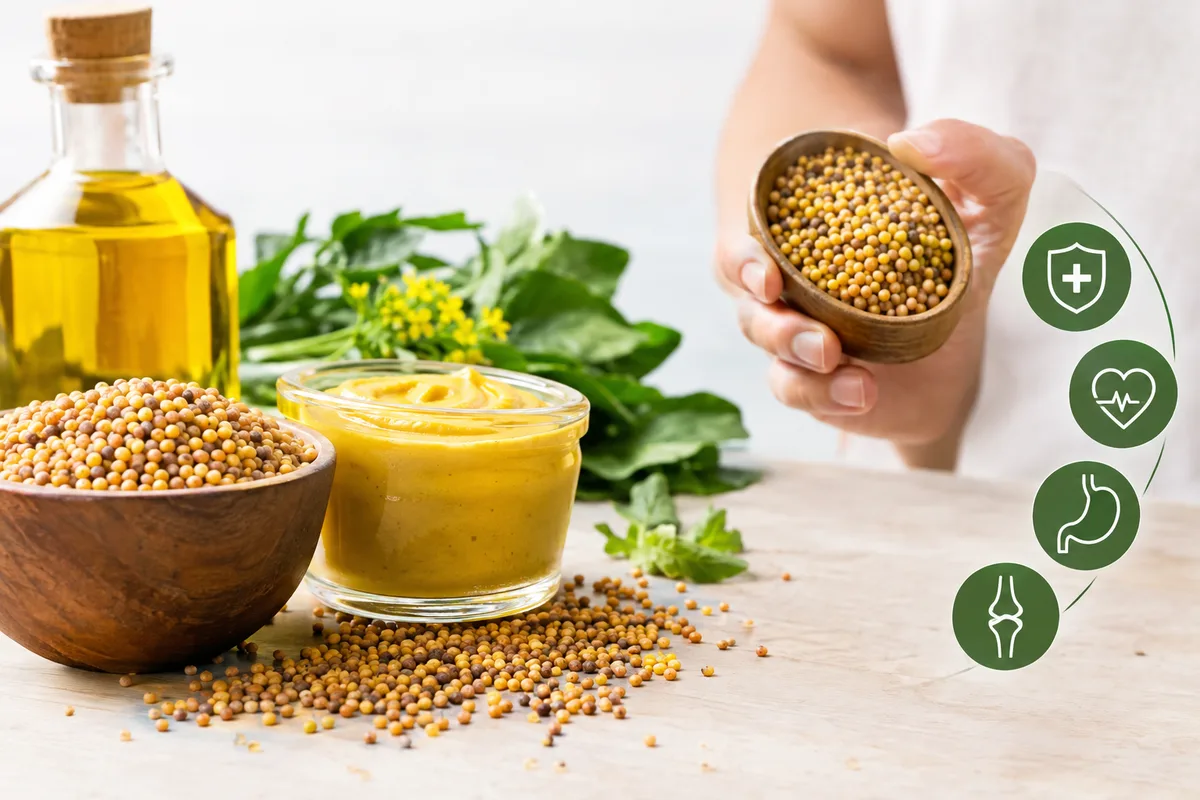
Because the usual portion is small, mustard is not a major source of nutrients for most diets. Its more useful role is as a flavouring that may help vegetables, lean proteins and other everyday foods feel less repetitive.
Energy and ingredients vary
Plain varieties often make a modest contribution to your daily energy intake, while sweetened or creamy versions may contain more. Check the label rather than assuming every mustard is nutritionally alike.
Look at the serving size listed and compare it with the amount you actually use. If you mix mustard with oil, sugar or another sauce, track those ingredients separately because they may contribute more energy than the mustard itself.
Salt deserves attention
Prepared mustard can contain salt, and the amount differs between brands and styles. A small serving may fit easily into your day, but several spoonfuls or multiple salty condiments can add up.
When comparing labels, use the same amount so the figures are meaningful. You can also combine mustard with herbs, spices, vinegar or citrus juice to spread its flavour through a dish without relying on a larger portion.
How to log mustard accurately
For casual use, choose the closest matching entry in your food tracker and record the portion shown on the label. Weighing the container before and after use can help when mustard is added directly to a recipe or plate.
Save your regular mustard as a favourite entry if its label differs from a generic listing. The best portion depends on your taste, the rest of the meal and what you are tracking, so consistency is more useful than chasing a supposedly perfect amount.