
Bananas and Dehydrated Bananas: What Changes When the Water Goes
Fresh and dehydrated bananas begin with the same fruit, but removing water changes the portion, texture and nutrient concentration. Here is how those differences affect food tracking and everyday choices.
The main difference is water
A fresh banana contains plenty of water, which gives it a soft texture and adds volume without contributing calories. Dehydration removes much of that water, leaving a smaller, lighter and chewier piece of fruit. The nutrients and natural sugars are therefore packed into less food.
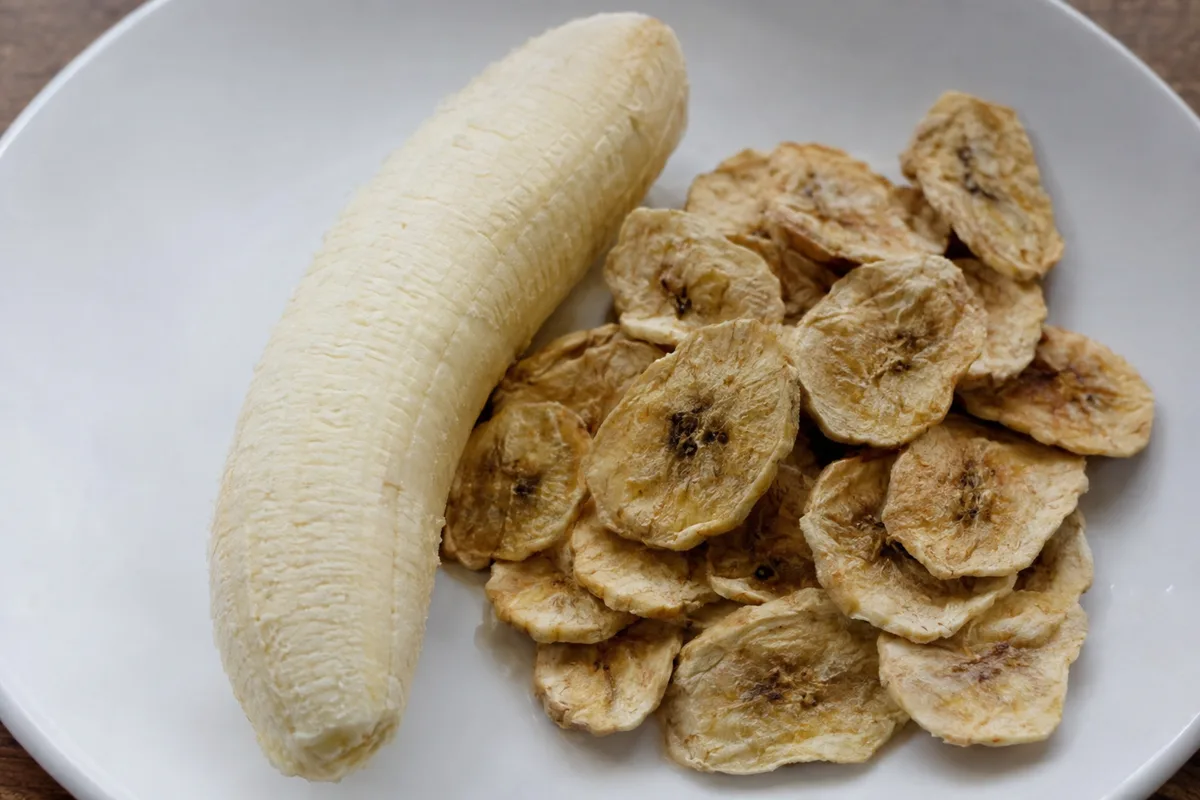
This means equal weights of fresh and dehydrated banana are not nutritionally equal. The dehydrated portion usually contains more carbohydrate and calories per gram because it represents a larger amount of the original fruit. Comparing a whole fresh banana with a small handful of dried pieces can also be misleading unless you check the stated serving size.
- Fresh banana: more water and greater volume
- Dehydrated banana: less water and more concentrated nutrients
- Equal weight: the dehydrated fruit usually provides more calories and carbohydrate
Calories and carbohydrates become concentrated
Most of a banana’s calories come from carbohydrate, including starch and naturally occurring sugars. Removing water does not create extra sugar, but it increases the amount of sugar and total carbohydrate in each gram. A compact portion of dehydrated banana can therefore contribute more to a food diary than its size suggests.
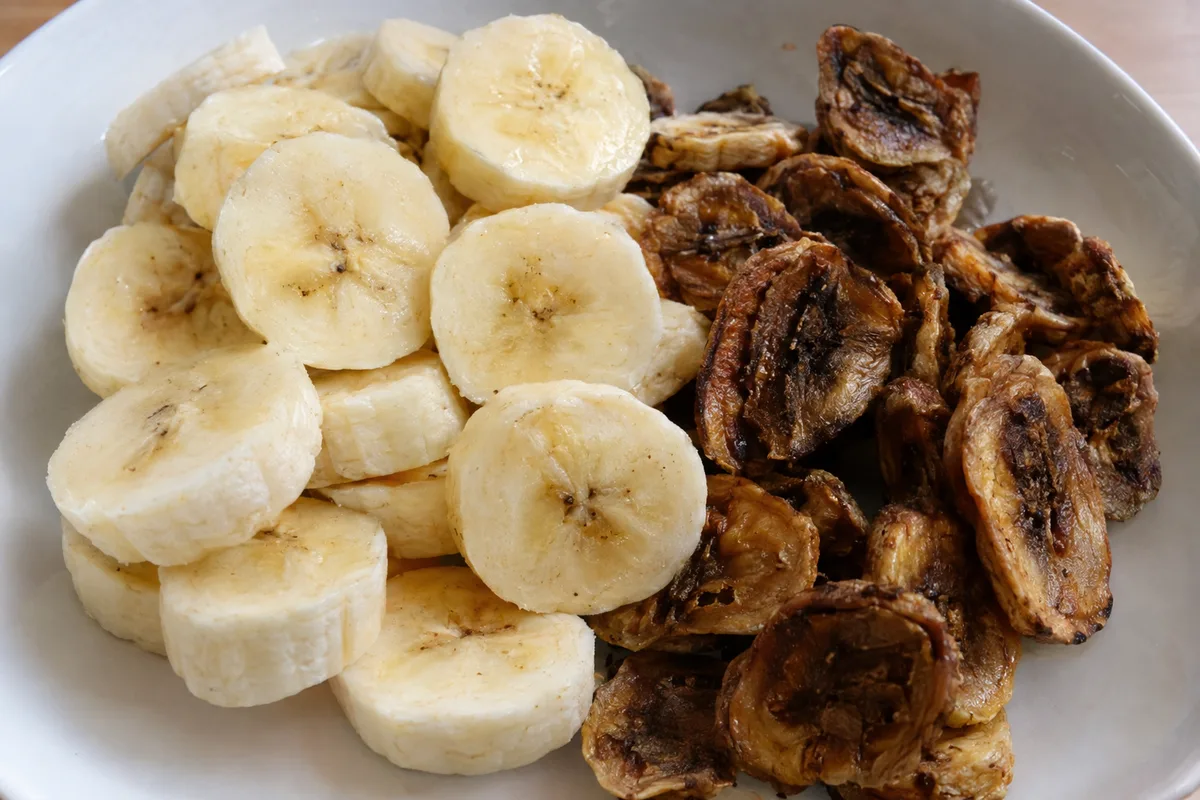
Ripeness matters as well as drying. As a banana ripens, some of its starch changes into sugars, which makes it taste sweeter. The exact nutrition of either form depends on the fruit, its ripeness, the drying method and any additional ingredients.
- Compare entries using the same unit, such as per serving or per gram
- Do not use a fresh banana entry for dehydrated banana
- Check whether the listed weight refers to the edible portion
- Record added sugar or fat when the product contains them
Fibre, fullness and eating pace
Both forms can provide fibre because drying does not simply remove the fruit’s solid material. However, a usual portion of fresh banana may feel more substantial because water adds bulk. Its soft flesh also takes up more room than a similar-looking amount of compact dried pieces.
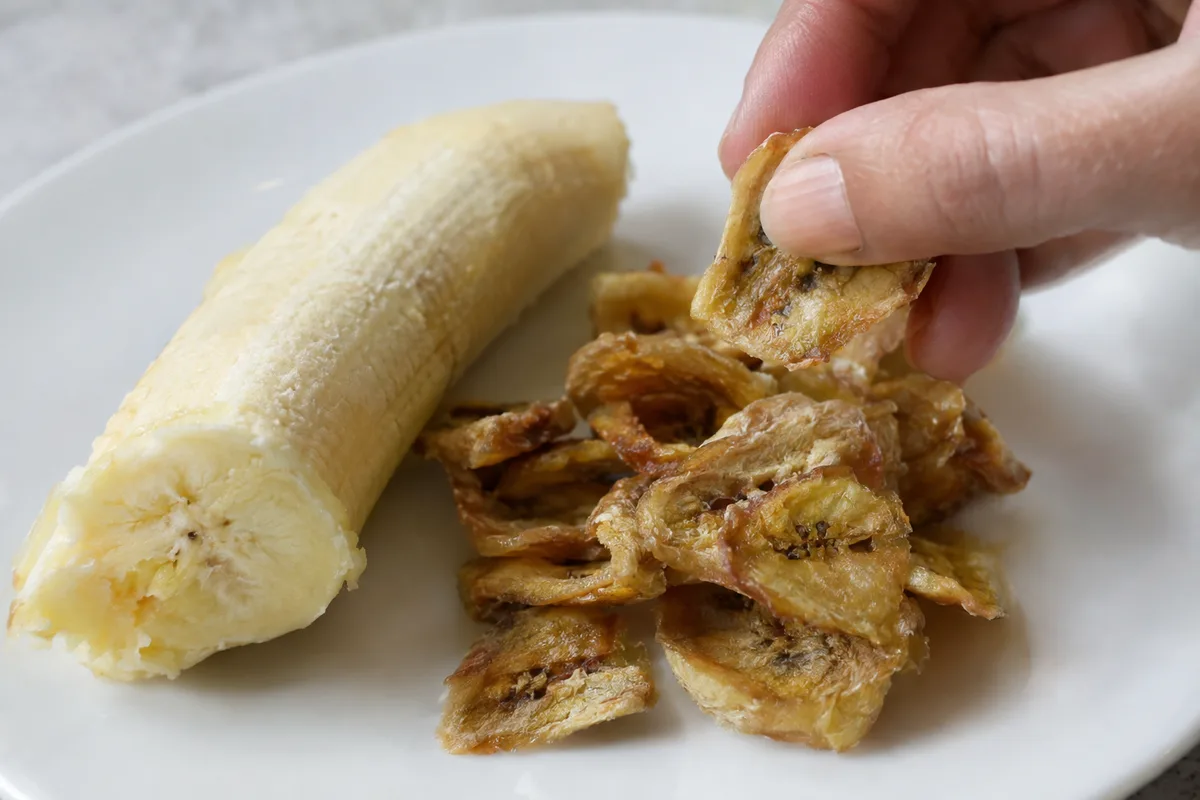
Dehydrated banana is easy to eat quickly, especially when the pieces are small. It can be useful when you want portable food, but it may be less obvious how much whole fruit the portion represents. Measuring the amount you actually eat makes the diary entry more dependable.
- Fresh banana offers more volume from water
- Dehydrated pieces are compact and easy to nibble
- Fibre values can vary with serving size and processing
Micronutrients can change during processing
Bananas contain a mixture of vitamins and minerals, and dehydration affects them in different ways. Minerals generally remain in the dried fruit and become more concentrated by weight when water is removed. Some vitamins are more sensitive to heat, air and storage, so their levels may fall during processing.
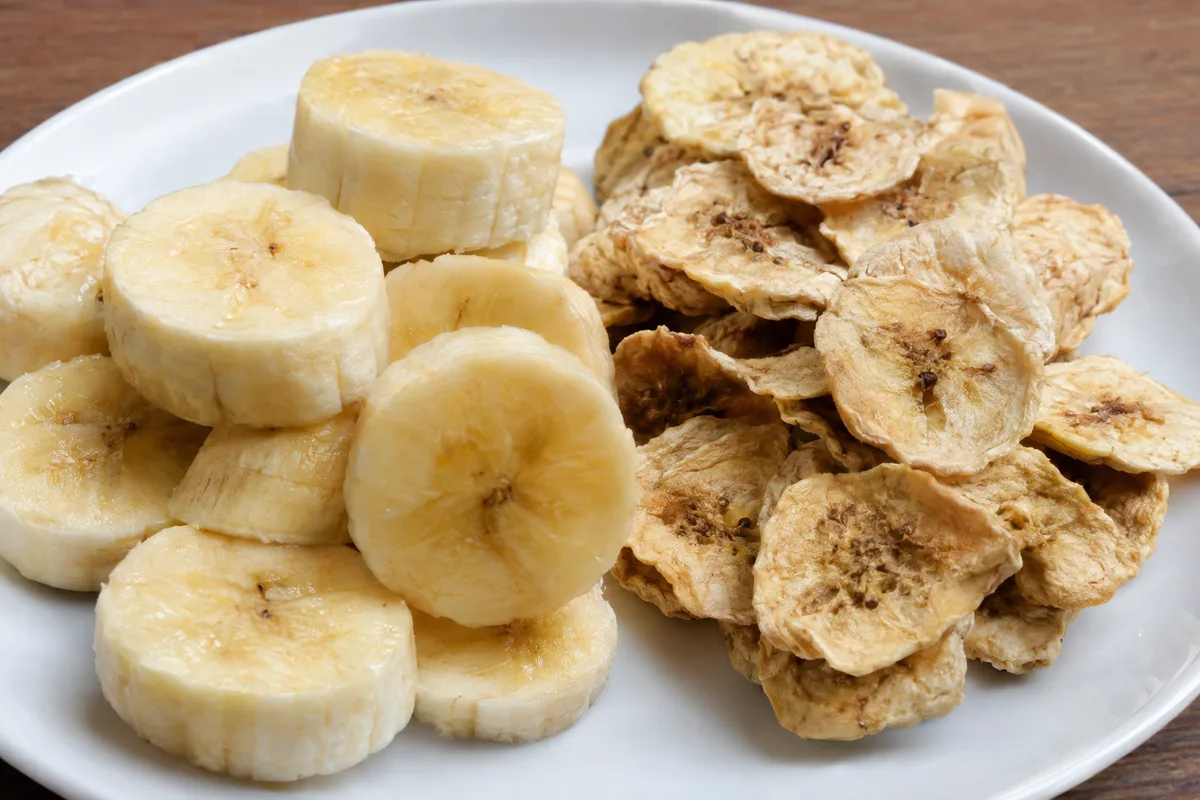
The final nutrient profile depends on the drying temperature, preparation and length of storage. A plain dehydrated banana may retain much of the original fruit’s solid nutrients, but it should not be assumed to match a fresh banana gram for gram. If detailed micronutrient tracking matters to you, use information for the specific form you ate.
- Minerals tend to remain after water is removed
- Some vitamins may be reduced by heat and storage
- Processing methods can produce different nutrient values
Dried slices and banana chips are not always the same
The word dried can cover several different foods. Plain dehydrated banana is usually made by removing moisture, while some crisp banana chips are cooked with added fat. Sweeteners, flavourings or coatings may also be included.
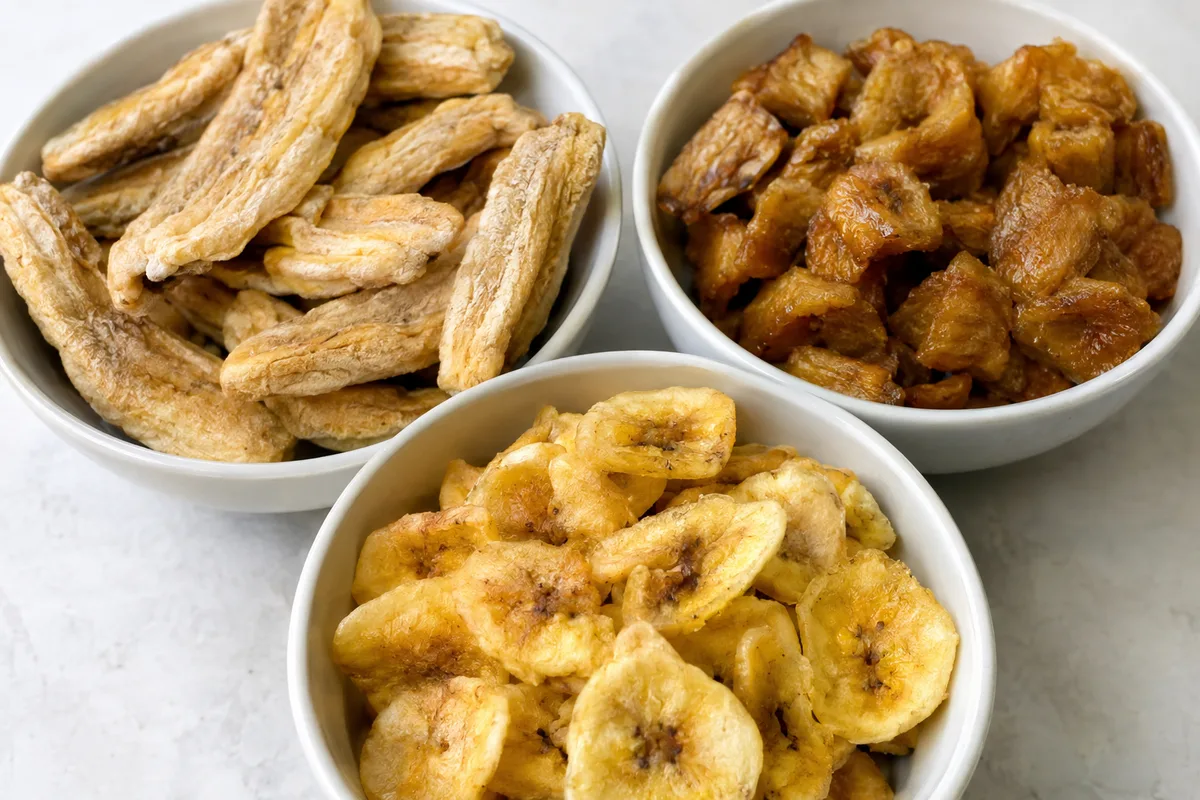
These additions change the calories and balance of carbohydrate and fat. Appearance alone may not reveal how the banana was prepared, so the ingredient list and nutrition information are the best guides. When logging, choose an entry that matches the preparation rather than selecting the first dried banana result.
- Plain dehydrated banana: banana with moisture removed
- Sweetened dried banana: includes an added sweetener
- Crisp banana chips: may contain added fat
- Flavoured or coated pieces: may include further ingredients
How to choose and log the right form
Fresh banana suits occasions when you want a larger, softer portion with more water. Dehydrated banana can be convenient when storage space, mess or portability matters. Neither form is automatically better, because the useful choice depends on your meal, appetite and overall intake.
For accurate tracking, start with the exact form and portion rather than trying to convert one into the other. Use the nutrition information supplied for packaged dehydrated fruit, or a database entry that clearly says the fruit is dried. For fresh fruit, choose an entry based on the edible amount or the relevant size description.
- Identify whether the banana was fresh, dehydrated, sweetened or cooked with fat
- Match your diary entry to that preparation
- Use the portion you actually ate
- Keep comparisons on the same weight or serving basis