
How to Use Oatmeal in a Bodybuilding Diet
Oatmeal can provide useful carbohydrate, fibre and an easy base for protein-rich meals. This guide explains how to track it, choose suitable toppings and adjust your bowl around your training goal.
What oatmeal brings to the diet
Oatmeal is made by cooking oats with water, milk or another liquid until soft. In Britain, the finished dish is usually called porridge, but the basic idea is the same. Oats mainly provide carbohydrate, along with fibre, some protein and a smaller amount of fat.
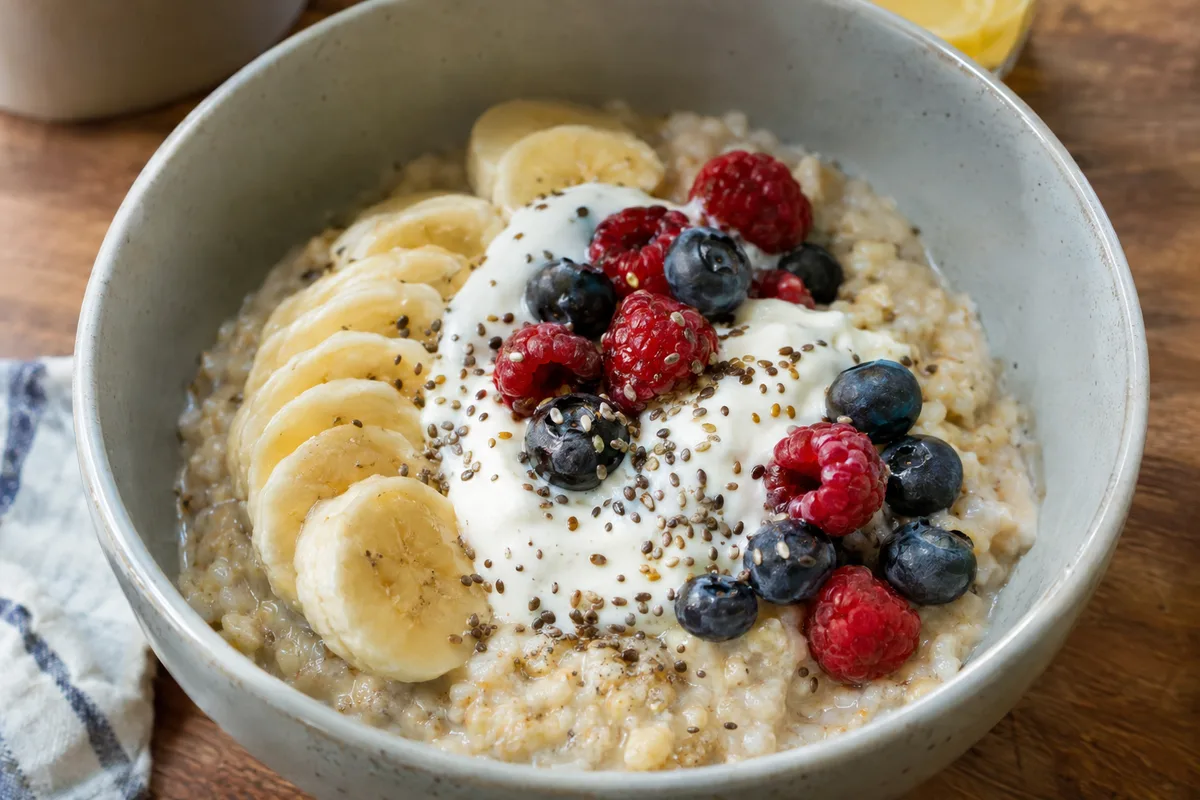
For bodybuilding, carbohydrate helps supply fuel for demanding training and restores fuel used by the muscles. The protein in oats contributes to your daily total, but a bowl of oats is not usually a complete muscle-building meal by itself. Adding a clear protein source makes it easier to fit the meal into a structured eating plan.
Oatmeal is useful because its portion and toppings can be changed without replacing the whole meal. A larger dry oat portion and energy-dense additions can support a higher intake, while a smaller portion with fruit and a lean protein source can suit a lower intake. The right amount depends on your body, training load, appetite and wider diet.
- Carbohydrate from oats for training fuel
- Fibre that adds texture and helps make the meal satisfying
- A flexible base for dairy, fruit, seeds or savoury toppings
- An easy ingredient to measure and record consistently
Track the oats and the finished bowl correctly
For consistent tracking, decide whether you will record oats by their dry weight or cooked weight. Dry weight is often simpler because cooking changes the amount of water in the bowl, not the original amount of oats. Cooked oatmeal can vary greatly in weight depending on how much liquid it absorbs.
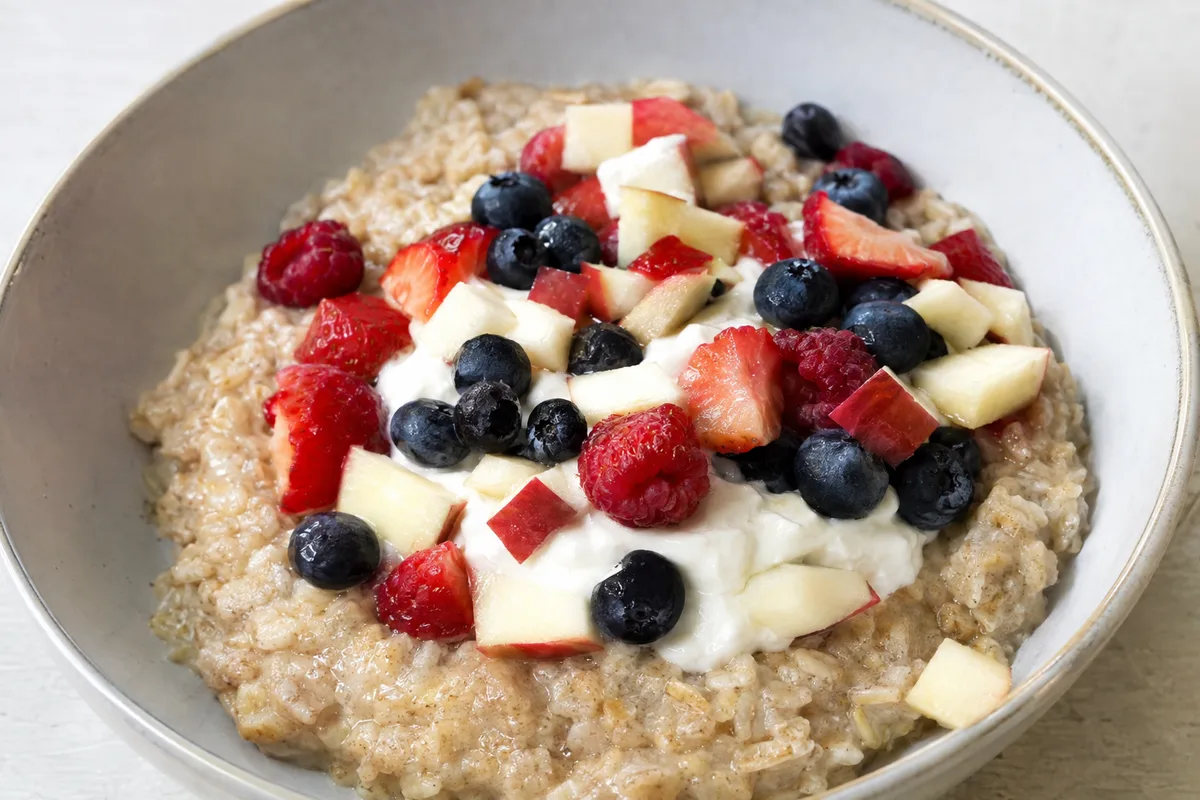
Check that the entry in your food log matches the form you measured. A dry-oats entry should be used for a dry portion, while a cooked-oatmeal entry should be used only when the database describes the cooked food. Brand labels and food databases may differ, so use the same reliable entry whenever possible.
Remember to log everything that contributes energy. Milk, yoghurt, nut butter, seeds, dried fruit and sweeteners can change the meal substantially even when the oat portion stays the same. Water, spices and a small pinch of salt add little or no energy, but they can improve texture and flavour.
- Measure the oats before cooking when practical
- Record the liquid if it contains energy
- Add toppings as separate entries
- Save the complete meal if you repeat the same recipe
- Review portion sizes when your training or goal changes
Build a balanced bodybuilding bowl
Start with oats as the carbohydrate base, then add a protein source. Milk, strained yoghurt, cottage cheese or egg whites can work, depending on the recipe and your preferences. A separate serving of eggs or another protein-rich food can also sit alongside the bowl.
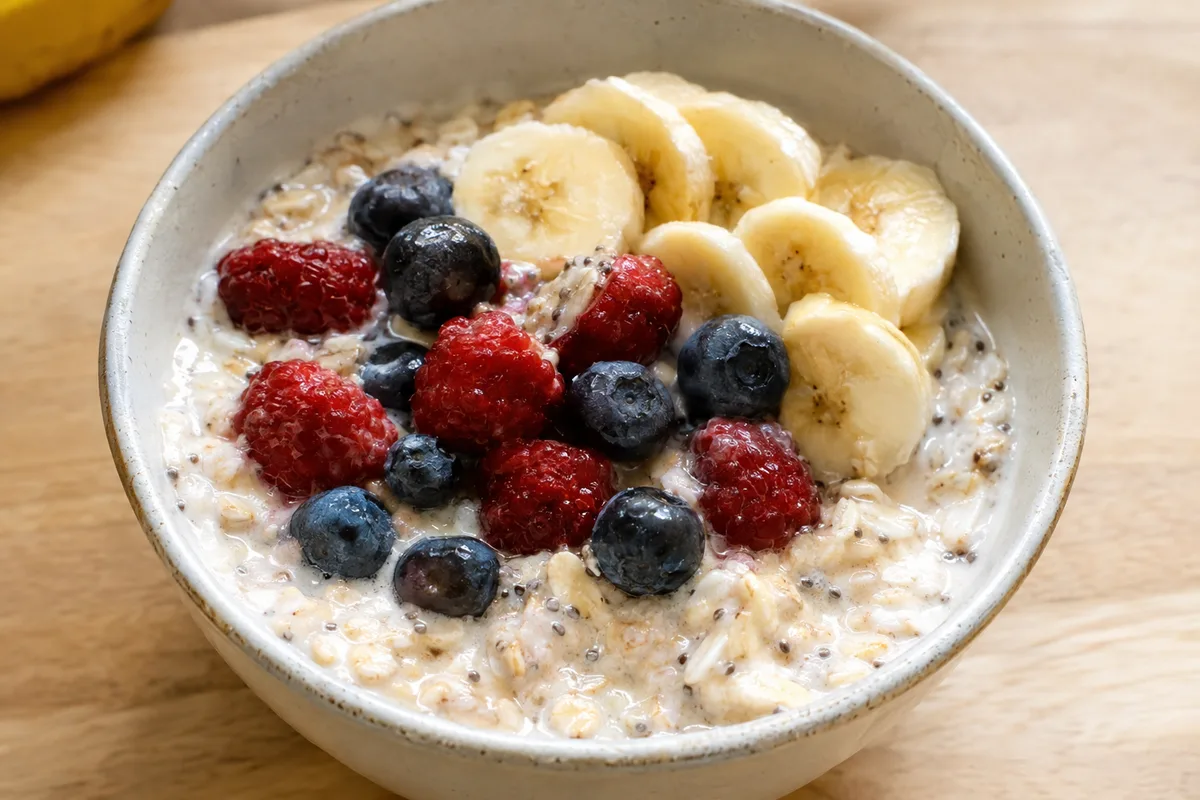
Next, choose fruit for flavour, colour and variety. Berries, chopped apple, banana, pear or stone fruit can all work with warm or chilled oats. Fresh fruit generally adds more volume than dried fruit, while dried fruit is easier to add in a concentrated portion.
Fat-rich toppings can make oatmeal more satisfying and increase its energy content. Nut butter, nuts and seeds are useful options, but they are easy to pour or spoon without noticing the amount. Measure them when accurate tracking matters.
- Oats, milk, strained yoghurt and berries
- Oats, banana, cottage cheese and cinnamon
- Oats, chopped apple, walnuts and a protein-rich side
- Oats, egg whites, cocoa and sliced pear
Fit oatmeal around training
Oatmeal can work before training when there is enough time for a full meal to feel comfortable. Keep the bowl familiar and avoid suddenly adding much more fibre or fat than usual, as a heavy meal may feel uncomfortable during movement. Your preferred timing will depend on portion size, training intensity and how quickly you digest the meal.
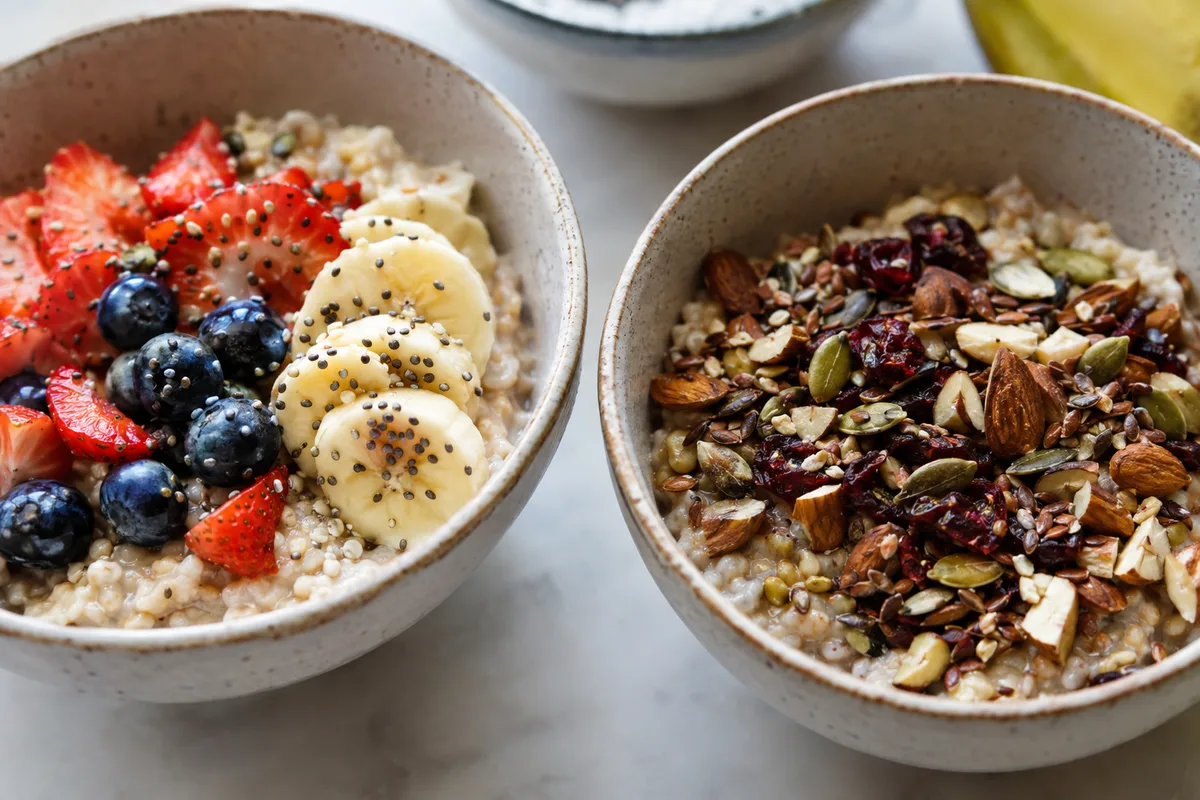
After training, oatmeal can provide carbohydrate alongside protein. A bowl made with a protein-rich liquid or topping is one option, while oats served beside a separate protein food is another. There is no need to force oatmeal into this meal if another carbohydrate source suits you better.
For training early in the day, overnight oats can reduce morning preparation. Warm porridge may suit slower mornings or colder weather, while chilled oats can be easier to carry as part of a prepared meal. Keep food chilled when the recipe contains dairy or other perishable ingredients.
- Before training: oats with milk and banana
- After training: oats with strained yoghurt and berries
- Early session: a smaller familiar portion, with more food later
- Rest day: the same ingredients with a portion matched to appetite and activity
Adjust the bowl for gaining or leaning phases
During a gaining phase, oatmeal offers simple ways to raise food intake without creating an entirely new meal. You can increase the dry oat portion, use milk instead of water or add measured nuts, seeds or nut butter. Choose changes that still leave room for protein, fruit, vegetables and varied meals across the day.
During a leaning phase, oatmeal can stay in the plan rather than being removed automatically. A measured oat portion cooked with more water creates a larger bowl, while fresh fruit adds flavour and volume. A lean protein source can help the meal remain substantial without relying on large amounts of energy-dense toppings.
Do not judge the bowl only by whether it looks healthy. A heavily topped serving may contain far more energy than plain oats, while a very small plain bowl may not support a demanding session. Use your food log, training performance, appetite and body-weight trend to decide whether the portion needs adjustment.
- For a higher intake: increase oats or use an energy-containing liquid
- For more protein: add strained yoghurt, cottage cheese or egg whites
- For more volume: use extra water and fresh fruit
- For tighter tracking: measure nuts, seeds, spreads and dried fruit
Keep oatmeal varied and practical
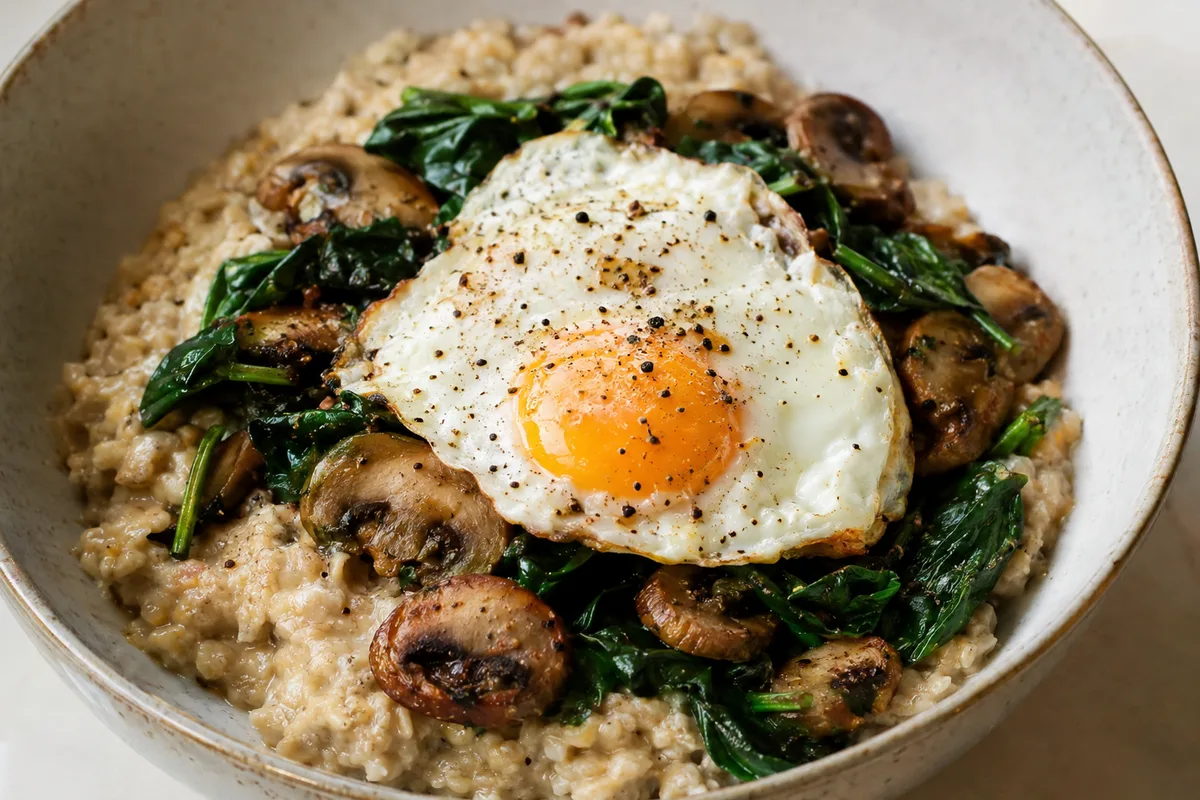
Sweet oatmeal is only one option. Oats can be cooked into a savoury porridge and topped with eggs, cooked vegetables or a portion of lean protein. This can be useful when you want the convenience of oats without another sweet meal.
Batch preparation can make oatmeal easier to repeat, but consistency matters for tracking. Mix a larger recipe thoroughly before dividing it, or prepare identical individual portions. Record the full recipe and the number of servings so each portion reflects the ingredients used.
Variety still matters even when oatmeal is a favourite. Rotate the fruit, protein source, flavourings and toppings, and use other carbohydrate foods across the week. Oatmeal is a flexible part of a bodybuilding diet, not a requirement or a complete plan on its own.
- Savoury oats with egg, spinach and mushrooms
- Apple and cinnamon overnight oats with strained yoghurt
- Warm oats with pear, seeds and cottage cheese
- Cocoa oats with banana and a measured spoonful of nut butter