
Juice From Concentrate or Not From Concentrate: What Changes Nutritionally?
The wording on a juice carton describes how the drink was processed, but it does not tell the whole nutrition story. Here is how to compare the two types and record them accurately in your food diary.
What ‘from concentrate’ means
Juice from concentrate starts as juice squeezed from fruit. Some of its water is removed, making it easier to store and transport. Before the juice is sold, water is added back to bring it closer to its original strength.
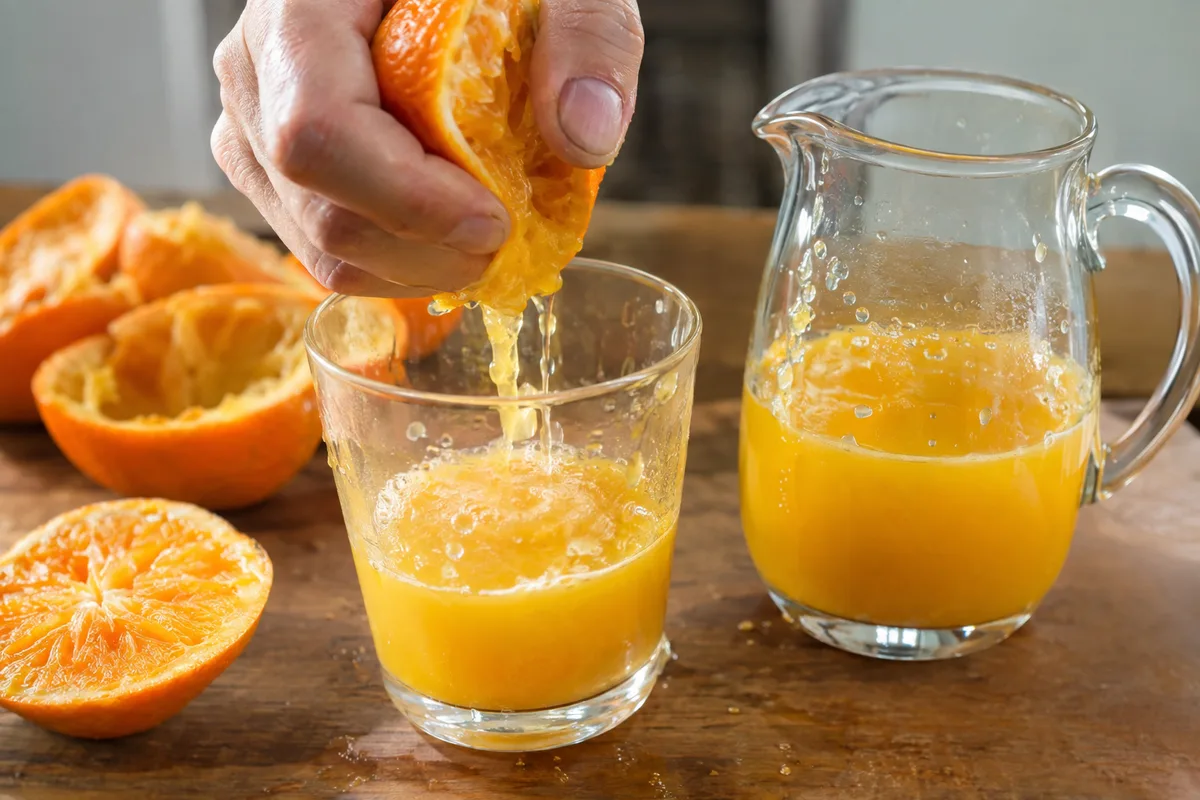
The juice may be heated during processing, while flavour and aroma can be collected and returned later. The exact method varies between producers and fruits. ‘From concentrate’ does not automatically mean that sugar has been added.
When tracking it, choose an entry that matches the prepared drink rather than the concentrated ingredient used during production. Check the nutrition information for the serving you actually pour. A larger glass can make more difference to your log than the production method.
- Juice is extracted from fruit
- Part of the water is removed
- The concentrated juice is stored or transported
- Water is added before it is packaged
What ‘not from concentrate’ means
Not-from-concentrate juice is squeezed and kept at its normal juice strength rather than having water removed and replaced. It may still be filtered, blended, chilled or heat-treated. The phrase does not mean the drink has gone straight from the fruit into the carton without processing.
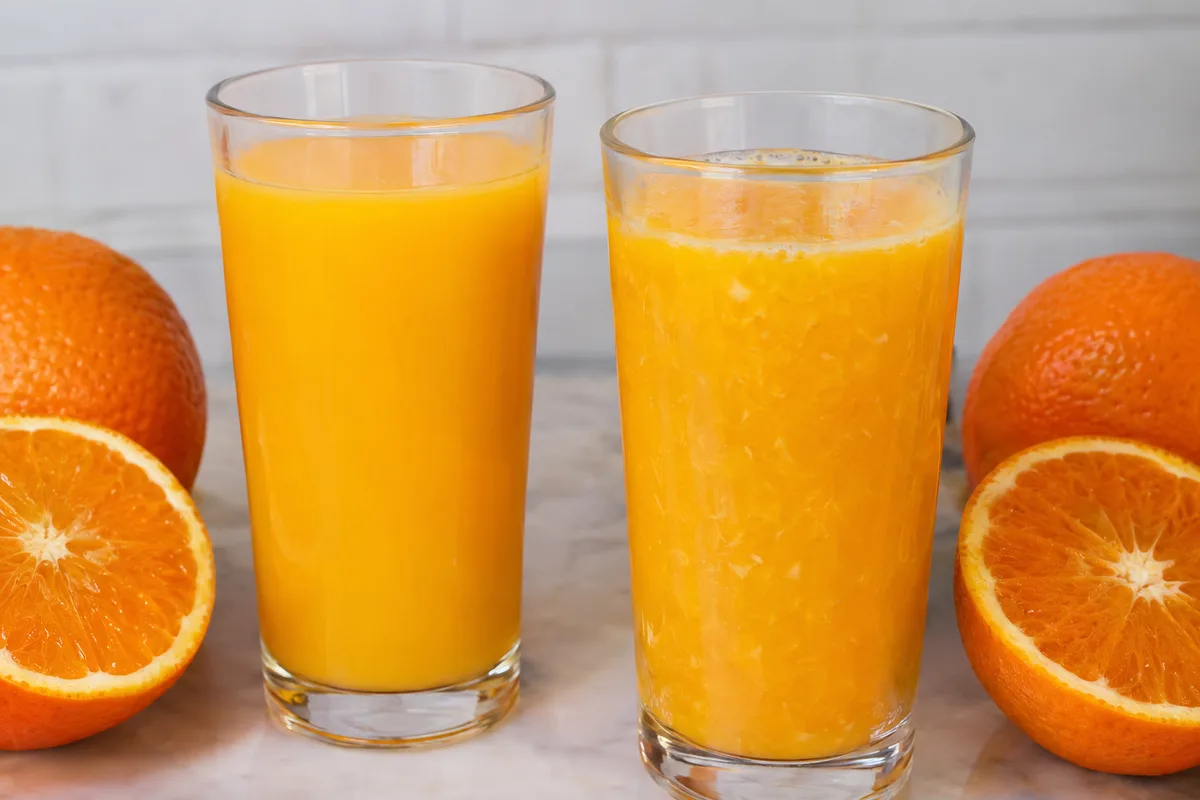
Some juices are stored before packaging so that they can be supplied throughout the year. Producers may also blend juice from different batches to keep the flavour consistent. These steps can affect taste, but the label phrase alone does not establish that one juice is nutritionally better.
For logging, use the figures shown for that particular juice. Do not assume a not-from-concentrate entry will match a fresh juice-bar drink or juice squeezed at home. Different fruits, blends and serving sizes can produce different totals.
- Check the fruit or fruit blend
- Look for added ingredients
- Use the stated serving size as a guide
- Log the amount you actually drink
How their nutrition compares
When both drinks are pure juice at a similar strength, their carbohydrate, natural sugar and energy values can be quite close. Differences may come from the fruit variety, the blend and how much pulp remains. Processing method is only one part of the comparison.
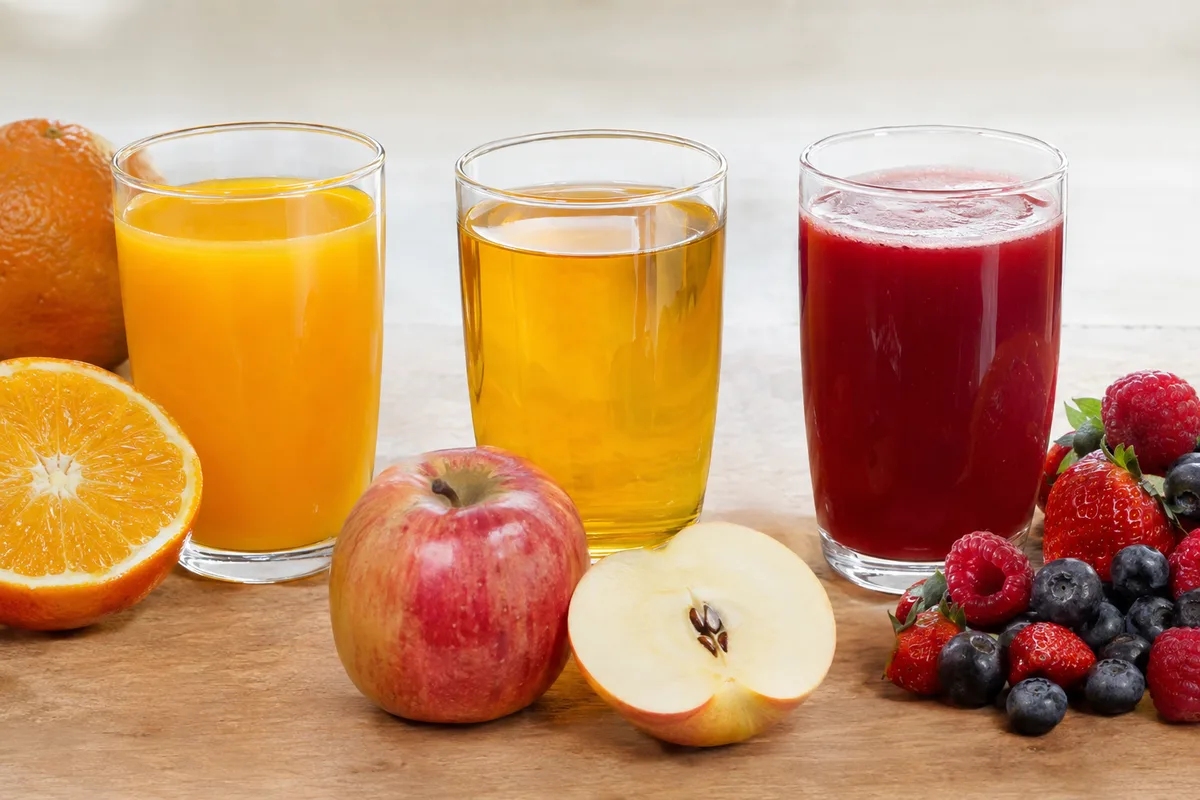
Heat, storage and exposure to air can reduce some sensitive vitamins. However, the amount left depends on the fruit and the way the juice was made, stored and handled. The words ‘from concentrate’ and ‘not from concentrate’ are not enough to calculate the difference.
The clearest comparison is the nutrition panel, using the same amount for both drinks. Compare values per 100 ml rather than comparing two suggested servings that may be different sizes. Also check whether vitamins have been added back, as this can change the listed amount.
- Energy per 100 ml
- Carbohydrate and sugars per 100 ml
- Fibre per 100 ml
- Listed vitamins and minerals
- Ingredients added beyond fruit juice
Natural sugar, added sugar and fibre
Fruit juice contains sugars that were already present in the fruit. Once the fruit is juiced, those sugars are held in a drink that is easy to consume quickly. Whether the juice came from concentrate does not by itself tell you how much sugar is in your glass.
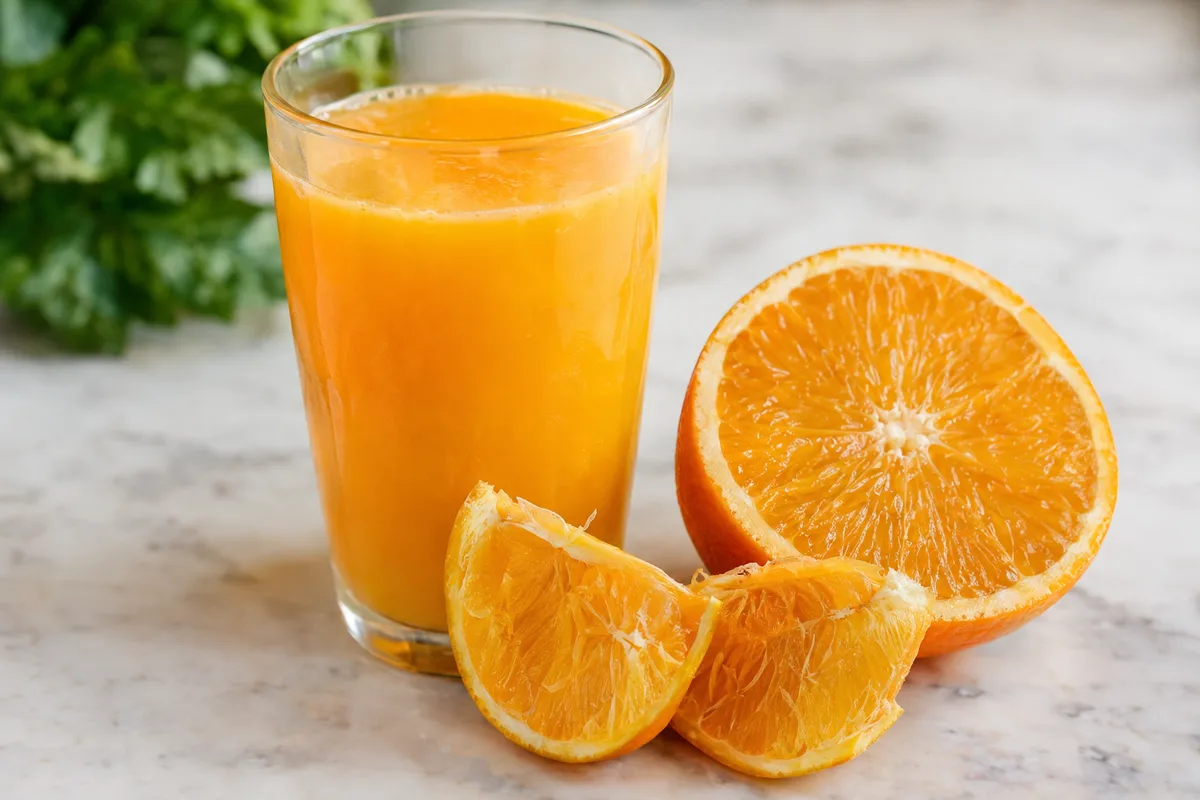
Read the ingredients rather than judging by the front of the carton. A pure fruit juice may list only juice, or juice and water when it has been reconstituted from concentrate. A juice drink can contain other ingredients, so it should not be logged as though it were pure juice.
Juicing also removes much of the fibre found in whole fruit, although pulpy juices may retain a little more. Eating the fruit and drinking its juice are therefore not nutritionally identical. If fibre is one of your tracking goals, record the juice entry that matches the product rather than using a whole-fruit entry.
- Distinguish pure juice from a juice drink
- Check for sugar or syrup in the ingredients
- Look at total sugars on the nutrition panel
- Check fibre separately
- Avoid logging juice as whole fruit
Taste and freshness can shape your choice
Not-from-concentrate juice is often chosen for a flavour that feels closer to freshly squeezed fruit. Juice from concentrate can taste slightly different because water was removed and later restored. Neither description guarantees a particular level of sweetness, sharpness or freshness.
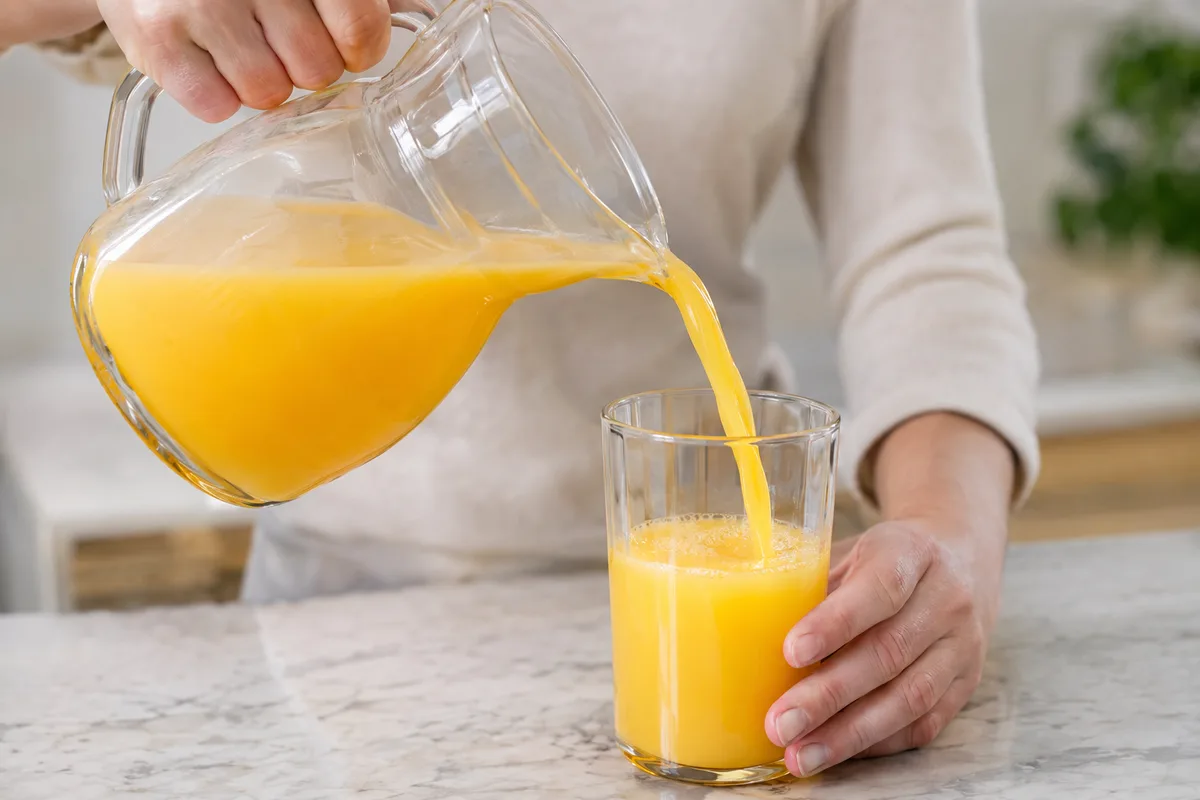
Pulp, fruit variety and storage after opening can have a strong effect on taste. Serving temperature also changes how sweet or sharp a juice seems. These details may matter more to your enjoyment than a small difference on the nutrition panel.
Choose the type you prefer while using the label to guide your log. If two options have similar nutrition values, taste and how much you usually pour may be the practical deciding factors. The better entry is the one that reflects the drink and quantity you actually had.
A simple way to log juice accurately
Start by identifying whether you have pure juice, reconstituted juice or a juice drink. Find the nutrition information per 100 ml, then measure or estimate the amount in your glass. Enter that volume in your tracker rather than automatically accepting its default portion.
If you dilute juice with water, log the amount of juice before dilution because plain water does not add energy or sugar. If you mix two juices, record each one separately when their nutrition values differ. For homemade juice, use an entry based on the fruits used and the approximate amount of finished juice.
Keep your method consistent when comparing drinks over time. Production wording can help you understand the carton, but the ingredients, nutrition panel and poured amount give you the useful tracking details. The number that matters depends on the specific juice and your serving.
- Identify the type of drink
- Read the values per 100 ml
- Note the amount poured
- Adjust the tracker entry to that volume
- Record mixed juices separately when needed