
Can Bananas Help With Weight Loss?
Bananas are filling, convenient and easy to track, but they do not cause weight loss on their own. This guide explains how to include them while keeping your overall calorie target in mind.
The short answer
Bananas can be a good choice when you are trying to lose weight. They provide carbohydrate, fibre and natural sweetness, and they can make a snack or meal more satisfying. Whether they support your goal depends mainly on how they fit into everything else you eat.
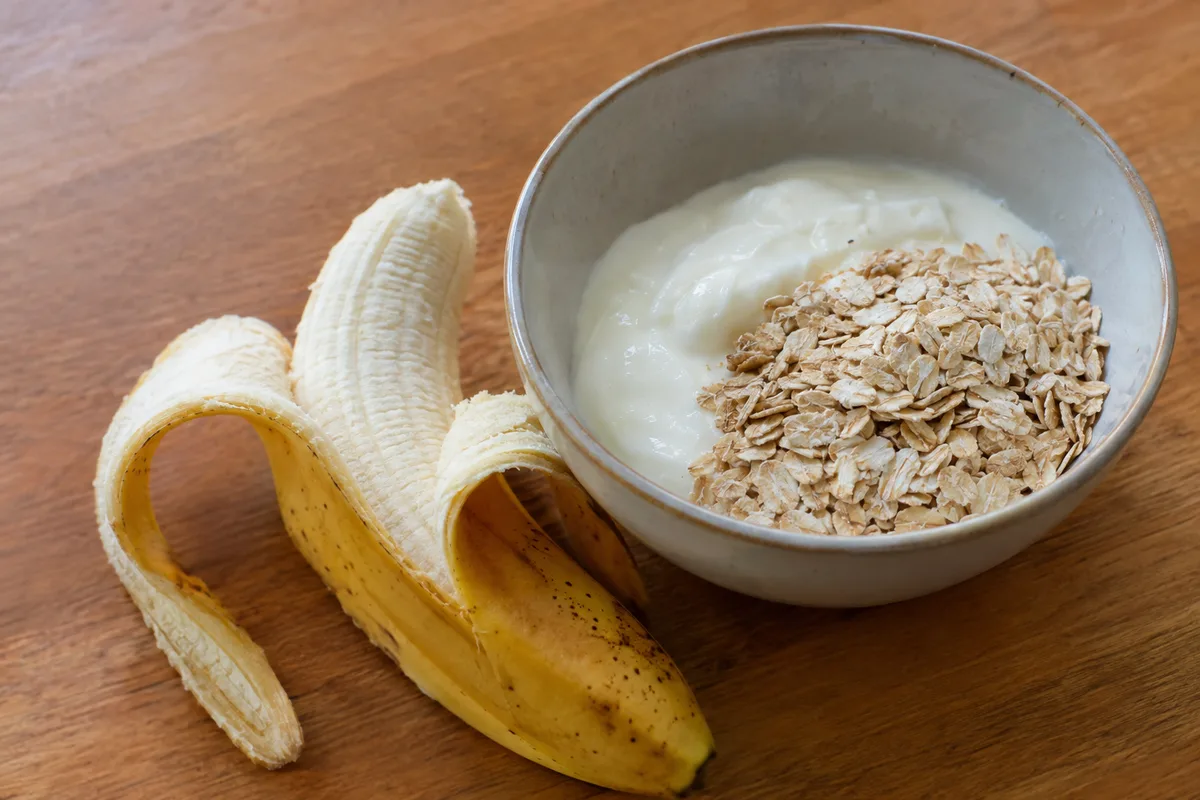
Weight loss requires you to take in less energy than your body uses over time. A banana contributes calories, just like any other food, but it does not need to be avoided. Tracking it alongside the rest of your food gives you the clearest view of how it fits.
- Choose a banana when you want a naturally sweet snack.
- Include it within your usual calorie target.
- Judge the whole day rather than a single food.
- Adjust the portion or pairing if it regularly takes you beyond your target.
What a banana adds to your diet
Most of a banana’s energy comes from carbohydrate. It also contains fibre, which slows down eating and digestion compared with a drink made from fruit. The exact calorie and fibre content depends on the banana’s size and ripeness.
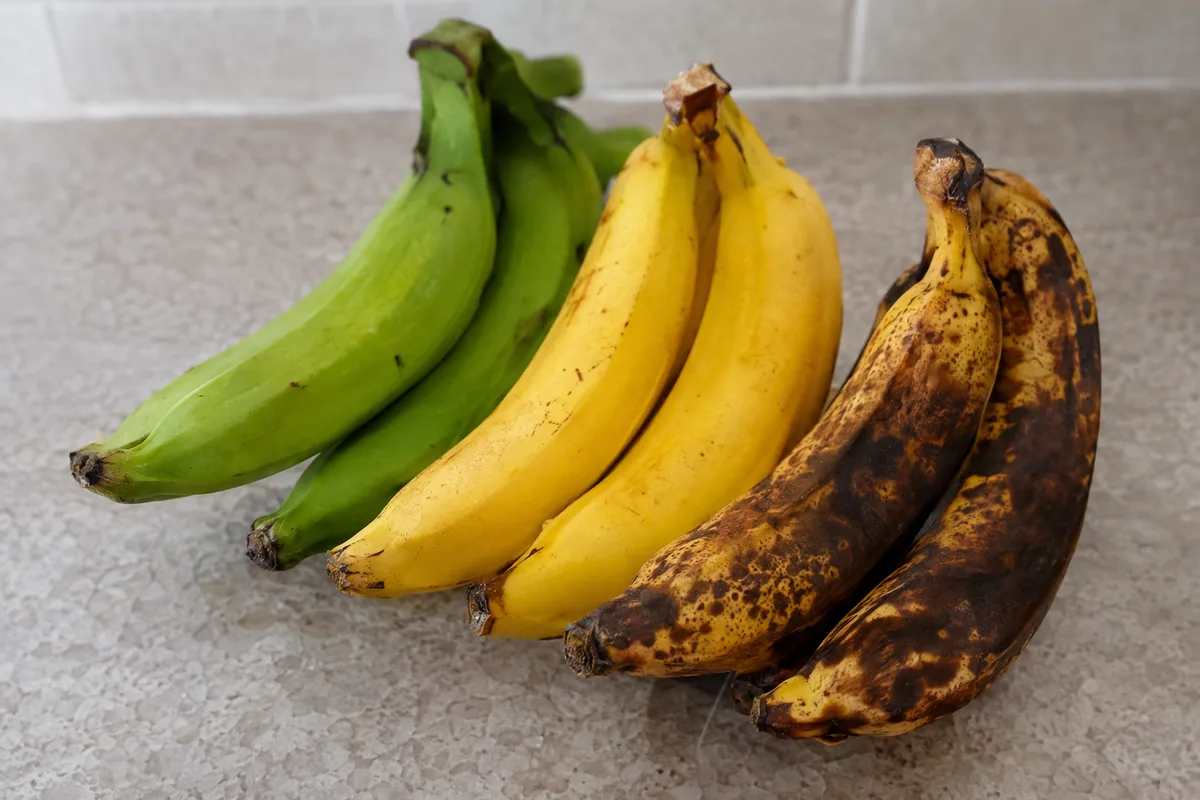
Bananas also provide useful vitamins and minerals, so they offer more than sweetness alone. As they ripen, their starches change and the fruit tastes sweeter, but it remains a source of carbohydrate. Ripeness can affect texture and preference, so choose the stage you enjoy and can track consistently.
- Less ripe bananas are firmer and less sweet.
- Ripe bananas are soft and easy to add to breakfast.
- Very ripe bananas work well mashed into foods.
- Larger bananas contribute more calories than smaller ones.
Will a banana keep you full?
A whole banana may help with fullness because it contains fibre and requires chewing. However, it is not especially high in protein or fat, so some readers may feel hungry again soon after eating one by itself. Appetite varies, and your food log can help you notice your own pattern.
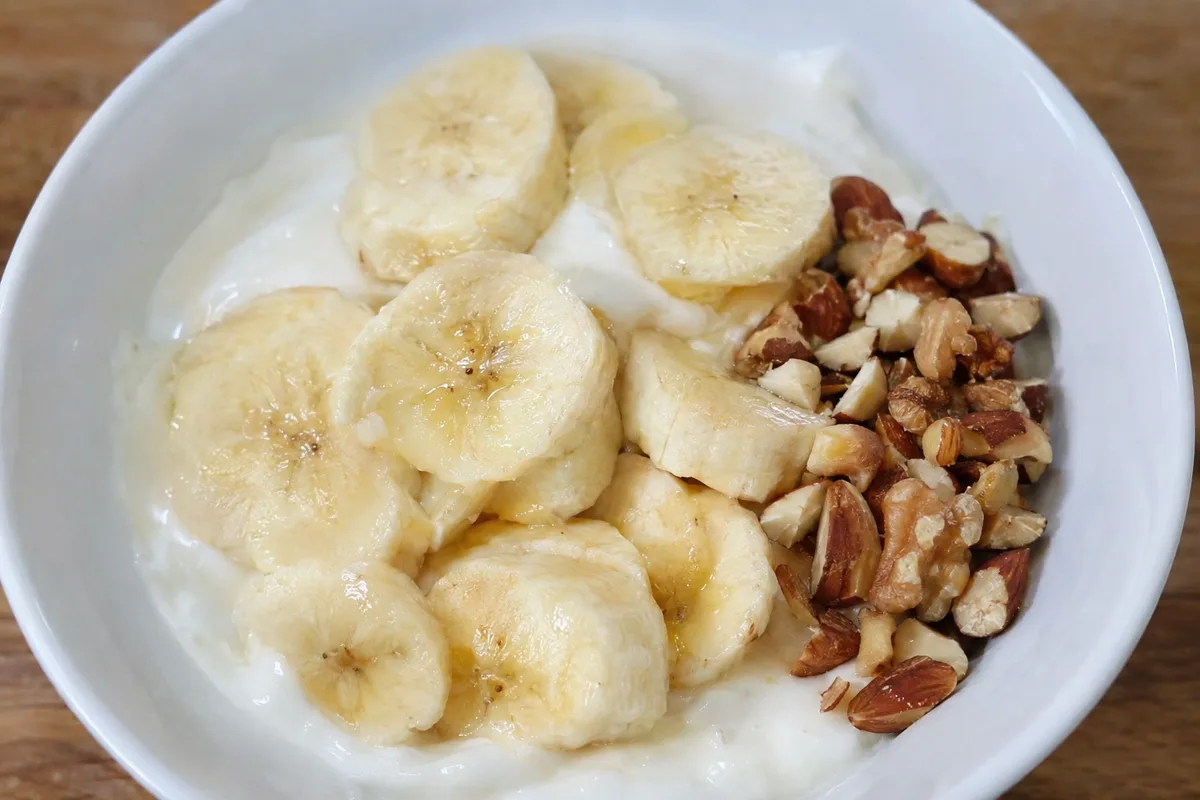
Pairing a banana with a source of protein or fat may make the snack feel more substantial. That pairing will also add calories, so log both parts rather than treating the banana as the whole snack. The most useful choice is one that satisfies you without making your daily target difficult to meet.
- Banana with plain yoghurt
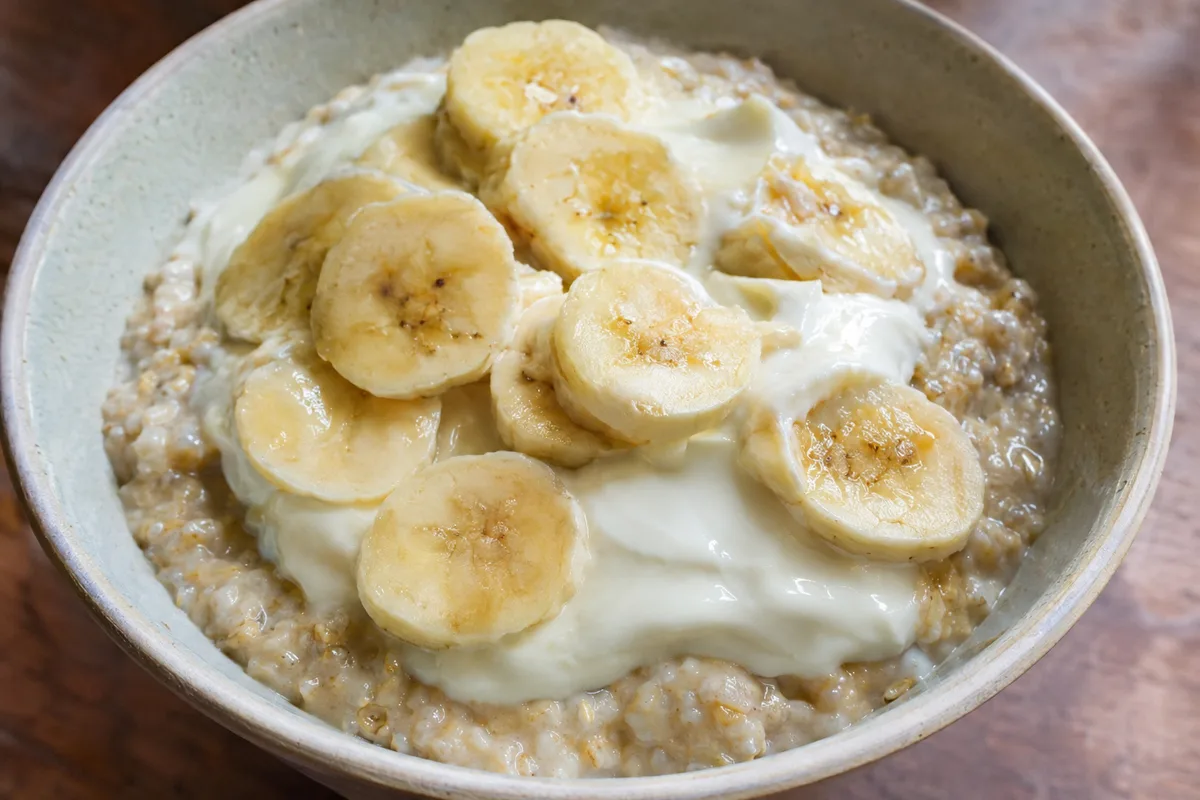
- Sliced banana with porridge
- Banana with a small portion of nuts
- Banana on wholegrain toast
- Banana blended with milk and logged as a complete drink
Preparation can change the calorie total
A plain banana is straightforward to track, but toppings and cooking methods can change the total considerably. Nut butter, chocolate, syrup, cream and generous handfuls of granola all add energy. These foods can still fit, but they should be included in the entry.
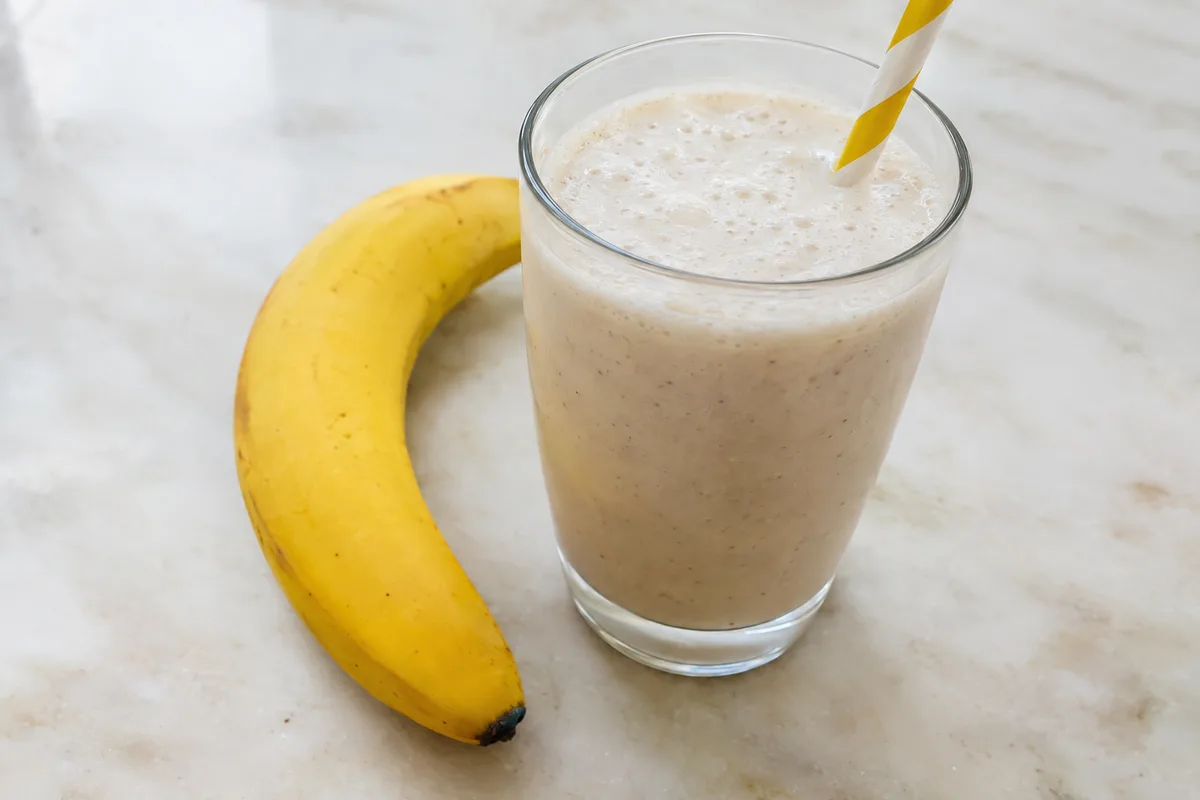
Drinks also deserve attention because they can be consumed quickly. A blended banana may feel less filling than eating the whole fruit, especially when juice, sweetened yoghurt or other additions are used. Record each ingredient and use the amount you actually added.
- Keep a plain banana as the simplest option.
- Measure calorie-dense spreads rather than estimating a thick layer.
- Log yoghurt, milk and toppings separately.
- Count every ingredient in a smoothie.
- Notice whether eating the fruit whole keeps you fuller than drinking it.
How to log bananas accurately
Banana entries in food databases may refer to different sizes or to edible weight. The peel is not normally eaten, so an entry based on the whole unpeeled fruit can make your log less accurate. Choose a database entry that clearly describes the edible portion or the banana’s size.
Perfect precision is not necessary, but a consistent method makes your records more useful. If bananas vary greatly in size, select the closest size description each time. For recipes, log the banana along with every other ingredient and divide the finished dish into the portions you actually eat.
- Check whether the entry refers to peeled fruit.
- Match the listed size as closely as practical.
- Use the same reliable database entry regularly.
- Create a recipe entry for banana bread, pancakes or baked oats.
- Update the portion if you eat only part of the banana.
Making bananas work for your goal
There is no special time of day when a banana becomes better for weight loss. It can work at breakfast, as a snack, before activity or as part of a dessert. What matters is whether it suits your appetite and your overall eating pattern.
Review your food log after trying bananas in different ways. Look at how hungry you felt afterwards, what you paired them with and whether the choice helped you stay near your planned intake. Keep the approach that feels satisfying and practical, rather than expecting the fruit itself to produce weight loss.
- Use banana to add sweetness to plain porridge or yoghurt.
- Choose a smaller banana when you want a lighter snack.
- Pair it with protein when a banana alone is not satisfying.
- Plan toppings rather than adding them without tracking.
- Compare whole and blended banana to see which suits your appetite.