
Are gummy bears healthy, or just a sweet treat?
Gummy bears can fit into a varied diet, though they offer little beyond quick energy and enjoyment. Here is how to read the label, track a portion and choose when they are worth eating.
What gummy bears are made from
Most gummy bears are made with sugar, glucose syrup, gelatine, flavourings and colours. These ingredients create their sweetness, chewiness and bright appearance. Recipes vary, so the packet is the best guide to the product you are eating.
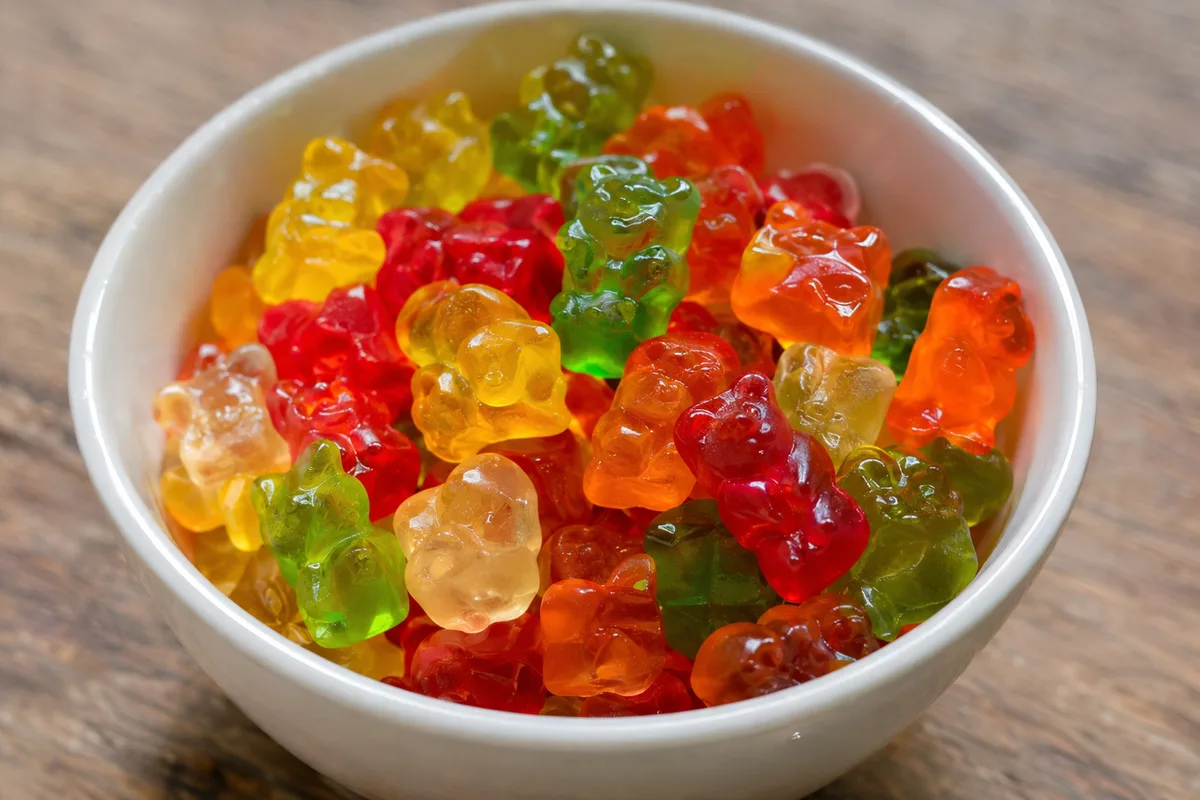
Standard gummy bears usually provide mostly carbohydrate in the form of sugar. Gelatine can add a small amount of protein, but that does not make them a meaningful protein food. They generally contain little fibre and few of the nutrients found in fruit, nuts, dairy foods or wholegrains.
- Sugar or glucose syrup is often near the start of the ingredients list.
- Gelatine provides the familiar chewy texture.
- Starch, wax or oil may be used to shape the sweets or stop them sticking.
- Flavourings and colours differ between products.
So, are they healthy?
It is more useful to think about what gummy bears contribute than to label them simply healthy or unhealthy. They are sweets designed mainly for taste and enjoyment, rather than for fibre, vitamins or lasting fullness. A small amount can still fit within an overall varied way of eating.
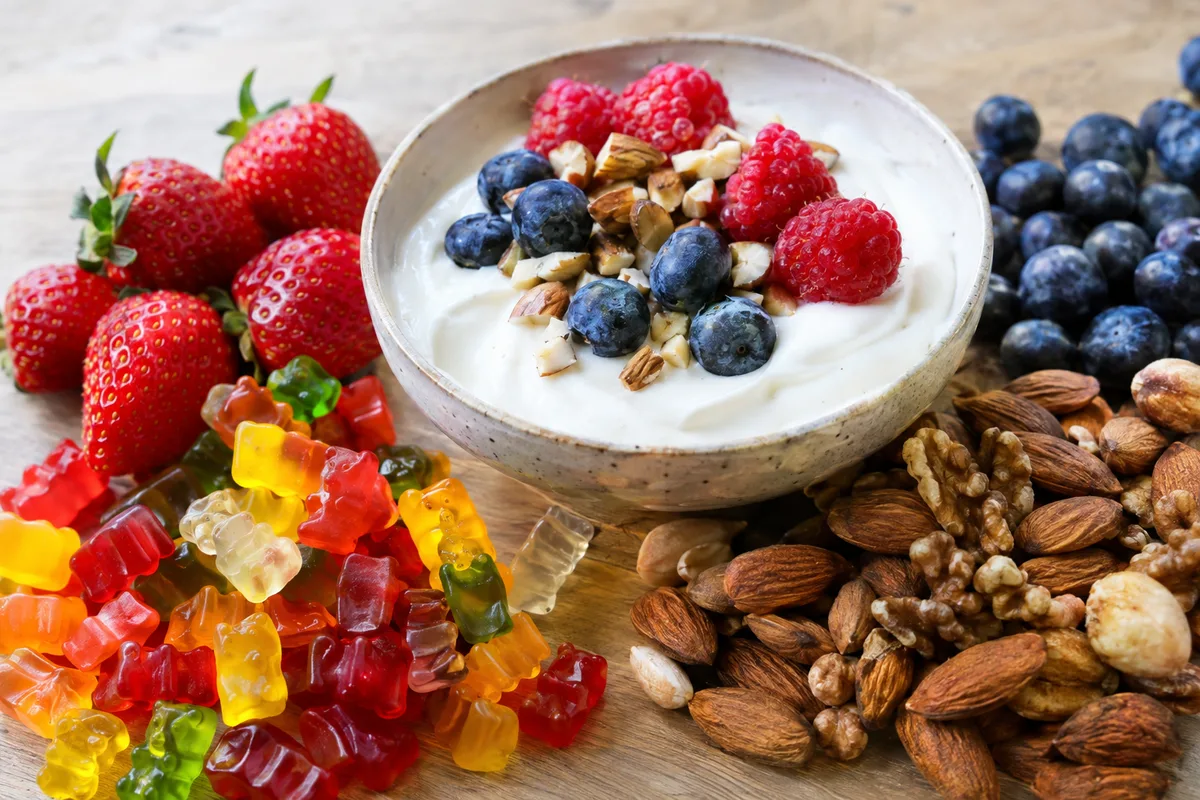
Context matters because your full day or week is more important than one snack. Gummy bears alongside regular meals containing vegetables, fruit, protein foods and higher-fibre carbohydrates are different from sweets repeatedly taking the place of those foods. Your needs and preferred portion depend on the person.
- They can provide enjoyment and quick energy.
- They are not a close nutritional substitute for fruit.
- They may be less filling than foods containing fibre, protein or fat.
- How often and how much you eat matters more than whether you ever eat them.
How to track a portion accurately
Start with the nutrition information for the exact gummy bears you have, as recipes and bear sizes differ. Some labels show values per serving as well as per 100 grams. Check what the manufacturer calls a serving rather than assuming it matches the amount in your hand.
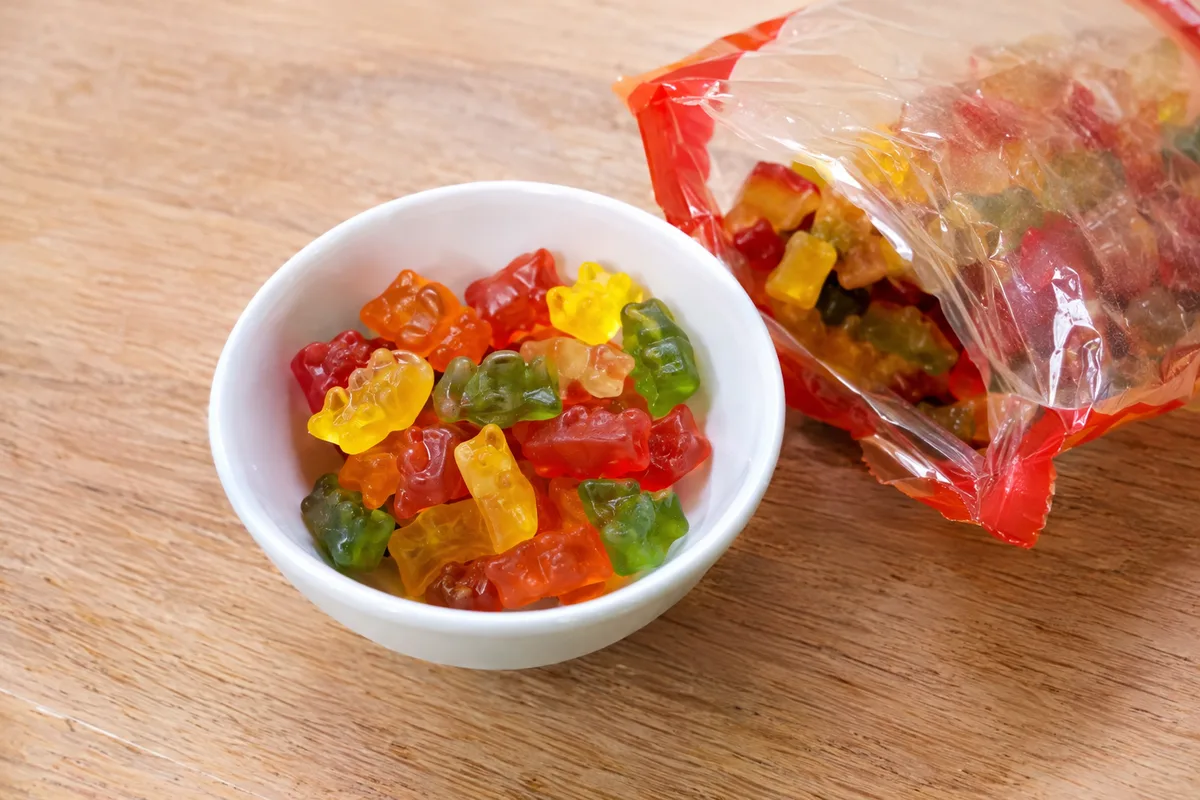
If you eat directly from a large bag, it can be easy to lose track of the amount. Put the portion you plan to eat into a small bowl, then log that amount using the matching label entry. If you have more, update your record without treating the change as a failure.
Restaurant, cinema or pick-and-mix gummy sweets may not come with clear information. In that case, use the closest comparable entry and mark it as an estimate. Consistent, reasonable tracking is usually more useful than pretending an uncertain number is exact.
- Match the product name and serving information where possible.
- Check whether your app entry is per piece, per serving or per 100 grams.
- Record extra handfuls if your planned portion changes.
- Save a frequently used entry only after checking it against the current packet.
What about special types?
Vegan gummy bears usually replace gelatine with a plant-based gelling ingredient. That changes their suitability for some eating preferences, but it does not automatically reduce their sugar content. Check both the ingredients and nutrition panel rather than relying on the word vegan.
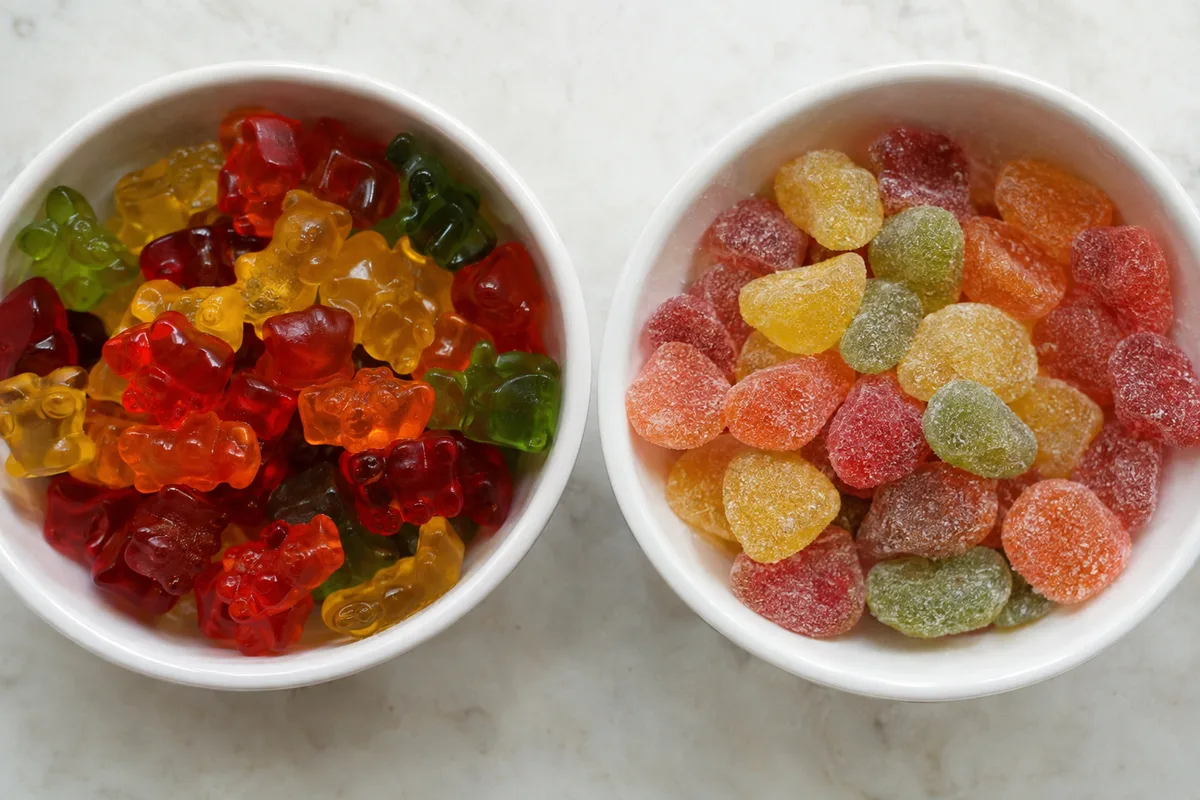
Sugar-free versions use alternative sweeteners, and their energy content can differ from standard sweets. Some sweeteners can cause digestive discomfort when eaten in larger amounts. The label may give a warning or serving guidance, so read it before deciding how much suits you.
Gummies marketed around added vitamins or other nutrients are still worth assessing as a whole food. Added nutrients do not cancel out the sugar or make the sweet equivalent to a balanced meal. Avoid counting the same added nutrient from several sources without considering your wider intake.
- Vegetarian or vegan does not necessarily mean lower in sugar.
- Sugar-free does not always mean energy-free.
- Added vitamins do not turn sweets into fruit.
- Ingredients and nutrition can vary widely between similar-looking products.
Ways to enjoy them with more intention
If gummy bears are a favourite, there is no need to force a replacement that leaves you unsatisfied. Decide whether you want them for sweetness, chewiness or simple enjoyment, then choose a portion that fits the rest of your day. Eating them without distraction can make the experience feel more deliberate.
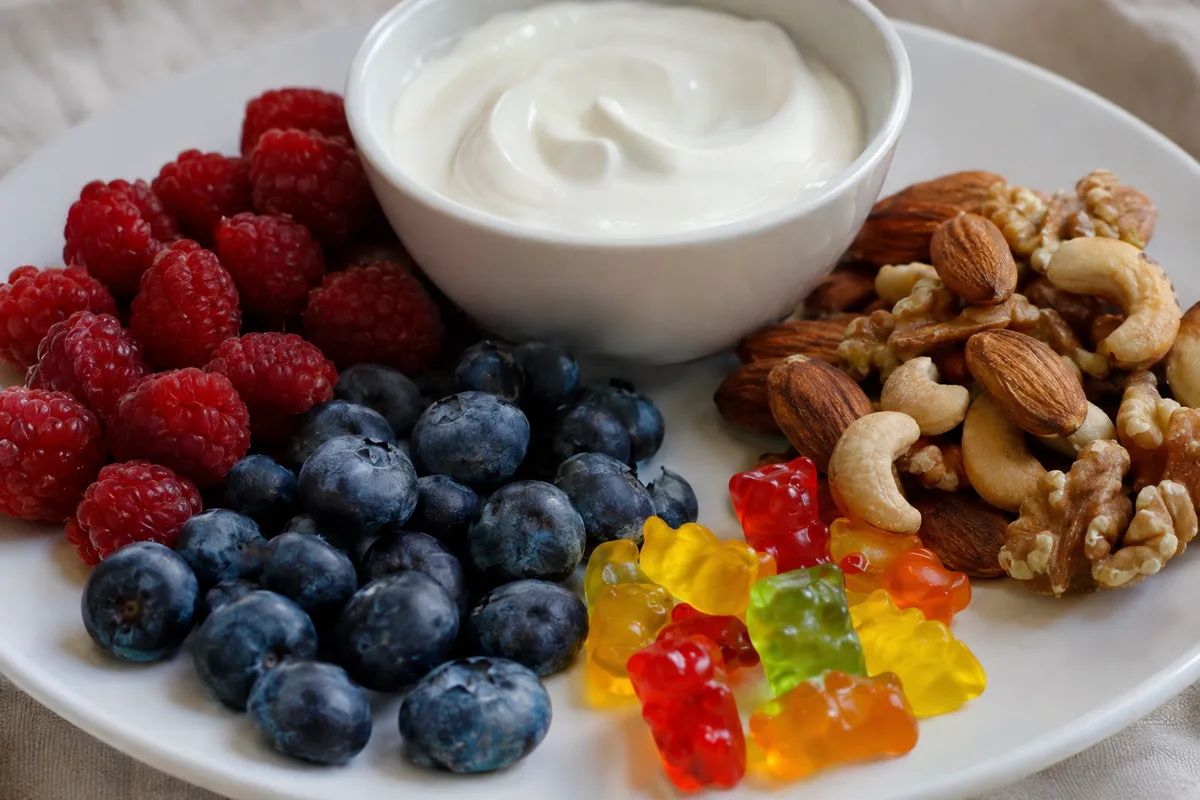
When you want a more filling snack, combine sweetness with foods that provide fibre, protein or fat. This does not make the gummy bears nutritionally different, but it can create a more rounded snack. You can also choose a different food when what you really want is freshness, crunch or something substantial.
The practical answer is that gummy bears are best viewed as sweets rather than an everyday source of nutrients. They can fit into food tracking without being treated as either forbidden or beneficial. Log them honestly, enjoy them if you choose them and keep the wider pattern in view.
- Pair a small portion with plain yoghurt and fruit.
- Choose fresh or dried fruit when you want sweetness with some fibre.
- Have nuts with a few gummy bears when you want a more substantial snack.
- Serve the amount you intend to eat instead of keeping the open bag beside you.