
Are Nuts and Peanuts Gluten Free?
This guide explains when nuts and peanuts are gluten free and why some nut products need a closer look. It also covers labels, cross-contact and how to record them accurately in your food diary.
Plain nuts and peanuts do not contain gluten
Nuts in their natural form are gluten free. This includes almonds, walnuts, cashews, pistachios, hazelnuts, pecans and Brazil nuts. Plain peanuts are also gluten free, although they are legumes rather than true nuts.
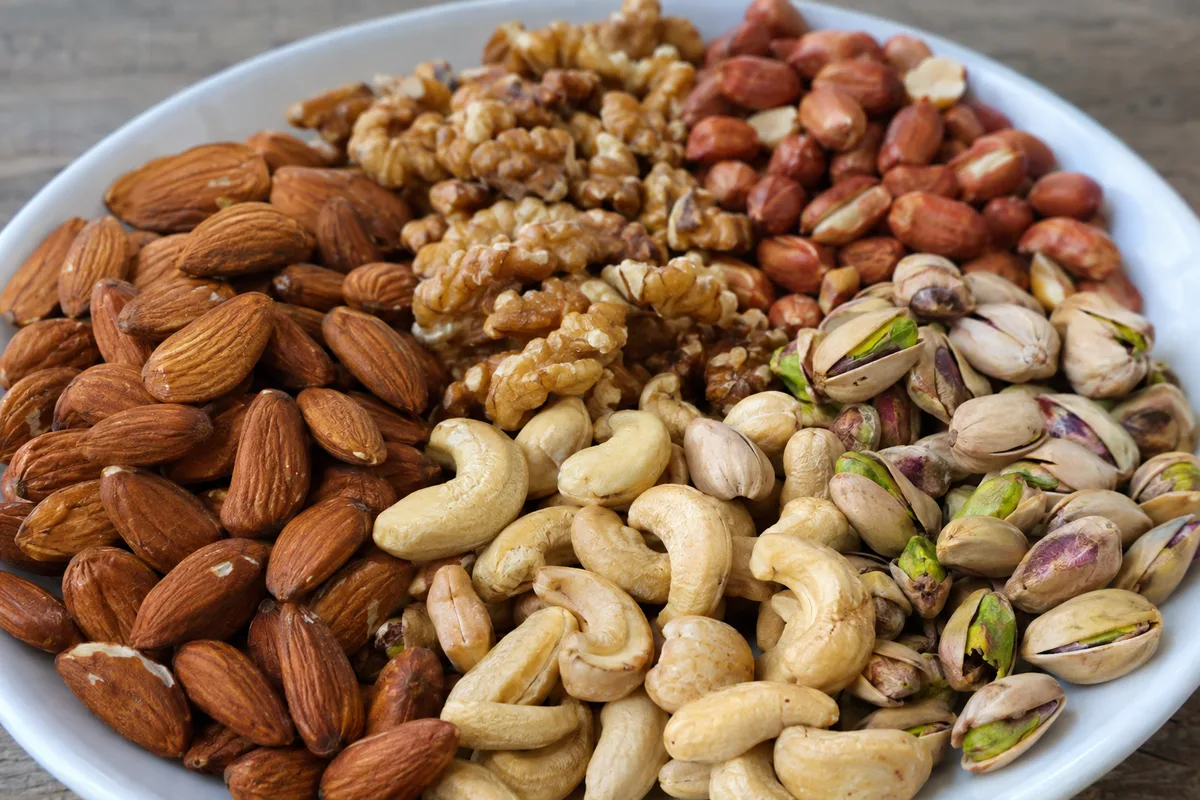
Raw, dry-roasted and oil-roasted varieties can all be gluten free when nothing containing gluten has been added. Roasting itself does not introduce gluten. The important questions are what went into the product and how it was handled.
- Almonds
- Cashews
- Walnuts
- Peanuts
- Mixed nuts containing only plain nuts
Flavoured and coated nuts need checking
A coating or seasoning can turn a naturally gluten-free food into one that contains gluten. Wheat flour may help a crunchy coating stick, while barley malt can appear in sweet or savoury flavourings. Some seasoning blends and sauces may also include ingredients made from cereals containing gluten.
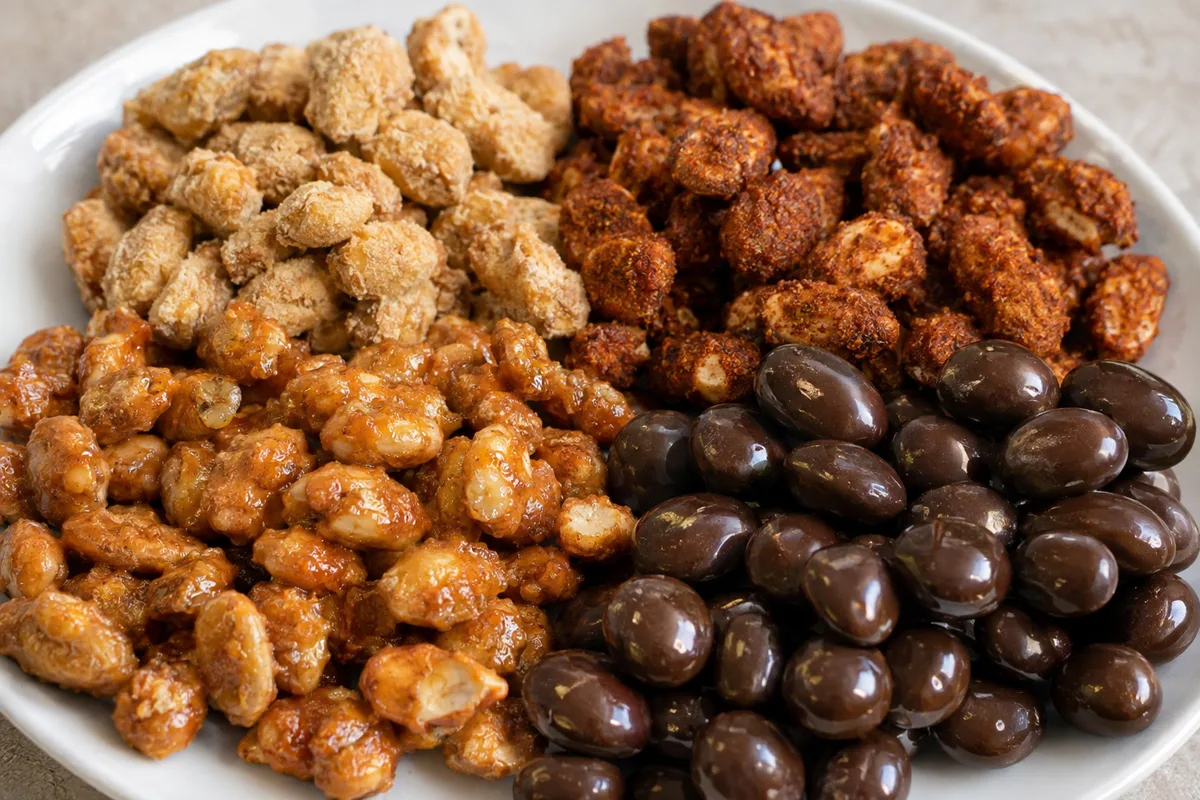
Do not rely on the flavour name or the appearance of the nuts. Two similar-looking products can use different recipes. Check the ingredients each time, particularly if the recipe or packaging has changed.
- Batter-coated or cracker-coated peanuts
- Nuts with barbecue or savoury seasoning
- Honey-roasted nuts with added flavourings
- Chocolate-covered nuts
- Nut mixes containing pretzels or cereal pieces
How to read the label
Start with the ingredients list and look for wheat, barley and rye. In the UK, cereals containing gluten must be emphasised within the ingredients, often through bold type. A clearly stated gluten-free claim provides additional information about how the finished food meets the relevant standard.
Also read any advisory statement about how the product was made. Wording such as “may contain wheat” warns that accidental cross-contact is possible, even when wheat is not part of the recipe. The right choice depends on how strictly you need to avoid gluten and the guidance you follow.
- Read the full ingredients list
- Look for emphasised cereal ingredients
- Check for a gluten-free statement
- Notice advisory cross-contact wording
- Recheck familiar products when the packaging changes
Cross-contact can happen during handling
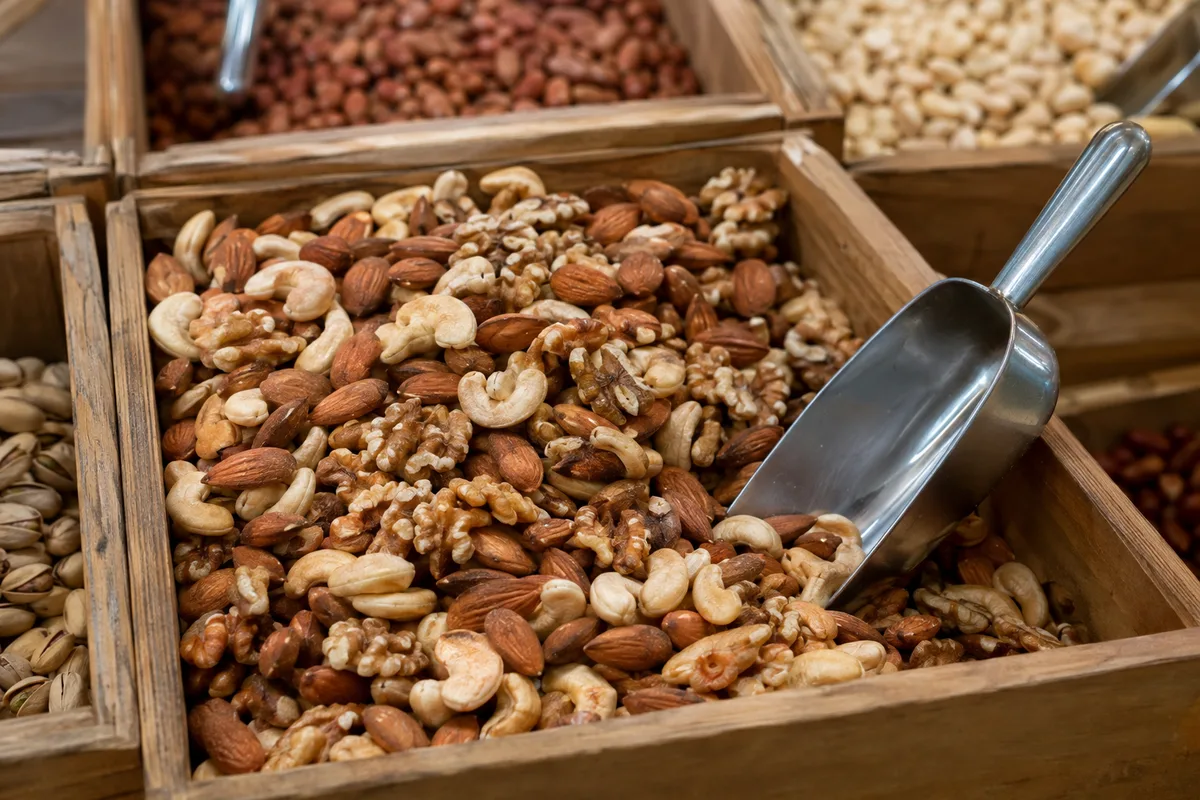
Nuts may be processed, packed or displayed alongside foods containing gluten. Small amounts can transfer through shared production lines, scoops, containers or preparation surfaces. This is why an unflavoured product may still carry an advisory warning.
Loose nuts from self-service containers can be harder to assess because scoops may move between bins. At home, shared bowls and utensils can create the same issue if crumbs are present. Keeping suitable nuts in a clean, separate container reduces accidental mixing.
- Shared factory equipment
- Open self-service bins
- Scoops used for several foods
- Serving bowls containing crumbs
- Chopping boards used for bread and nuts
Nut butters and nut-based foods vary
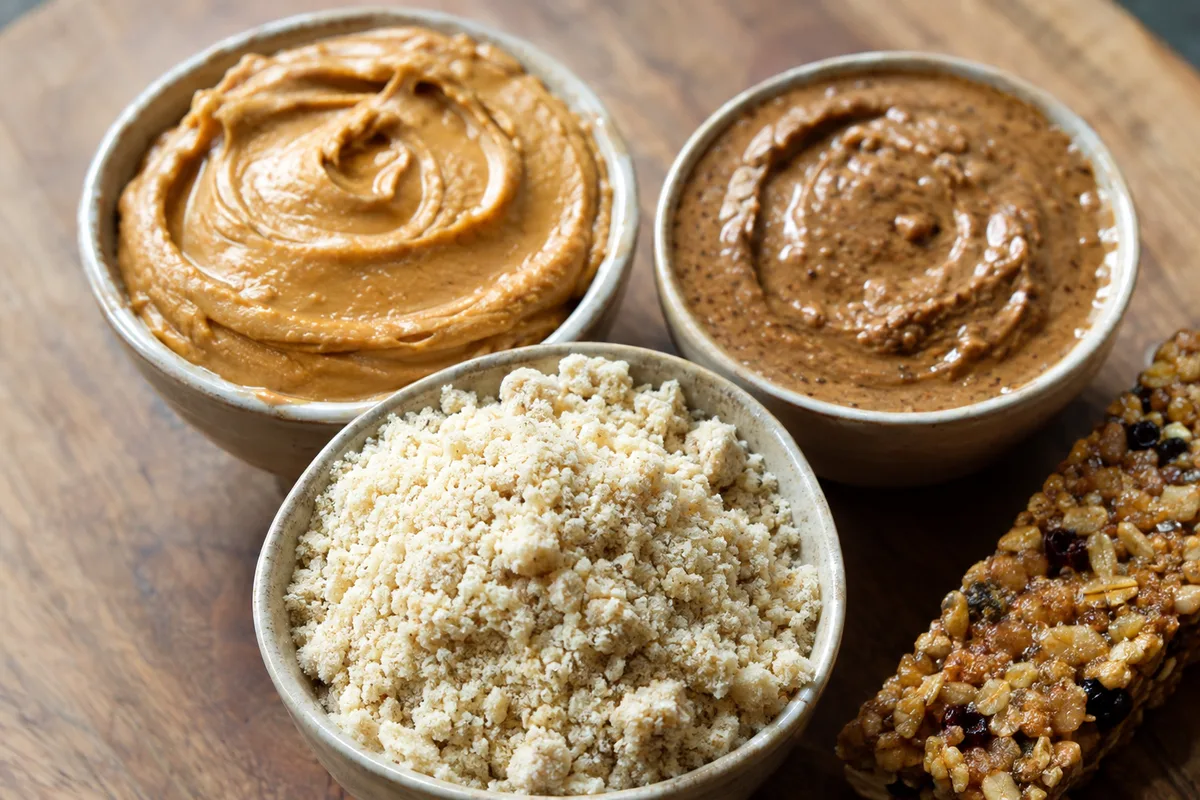
A simple nut butter made only from nuts, with perhaps salt or oil, is usually gluten free by ingredients. Added biscuit pieces, malt flavouring, cereal crumbs or certain chocolate additions can change that. Always judge the complete product rather than assuming the main ingredient tells the whole story.
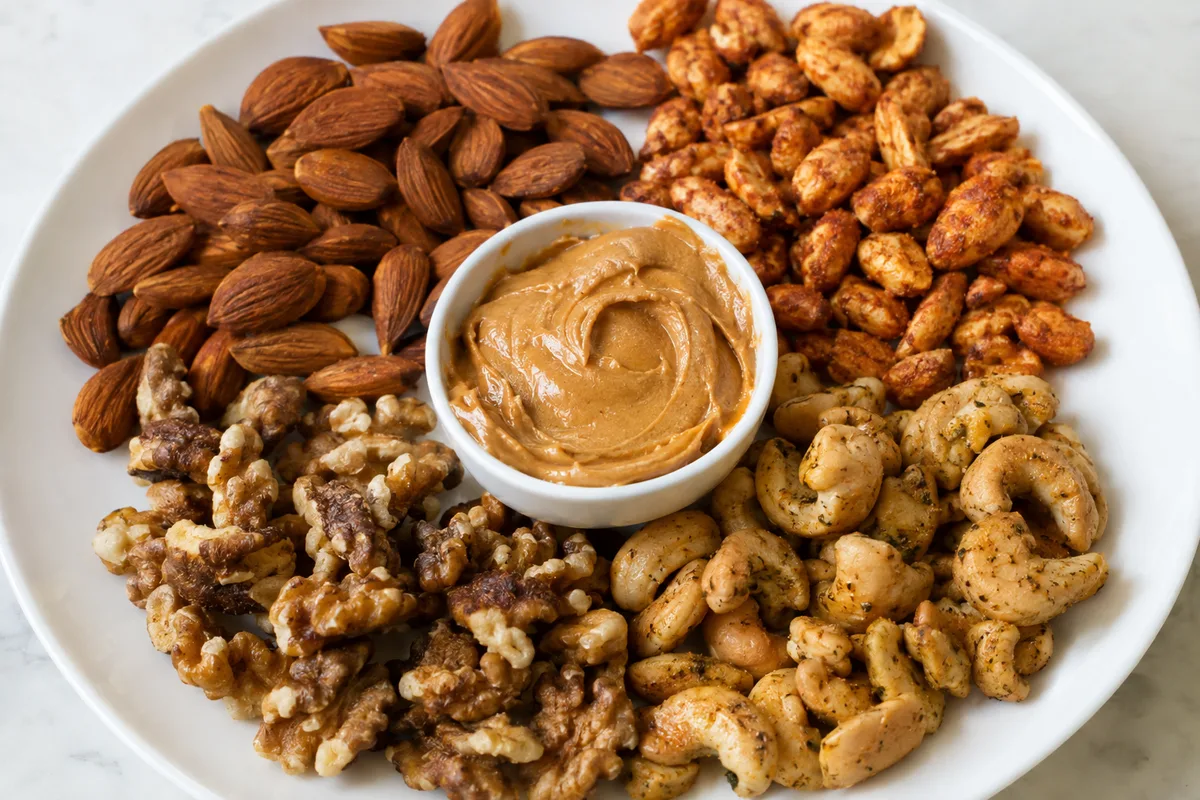
The same rule applies to nut bars, nut flours, nut drinks and nut-based snacks. Nut flour itself is naturally gluten free, but a baking mix may also contain wheat flour. Products made in shared facilities may carry cross-contact advice.
- Choose nut butter with a short, clear ingredients list
- Check nut bars for cereal and biscuit pieces
- Distinguish pure nut flour from a blended baking mix
- Read the full label on nut drinks and desserts
Recording nuts in your food diary
When logging nuts, select the entry that matches the form you ate. Plain nuts, salted nuts, flavoured nuts and nut butter can differ in ingredients and nutritional values. If you have the packet, use its label rather than a generic entry where possible.
Record coatings, chocolate and other additions as part of the food rather than logging only the nuts underneath. Portion size also matters because nuts are energy dense, so a small visual difference can affect the entry. The appropriate amount depends on the person, the meal and their wider eating pattern.
- Match raw, roasted, salted or flavoured varieties
- Use the packet information when available
- Include coatings and added ingredients
- Record nut butter separately from whole nuts
- Note whether a mixed snack contains other foods