
Are Potatoes Good for You?
Potatoes provide carbohydrate alongside fibre and useful vitamins and minerals. How you cook and serve them often matters more than whether you label them good or bad.
What potatoes bring to your plate
Potatoes are mainly a source of carbohydrate, which your body uses for energy. They also provide fibre, vitamin C, potassium and other nutrients, although the exact amounts vary by type and preparation.
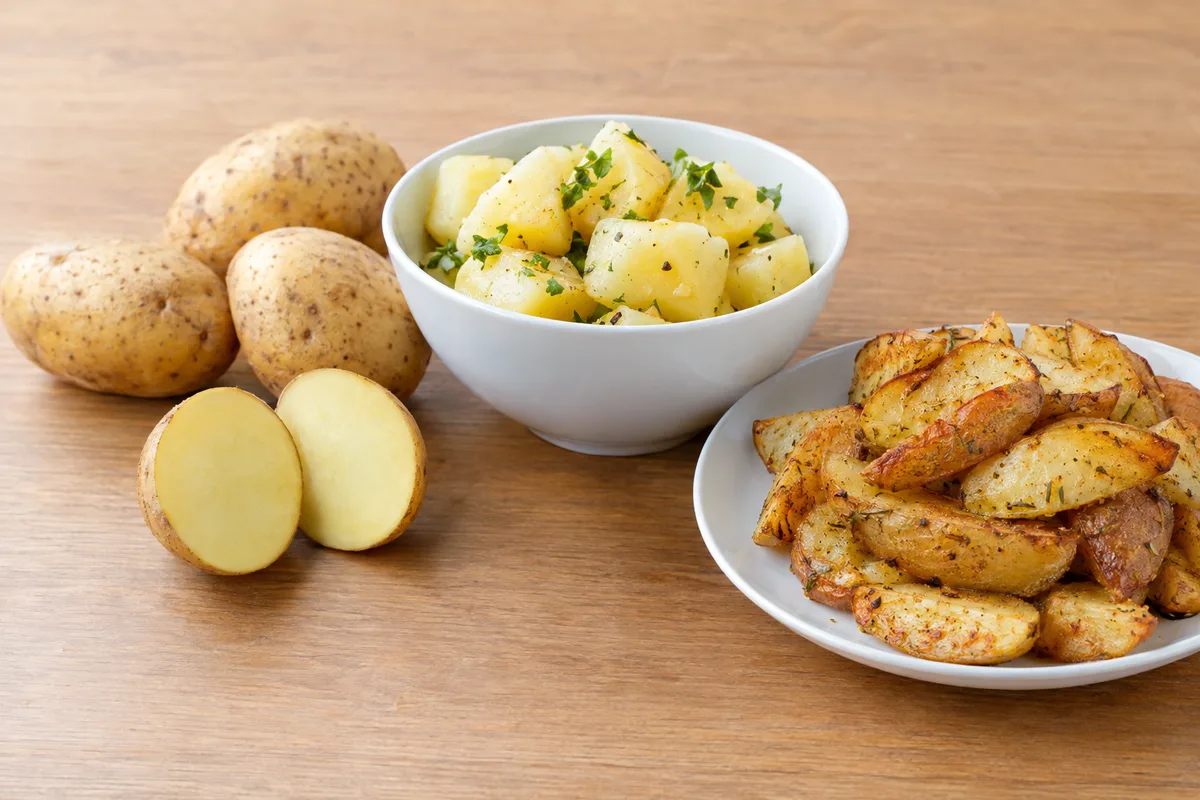
Keeping the skin on can retain more fibre, provided you enjoy the texture and clean it well. Potatoes can also be filling, especially when they are boiled or baked and eaten as part of a balanced plate.
Cooking method makes a difference
Boiling, steaming, baking and air-frying can prepare potatoes with little added fat. Roasting or frying usually adds more energy because the potato absorbs or is coated in oil.
Toppings and sauces count too. Butter, cheese, creamy dressings and cooking oils are not automatically off limits, but logging them separately can make your record more accurate.
Portions and balance
There is no single ideal potato portion because needs vary with appetite, activity, goals and the rest of the meal. Use your usual tracking approach and compare the amount you serve with how satisfied and energised you feel afterwards.
A potato-based meal can be rounded out with a protein source and vegetables. This creates a broader mix of nutrients and may feel more satisfying than eating potatoes on their own.
Tracking potatoes accurately
Log potatoes in the same state in which you weigh them, such as raw, boiled or baked. Water gained or lost during cooking changes the weight, so matching the food entry to the preparation method helps avoid confusion.
Check whether a database entry includes the skin, oil or other additions. Potatoes do not need to be treated as either virtuous or unhealthy; a clear entry that reflects what you actually ate is more useful.