
Rice or Potatoes: Which Has More Carbohydrate?
Rice and potatoes both provide carbohydrate, but the amount you log depends on the type, portion and cooking method. This guide explains how to compare them fairly and choose the right entry in your food tracker.
The basic difference
Rice and potatoes both contain plenty of starch, which is a form of carbohydrate. Once cooked, rice is generally more carbohydrate-dense than boiled or baked potato when you compare the same weight. This is largely because cooked potatoes hold more water, while cooked rice packs more starch into each spoonful.
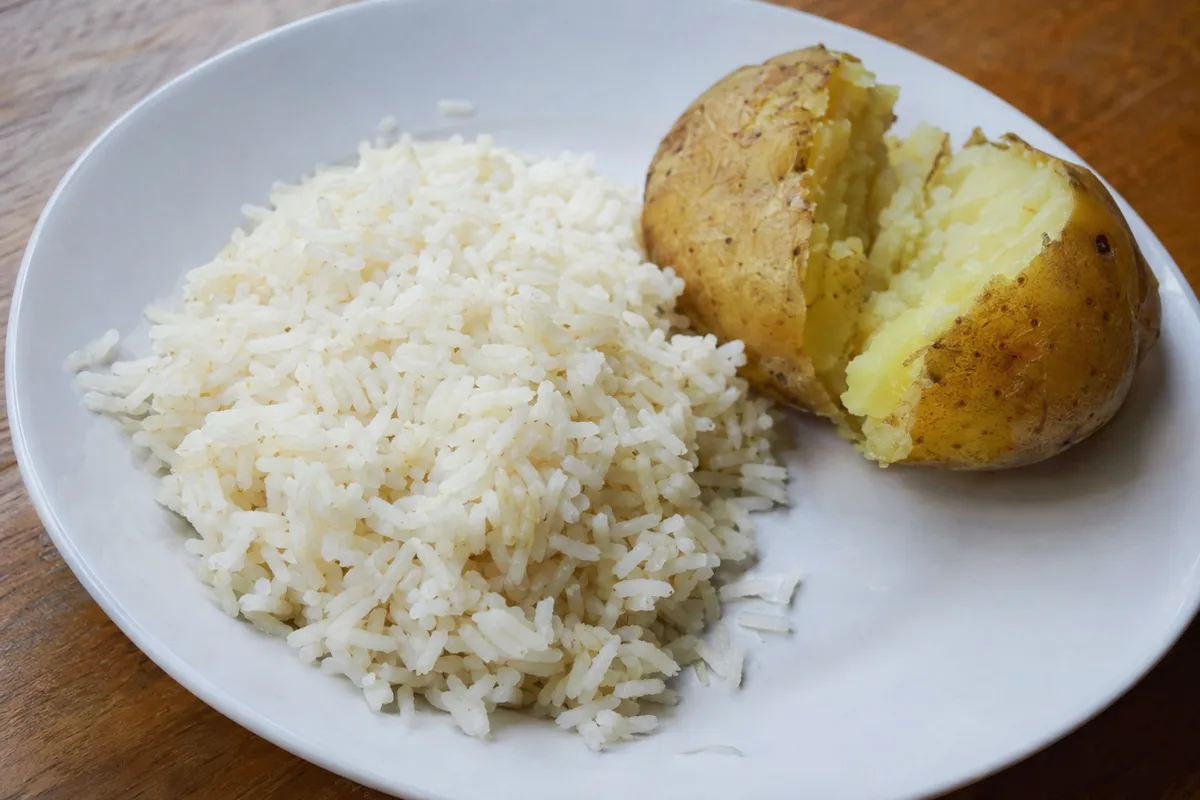
That does not mean a potato meal always contains less carbohydrate than a rice meal. A large potato may weigh considerably more than a typical serving of cooked rice, so the total can be similar or higher. Your actual portion matters more than a simple ranking of the two foods.
- Cooked rice usually provides more carbohydrate for the same cooked weight
- Potatoes contain more water after cooking
- A larger potato portion can change the comparison
- Both can fit into a meal according to your preferred carbohydrate target
Compare like with like
Food tracker entries may describe rice and potatoes as raw, cooked, boiled, baked or prepared in another way. Raw and cooked weights are not interchangeable because cooking changes the amount of water in the food. A cooked serving should be matched with a cooked database entry whenever possible.
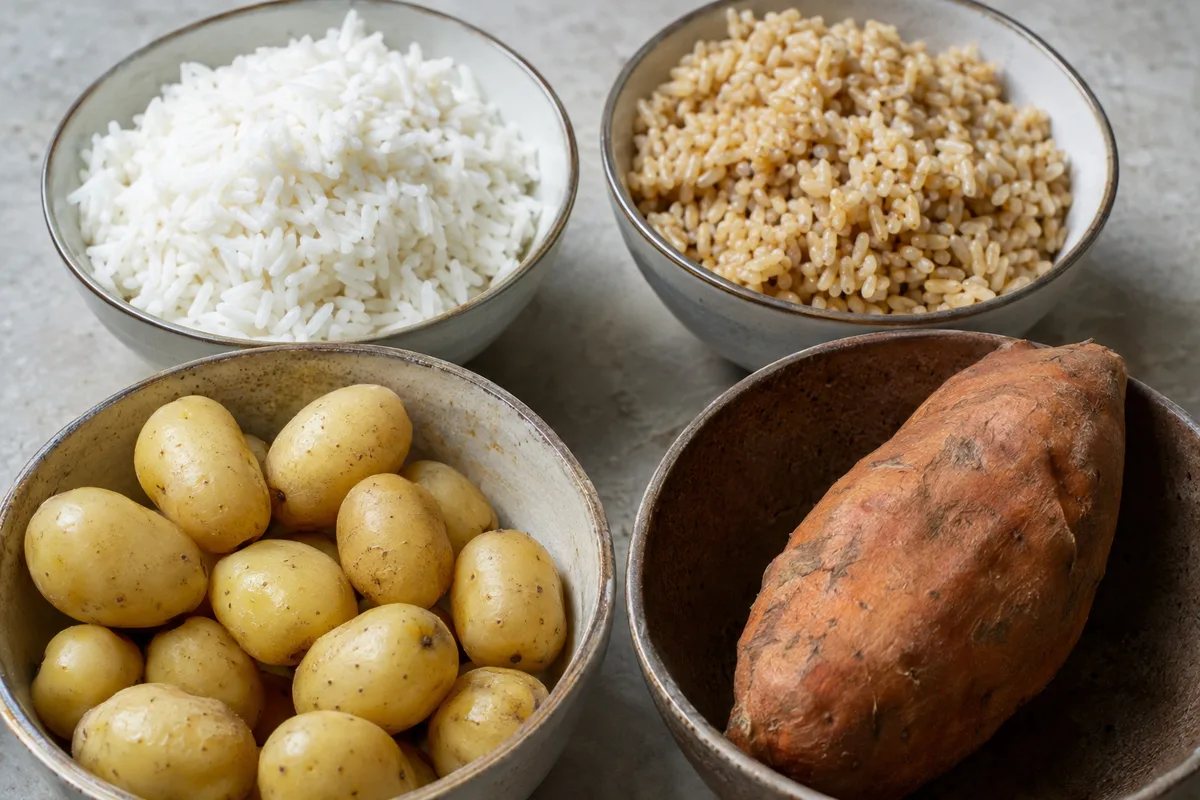
Rice absorbs water and becomes heavier during cooking, while potatoes can gain or lose water depending on the method. Baking tends to remove more moisture than boiling, so the same potato may become more carbohydrate-dense by weight. Check the description of an entry rather than choosing the first result.
- Match cooked food with a cooked entry
- Choose the specific cooking method where possible
- Keep the skin setting consistent for potatoes
- Use the same database entry each time for better consistency
Portion size decides the total
Comparisons per fixed weight are useful, but you eat a portion rather than a chart. A modest scoop of rice may contain less carbohydrate than a very large baked potato, even though rice is usually denser by weight. Logging the amount on your plate gives you the comparison that matters for your meal.
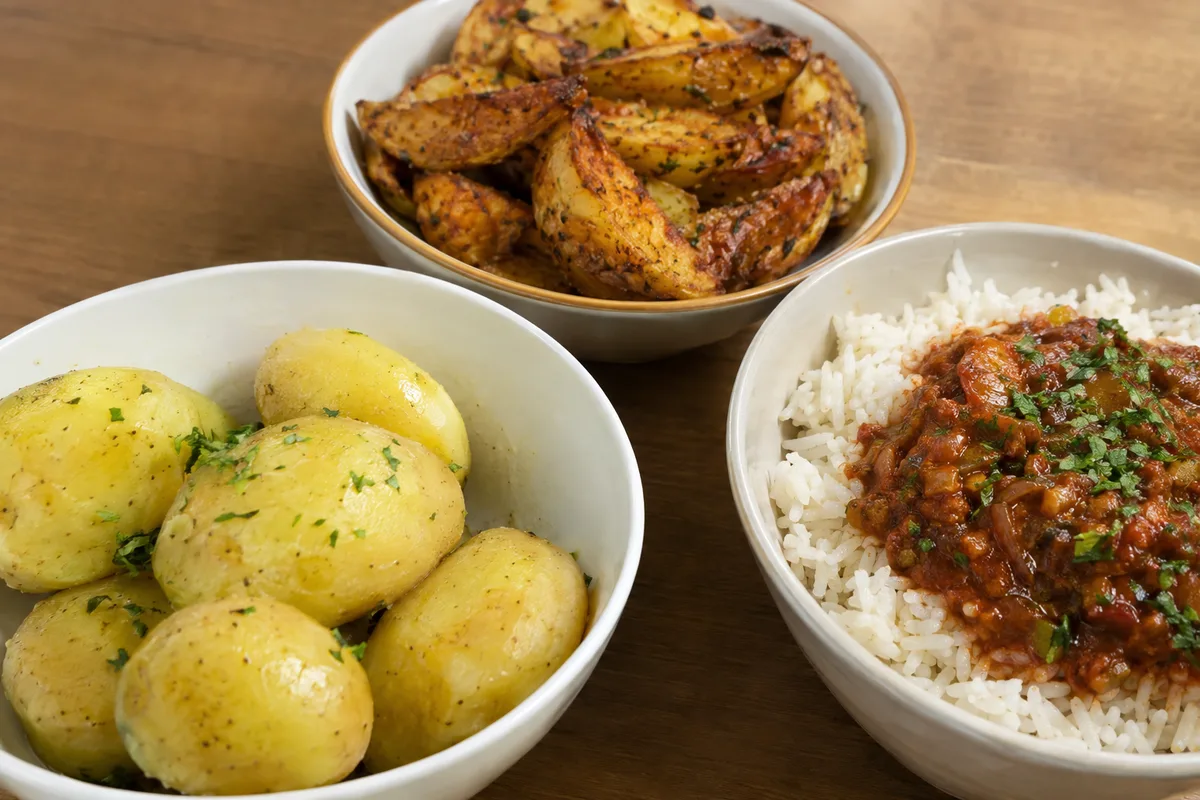
If you cook several servings together, you can track the full cooked batch and divide it by the number of portions. This works well for a pan of rice or a tray of potatoes cut into similar pieces. The result still depends on how evenly the food is shared.
- Log the edible portion rather than peelings or discarded scraps
- Record seconds or extra spoonfuls separately
- Divide shared batches as consistently as you can
- Use household measures only when weighing is not practical
White, brown, new and sweet varieties
Different varieties can have slightly different carbohydrate and fibre values. White and brown rice are often fairly close in total carbohydrate, although brown rice usually keeps more of the grain's fibre. The exact figures depend on the variety and the entry used in your tracker.
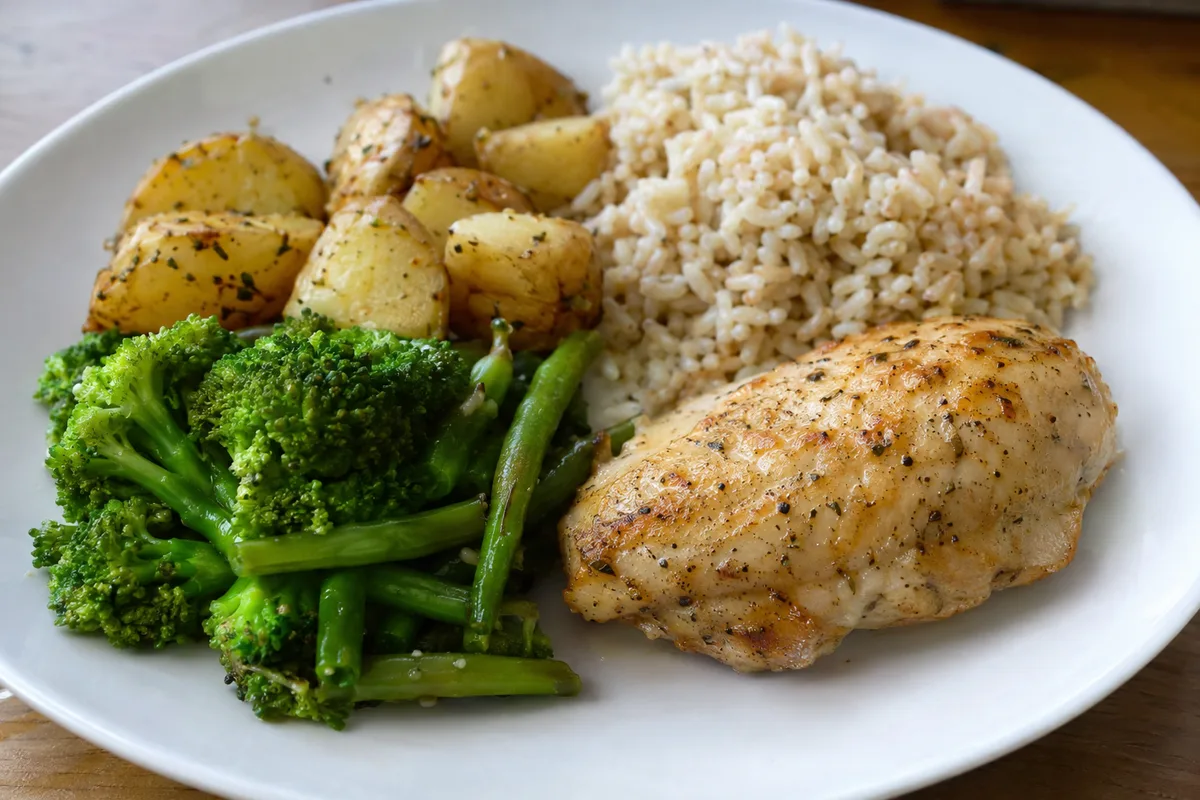
Potato varieties also differ, and new potatoes may have a different texture and water content from larger floury potatoes. Sweet potatoes provide starch too, but they should be logged as their own food rather than treated as ordinary potatoes. Keeping the skin on a potato usually adds fibre, provided you eat it.
- Log white, brown and wild rice separately
- Choose the named rice variety when it is available
- Treat sweet potato and ordinary potato as different entries
- Select potato with skin or without skin to match your plate
Cooking and added ingredients matter
Plain boiled rice and plain boiled potatoes are easier to compare than mixed dishes. Oil, butter, creamy sauces and other additions may change the energy and fat in the meal without adding much carbohydrate. Ingredients such as beans, vegetables or sweet sauces can also change the carbohydrate total.
Frying does not remove the potato's carbohydrate, but it can reduce water and add cooking fat. Rice cooked with stock may be similar in carbohydrate to rice cooked with water, unless the stock or added sauce contains carbohydrate. For the clearest log, enter important additions separately or use a recipe made from the ingredients you actually used.
Cooling cooked rice or potatoes can alter how some of their starch is digested. Reheating may change it again, and the effect varies with preparation. Unless your tracker has a suitable tested entry, do not guess an amount to subtract from the carbohydrate total.
- Log cooking fats separately
- Include sauces, dressings and toppings
- Build a recipe for mixed rice or potato dishes
- Avoid using a plain-food entry for fried or creamy versions
Choosing between rice and potatoes
Neither food is automatically the better choice. Rice may suit a meal where you want a smaller, starchier portion, while potatoes can provide more plate volume because of their water content. Fibre also depends on whether you choose brown rice, potato skin and the rest of the meal.
Use your food log to compare portions you genuinely enjoy and are likely to repeat. Look at total carbohydrate, fibre and the ingredients served alongside the starch rather than judging rice or potatoes alone. Consistent entries and realistic serving sizes will make the comparison more useful than searching for one perfect number.
- Choose the option that suits the meal
- Compare your usual portions rather than equal-looking servings
- Add vegetables and a protein food according to your preferences
- Keep favourite meals repeatable by saving accurate recipes