
Carbohydrates Explained: What You Are Really Tracking
Carbohydrates are a broad group of nutrients rather than one type of food. Understanding their different forms can make your food log easier to interpret.
What counts as carbohydrate
Carbohydrates include sugars, starches and fibre. Sugars are smaller carbohydrate molecules, while starch is made from longer chains that the body breaks down during digestion. Fibre is also a carbohydrate, but it is not digested in the same way.
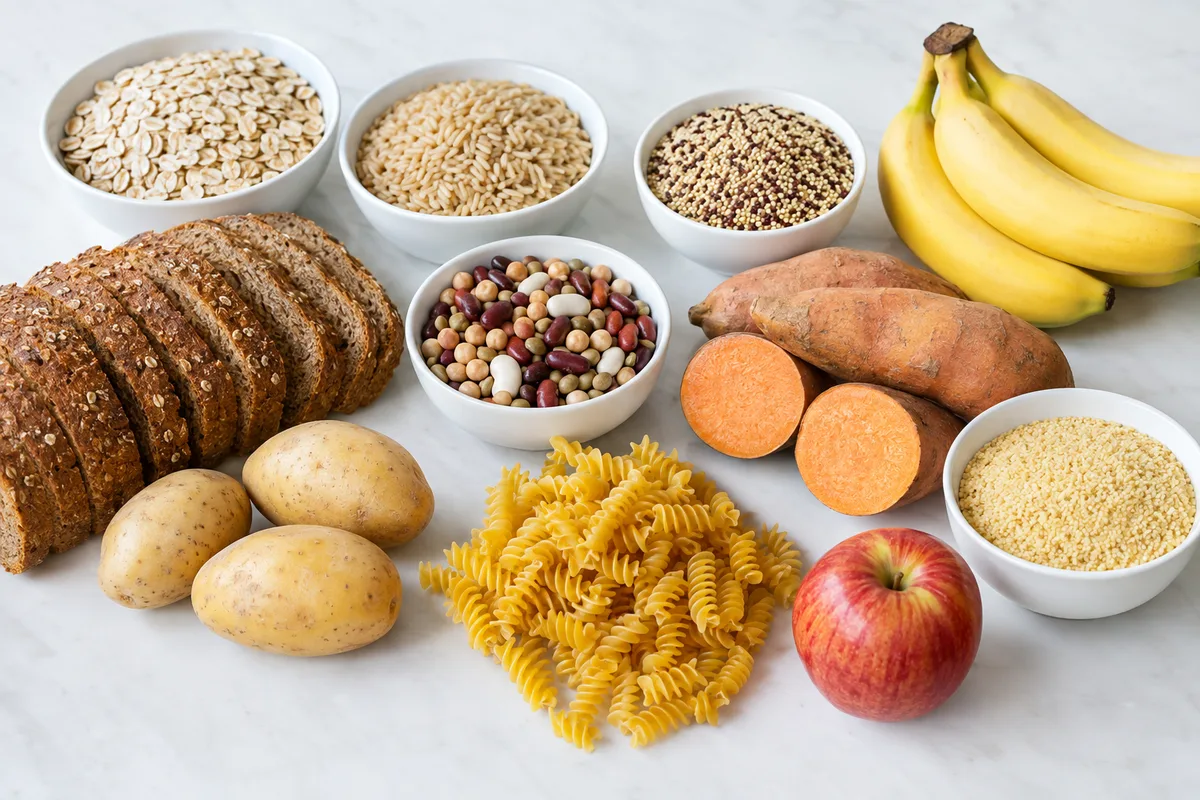
Carbohydrates appear in foods such as grains, pulses, fruit, vegetables and dairy products. The source matters because foods contain different combinations of fibre, protein, fat, vitamins and minerals. Two entries with similar carbohydrate values can therefore offer very different overall nutrition.
Carbohydrates and energy
Digestible carbohydrate provides about 4 kcal per gram. That makes carbohydrate less energy-dense gram for gram than fat, which provides about 9 kcal per gram. The total energy in a food still depends on its full mix of carbohydrate, protein, fat and other components.
Fibre is handled differently from sugars and starches, so its contribution may be calculated differently across labels and tracking databases. This can explain why a food's listed energy does not always match a simple calculation from its macronutrients. Small differences can also come from rounding.
Reading labels and app entries
On UK food labels, the carbohydrate line usually refers to digestible carbohydrate, with fibre listed separately. The phrase “of which sugars” shows how much of that carbohydrate is sugar; it is not an extra amount to add on. Starch generally makes up the remaining digestible carbohydrate.
Tracking apps may use data from different countries or user-created entries, so definitions are not always consistent. Check whether fibre is separate and whether the entry matches the label for the portion you ate. For foods weighed dry or cooked, select the entry that reflects the state in which you weighed them.
Putting the number in context
A carbohydrate total does not tell you everything about a meal or a day. Looking at fibre, protein and fat alongside it gives a fuller picture, while the ingredients show where the carbohydrate came from. Your preferred carbohydrate intake depends on your body, routine, appetite and goals.
Consistency is often more useful than chasing perfect precision. Use the same weighing method, save reliable entries and review patterns across several days rather than judging one item in isolation. This turns carbohydrate tracking into practical information rather than a single number to label as good or bad.