
Vitamins explained: what they do and how to track them
Vitamins help the body carry out everyday jobs, but they do not provide energy in the same way as protein, carbohydrate and fat. This guide explains the main vitamin groups, where they come from and how to use your food log sensibly.
What vitamins are
Vitamins are nutrients that the body needs in relatively small amounts. They support jobs such as releasing energy from food, maintaining tissues and helping normal body processes run smoothly. Each vitamin has its own roles, so one cannot simply stand in for another.

Vitamins do not add calories to your diary. Instead, they work alongside the protein, carbohydrate, fat and minerals in what you eat. A meal can therefore fit your calorie target while still offering a narrow or varied mix of vitamins.
Your requirements depend on factors such as age, life stage, food choices and individual circumstances. Rather than trying to make every meal perfect, look at the range of foods logged across several days. Regular variety is usually more informative than one unusually nutritious or limited day.
- Vitamin A supports normal vision, skin and immune function.
- B vitamins help the body use energy from food and support normal cell processes.
- Vitamin C supports normal tissue formation and helps the body absorb iron from plant foods.
- Vitamin D supports normal bones, muscles and immune function.
- Vitamins E and K have roles in protecting cells and normal blood clotting.
Water-soluble vitamins
Vitamin C and the B-group vitamins are described as water-soluble. The body handles each one differently, but many are not stored in large amounts. This makes regular food sources useful, without meaning that every vitamin must appear at every meal.
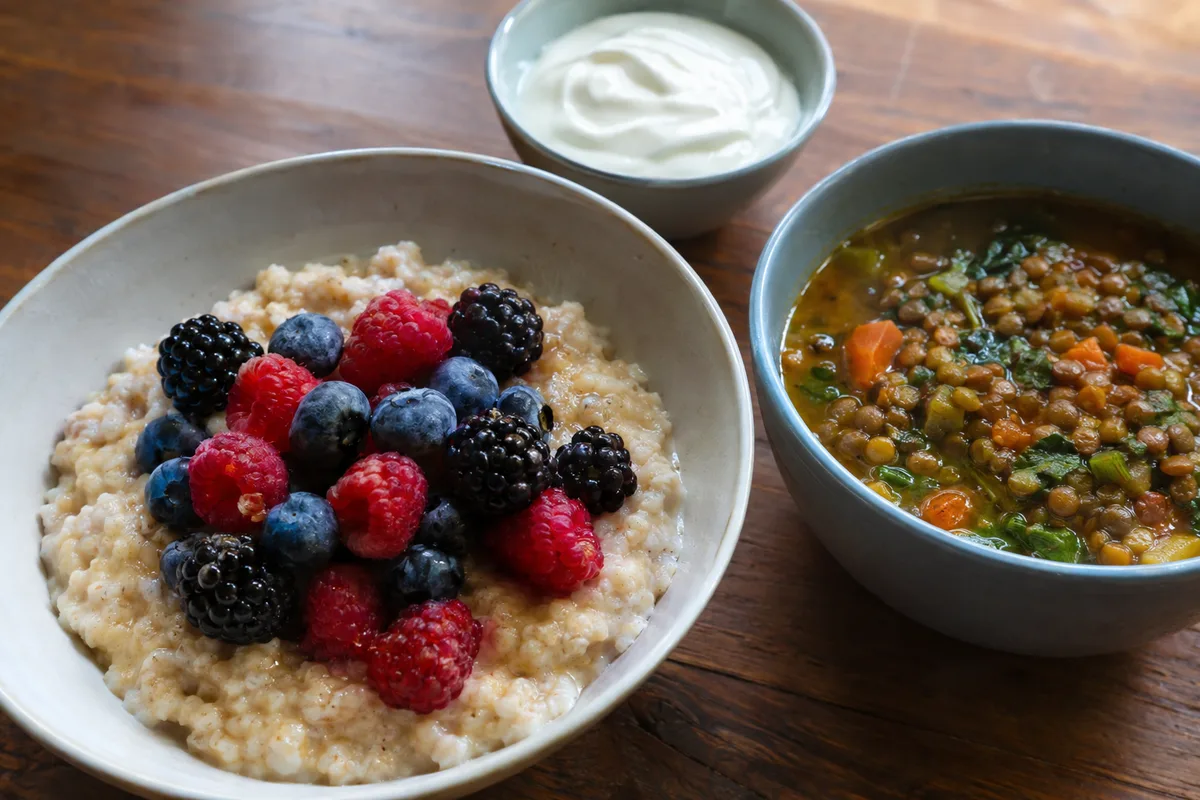
Fruit and vegetables provide vitamin C, while B vitamins are spread across many foods. Depending on the vitamin, sources can include wholegrains, pulses, dairy foods, eggs, fish, meat, nuts, seeds and fortified foods. Cooking and storage can affect some water-soluble vitamins, especially when food is boiled for a long time and the cooking water is discarded.
A varied diary may show several sources even when no single food looks especially important. Porridge, beans, yoghurt, vegetables and fruit can each contribute something different. If your tracking app gives nutrient details, treat them as an estimate because its food entries may not all contain complete vitamin data.
- Add berries or sliced fruit to porridge or yoghurt.
- Include beans, lentils or peas in soups, stews and salads.
- Choose a mixture of vegetables rather than repeating one type.
- Use cooking water in soups or sauces when it suits the dish.
- Check whether logged fortified foods include their vitamin information.
Fat-soluble vitamins
Vitamins A, D, E and K are fat-soluble, meaning the body absorbs them alongside dietary fat. They can also be stored in the body. This is why more is not automatically better, particularly when concentrated sources are involved.

Food sources vary by vitamin. Oily fish and egg yolk can provide vitamin D, while nuts, seeds and plant oils provide vitamin E. Leafy green vegetables supply vitamin K, and vitamin A activity can come from animal foods or colourful vegetables that contain carotenoids.
A meal does not need to be high in fat to include fat-soluble vitamins. A little fat already present in eggs, fish, yoghurt, nuts, seeds or a dressing can be part of a balanced meal. Focus on the whole pattern rather than trying to pair and calculate every nutrient.
- Leafy greens with a dressing made from plant oil
- Carrots or peppers served with hummus
- Eggs with spinach and wholegrain toast
- Oily fish with potatoes and green vegetables
- Yoghurt topped with nuts, seeds and fruit
Food sources matter more than a single score
Foods rarely supply just one vitamin. An orange offers more than vitamin C, and an egg contains more than fat-soluble vitamins. Whole foods also bring combinations of fibre, protein, fats, minerals and other components that a vitamin total cannot fully describe.

This is why a nutrient score should not become the only measure of a good day. A high value for one vitamin does not cancel a limited overall food pattern. Equally, one low-looking app result may reflect missing database information rather than what was actually on your plate.
Use your diary to notice repetition and gaps. If the same breakfast, lunch and vegetables appear every day, small changes can broaden the nutrient mix without replacing everything. Rotating foods within familiar meal types is often easier than creating a completely new menu.
- Swap between different fruits during the week.
- Rotate leafy greens, peas, broccoli, carrots and peppers.
- Vary protein choices across pulses, eggs, dairy foods, fish and meat if eaten.
- Alternate oats, wholegrain bread, brown rice and other grain foods.
- Use different nuts and seeds as toppings or ingredients.
What food tracking can and cannot show
A food diary can help you see which meals contribute particular vitamins. However, vitamin totals are often less reliable than calorie and macronutrient totals because database entries may be incomplete. A missing value can mean missing data, not necessarily that the food contains none.
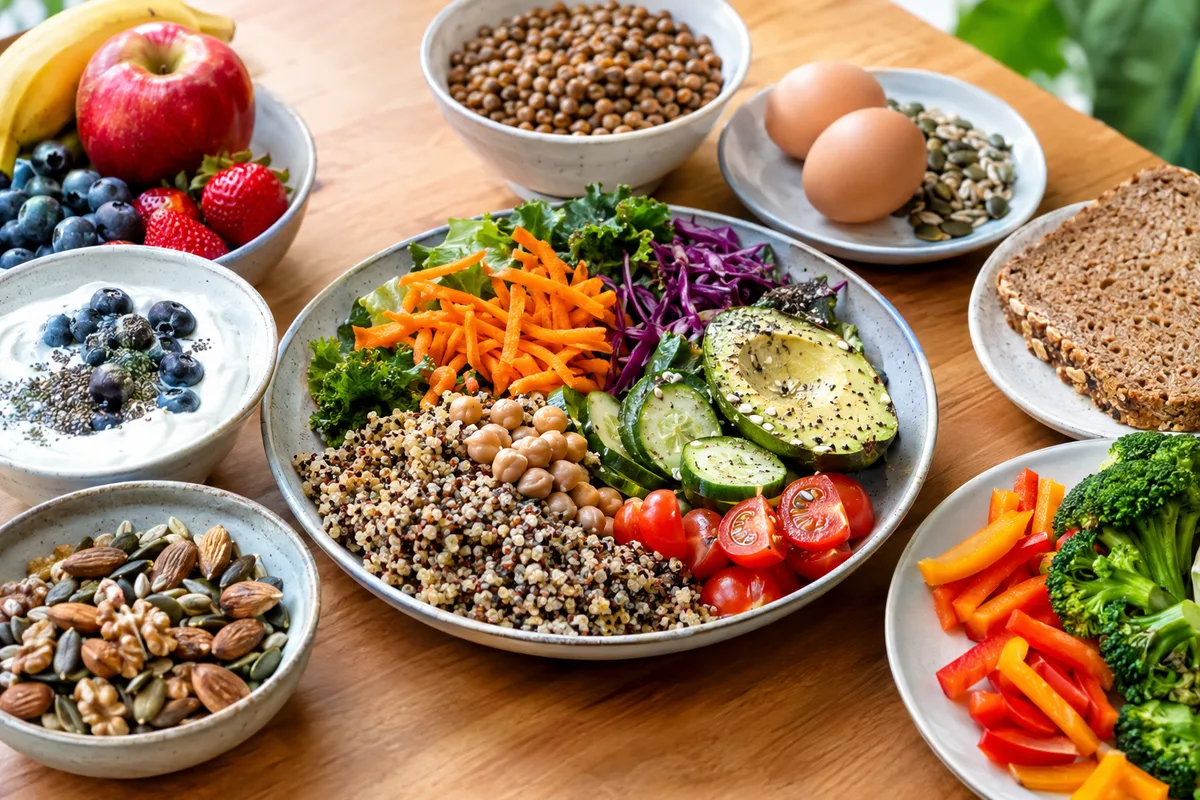
Portion estimates, recipes, cooking methods and fortified versions can also change the result. Generic entries may not match the exact food you ate, while user-created entries may list only calories and macronutrients. Packaged-food labels do not always show every vitamin present.
Look for patterns before reacting to a single number. Check whether your most frequently logged foods have full nutrient details, and compare similar entries when a result seems surprising. Your individual target may also differ from a general reference shown in an app.
- Choose verified or detailed database entries where available.
- Build and save recipes using the actual ingredients you use.
- Check serving sizes and whether foods were logged raw or cooked.
- Review several days rather than judging one meal.
- Treat blank nutrient fields as unknown rather than zero.
A practical way to review your diary
Start with foods rather than chasing every vitamin separately. Scan your recent diary for fruit, vegetables, wholegrains, pulses, protein foods, dairy foods or alternatives, nuts and seeds. The relevant mix depends on your preferences and eating pattern.
Next, note which groups appear often and which rarely appear. Pick one realistic change, such as adding a vegetable to lunch or varying your usual breakfast topping. Keep the change long enough to see whether it fits your routine before adding another.
Supplements are concentrated sources, and the suitable type or amount depends on the person. They should not be treated as a way to correct an uncertain app total or replace a varied diet. If your circumstances, food restrictions or life stage affect your needs, seek advice from a suitably qualified health professional.
- Review a run of typical days in your diary.
- Circle the foods that provide variety across the week.
- Identify one food group that appears less often.
- Choose one practical addition or swap.
- Check the pattern again after the change has become familiar.