
How Weight Training Can Support Fat Loss
Weight training can help you retain strength and muscle while your food intake supports gradual fat loss. This guide explains how to combine lifting, eating, recovery and progress checks without treating workouts as a way to cancel out meals.
What weight training contributes
Fat loss happens when your body uses more energy than it receives from food and drink over time. Weight training can contribute to the energy you use, but that is not its only role. It gives your muscles a reason to keep working and adapting while you eat less energy than you use.

A lifting session does not guarantee fat loss, and its energy use is difficult to estimate accurately. Exercise trackers and gym machines can only provide rough figures, so avoid automatically eating back everything they report. Let your food record, training performance and longer-term body trend guide your decisions together.
Weight training can also make everyday tasks feel more manageable as your strength improves. The size of any change depends on your starting point, programme, food intake and recovery. Think of lifting as one part of the process rather than the whole solution.
Keep the energy deficit manageable
Because you already track your food, start by looking for patterns rather than trying to make every day identical. Compare your usual intake with changes in body weight, waist measurements, clothing fit and gym performance over several weeks. Daily readings can move around because of food, fluid and other normal factors.

A very aggressive reduction in food can leave you tired, hungry and less able to train well. A more manageable approach is to make small adjustments, observe the result and change again only when the trend calls for it. The right intake depends on the person, so there is no single calorie target that suits everyone.
Check whether small extras are being recorded consistently before cutting portions further. Cooking oils, drinks, sauces, snacks and unplanned tastes can be easy to overlook. Accurate tracking is more useful than aiming for false precision.
- Record cooking fats, sauces and calorific drinks
- Use similar portion methods from day to day
- Look at a weekly trend rather than one isolated weigh-in
- Adjust food intake gradually when progress has genuinely stalled
Build sessions around useful movements
A practical programme trains the main movement patterns across the week. These include pushing, pulling, squatting, hinging and carrying or bracing. You do not need a complicated list of exercises if a smaller selection covers your whole body.
Choose movements that suit your experience, mobility and available equipment. Use a load that lets you control the exercise and keep your technique steady. The suitable number of exercises, sets and repetitions depends on your programme and recovery.
Training every set until you cannot move the weight is not required for useful work. Most sessions should leave you able to repeat good technique, even when the final repetitions feel challenging. If form changes sharply, reduce the load, shorten the set or rest longer.
- Squat pattern: bodyweight squat, goblet squat or leg press
- Hinge pattern: hip hinge, Romanian deadlift or bridge
- Push pattern: press-up, chest press or overhead press
- Pull pattern: row or pulldown
- Carry or brace pattern: loaded carry or plank variation
Progress without chasing exhaustion
Progressive training means asking your muscles to do slightly more over time. That could mean adding a little load, completing another controlled repetition, improving your range of movement or using cleaner technique. It does not mean that every workout must be harder than the last.

Record your exercises, loads and repetitions alongside brief notes about effort and form. This makes it easier to see progress that body weight alone cannot show. During fat loss, maintaining performance can itself be a useful sign, especially when energy intake is lower.
Change one part of an exercise at a time so you can judge what made the difference. Large jumps in load often make technique harder to assess. When progress slows, first review sleep, food, rest periods and training consistency before adding more work.
- Add load only when the current weight is controlled
- Increase repetitions within your planned range
- Improve depth or range without losing position
- Repeat a load with steadier technique
- Use the same exercise long enough to compare sessions
Eat to support lifting and appetite
Protein provides the building blocks used to maintain and repair muscle. Spread protein-containing foods across your meals rather than relying on one large serving. The amount that suits you depends on your body, preferences and overall eating pattern.
Carbohydrate can support demanding training, while dietary fat contributes energy and helps make meals satisfying. Protein and carbohydrate provide about 4 kcal per gram, while fat provides about 9 kcal per gram. This is why small servings of oils, spreads and other high-fat foods can make a noticeable difference to a tracked total.
Build meals around filling foods that you enjoy and can record consistently. Vegetables, fruit, beans, wholegrain foods and other fibre-rich choices can add volume and variety. There is no need to label individual foods as forbidden if your overall intake remains suitable.
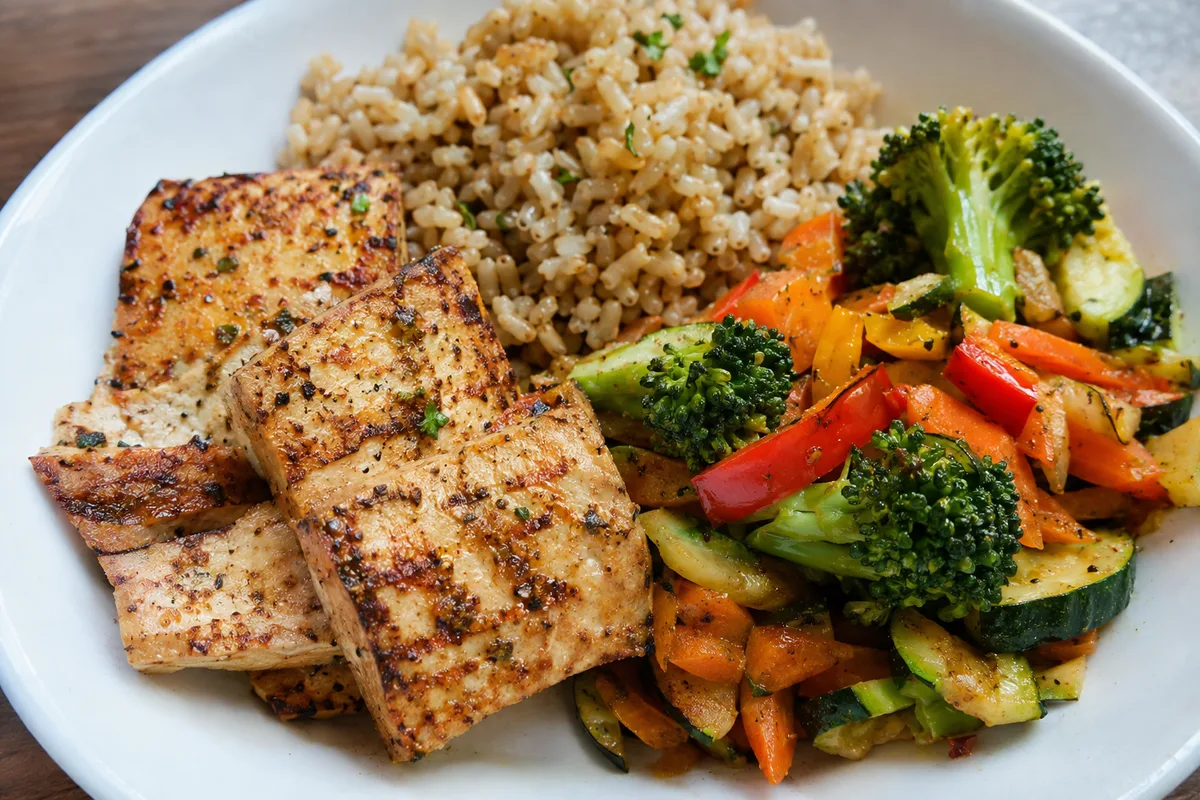
- Pair eggs, yoghurt, fish, tofu, beans, poultry or lean meat with meals
- Include rice, potatoes, oats, bread or fruit around training when useful
- Add vegetables or salad for fibre and meal volume
- Measure energy-dense oils, dressings, spreads and toppings consistently
Use recovery and trends to guide changes
Strength training creates a demand, while recovery gives your body time to respond. Leave enough time between hard sessions for the same muscles, and keep some sessions easier when fatigue builds. The ideal schedule depends on your training history, workload, sleep and other activity.
Poor recovery can appear as falling performance, persistent soreness, low motivation or technique that worsens with familiar loads. Treat these signs as information rather than a reason to force a harder session. An easier workout, different movement or rest day may be more useful than adding effort.
Judge the plan over a meaningful stretch of consistent tracking. If body measurements are trending as intended and strength is broadly steady, the plan may not need changing. If neither is moving, review recording accuracy, portions, daily movement, training quality and recovery before making one modest adjustment.
- Keep a regular sleep routine where possible
- Plan rest around your harder lifting sessions
- Track strength alongside body-weight and waist trends
- Reduce training demand when fatigue is affecting technique
- Change one variable, then allow time to assess it