
What an 1800-Calorie Day Can Look Like
An 1800-calorie day can include familiar, satisfying foods rather than one fixed menu. This guide shows how to spread your intake across the day and track the details that are easy to miss.
Start with the total, not a perfect menu
An 1800-calorie day means that everything you eat and drink adds up to about 1800 kcal. Food labels and tracking apps often use kcal, even when they call them calories. There is no single correct way to divide that total between meals and snacks.
Your preferred pattern may depend on your appetite, routine, food choices and activity. Some days might include three main meals, while others work better with smaller meals and more snacks. Whether 1800 calories is suitable for you also depends on your individual needs.
- Choose a meal pattern that suits your usual day.
- Leave room for drinks, dressings, sauces and cooking fats.
- Use your tracker to adjust portions rather than removing whole meals.
- Treat 1800 as a daily framework, not a list of compulsory foods.
Build a breakfast that carries you forward
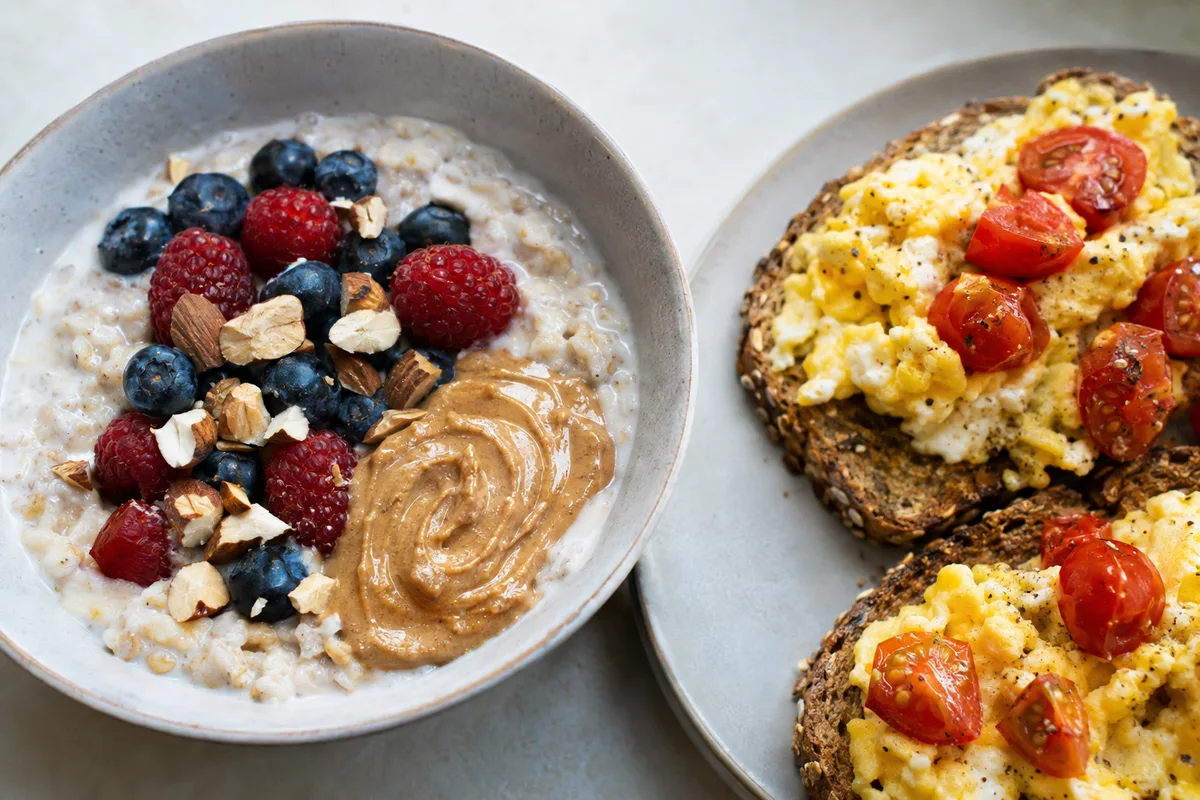
Breakfast can combine a source of carbohydrate with protein, fruit and some fat. For example, porridge with milk, fruit and nut butter gives a different mix from eggs on toast, but either can fit. The portion sizes you log determine how much of the daily total each breakfast uses.
If you are usually hungry soon after breakfast, look at what the meal contains as well as its calorie value. Fibre-rich foods, protein and some fat can make breakfast feel more substantial. Drinks and toppings still need to be included in your log.
- Porridge made with milk, topped with berries and nut butter.
- Eggs on wholemeal toast with tomatoes or mushrooms.
- Plain yoghurt with fruit, oats and chopped nuts.
- Wholegrain cereal with milk and a banana.
Make lunch more than a light snack
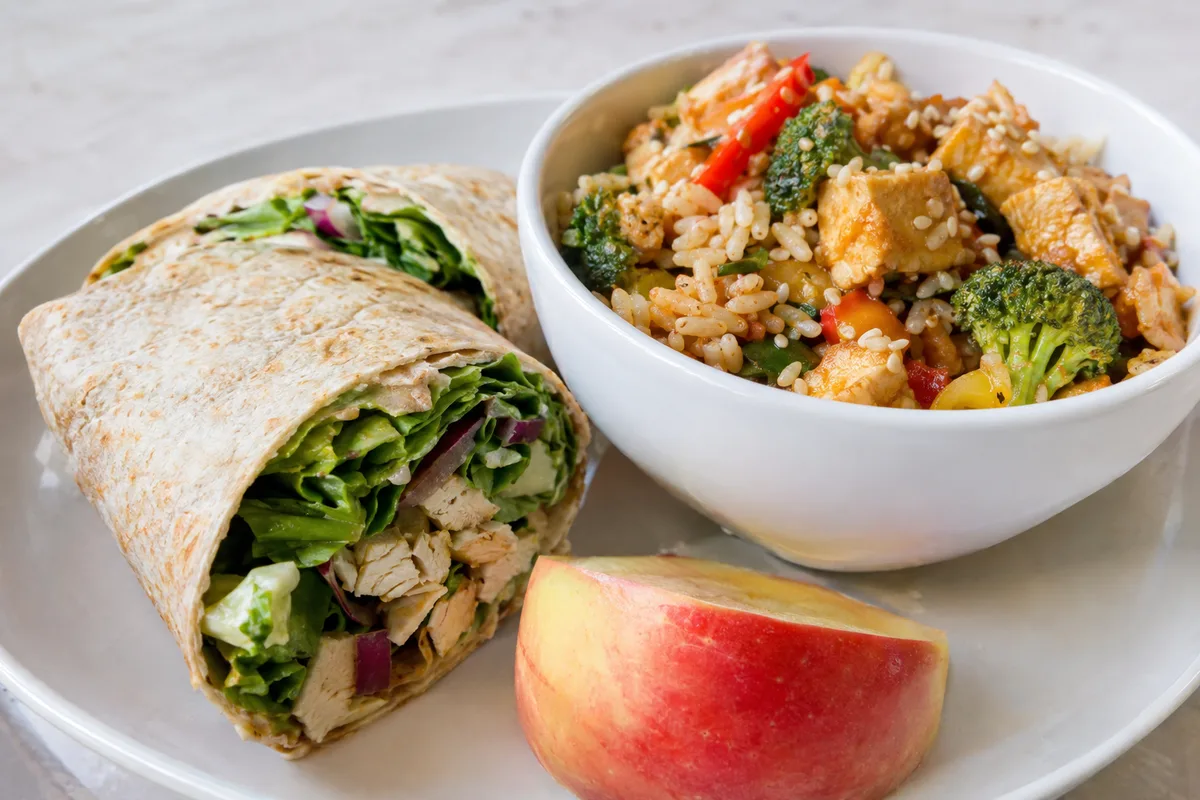
A practical lunch usually has a clear protein food, a starchy food and vegetables or fruit. This might be a filled wrap, a grain bowl, soup with bread, or leftovers from dinner. A lunch that is too small for your appetite can leave you trying to catch up later.
The ingredients around the main food often change the logged total more than expected. Oil, mayonnaise, cheese, avocado and dressings can all belong in an 1800-calorie day, but their portions matter. Enter them separately when a recipe or label does not already include them.
- A chicken or bean wrap with salad and a yoghurt-based dressing.
- A rice bowl with tofu, mixed vegetables and a measured sauce.
- Lentil soup with wholemeal bread and a piece of fruit.
- Leftover pasta with vegetables and a protein food.
Use dinner to complete the day
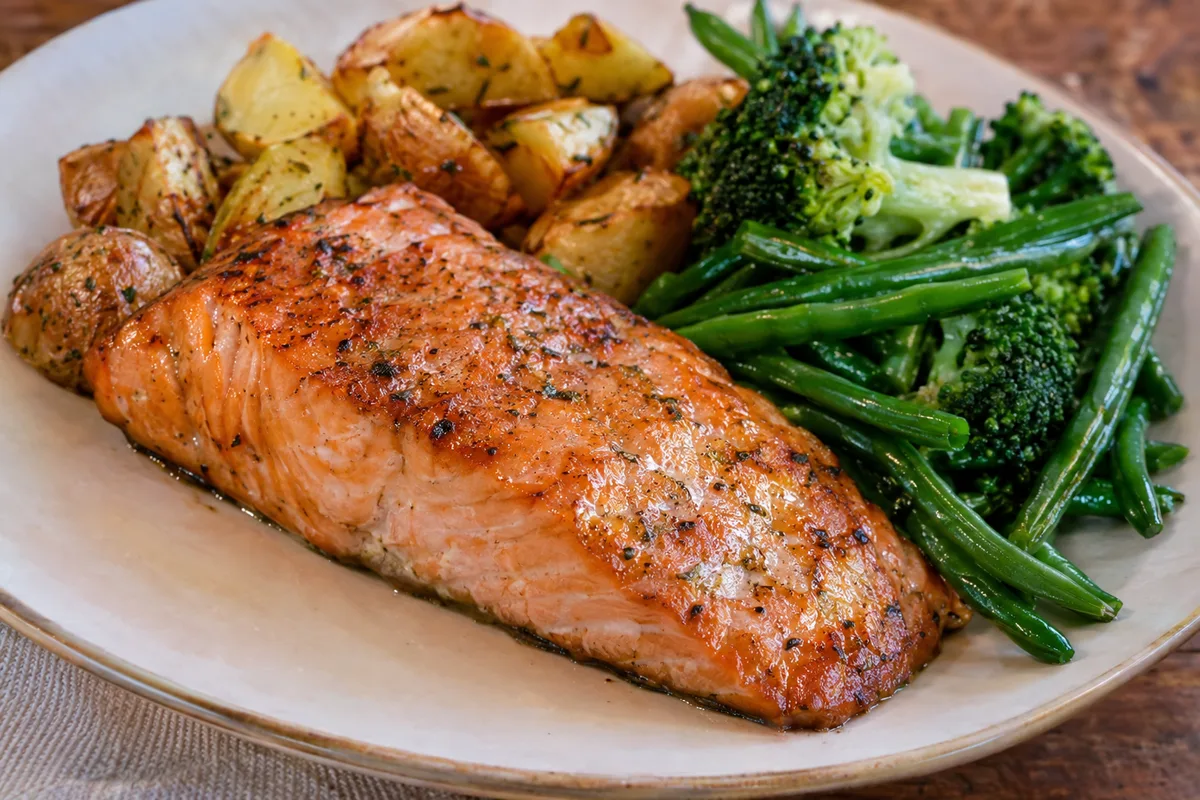
Dinner does not need to be tiny just because you have eaten earlier. Check what remains in your tracker, then choose portions that fit while still making a balanced plate. A useful starting point is vegetables, a protein food, a starchy side and any cooking fat or sauce.
Home-cooked meals may need to be entered as recipes rather than as one generic database item. Log the full recipe, including oil and sauces, then divide it by the amount you actually served. The result will be more useful than choosing an entry that only looks similar.
- Salmon, potatoes and green vegetables with a simple dressing.
- A bean chilli with rice and a spoonful of yoghurt.
- Chicken stir-fry with noodles, vegetables and sauce.
- Vegetable pasta with lentils and a little grated cheese.
Leave deliberate room for snacks and drinks
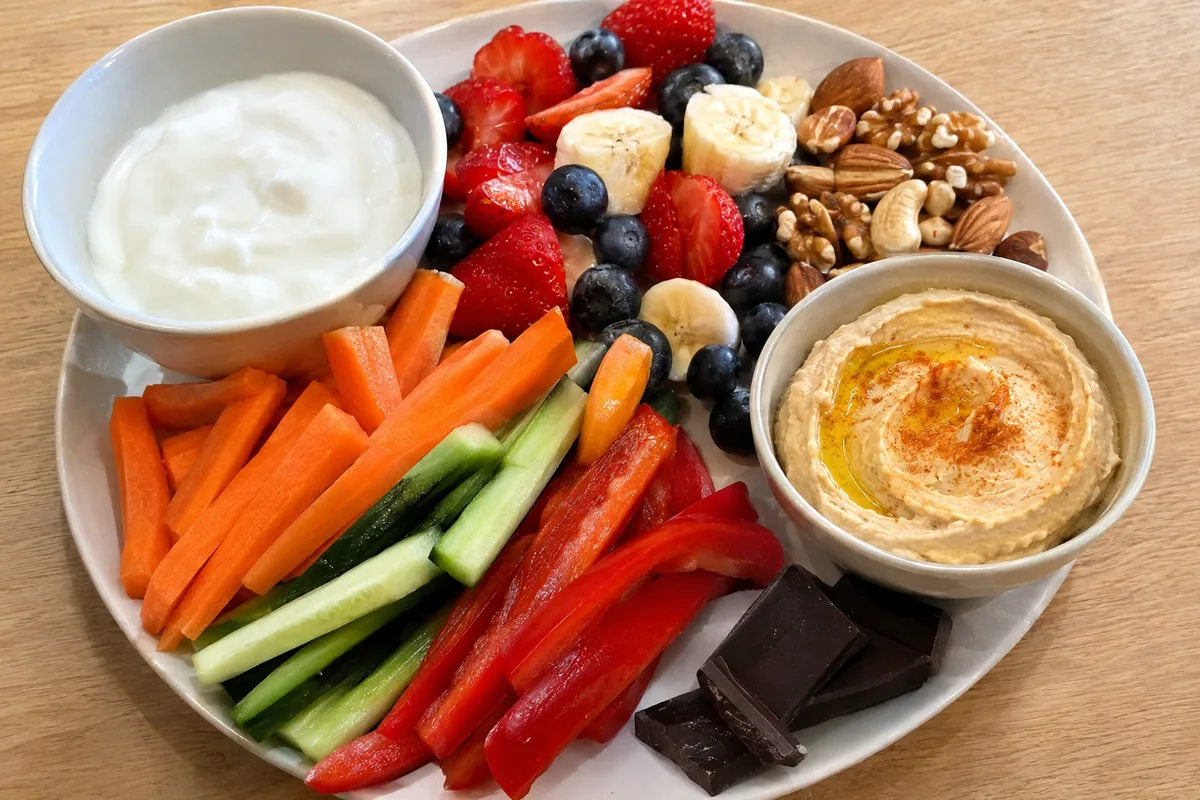
Snacks can bridge a long gap between meals or simply provide something enjoyable. They are easier to fit when you plan for them instead of treating them as forgotten extras. Fruit, yoghurt, nuts, toast and small portions of favourite foods can all have a place.
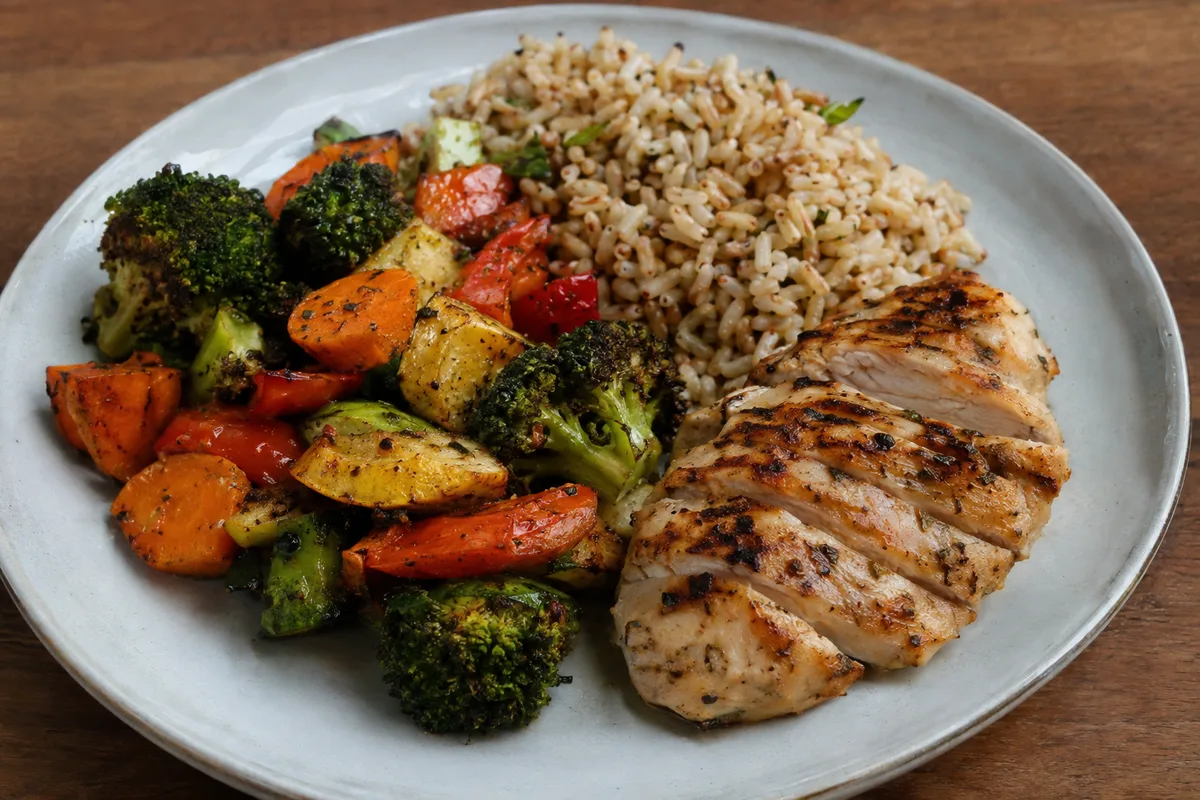
Water and unsweetened drinks add little or no food energy, while milky, sweetened and alcoholic drinks contribute to the total. The same applies to bites taken while cooking and food finished from someone else's plate. Logging these details gives you a clearer picture without attaching judgement to them.
- Fruit with yoghurt or a small handful of nuts.
- Toast with peanut butter or another spread.
- Vegetable sticks with hummus.
- A planned portion of chocolate, biscuits or another favourite food.
- Milk, juice and other energy-containing drinks entered alongside meals.
Adjust the shape of the day to suit you
Your finished day might have a larger breakfast and lighter dinner, or the reverse. What matters for the target is the combined total, while meal quality and timing affect how practical the day feels. Review your log for patterns rather than expecting every meal to look identical.
If the day regularly feels too restrictive or leaves more food than you want, the target or meal split may not suit you. Individual energy needs vary, so an appropriate number cannot be decided from a sample menu alone. Use your records to make small portion changes and seek qualified personalised guidance if you are unsure about your needs.
- Move calories between meals instead of skipping food automatically.
- Increase vegetables or other fibre-rich foods when meals feel small.
- Include protein foods across the day rather than saving them for dinner.
- Compare similar days to spot repeat omissions in your log.