
What Eating Salads Can Add to Your Day
Salads are a flexible way to eat more vegetables, fruit and other useful foods without making every meal feel the same. This guide explains their main benefits, how to build a satisfying salad and what to record when tracking one.
An easy way to add more plants
A salad can gather several vegetables, fruits, herbs and pulses in one meal. Each ingredient brings its own mix of fibre, vitamins, minerals and plant compounds. Changing the ingredients regularly gives you a broader range than relying on the same leaves every day.
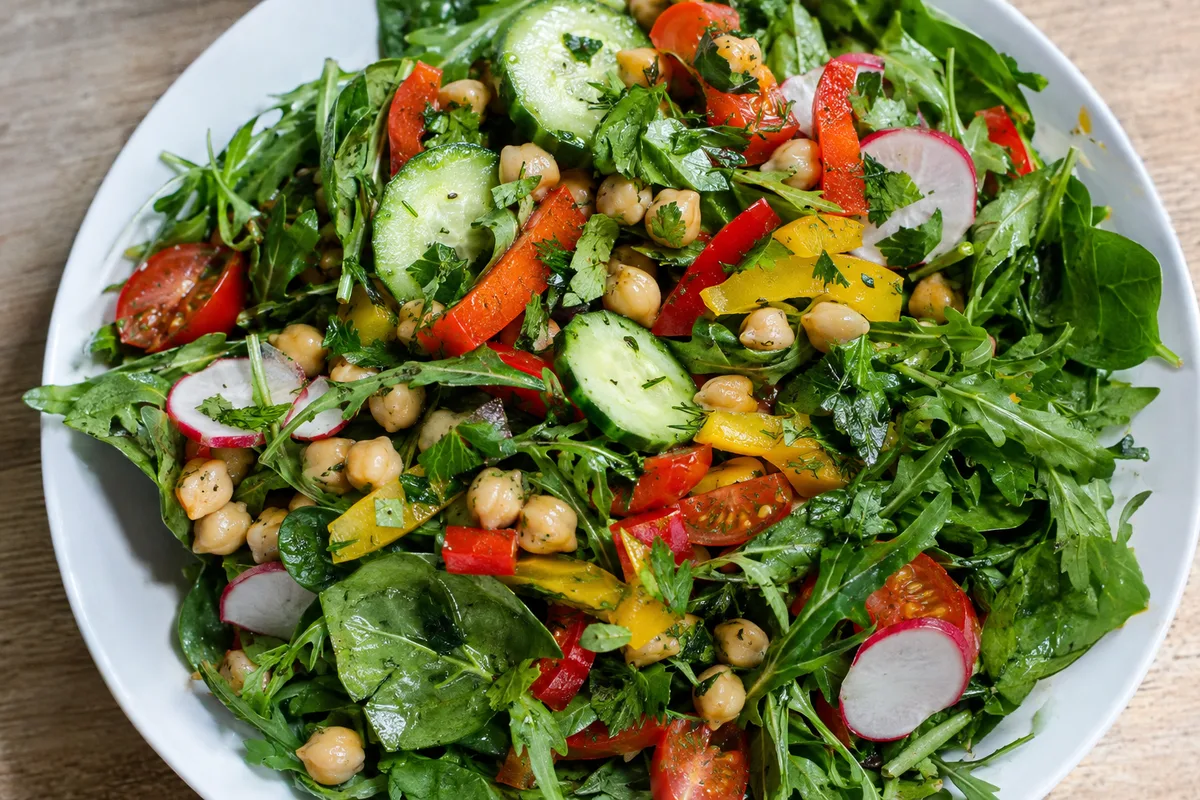
Salads also make it easy to use produce in different ways. You might combine crisp raw vegetables with roasted roots, cooked grains or warm beans. This contrast in flavour and texture can make vegetables more enjoyable and help a meal feel less repetitive.
- Dark leafy vegetables such as spinach, rocket or kale
- Crunchy vegetables such as cucumber, radish, peppers or carrots
- Sweet additions such as tomatoes, beetroot, apple or orange
- Fresh herbs such as parsley, mint, coriander or basil
- Pulses such as chickpeas, lentils or beans
Fibre can make a meal more satisfying
Vegetables, fruit, whole grains, pulses, nuts and seeds can all contribute fibre. Fibre adds substance to a meal and generally takes longer to eat than soft, highly refined foods. It can also help you feel satisfied after eating, although the amount needed varies from person to person.
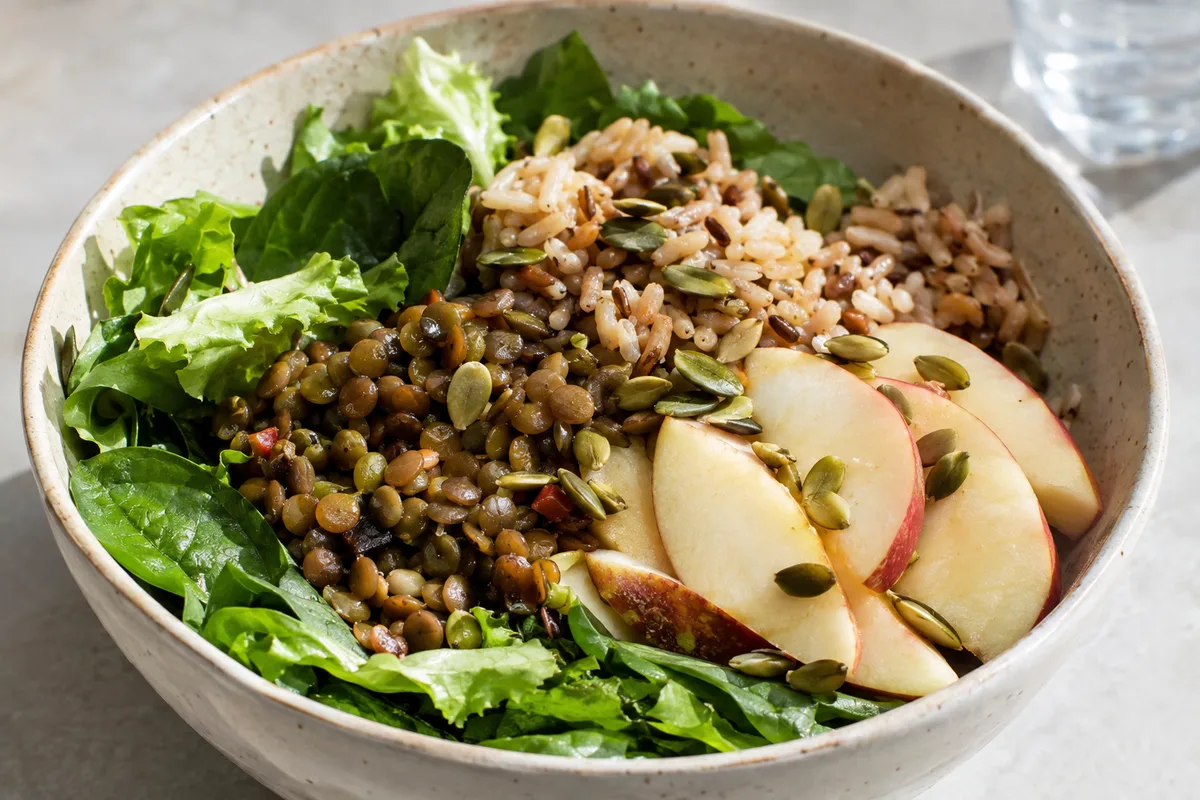
A bowl of leaves alone may not keep you satisfied for long. Adding a fibre-rich carbohydrate and a source of protein usually creates a more complete meal. If you are increasing fibre, doing so gradually and drinking enough fluid may feel more comfortable.
- Add beans or lentils to a vegetable salad
- Use brown rice, quinoa, barley or another whole grain
- Include fruit with its edible skin where suitable
- Scatter over nuts or seeds rather than relying only on leaves
More volume and freshness on the plate
Many common salad vegetables contain plenty of water as well as fibre. This gives them volume, so they can fill a generous part of the plate without all the energy coming from one ingredient. Their water content contributes to overall fluid intake, though drinks still matter.

Volume is not the same as satisfaction. A large vegetable salad may still leave you hungry if it lacks protein, carbohydrate or fat. Think of the vegetables as the fresh base of the meal rather than the entire meal by default.
- Pair leafy vegetables with eggs, fish, chicken, tofu, tempeh or pulses
- Add potatoes, grains, bread, pasta or another carbohydrate
- Include avocado, olives, nuts, seeds or an oil-based dressing for fat
- Choose a combination that matches your appetite and the rest of your day
Variety can improve taste as well as nutrition
A good salad uses more than one texture. Crisp leaves, soft roasted vegetables, chewy grains and crunchy seeds make each mouthful different. This can make a tracked meal feel enjoyable rather than chosen only because it fits a target.
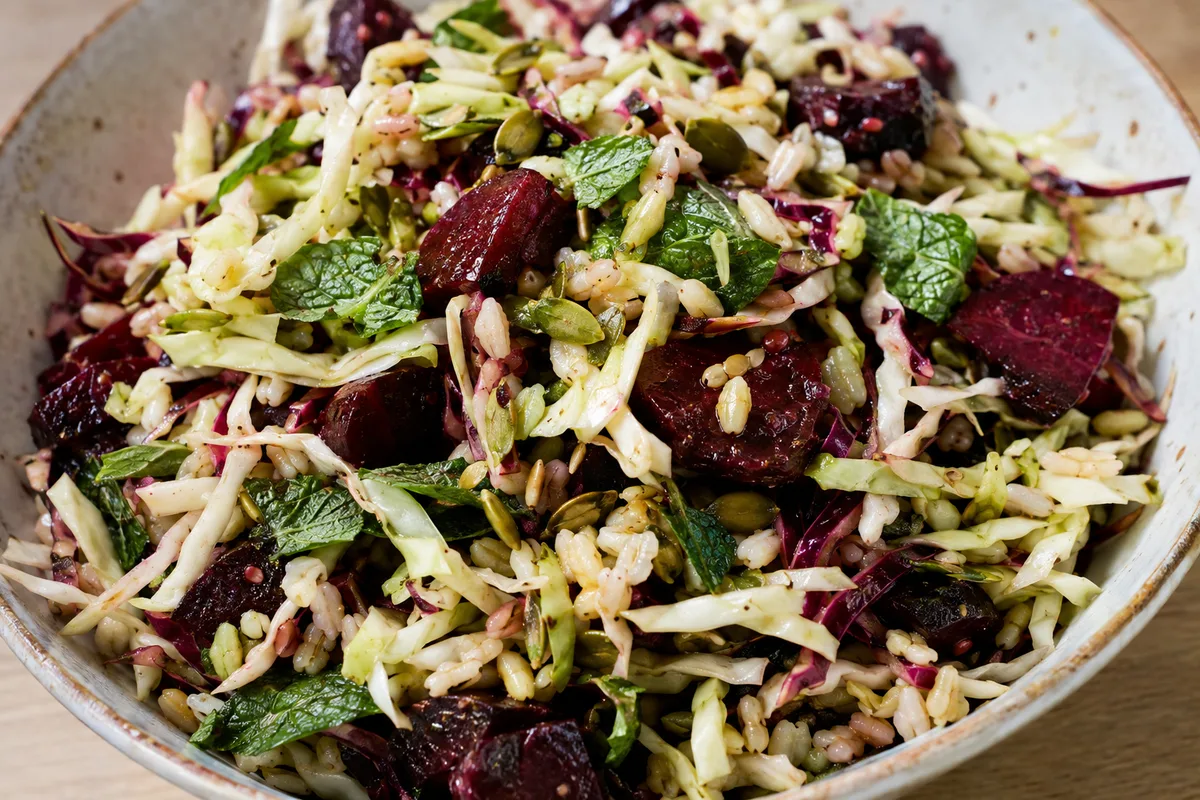
Dressings, herbs, spices and acidic ingredients bring the components together. Lemon juice, vinegar, mustard, yoghurt, tahini and oils all create different results. The best choice depends on the other ingredients and the flavour you want.
- Combine something crisp with something soft
- Use herbs or spices for flavour without relying only on salt
- Add lemon juice or vinegar for sharpness
- Include a measured creamy or oil-based dressing when it suits the meal
- Change the main ingredients with the season
A balanced salad can work as a full meal
For a salad to serve as a main meal, it helps to include several food groups. Start with vegetables, then add protein, a carbohydrate and some fat. The amounts depend on your appetite, activity, goals and what else you eat that day.
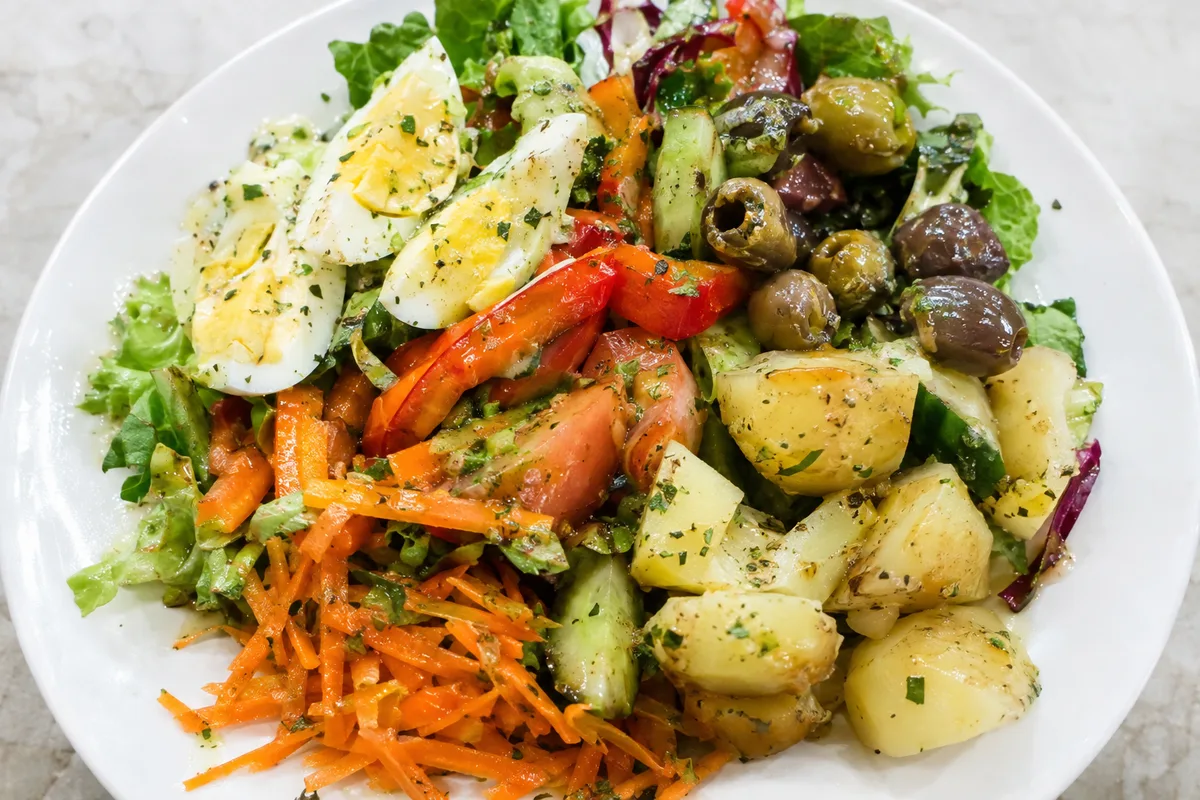
There is no single correct salad formula. Someone wanting a light side dish will build a different bowl from someone needing lunch after an active morning. Tracking the separate parts helps you see whether the meal suits your usual pattern.
- Vegetable base: leaves, tomatoes, cucumber, cabbage or roasted vegetables
- Protein: pulses, eggs, fish, poultry, tofu, tempeh or yoghurt
- Carbohydrate: grains, potatoes, pasta, bread, fruit or sweetcorn
- Fat and flavour: oil, avocado, olives, nuts, seeds, cheese or dressing
Track the whole salad, not just the leaves
Salad is not automatically low in energy, and it does not need to be. Oils, dressings, cheese, nuts, seeds, avocado and crunchy toppings can add flavour, texture and useful nutrients. They can also make up a meaningful share of the meal's energy, so include them in your record.
Logging each component gives you a clearer picture than choosing a generic entry called salad. Record cooking oils, dressings and toppings as well as the vegetables, protein and carbohydrate. Accuracy does not require avoiding richer ingredients; it simply means counting what was actually eaten.
If someone else prepares the salad, use the closest reasonable estimate rather than treating the meal as impossible to track. Note the main ingredients and estimate visible dressings or toppings. Consistency is usually more useful than chasing false precision.
- Log the vegetable base and any fruit
- Record protein and carbohydrate ingredients separately
- Include oil used for roasting or dressing
- Add cheese, nuts, seeds, avocado and crunchy toppings
- Adjust the recorded portion if you leave some behind