
How to Choose a Healthier Veggie Burger
The healthiest veggie burger is one that suits your nutritional needs, tastes good and works within the meal you are tracking. Here is how to compare the options without judging them by calories alone.
Start with what the burger is made from
Veggie burgers range from simple vegetable patties to products designed to look and cook like meat. Their main ingredients shape their nutrition, texture and flavour. A bean-based burger may offer more fibre, while one based on concentrated plant protein may provide more protein.
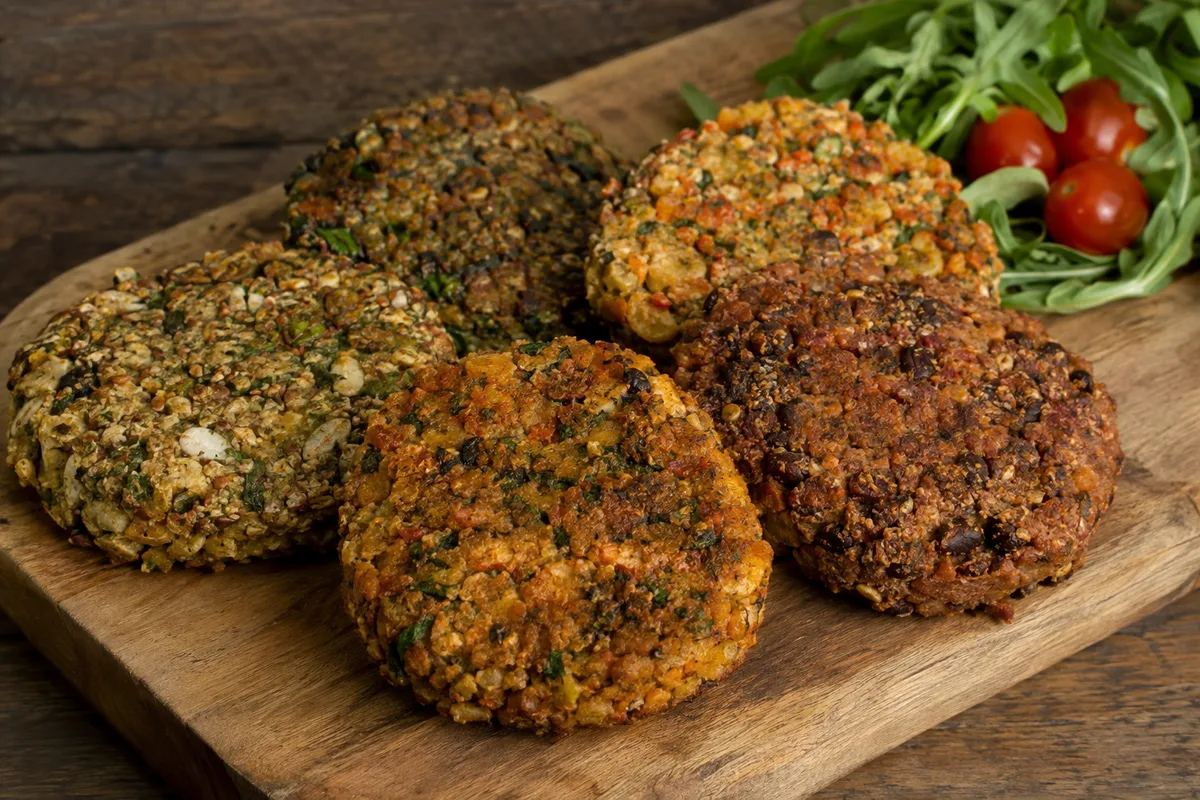
Do not assume that a long ingredients list automatically makes a burger a poor choice. Some products need extra ingredients to hold their shape, retain moisture or create a particular texture. Instead, notice whether recognisable foods such as beans, lentils, vegetables, grains, nuts or seeds appear near the start of the list.
- Beans or lentils for fibre and protein
- Vegetables for variety, flavour and colour
- Whole grains for carbohydrate and fibre
- Nuts or seeds for texture and unsaturated fats
- Concentrated plant proteins for a higher-protein patty
Check whether it provides enough protein
Protein can help make a veggie burger meal feel more substantial. The amount varies widely, so compare the protein per burger rather than relying on words such as plant-based or high-protein on the front. Your preferred amount depends on the rest of the meal and your daily target.
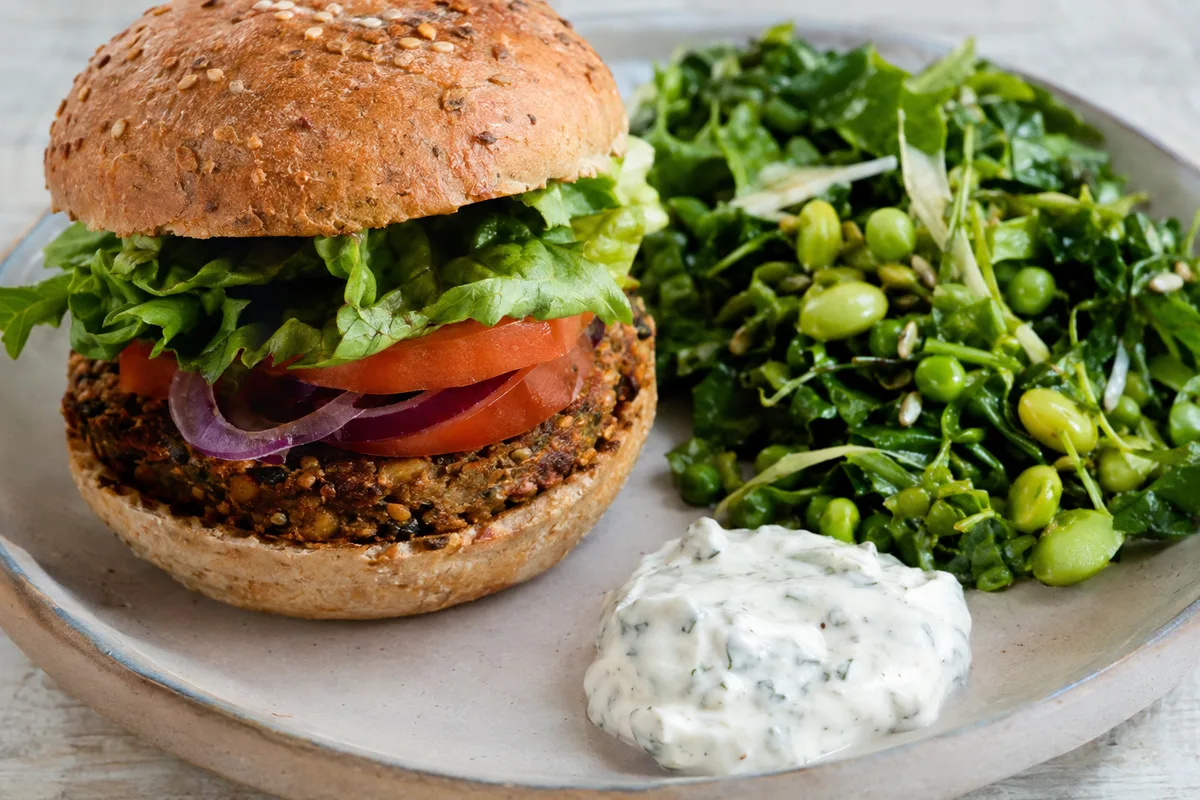
Protein provides about 4 kcal per gram, but a higher-protein burger is not automatically the healthiest choice. Salt, fibre, fat and portion size still matter. If the patty provides little protein, you can add it elsewhere in the meal.
- Add beans or lentils to a side salad
- Use a yoghurt-based or bean-based sauce
- Choose a protein-rich bun or wholegrain bread
- Serve the burger with peas, edamame or another pulse
Look for fibre and useful carbohydrates
Fibre is one reason a bean, lentil, vegetable or wholegrain burger can be a useful choice. It contributes to fullness and supports normal digestion. Check the label because a burger that looks full of vegetables may still contain little fibre.
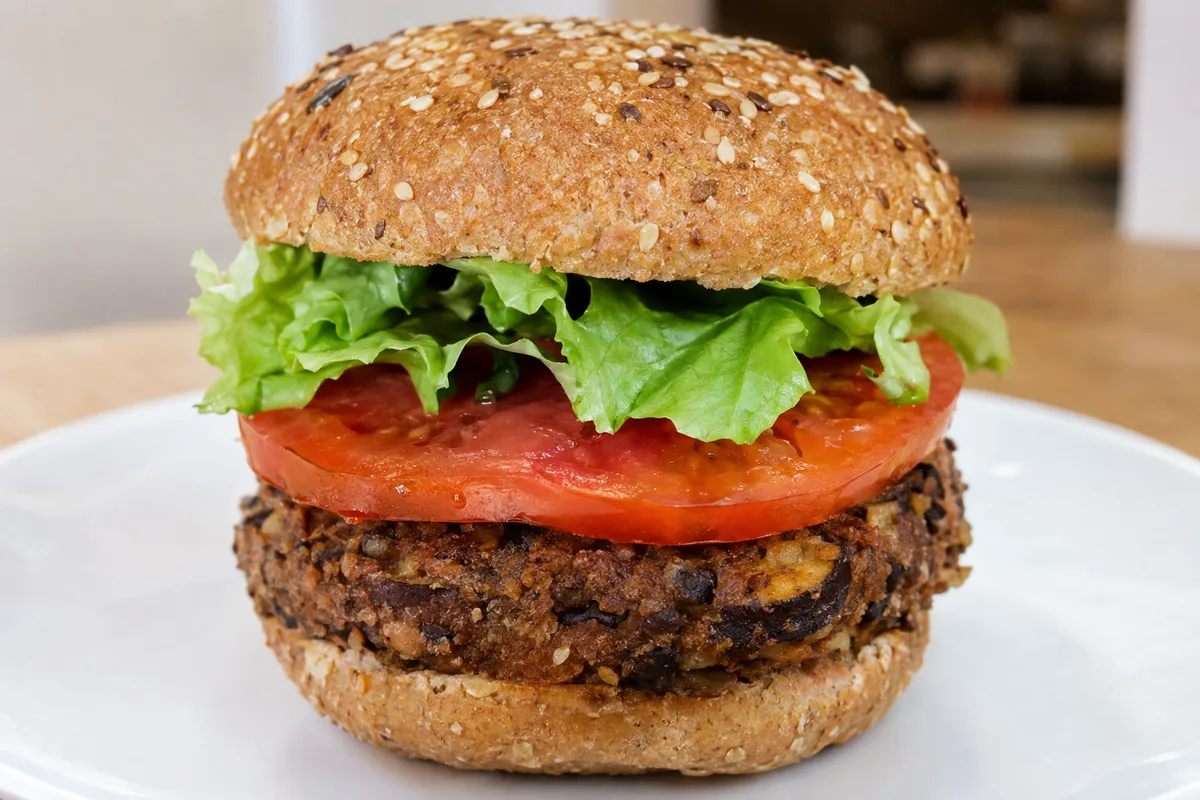
Carbohydrate provides about 4 kcal per gram, but its source matters when you are comparing products. Whole grains, pulses and vegetables bring more than carbohydrate alone. Refined starches can help a burger hold together, although a patty dominated by them may be less filling than one based on pulses or whole grains.
- Compare fibre per burger, not only per 100 grams
- Look for beans, lentils or whole grains near the start of the ingredients
- Count the bun, sides and sauces when tracking the full meal
- Choose vegetables on the side when the patty contains little fibre
Compare salt and fat in context
Salt can vary considerably because it adds flavour and helps create a savoury taste. Compare similar serving sizes and remember that cheese, sauces, pickles and seasoned sides also add salt. A moderately salty burger may fit differently into your day depending on what else you eat.
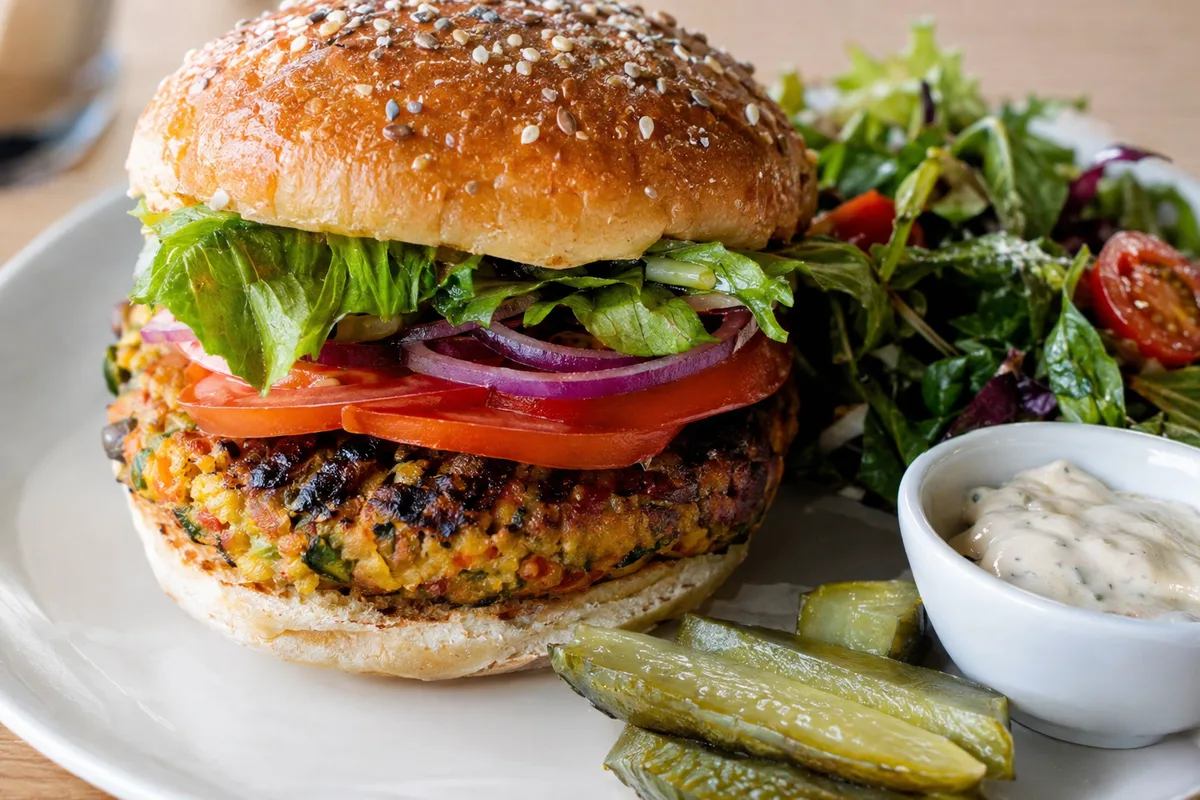
Fat provides about 9 kcal per gram, so it can have a noticeable effect on the burger's energy content. The type and amount of oil used differ between products, and cooking method also matters. Grilling, baking or pan-cooking with a measured amount of oil makes tracking easier than adding oil without checking the quantity.
- Compare salt per burger or per stated serving
- Check whether oils or solid fats appear prominently in the ingredients
- Include cooking oil in your food record
- Treat cheese, mayonnaise and creamy sauces as part of the meal
- Balance a richer patty with fresh vegetables and a lighter sauce
Judge calories as part of the whole plate
A lower-calorie patty is not necessarily more nourishing or satisfying. It may simply be smaller or contain less protein and fat. The right energy content depends on your needs, appetite and what you serve with it.
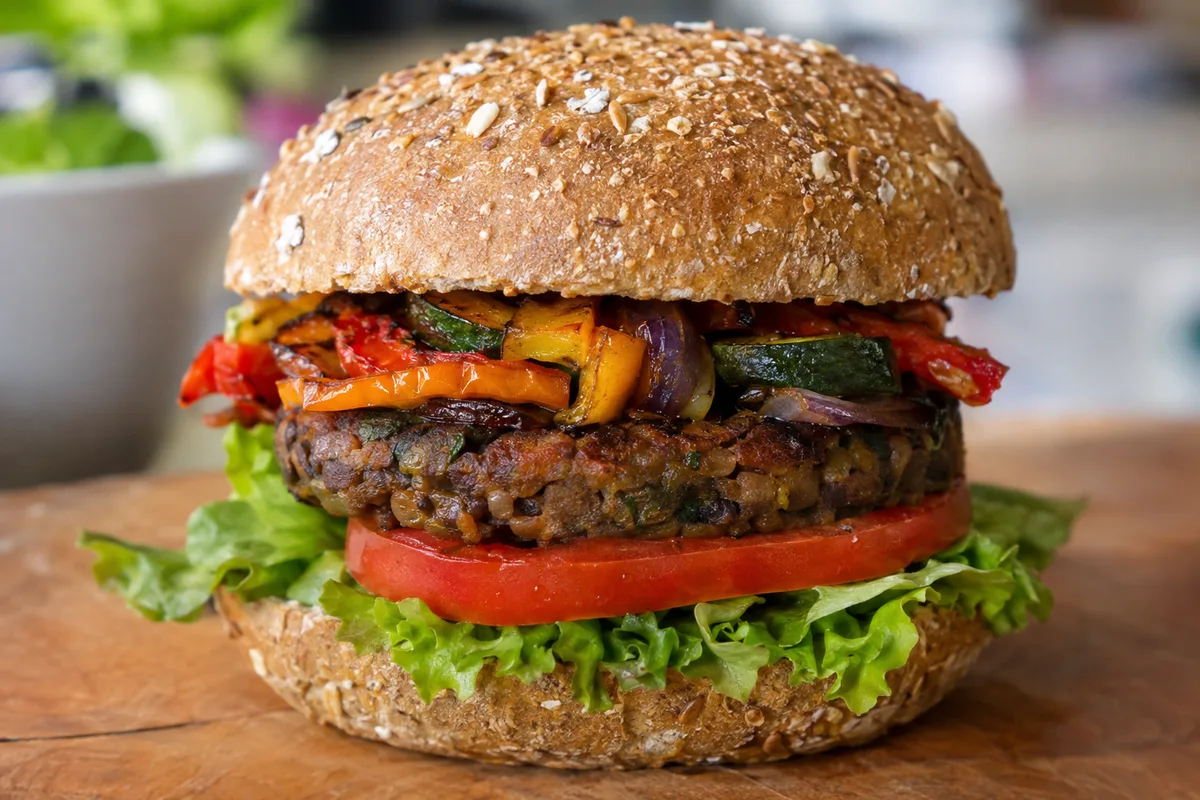
Track the complete meal rather than focusing only on the burger. Buns, oil, cheese, sauces and sides can change its overall balance more than the choice between two similar patties. A satisfying meal usually combines the burger with vegetables and a suitable source of carbohydrate.
- Veggie burger in a wholegrain bun with salad
- Bean burger with roasted vegetables and potatoes
- Lentil patty in a wrap with crunchy vegetables
- Vegetable burger over a grain and leafy salad
- Plant-protein burger with slaw and a baked potato
Choose the healthiest option for your routine
There is no single healthiest veggie burger for everyone. A bean-based patty may suit someone seeking more fibre, while a higher-protein product may fit a meal that otherwise contains little protein. Taste matters too, because a nutritionally impressive burger is not useful if you do not enjoy eating it.
Use your food record to see how the burger fits into the whole day. Compare products using the same basis, then consider protein, fibre, salt, fat and ingredients together. The best regular choice is one that supports your targets without requiring an elaborate meal to make it satisfying.
Homemade burgers give you more control over ingredients, but shop-bought versions can also fit a balanced eating pattern. Neither category is automatically healthier. Preparation, portion and accompaniments all shape the final meal.
- Pick bean or lentil burgers when fibre is the priority
- Pick a concentrated plant-protein burger when protein is the priority
- Choose a vegetable-rich patty when the meal already includes another protein source
- Keep a few enjoyable options for different meals rather than seeking one perfect burger