
Which Type of Salmon Is Healthiest to Eat?
Salmon provides protein, omega-3 fats and several useful vitamins and minerals. This guide explains how different types compare and what to record when tracking a meal.
There is no single healthiest salmon
Wild and farmed salmon are both nutritious choices. They provide complete protein, omega-3 fats, vitamin B12, selenium and, in varying amounts, vitamin D. The healthiest option for you depends on the rest of your diet, how the fish is prepared and what you want to track.
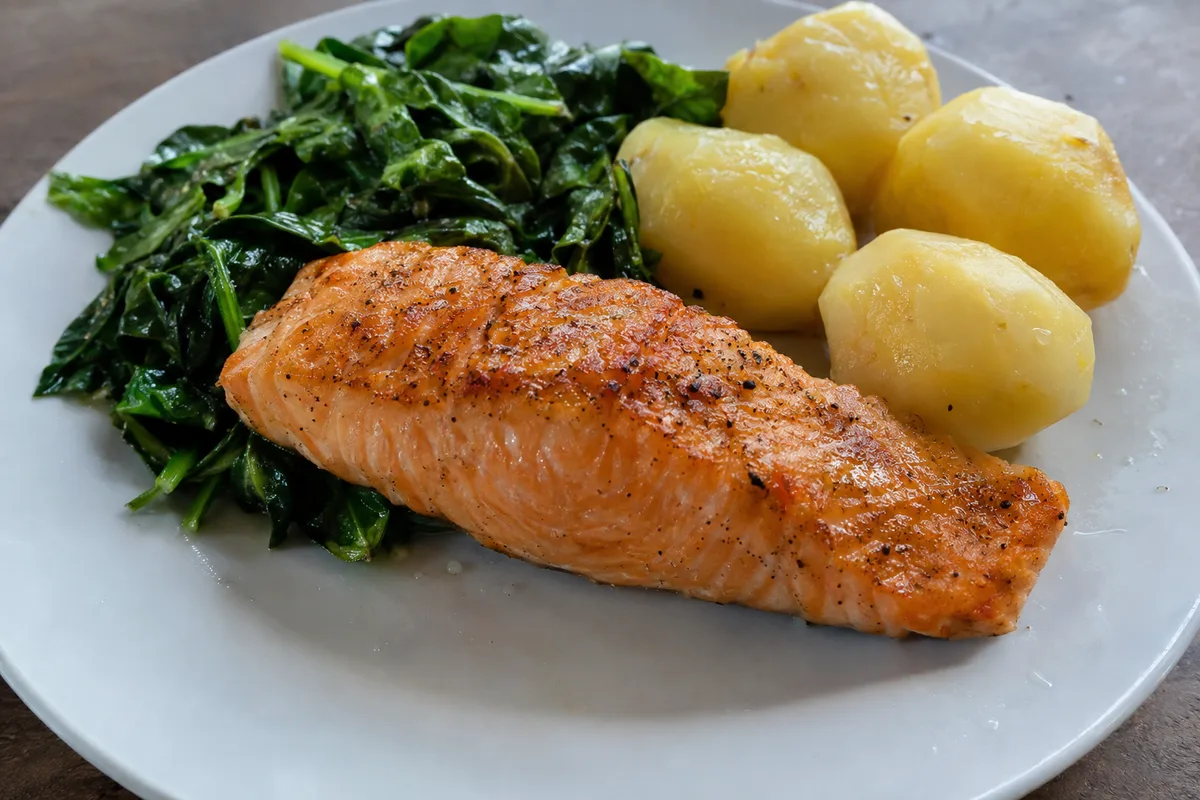
Species, season, feed and growing conditions can change the nutrient content. Portion size and added ingredients may make a bigger difference to your meal than the salmon variety itself. It is therefore more useful to compare the full label or food entry than to rely only on words such as wild or farmed.
- Choose plain salmon when you want more control over added salt, oil and sauces.
- Check whether your tracking entry refers to raw or cooked fish.
- Match the species and preparation method as closely as your app allows.
- Use the pack label when it differs from a generic database entry.
Wild salmon is often leaner
Wild salmon usually has less total fat than farmed Atlantic salmon, although the amount varies by species and season. It still supplies omega-3 fats, but a leaner fillet may contain less of them overall than a fattier farmed portion. Its lower fat content can also mean less energy for the same weight.
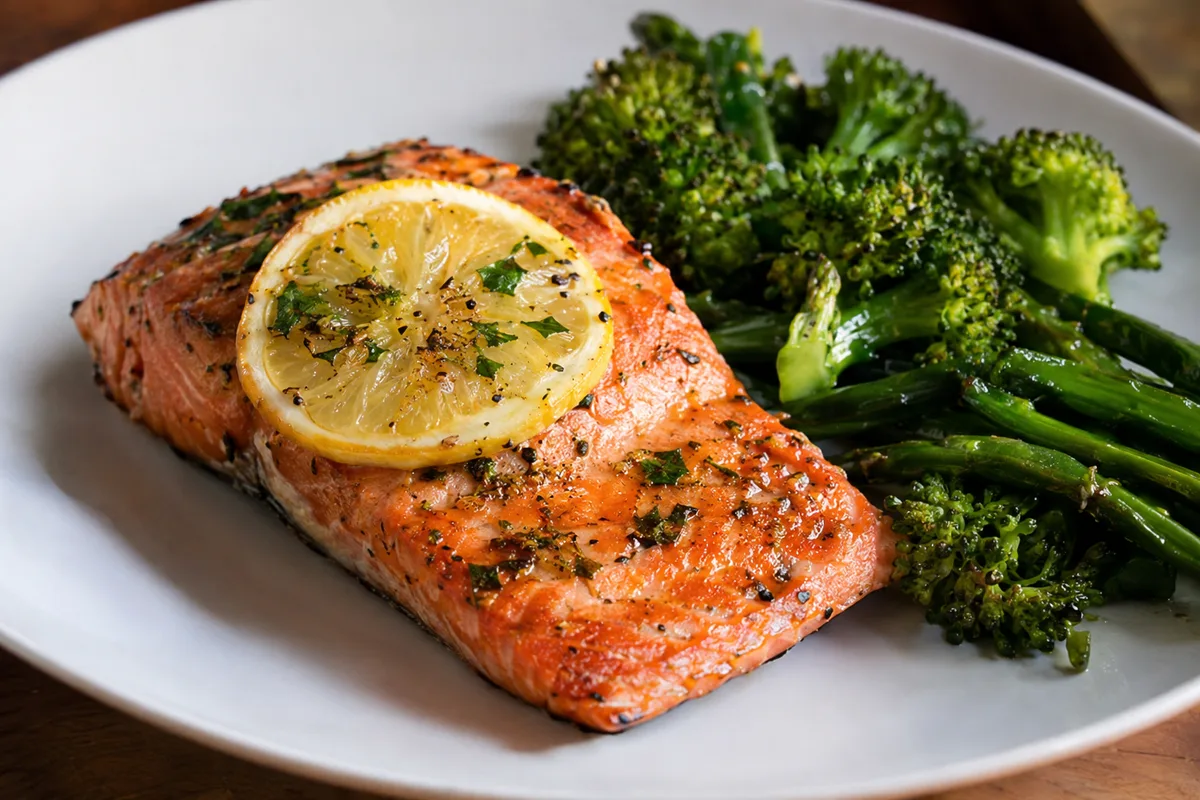
Sockeye, coho, pink, chum and Chinook are common wild species. Chinook tends to be richer and fattier, while pink and chum are generally leaner. If you track energy or fat, select the named species rather than using one general wild salmon entry.
- Sockeye: firm, strongly coloured and usually fairly lean.
- Coho: moderately rich with a milder flavour.
- Pink: lean, mild and often sold tinned.
- Chum: generally lean with a firm texture.
- Chinook: typically richer and higher in fat.
Farmed salmon can provide more omega-3 fat
Farmed Atlantic salmon is usually fattier than many wild varieties. That often means it supplies more omega-3 fat per portion, but it also tends to provide more energy. Neither point makes it automatically better or worse.
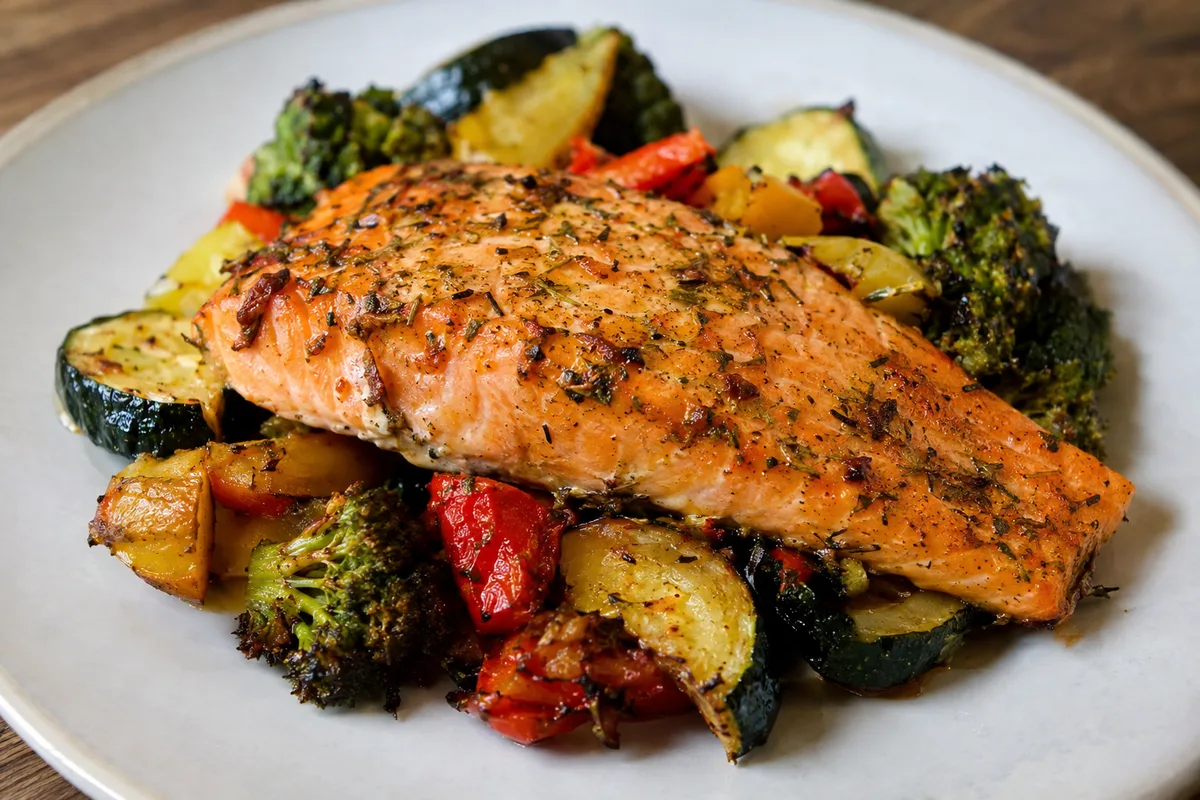
The fat profile of farmed salmon depends partly on its feed. Nutrient values can therefore vary between producers and food databases. When accuracy matters, use the nutrition panel from the pack and log the edible amount you actually eat.
Farmed salmon is widely available and its higher fat content can help it stay moist during cooking. A plain oven-baked or grilled fillet keeps the meal straightforward to track. Added butter, oil, glaze or creamy sauce should be recorded separately.
- Choose farmed salmon when omega-3 intake and a richer texture are priorities.
- Choose a leaner wild species when you want less total fat in that meal.
- Record cooking fats and sauces rather than assigning them to the fish.
- Compare portions by the same weight and in the same cooked or raw state.
Fresh, frozen and tinned salmon are all useful
Freezing does not remove salmon's protein or omega-3 fats, so frozen plain fillets can be as useful nutritionally as fresh ones. Fresh and frozen salmon are also easy to season without adding much salt. The main tracking difference is whether the listed weight is raw, cooked or includes skin.
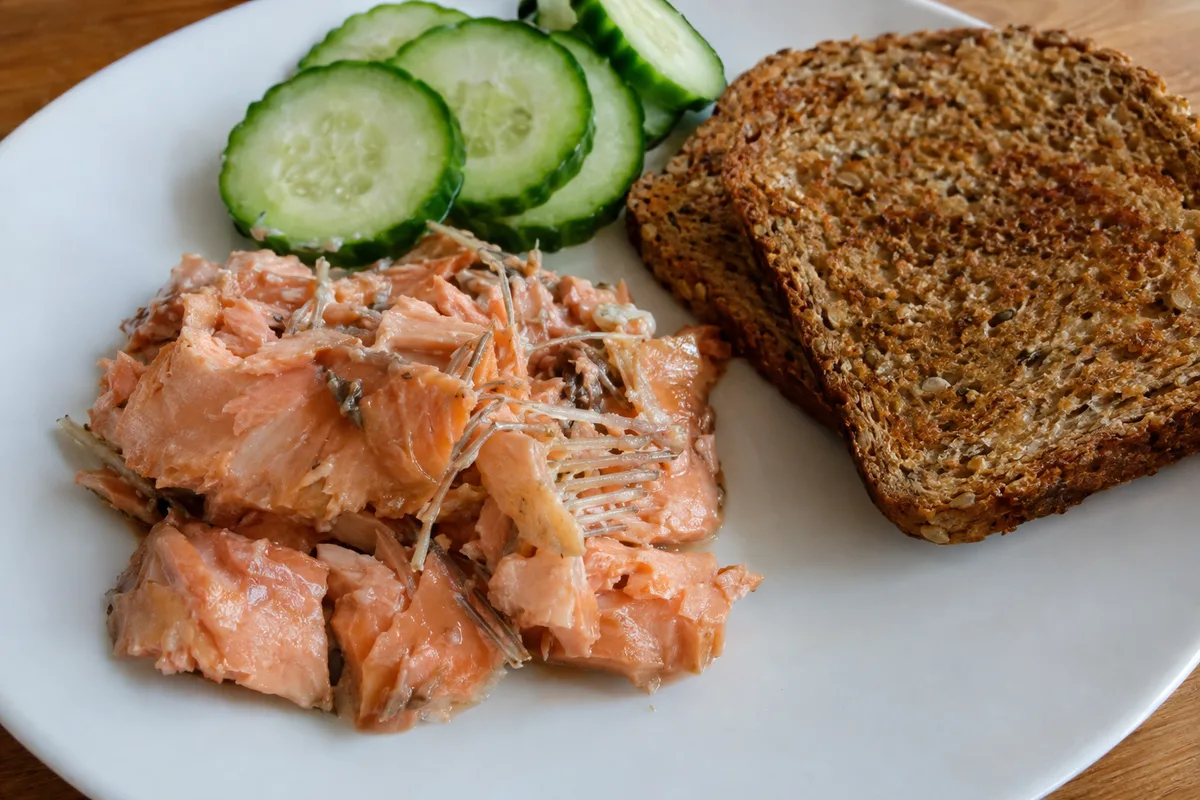
Tinned salmon remains a nutritious option and may include soft edible bones, which add calcium. It can contain added salt, and versions packed in oil differ from those packed in water. Draining changes what reaches the plate, but a label may give values for the product as sold, so check the wording.
Smoked salmon provides protein and omega-3 fats but is generally saltier than plain salmon. It can still fit into a balanced pattern, especially when the rest of the meal is lower in salt. Treat it as a different food entry rather than logging it as a plain fillet.
- Fresh or frozen plain fillets: easiest for controlling seasoning and cooking fat.
- Tinned in water: convenient, with any added salt shown on the label.
- Tinned in oil: record the oil if you eat it rather than draining it fully.
- Tinned with soft bones: a source of calcium as well as salmon nutrients.
- Smoked: useful in smaller portions when you are watching salt.
Preparation can change the answer
A plain salmon fillet may be a more balanced everyday choice than the same fish covered in a sugary glaze or fried in a thick coating. The salmon still provides its nutrients, but added oil, batter, salt and sauce change the meal. This is why preparation often matters more than whether the fish was wild or farmed.
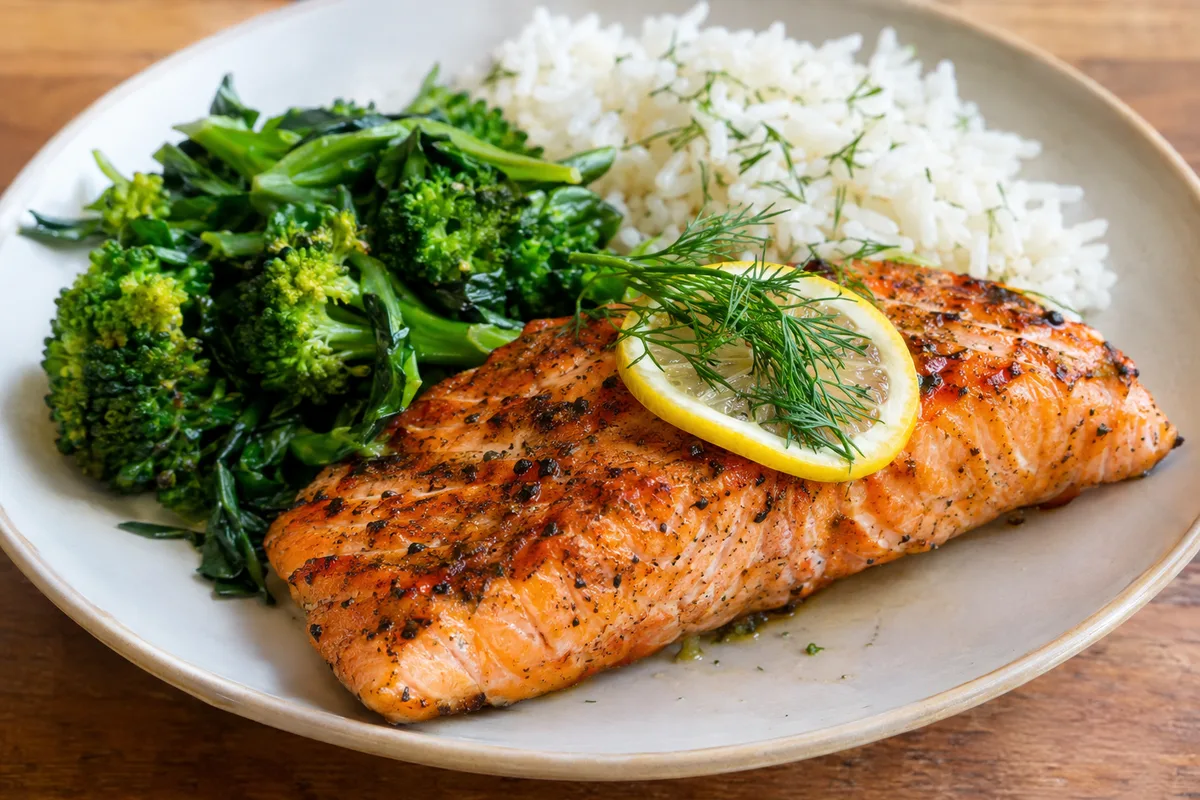
Baking, grilling, steaming and air-frying can all work with little or no added fat. Lemon, pepper, garlic, chilli and herbs add flavour without making the tracking entry complicated. If you use oil, measure or estimate it and record the amount that ends up in the meal.
Raw or lightly cooked salmon requires careful sourcing, storage and handling. Use fish sold as suitable for that purpose and follow current food safety guidance. If you are in a group advised to avoid raw fish, choose thoroughly cooked salmon instead.
- Bake salmon with lemon, black pepper and dill.
- Grill it with garlic and a small measured amount of oil.
- Steam it with ginger and spring onion.
- Serve it with vegetables and potatoes, rice or another carbohydrate source.
- Keep rich sauces on the side so the amount is easier to track.
How to choose the best option for your meal
For a leaner meal, choose wild sockeye, pink, chum or coho and cook it with little added fat. For a higher-fat portion with plenty of omega-3, farmed Atlantic salmon or wild Chinook may suit better. Tinned salmon is useful when convenience matters, while plain fresh or frozen fillets offer the most control over added ingredients.
Look at the whole plate rather than judging the salmon alone. Pair it with vegetables or salad, a carbohydrate that suits your needs and any sauce or oil you intend to track. Variety across meals can be more practical than trying to identify one perfect type.
The simplest answer is that plain salmon you enjoy and can eat regularly is usually a sound choice. Choose the species and format that match your energy, fat, salt and convenience priorities. For accurate tracking, favour the package information and record the preparation method.
- For less total fat: select a leaner wild species.
- For more omega-3 and a richer texture: consider farmed Atlantic salmon or wild Chinook.
- For more control over salt: choose an unseasoned fresh or frozen fillet.
- For convenience: use tinned salmon and check the packing liquid and salt.
- For accurate logging: match species, cooked state and added ingredients.