
Wheat bran or oat bran: which fits your food diary?
Wheat bran and oat bran both add fibre, but they behave differently in food and in the body. This guide compares their main qualities and shows how to track them accurately.
What wheat bran and oat bran actually are
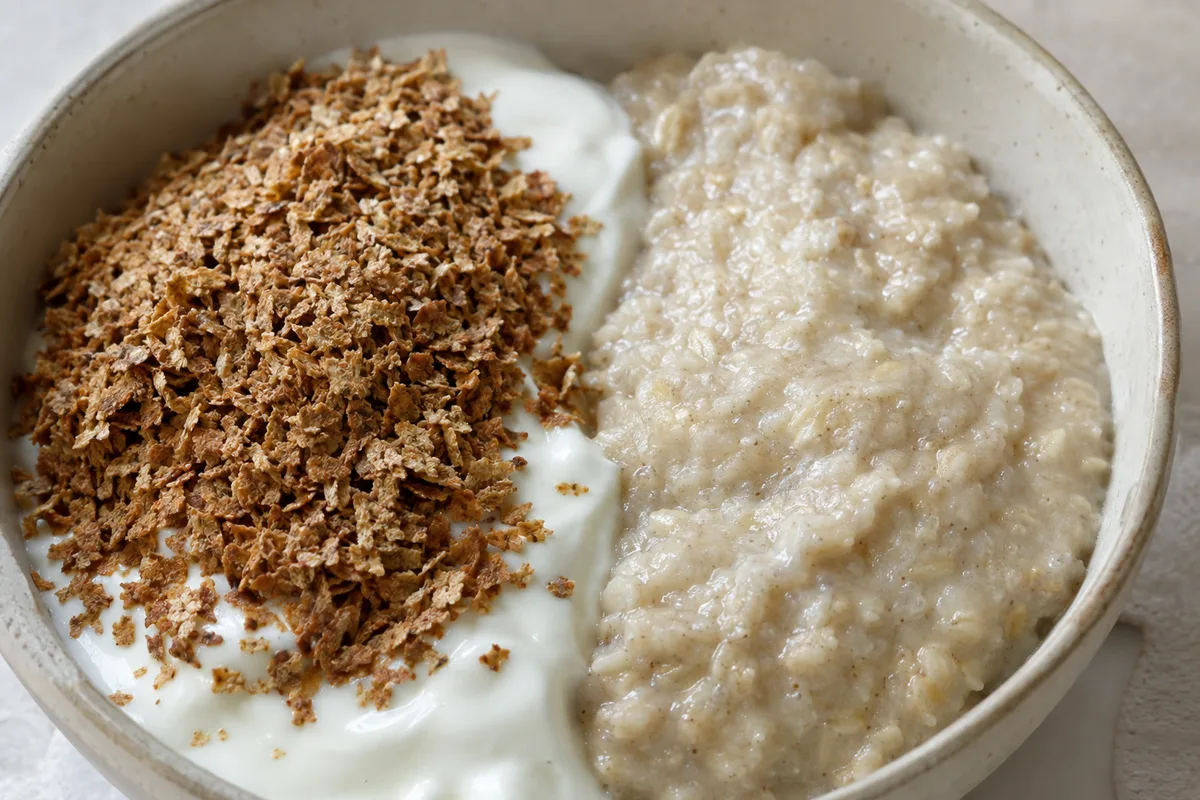
Wheat bran is the protective outer layer of the wheat grain. It is separated from the rest of the grain during milling and has a light, flaky texture. Its flavour is earthy and noticeably wheaty.
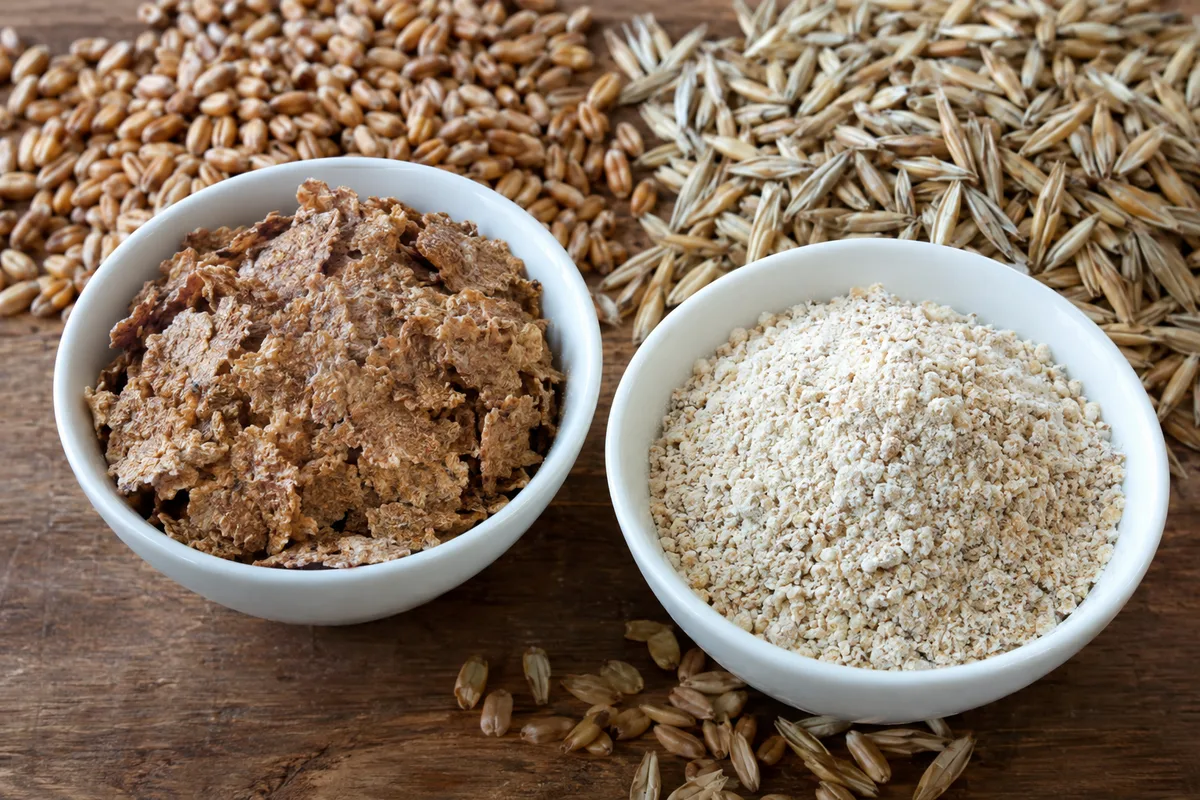
Oat bran comes from the fibre-rich outer part of the oat groat, just beneath its inedible hull. It is usually finer and softer than wheat bran, with a mild oat flavour. When mixed with liquid and heated, it thickens and becomes creamy.
Neither is the same as a whole grain because each is only one part of its original grain. They can still be useful additions to meals when you want more fibre. The best choice depends on the texture, fibre type and recipe you prefer.
- Wheat bran: flaky, dry and lightly nutty
- Oat bran: fine, soft and mildly oaty
- Whole wheat or whole oats: the bran, germ and starchy centre together
The main difference is the type of fibre
Both foods contain a mixture of fibres, but their balance is different. Wheat bran is especially rich in insoluble fibre, which holds water and adds bulk as it moves through the gut. It tends to keep more of its texture rather than forming a gel.
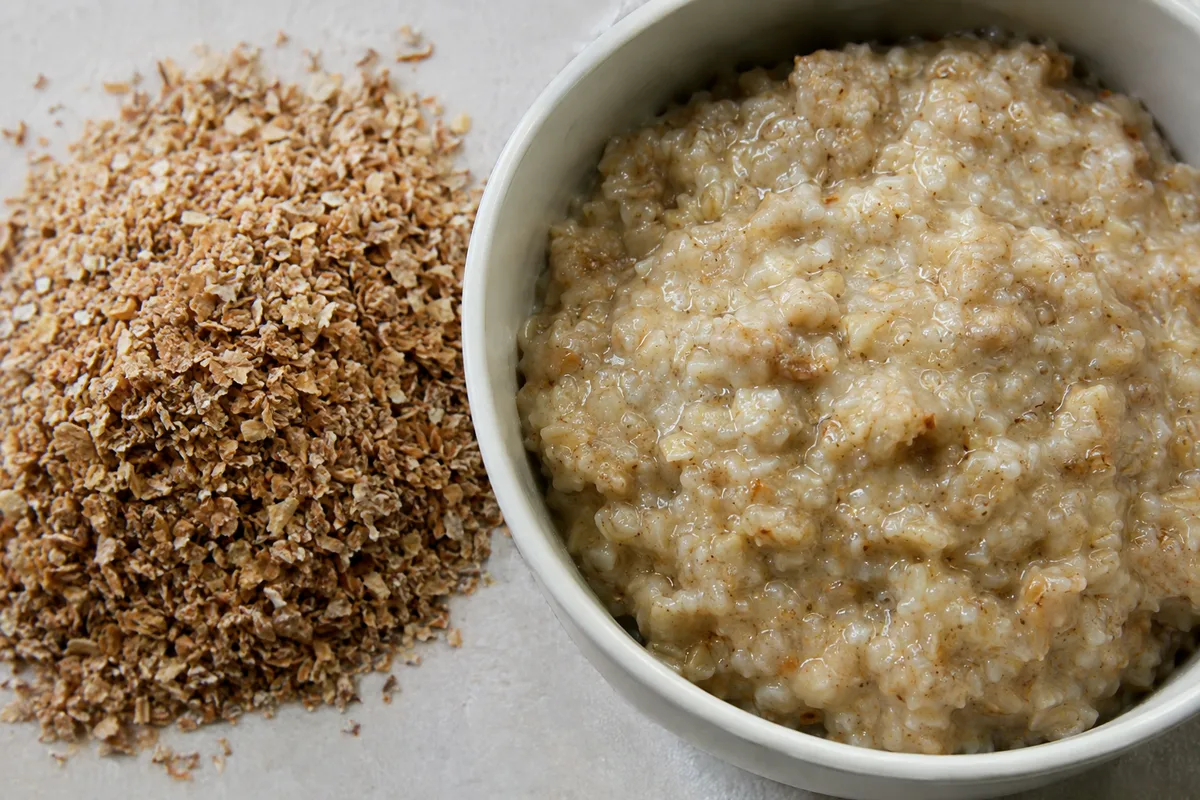
Oat bran provides more soluble fibre, including beta-glucan. Soluble fibre absorbs liquid and forms a thicker, gel-like mixture. This is why cooked oat bran resembles porridge while wheat bran remains more distinct.
Your food diary may show similar-looking fibre totals for different servings, yet the foods can feel different to eat. Oat bran may make a bowl or batter seem thicker, while wheat bran adds roughness and volume. Checking the fibre figure alongside the serving size gives a more useful comparison.
- Choose wheat bran when you want a dry, bulky fibre addition
- Choose oat bran when you want a smoother, thickened result
- Increase either one gradually if your usual fibre intake is lower
- Drink enough fluid as you add more fibre
Comparing energy and macronutrients
The energy and nutrient figures depend on the brand, serving and whether you weigh the bran dry or after mixing it with liquid. Both contain carbohydrate, protein and some fat, but oat bran generally contains more fat because oats naturally have a higher fat content than wheat. Wheat bran often provides more fibre by dry weight.
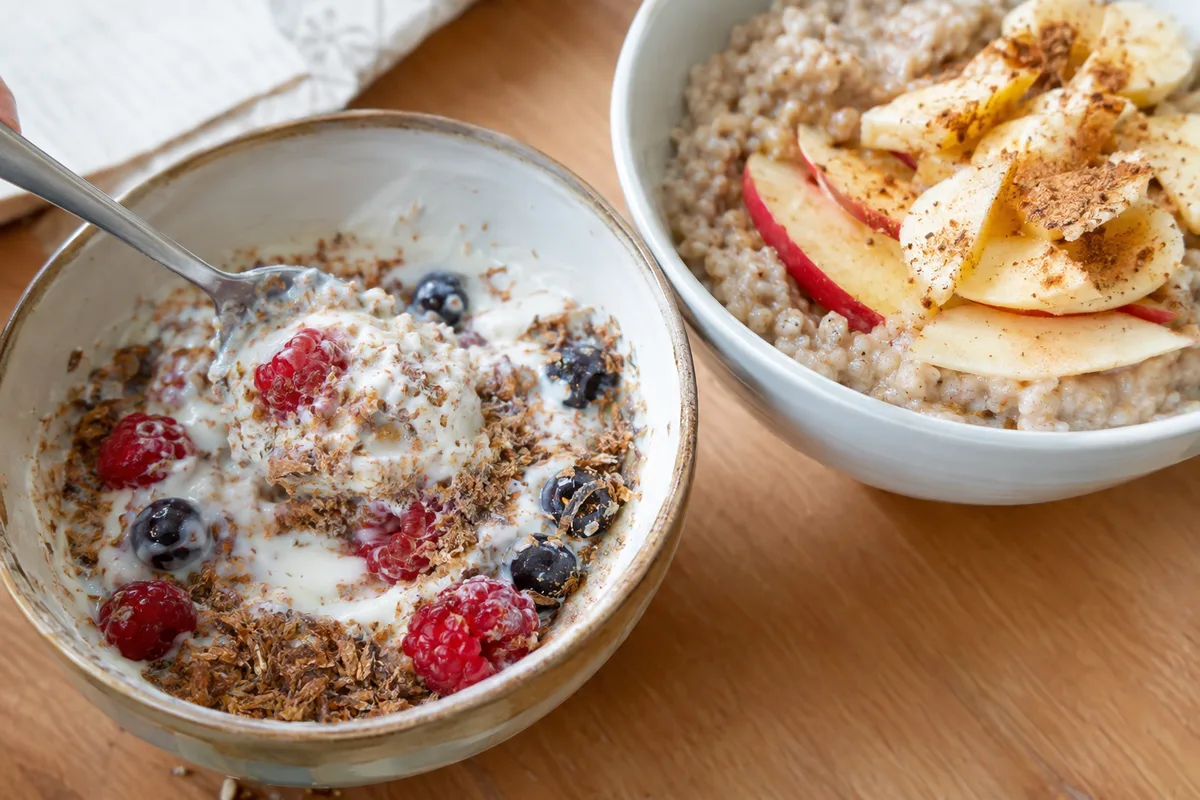
A small spoonful can look insignificant, so it is easy to forget to log it. Weighing the dry bran before adding it to porridge, yoghurt or batter usually gives the clearest entry. If you use a packaged product, match your diary to its label rather than choosing a generic cooked entry.
Added ingredients can change the total more than the choice of bran itself. Milk, yoghurt, nuts, seeds, dried fruit and sweeteners all contribute their own energy and nutrients. Log these separately so you can see what the bran is adding.
- Record the dry weight when possible
- Use the nutrition label for the product you ate
- Check whether the diary entry is dry or cooked
- Log toppings, liquids and sweeteners separately
How each bran works in meals
Wheat bran is useful when you want extra texture without making a mixture much creamier. It can be stirred into cereal, yoghurt or dough, although a large addition may make baking drier or more crumbly. Adding liquid and allowing the mixture to rest can help the bran soften.
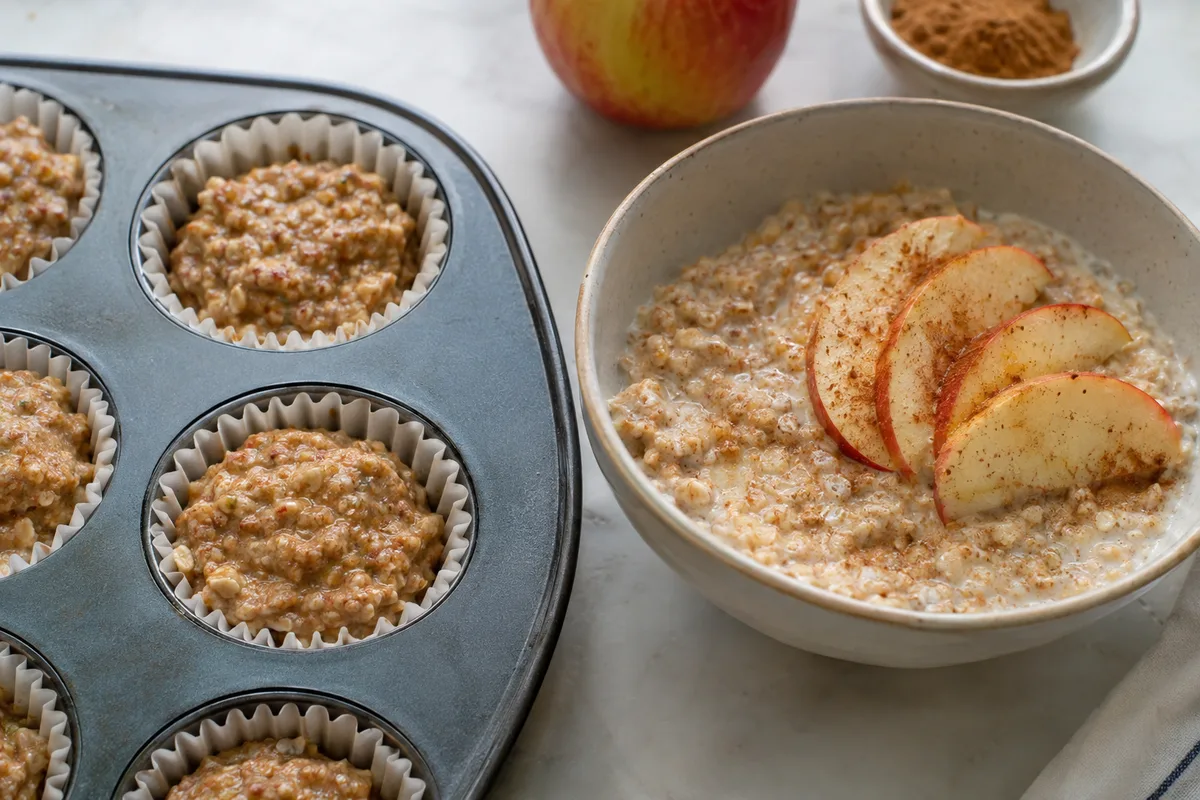
Oat bran works well as a hot breakfast because it thickens during cooking. It can also be mixed into yoghurt, overnight oats, soups or batters where a softer texture is welcome. Its mild flavour usually blends easily with fruit and spices.
Bran is an addition rather than a direct replacement for every flour or grain. Swapping a large amount into a familiar recipe can change how it rises, holds together and absorbs moisture. Begin with a modest amount and adjust the liquid or cooking time based on the result.
- Stir wheat bran into yoghurt for a lightly crunchy texture
- Add wheat bran to bread or muffin batter with extra moisture
- Cook oat bran with milk or water for a creamy bowl
- Mix oat bran into overnight oats to make them thicker
- Use either bran in a savoury batter or topping
Taste, texture and dietary checks
Wheat bran has a stronger grain flavour and can feel coarse if eaten without enough moisture. Oat bran is usually milder and smoother, especially after cooking. Preference matters because a fibre source is only useful in practice if you enjoy eating it regularly.
Wheat bran contains gluten. Oat bran does not naturally contain gluten, but it may come into contact with wheat, barley or rye during growing and processing. Anyone who needs to avoid gluten should check the wording and certification on the packet.
Both brans can absorb plenty of liquid, and a sudden large serving may feel uncomfortable if you are not used to much fibre. A gradual change makes it easier to judge how the food suits you. Your appropriate portion depends on your wider diet, appetite and usual fibre intake.
- Pick wheat bran for a robust, grainy bite
- Pick oat bran for a soft, porridge-like texture
- Check packaging carefully when avoiding gluten
- Adjust the amount according to comfort and the rest of your diet
How to choose between them
There is no single winner because wheat bran and oat bran serve different purposes. Wheat bran is the clearer choice for a coarse addition with a strong emphasis on insoluble fibre. Oat bran suits meals where soluble fibre and a creamy texture are more useful.
Your tracking goal can guide the decision. Compare equal dry weights in your diary, then look at fibre, protein, fat and total energy rather than focusing on one line alone. Also consider the rest of the meal, because variety across grains, fruit, vegetables, pulses, nuts and seeds matters more than relying on one ingredient.
You do not have to choose one permanently. Wheat bran may suit baking or a yoghurt topping, while oat bran may work better for breakfast bowls. Logging the actual portion lets you use either one according to the meal without losing sight of your overall intake.
- For more crunch and bulk: wheat bran
- For creamy breakfasts and thick mixtures: oat bran
- For accurate comparison: use equal dry weights
- For variety: use each where its texture works best