
Which beans are highest in protein?
Soybeans are generally the highest-protein choice among familiar beans, but preparation and serving size can change the figures you log. Here is how common varieties compare and how to make a fair choice for your meals.
The short answer
Cooked soybeans generally provide more protein than other commonly eaten beans in the same weight. Lupin beans can also be particularly protein-rich, although the amount varies between plain cooked and prepared products. For an accurate entry, use the label or database record that matches the form you ate.
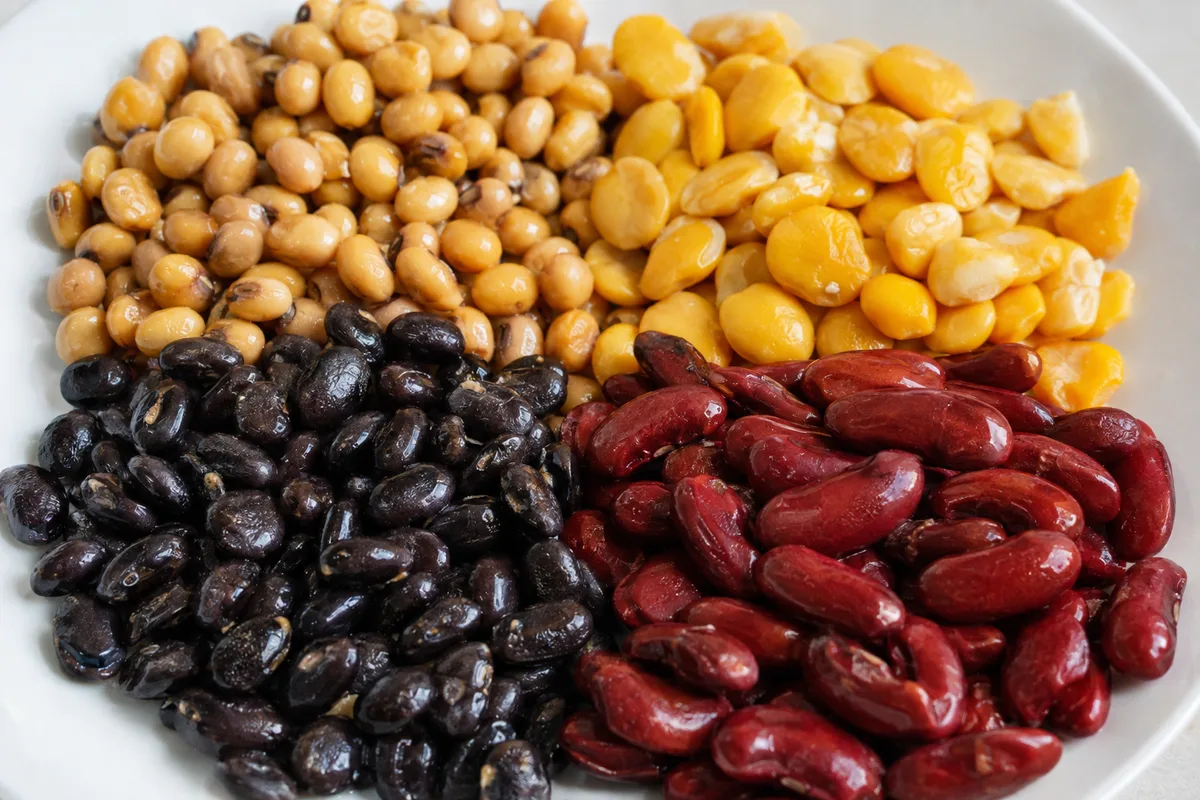
Among everyday choices, white beans, black beans, kidney beans and pinto beans are fairly close to one another. None is always the clear winner because varieties, cooking methods and water absorption differ. It usually makes more sense to choose according to the meal than to chase a small difference between them.
- Soybeans: usually the highest-protein common bean
- Lupin beans: another notably protein-rich option
- White, black, kidney and pinto beans: broadly similar everyday choices
- Chickpeas: useful for protein, though often below cooked soybeans
Compare like with like
A dry bean and a cooked bean cannot be compared directly by weight. During soaking and cooking, beans take in water, which spreads their nutrients across a heavier portion. Dry listings therefore appear much more concentrated even though you would normally eat the beans cooked.
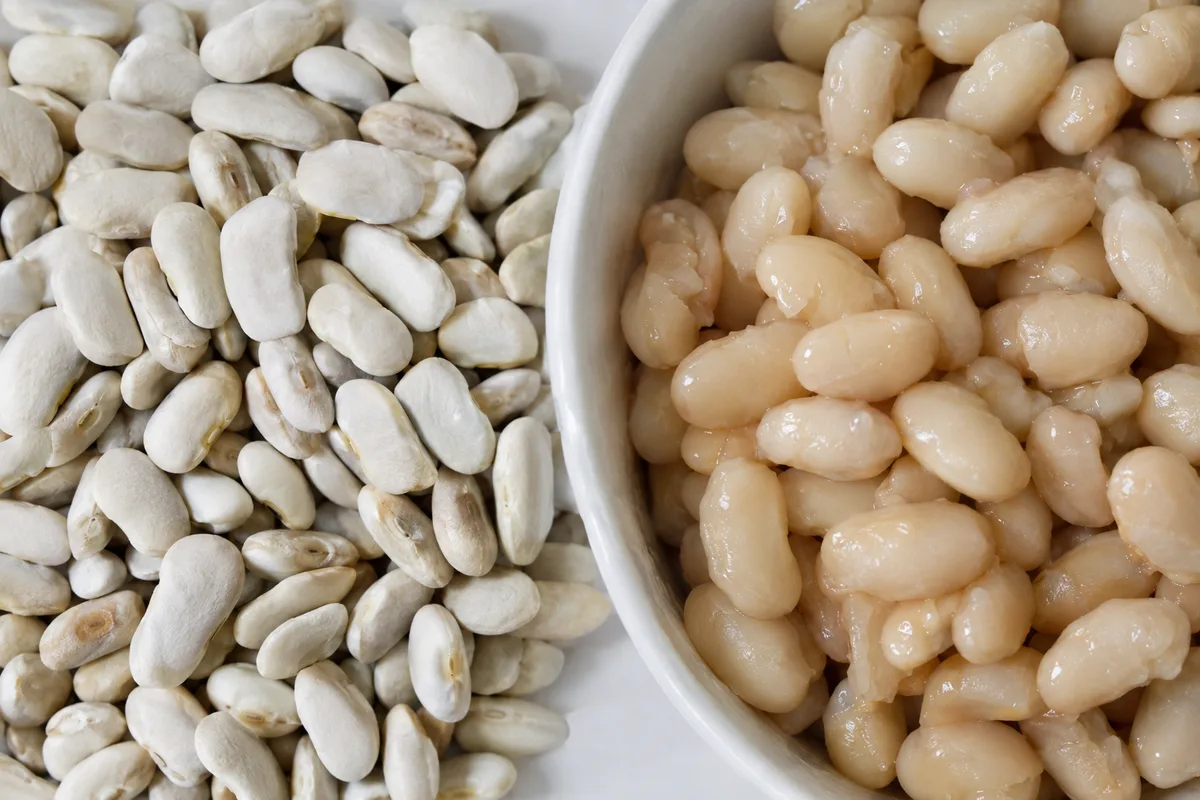
Drained tinned beans may also differ from beans weighed with their liquid. The same applies to beans in sauce, where the logged weight includes ingredients other than beans. When comparing varieties, use the same state, such as cooked and drained per 100 grams.
- Check whether the entry says dry, cooked, drained or undrained
- Match plain beans with plain beans rather than beans in sauce
- Use the same portion basis for every comparison
- Prefer the packet or tin label when it matches what you ate
How common beans rank in practice
Soybeans form the clearest top group because they contain more protein and fat than most familiar beans. Lupin beans also sit towards the top, but prepared versions may contain added salt or other ingredients. Their texture and flavour are different from kidney, black or pinto beans, so they are not always direct swaps.
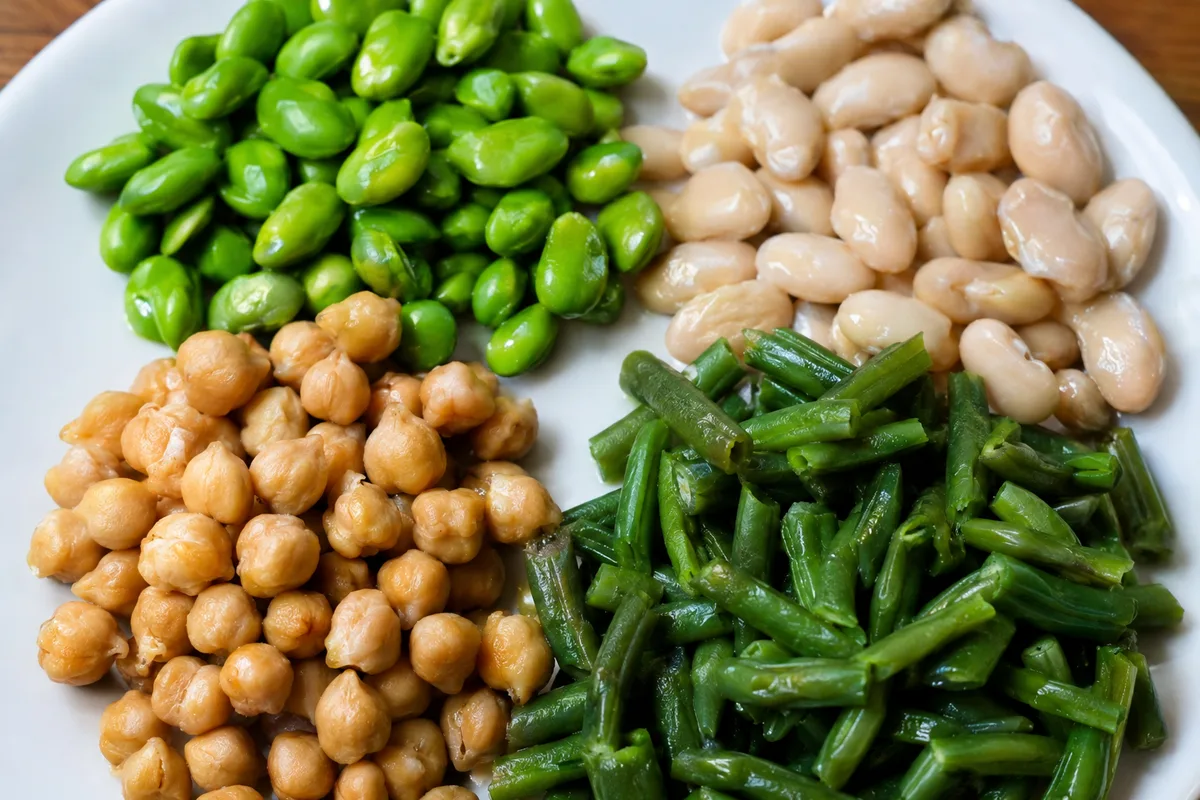
White beans, black beans, kidney beans and pinto beans form a broad middle group. Chickpeas are often in a similar general range, though their exact place depends on the source and preparation. Green beans are much lower because they are eaten as fresh pods and contain far more water than mature dried beans.
- For the highest protein: soybeans or lupin beans
- For soups and stews: white, kidney, black or pinto beans
- For salads and blended dishes: chickpeas or white beans
- For a vegetable side rather than a concentrated pulse: green beans
Build a higher-protein bean meal
The type of bean matters, but the amount in the meal matters too. A small spoonful of soybeans may provide less protein overall than a generous portion of another variety. Log the portion you actually eat rather than judging the meal from the bean's ranking alone.
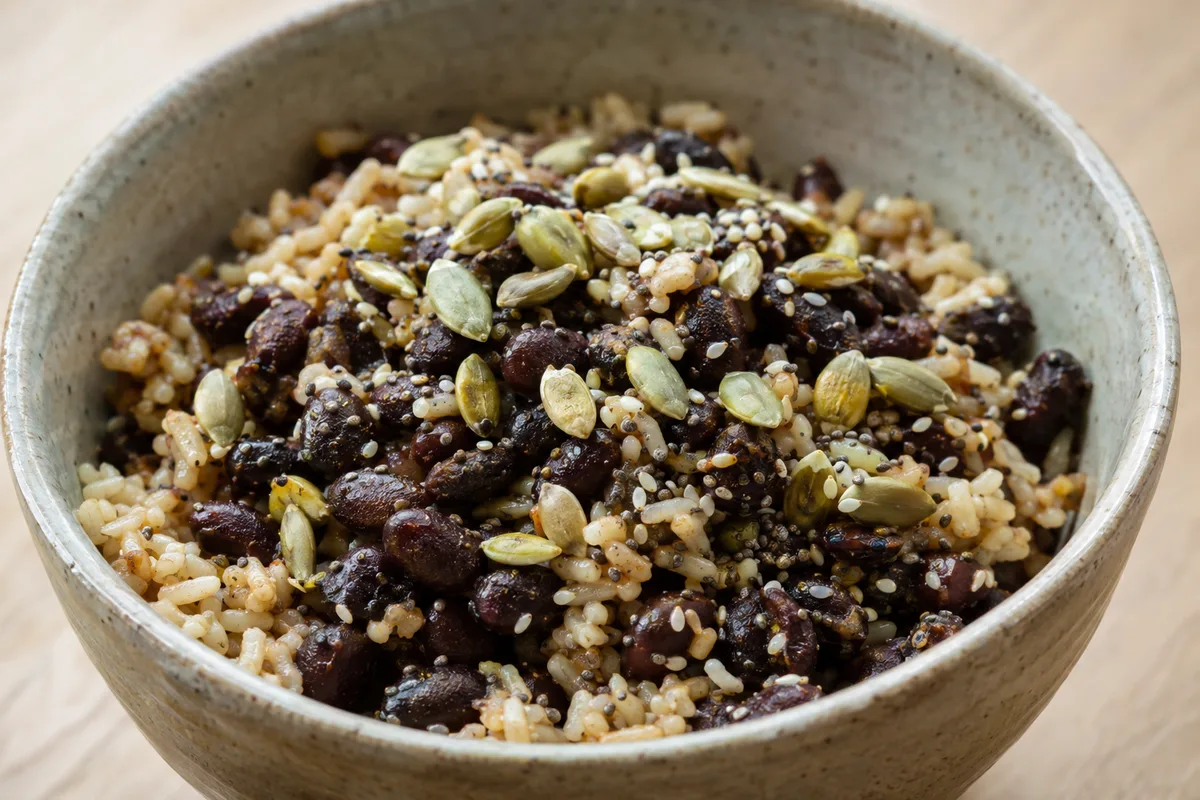
Beans can also be combined with other protein-containing foods. Grains, seeds, eggs, dairy foods, fish or meat may all contribute, depending on your preferences. If beans are the main ingredient, make them a substantial part of the dish rather than a garnish.
- Add beans generously to soups, stews and salads
- Replace part of a low-protein filling with beans
- Mix beans into rice, bulgur or wholegrain pasta dishes
- Choose plain beans when you want an easier entry to track
- Count every substantial ingredient in the full meal
Track the entry that matches your plate
Food databases can show several figures for the same bean because the entries describe different products. Look for the variety, cooking state and drained status before selecting one. If you cooked from dry, either log the dry amount before cooking or weigh the finished batch and divide it between portions consistently.
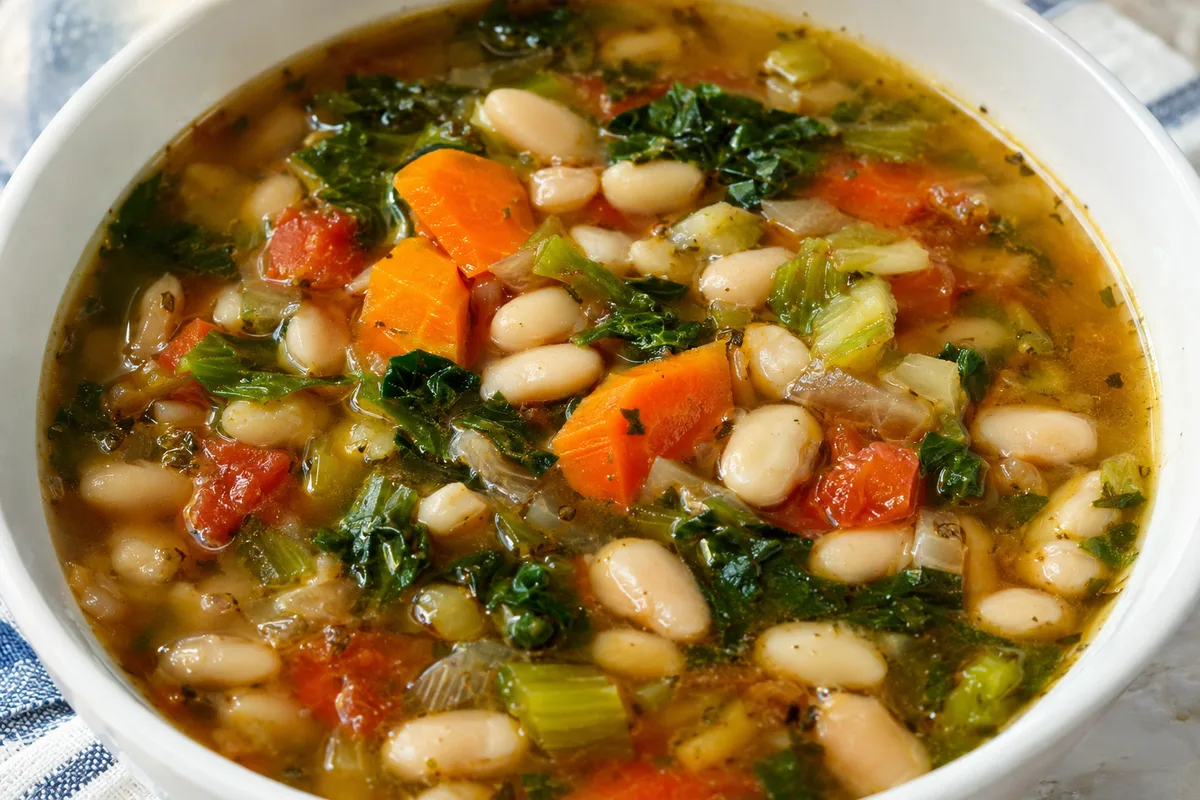
For tinned or packaged beans, the nutrition label is usually the closest match to that product. If the label gives values for drained beans, base your log on the drained portion. Sauces, oils and dressings should be entered separately unless they are already included in the product information.
- Record the exact bean variety
- Choose the correct cooked or dry entry
- Note whether the weight is drained
- Divide homemade batches using the same method each time
- Log added sauces, oils and toppings
Protein is not the only reason to choose a bean
Most mature beans also provide fibre and carbohydrate, while soybeans contain more fat than many other varieties. These differences affect the meal's overall energy and texture as well as its protein. The best choice may therefore depend on what else is already on your plate.
Variety can make tracking and meal planning more practical. Kidney beans suit chilli-style dishes, black beans work well in bowls and fillings, and white beans blend easily into soups and sauces. Choosing a bean you enjoy and will use in a satisfying portion often matters more than a narrow difference in protein.
- Consider fibre and total energy alongside protein
- Choose a texture that suits the dish
- Check added salt, sugar and fat in prepared products
- Rotate varieties to keep meals varied