
Which yoghurt has the most protein?
Strained dairy yoghurts and protein-enriched varieties are often the highest-protein choices, but there is no single winner across every range. This guide explains what to look for and how to log a fair comparison.
The short answer
Plain strained dairy yoghurt is usually a strong place to look for protein. Greek yoghurt and skyr-style products have less liquid than many standard yoghurts, leaving protein more concentrated. Products made with added milk protein may contain even more, so the label gives the final answer.
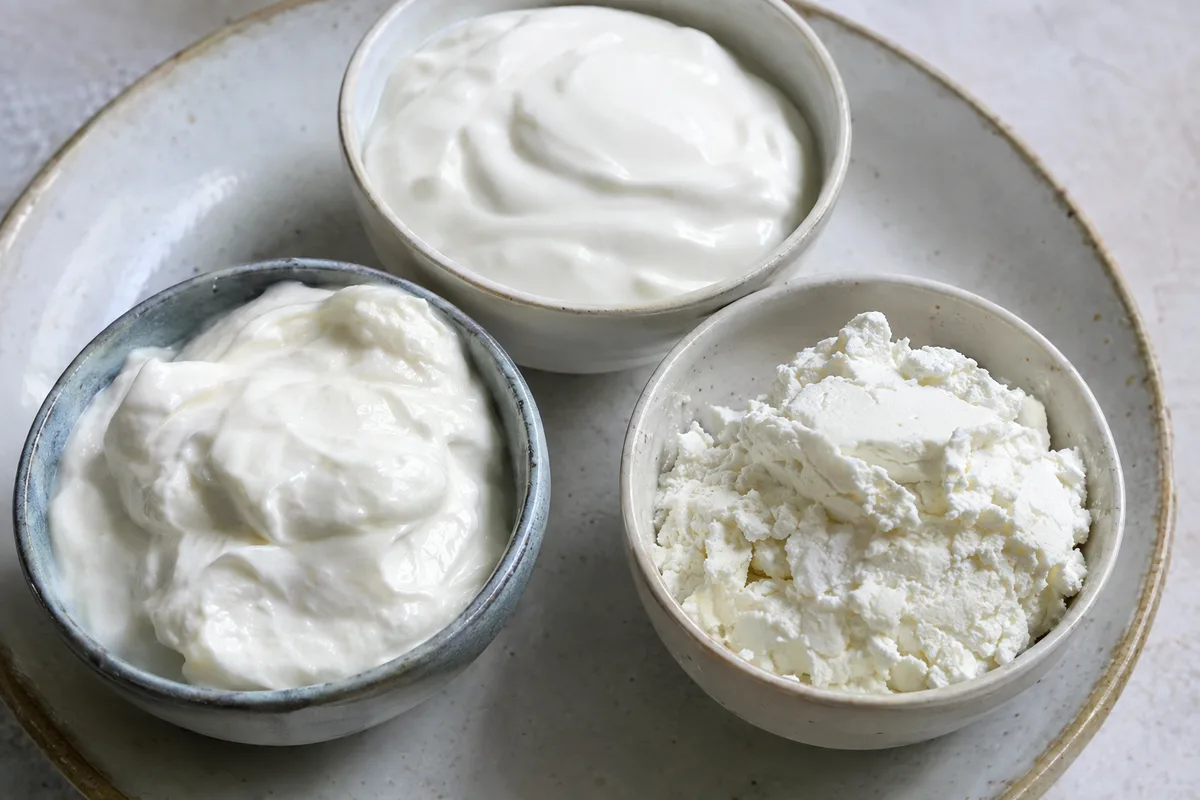
Names alone do not guarantee a particular protein content. Greek-style yoghurt can be made in different ways, while some thick yoghurts gain their texture mainly from added starch or cream. Compare the nutrition information rather than judging by thickness.
- Protein-enriched yoghurt: often among the highest, depending on the recipe
- Skyr-style cultured dairy: generally high in protein and low in fat
- Strained Greek yoghurt: usually higher in protein than standard yoghurt
- Standard natural yoghurt: typically contains less protein than strained styles
- Plant-based yoghurt: varies greatly with its main ingredient
Why strained yoghurt contains more protein
Yoghurt starts with milk or a plant-based mixture that is cultured until it thickens. Straining removes some of the watery whey, concentrating what remains. This usually raises the amount of protein in the same weight of yoghurt.
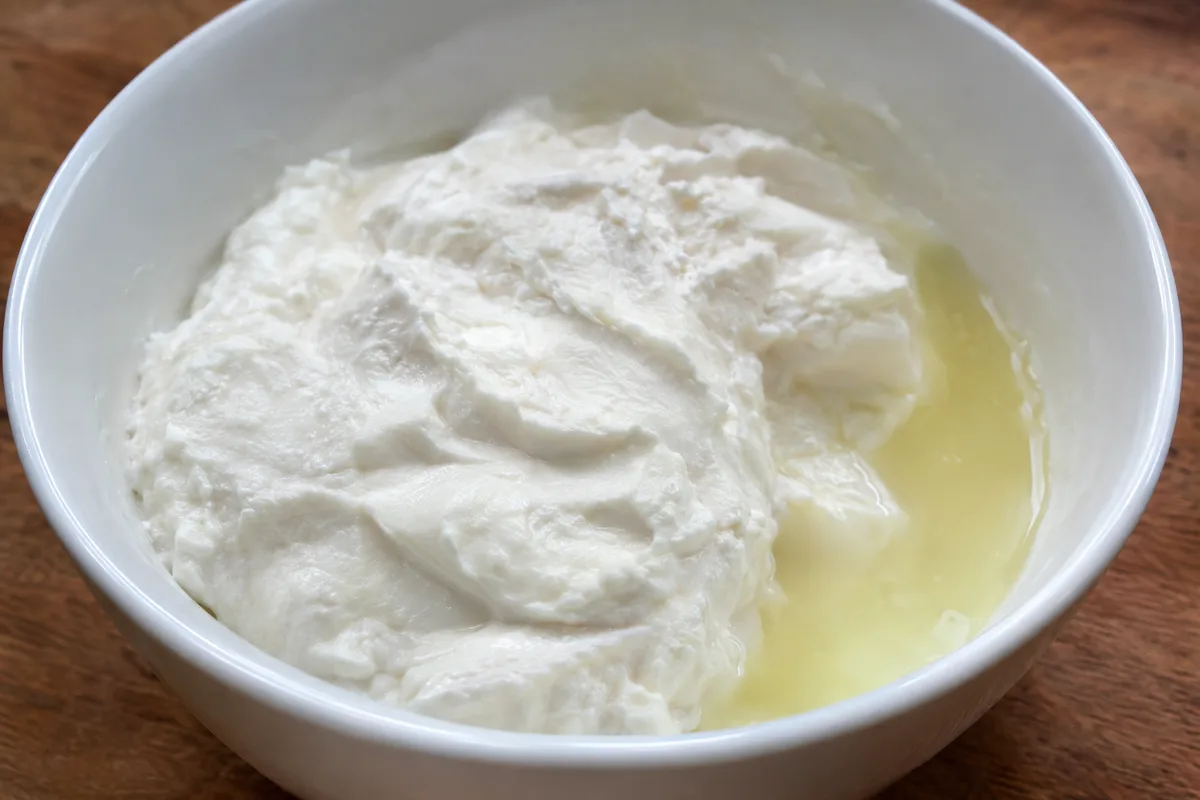
Manufacturers can also adjust protein by changing the starting ingredients. Some use more milk solids or add milk protein, while plant-based products may include added plant protein. Added cream makes yoghurt richer and thicker, but it does not necessarily make it higher in protein.
- Straining removes liquid and concentrates the yoghurt
- Extra milk solids can increase protein
- Added protein can raise the amount further
- Cream changes richness more than protein content
How to compare yoghurt labels fairly
Use the protein figure per 100g when deciding which yoghurt is most protein-dense. This gives each product the same comparison point, even when pots and suggested portions differ. The highest number per 100g is the highest-protein option among the products you are checking.
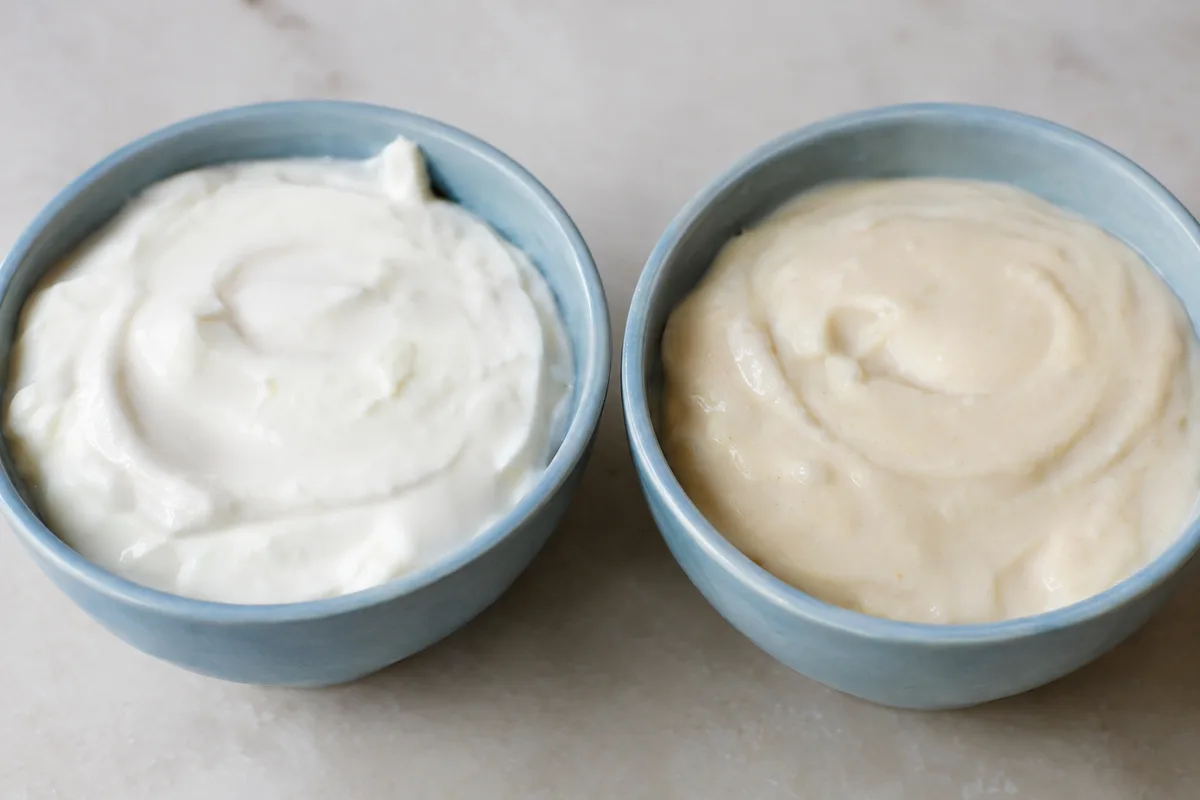
Then look at the amount you actually eat. A yoghurt with more protein per 100g may contribute less overall if your portion is smaller. For accurate tracking, log the product and the weight or stated portion you used.
- Check protein per 100g first
- Compare like with like, such as plain yoghurt with plain yoghurt
- Check the serving size you actually eat
- Notice whether toppings are included in the nutrition figures
- Log the exact variety because recipes differ
How the main yoghurt styles compare
Strained Greek yoghurt and skyr-style products commonly sit towards the higher-protein end of the yoghurt aisle. Regular natural yoghurt is less concentrated, while creamy or dessert-style yoghurt may prioritise texture and sweetness rather than protein. The exact order depends on each recipe.
For plant-based yoghurt, the main ingredient matters. Soya-based varieties often provide more protein than products based mainly on coconut, oats or nuts, although added protein can change that. Check each label because the ingredient name does not reveal the full nutritional result.
- Choose strained or protein-enriched dairy styles when protein is the priority
- Compare full-fat and lower-fat versions separately, as recipes can differ
- Check soya-based yoghurt when comparing plant-based options
- Do not assume coconut or nut yoghurt is protein-rich because of its name
Protein is not the only useful detail
The highest-protein yoghurt is not automatically the best fit for every meal. You may also care about flavour, texture, fat, carbohydrate, added sugars or ingredients. A yoghurt you enjoy and can track consistently may suit you better than the product with the highest protein figure.
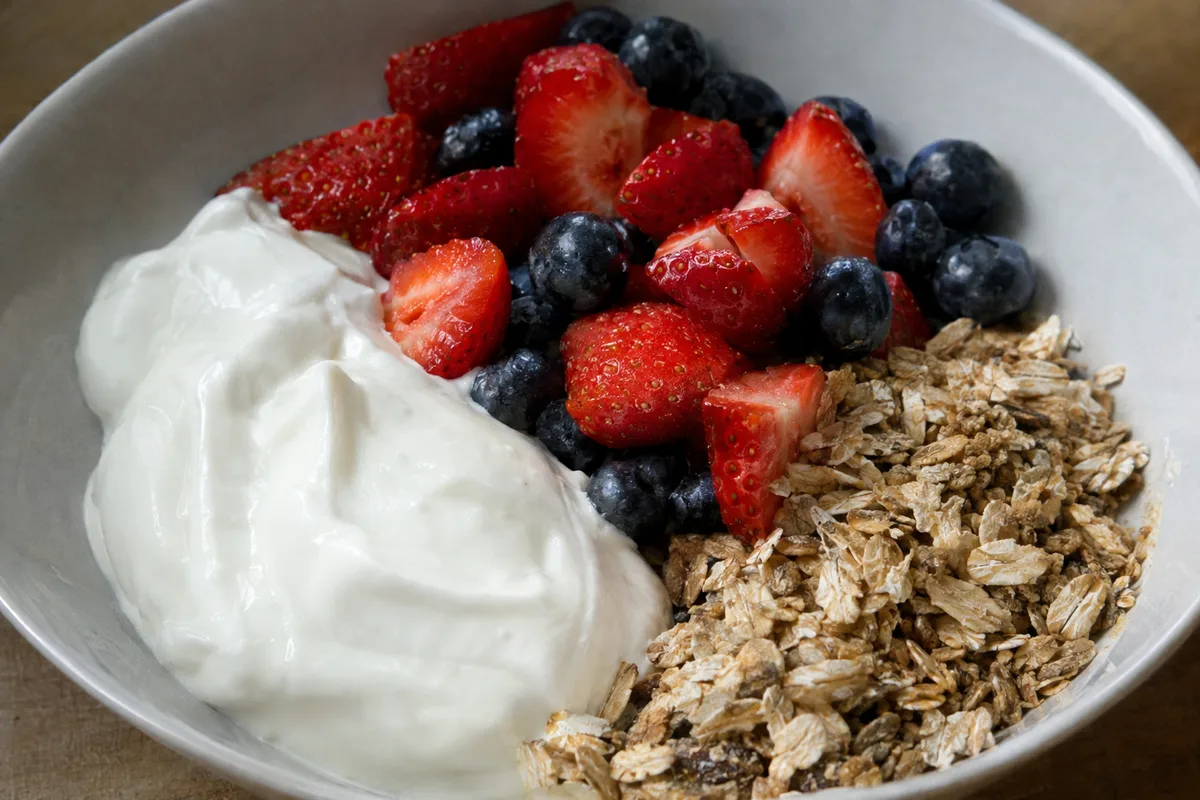
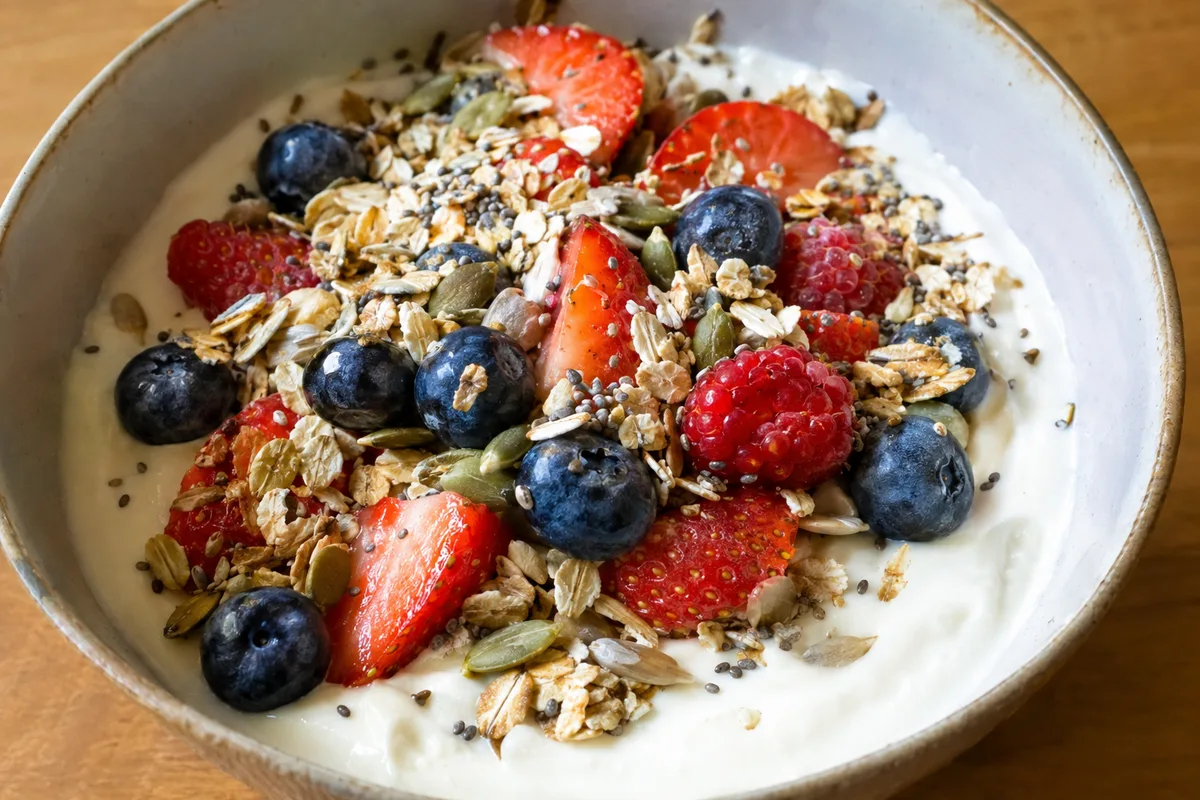
Plain yoghurt makes it easier to control what is added. Fruit, oats, seeds and nut butter can turn it into a fuller meal, but they also change the totals you log. Flavoured yoghurt can still fit your plan, provided you use its complete nutrition information rather than logging it as plain yoghurt.
- For breakfast, add fruit and oats for carbohydrate and fibre
- For a snack, pair plain yoghurt with fruit
- For a savoury option, mix thick yoghurt with herbs and cucumber
- For extra texture, add seeds and log them separately
A simple way to choose and track it
Start by deciding whether you want the most protein per 100g or the most protein in the portion you normally eat. Compare a few suitable products using the same basis, then consider the rest of their nutrition information. There is no universal amount that everyone needs from yoghurt because needs and eating patterns differ.
When logging, select the exact yoghurt variety whenever possible. Measure or estimate the portion in the same way each time, and add toppings as separate entries. This keeps your record useful without turning yoghurt choice into a complicated calculation.
- Compare protein per 100g
- Choose a portion that fits the meal
- Log the exact yoghurt style
- Add fruit, cereal, seeds or spreads separately
- Review the whole meal, not only the yoghurt