
Which fish and seafood give you the most protein?
Lean fish, tuna and many shellfish pack a large amount of protein into a serving. This guide explains the strongest choices and how preparation, packing liquid and portion size affect your food log.
The most protein-dense choices
Tuna, prawns and lean white fish are usually among the most protein-dense seafood choices. Most of their energy comes from protein because they contain relatively little fat or carbohydrate. This makes them useful when you want to add protein without changing the rest of a meal very much.
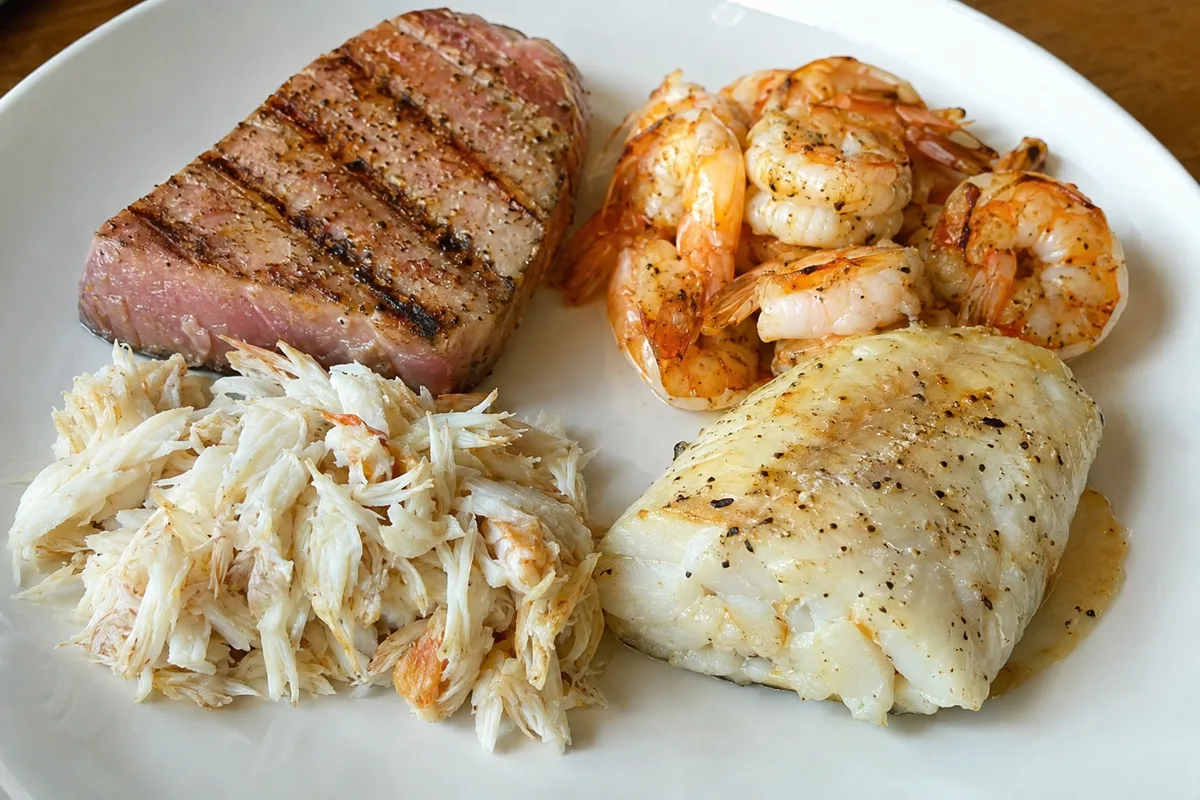
Exact figures vary by species, cut and preparation, so check the entry that matches what you ate. A cooked fillet is not directly comparable with the same weight of raw fish because cooking removes water. Compare foods using the same basis, such as cooked weight against cooked weight.
- Fresh or canned tuna, with canned weights entered as drained when appropriate
- Prawns and shrimp, logged as raw or cooked to match the portion
- Cod, haddock, pollock and other lean white fish
- Crab meat, especially when little dressing or sauce is added
Lean white fish
Cod, haddock, pollock, hake and similar white fish provide plenty of protein for their weight. They are naturally lean, although breading, batter, butter and creamy sauces can change the overall energy and fat content of the dish. Log these additions separately when they are not included in the food entry.
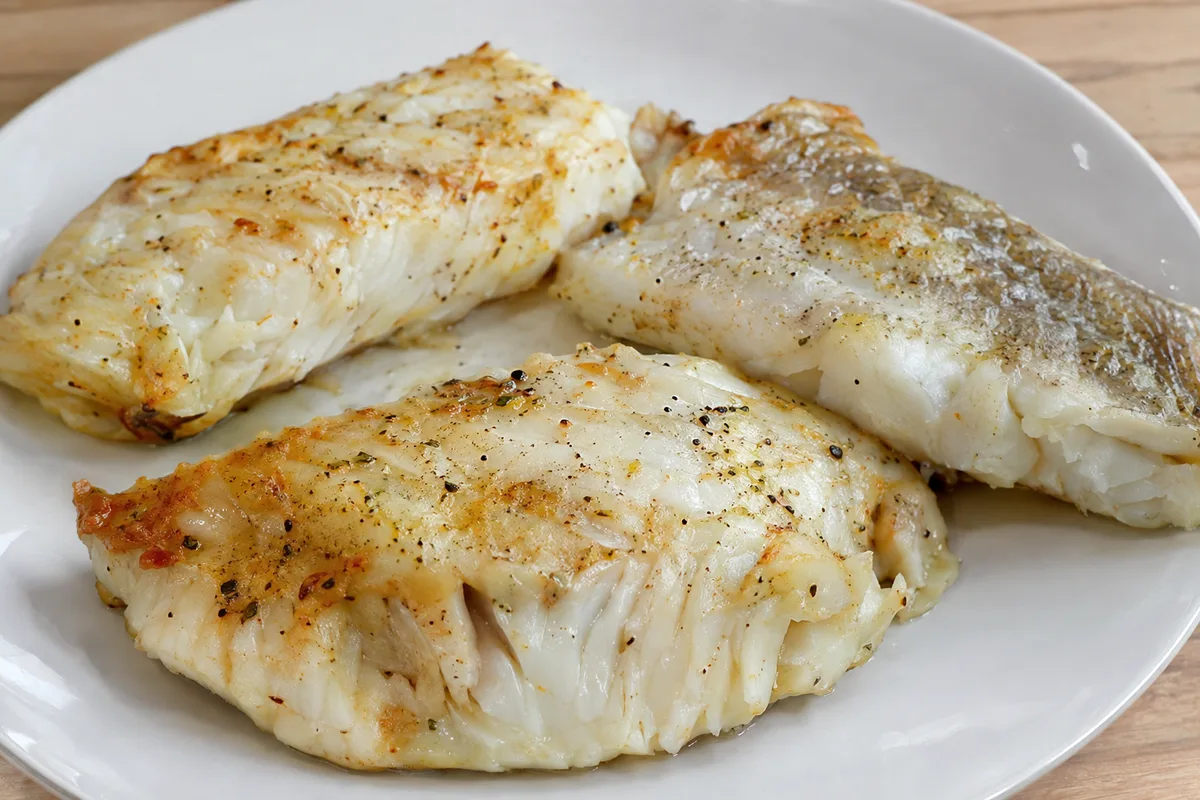
White fish can appear higher in protein per calorie than oily fish, but that does not mean it always contains more protein per fillet. The size and thickness of the portion still matter. A larger salmon fillet, for example, may provide more total protein than a smaller piece of cod even though salmon contains more fat.
- Grill or bake a plain fillet and log any oil used
- For battered fish, choose an entry that includes the coating
- Enter fish pie components separately when the recipe contains several ingredients
- Match frozen breaded portions to the nutrition label rather than a plain-fish entry
Tuna and other firm fish
Tuna is one of the clearest high-protein options because its flesh is dense and relatively lean. Fresh tuna steaks and canned tuna can both contribute a substantial amount, but their listed values may differ because of cooking and packing liquid. For canned tuna, use the drained weight if that is how the label presents the serving.
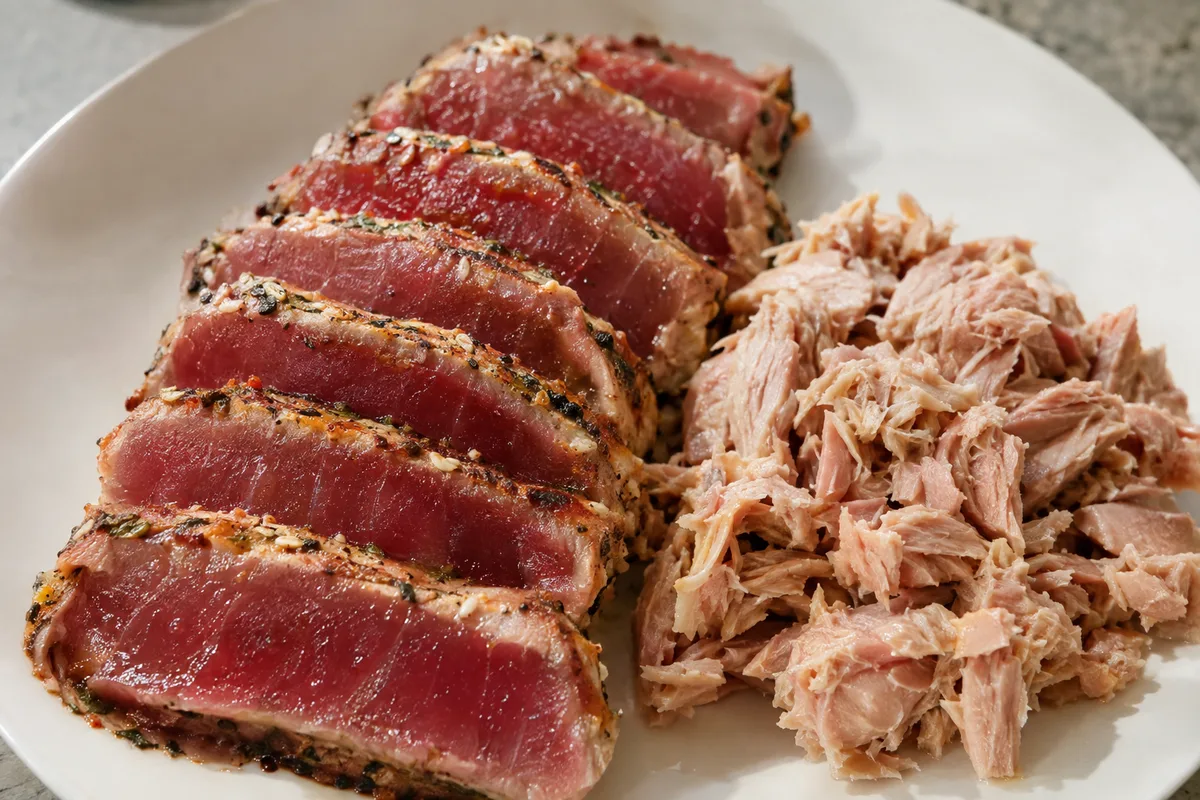
Swordfish and other firm fish can also be protein-rich, although values differ between species. Do not assume that every firm-textured fish has the same nutrition as tuna. Choose the exact species and preparation in your tracker whenever that information is available.
- Fresh tuna steak
- Canned tuna in spring water or brine, drained
- Canned tuna in oil, drained but logged with an oil-packed entry
- Firm fish fillets entered by cooked weight when weighed after cooking
Prawns, crab and other shellfish
Prawns and shrimp are usually high in protein and low in fat when served plainly. Crab meat is another strong option, while lobster and crayfish also provide a large share of their energy from protein. Sauces, mayonnaise, pastry and frying can make the complete dish very different from the seafood alone.
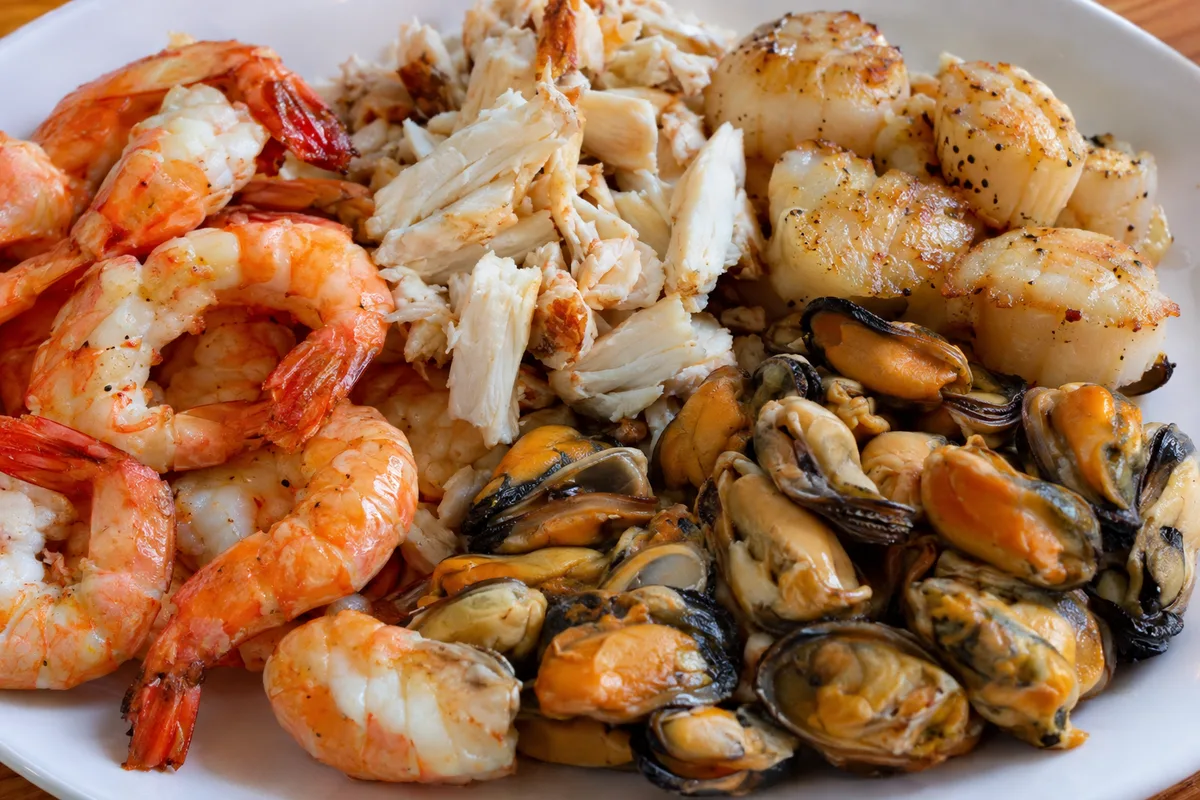
Mussels, clams, oysters and scallops contain protein too, but their protein density varies. A bowl of mussels in their shells may look large while yielding a much smaller edible portion. For accurate tracking, log the flesh you eat rather than the total weight including shells.
- Plain cooked prawns or shrimp
- Fresh or canned crab meat without a creamy dressing
- Scallops grilled with any added fat logged separately
- Mussels or clams counted by edible flesh where possible
- Lobster or crayfish meat without the shell
Oily fish still provides plenty of protein
Salmon, sardines, mackerel, trout and herring are rich in protein, but they also contain more fat than lean white fish. Because fat provides about 9 kcal per gram while protein provides about 4 kcal per gram, oily fish usually supplies less protein for the same number of calories. It can still provide as much or more total protein when the serving is larger.
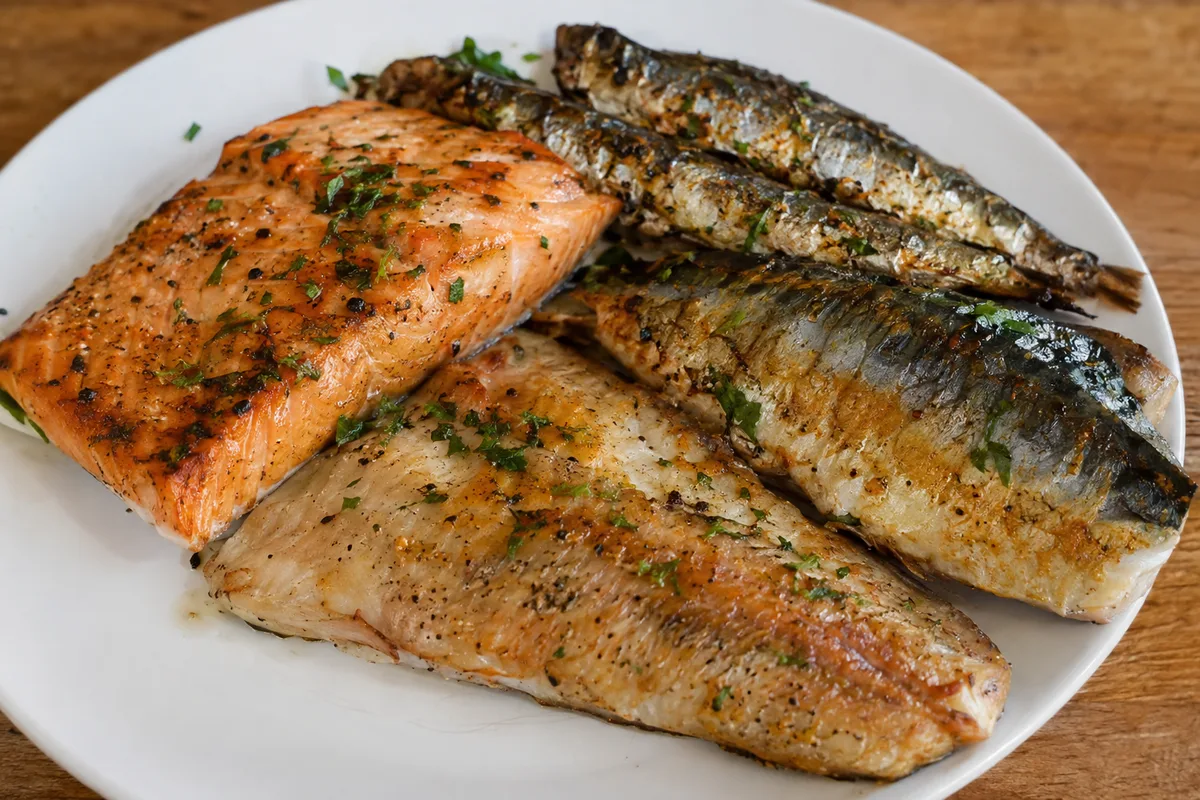
The best choice therefore depends on what you are tracking. If your main aim for a meal is the highest protein density, tuna, prawns or lean white fish may fit more easily. If you want oily fish, log the portion as it is served rather than replacing it with a generic fish entry.
- Salmon fillet, matched to raw or cooked weight
- Sardines, including the oil or sauce if consumed
- Mackerel fillet, entered as fresh, smoked or canned as appropriate
- Trout, with skin and added cooking fat reflected in the entry
How to compare seafood in your food log
Start with the protein shown per 100 grams when you want to compare foods fairly. Then look at the amount you actually plan to eat, because the highest value per 100 grams does not always produce the highest total in your meal. Nutrition labels and reliable database entries are more useful than choosing a broad entry such as mixed fish.
Keep the condition of the food consistent when weighing and logging it. Raw, cooked, drained, smoked and breaded versions can have different values because water, oil and coatings alter the weight. Dried seafood may look exceptionally protein-rich per 100 grams because much of its water has been removed, but it is usually eaten in a different portion from fresh fish.
- Match the species as closely as possible
- Choose raw or cooked according to when the food was weighed
- Use drained weight for canned seafood when directed by the label
- Include batter, breadcrumbs, oil, sauces and fillings
- Compare realistic portions as well as values per 100 grams