
Which Restaurant Breads Are Usually Highest and Lowest in Calories?
Restaurant bread can range from a small plain roll to a large piece filled or coated with fat and cheese. This guide explains which choices are usually higher or lower in calories and how to log them sensibly.
Why restaurant bread calories vary so much
The name of a bread gives you a useful clue, but it does not tell the whole story. Two restaurants can make the same style of bread with different amounts of flour, fat, sugar and fillings. The size of the piece also matters, so there is no single calorie figure for every roll, flatbread or slice.
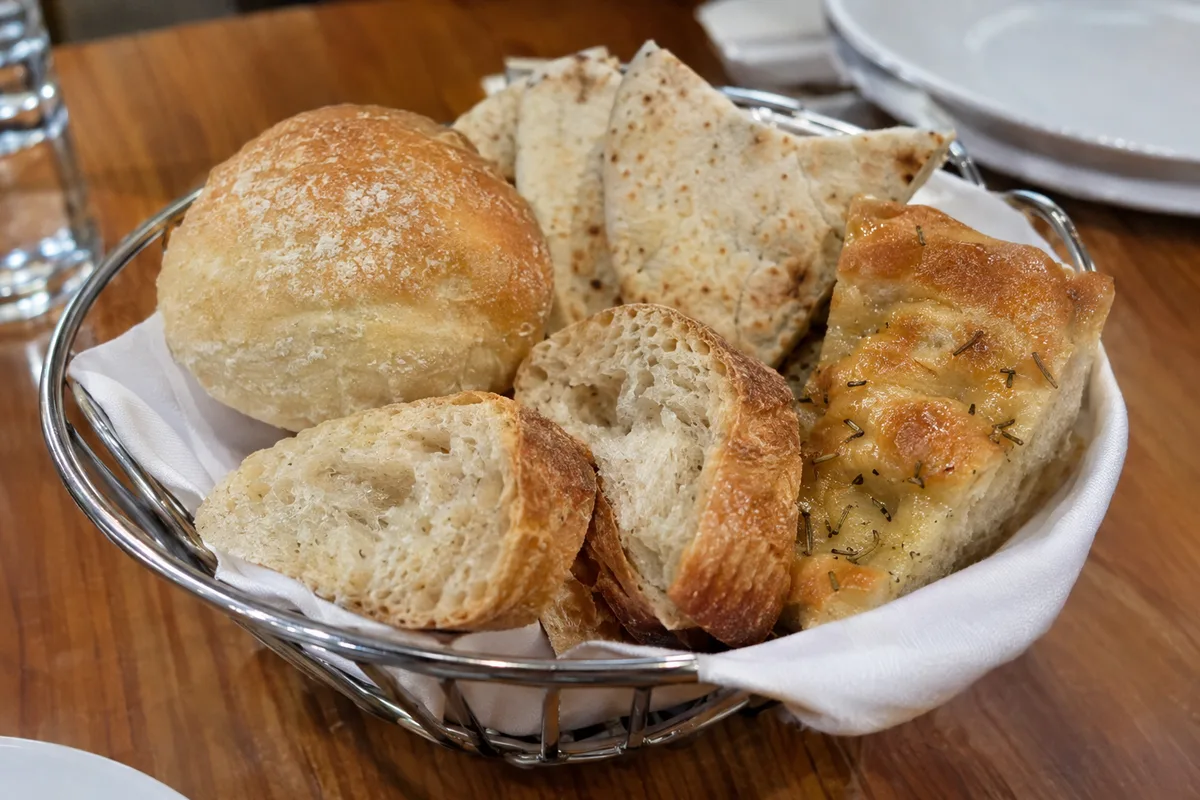
Most plain breads get much of their energy from carbohydrate, which provides about 4 kcal per gram. Added butter, oil or cheese can raise the total quickly because fat provides about 9 kcal per gram. A bread that looks only slightly richer may therefore contain noticeably more calories than a plain version of the same size.
When nutrition information is available, compare the stated serving with what arrives at the table. A serving may mean one piece, one slice or part of a shared basket. If no information is given, use the bread's size, ingredients and finish to choose the closest entry in your food log.
- Check whether the bread is plain, enriched, filled or topped.
- Notice whether the portion is a thin slice, small roll, thick wedge or whole flatbread.
- Look for visible butter, oil, cheese, seeds or sweet glaze.
- Confirm whether the listed calories include dips or spreads.
Breads that are usually highest in calories
The highest-calorie restaurant breads are often large and rich rather than simply dense. Cheese-stuffed breads, buttery brioche-style rolls and flatbreads brushed generously with oil combine flour with substantial added fat. Sweet breads may also include sugar, fillings and a glaze.
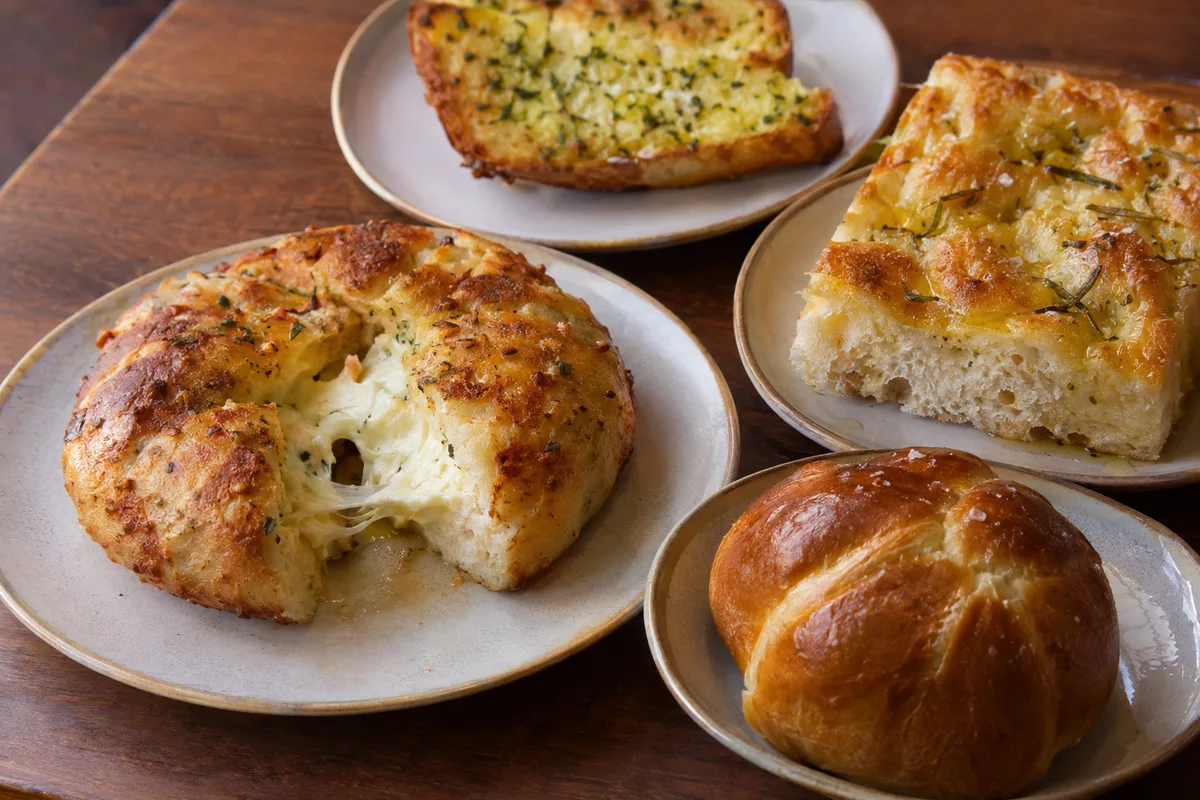
Garlic bread can sit towards the higher end when it is soaked or spread with butter or oil. A cheese topping raises it further, while a large sharing portion can be easy to underestimate. Thick focaccia may also be high when oil is used in the dough, on the surface and in the baking tray.
These foods are not identical from one kitchen to another, so their order can change. A small piece of rich bread may contain less than a very large plain one. For accurate tracking, treat the recipe and portion as more important than the name alone.
- Cheese-stuffed bread or cheese-filled breadsticks
- Garlic bread with butter, oil or cheese
- Large oil-brushed focaccia
- Buttery brioche-style rolls
- Sweet glazed or filled breads
Breads that are usually lowest in calories
A small plain bread serving is often the lowest-calorie option on a restaurant table. Examples include a modest dinner roll, a thin baguette slice or a small piece of plain pita. These choices usually have fewer calorie-dense additions than bread coated with fat or filled with cheese.
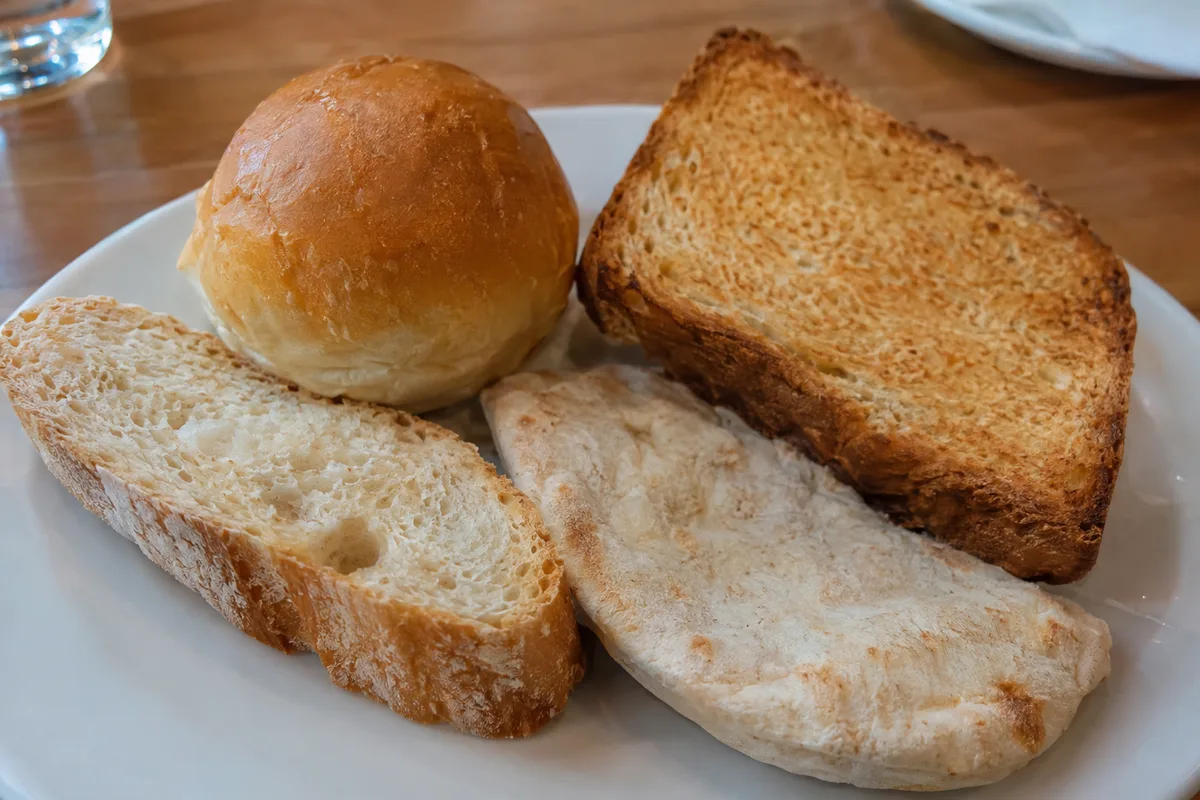
Plain does not automatically mean low in calories if the portion is large. A whole naan, large tortilla or thick section of baguette may provide more than a small enriched roll simply because there is more bread. Compare the amount you will actually eat rather than judging only by the bread's style.
Dry toast may look lighter, but toasting mainly removes water rather than calories. A toasted slice and the same slice before toasting contain roughly the same energy until butter or another topping is added. Thinness and portion size are more useful clues than crispness.
- Small plain dinner roll
- Thin slice of plain baguette
- Small piece of plain pita
- Plain crispbread, when served without a topping
- Thin slice of unbuttered toast
Toppings and dips can change the total
The bread may be only one part of what you eat. Butter, olive oil, creamy dips, cheese spreads and flavoured oils add calories beyond the bread itself. Restaurant nutrition details may list these separately, include them in a combined serving or leave them out.
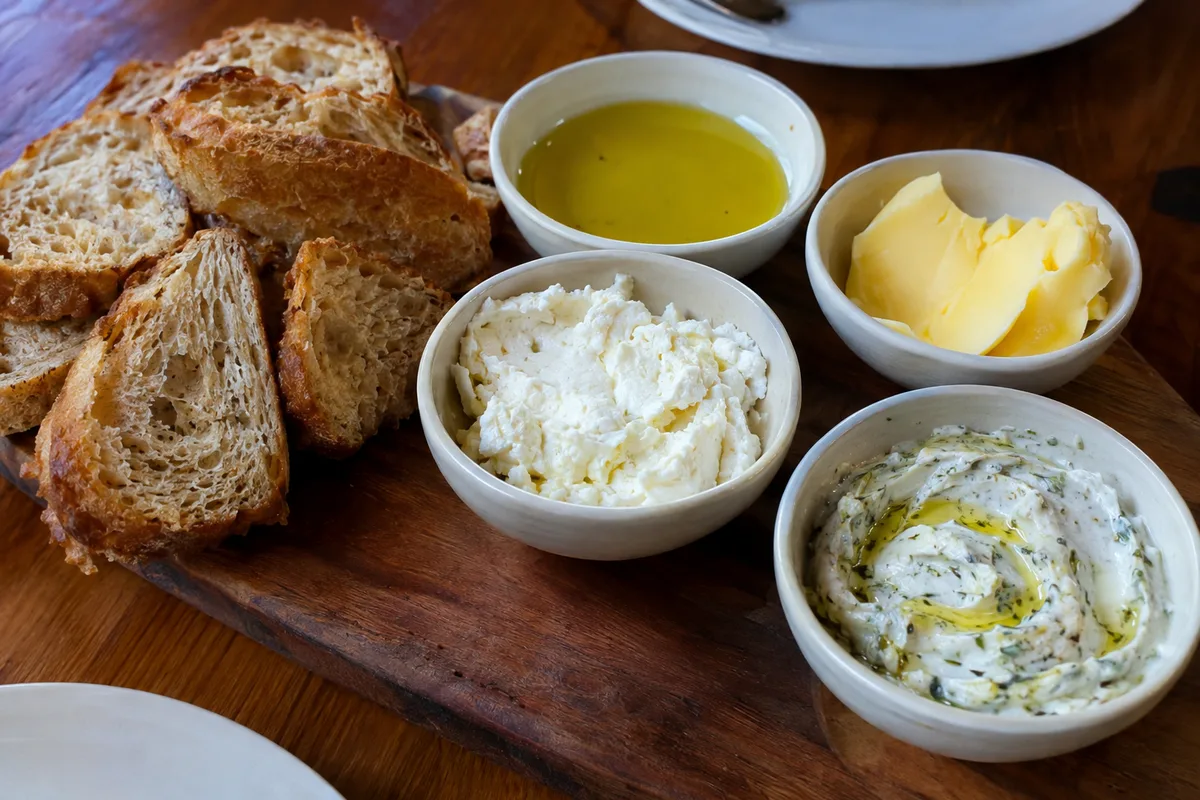
Oil can be particularly difficult to judge because it can soak into warm bread and disappear from view. Butter may also be spread before the plate reaches the table, especially on toast or garlic bread. If the bread is glossy, soft with fat or leaves oil on the plate, log an added fat rather than recording plain bread alone.
You do not need perfect information to make a useful estimate. Record the bread first, then add the topping or dip as a separate item when possible. If you leave some behind, adjust the amount to reflect what you actually ate.
- Plain bread with no spread
- Bread with a thin scrape of butter
- Bread dipped briefly in oil
- Bread heavily soaked in oil or butter
- Bread served with cheese or a rich dip
A practical way to log restaurant bread
Start with any nutrition information supplied by the restaurant, because it should reflect that kitchen's recipe and serving. Check the wording carefully to see whether the figure covers one piece, a full basket or a complete side order. If the serving does not match what you ate, adjust your log rather than entering the whole listed amount.
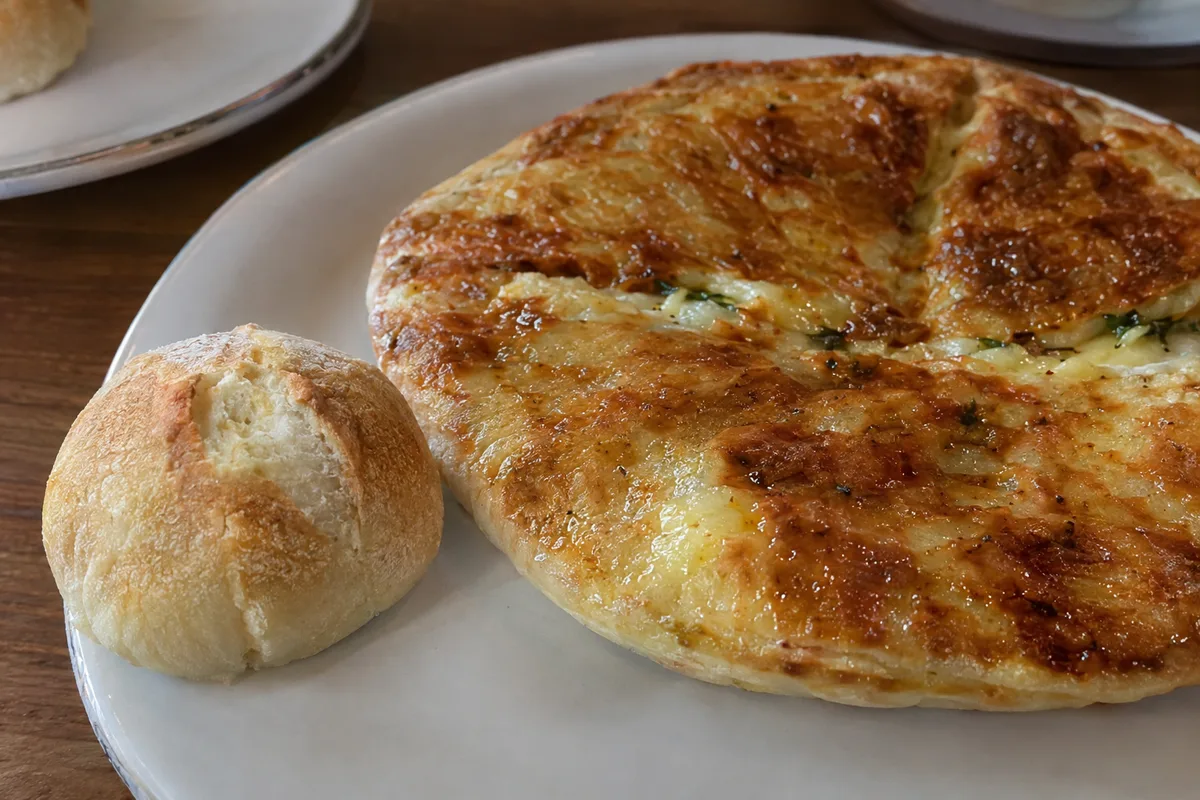
When there is no restaurant entry, choose a generic food that matches the bread's type and size. Record visible additions separately, including butter, oil, cheese or sweet fillings. It is usually clearer to log a plain bread base plus its extras than to pick a vague entry for an unknown restaurant bread.
Consistency matters more than pretending an estimate is exact. Use the same method each time: identify the bread, estimate the portion and account for additions. You can add a note in your log when the serving was unusually large, oily or heavily topped.
- Identify the closest bread type.
- Estimate how many pieces or what fraction you ate.
- Match the entry to the portion's size or weight when known.
- Add spreads, oils, fillings and dips separately.
- Save a personal meal entry if you often order the same serving.
How to compare choices at the table
For a lower-calorie bread choice, look first for a small plain portion without a coating or filling. A plain roll or thin slice is usually easier to estimate than a large house bread with an unknown recipe. Keeping dips and spreads separate also gives you more control over what enters your log.
For the highest-calorie options, look for several features appearing together. A large bread that is buttery, oil-brushed, cheese-filled or sweetened will generally sit above a small plain piece. Words such as stuffed, glazed, cheesy, buttery and oil-brushed are useful signals, although the exact total still depends on the recipe.
The simplest comparison is between the servings in front of you, not between broad bread categories. Consider size first, then added fat, fillings and toppings. This approach will not produce an exact number without recipe information, but it can help you choose a realistic food-log entry.
- Lowest end: small, plain and without a spread
- Middle: larger plain bread or a modestly enriched roll
- Higher end: bread brushed with butter or oil
- Highest end: large bread with added fat, cheese, filling or glaze