
Why chips can be hard to fit into your goals
Chips are not automatically “bad”, and eating them occasionally does not undo an otherwise balanced way of eating. The main concerns are how they are cooked, how much you serve and what accompanies them.
Why frying changes potatoes
Potatoes themselves provide carbohydrate, along with some fibre and useful nutrients. When they are fried, they absorb oil, which adds fat and makes the same weight of food more energy-dense. This can make it easier to eat more energy than you intended.
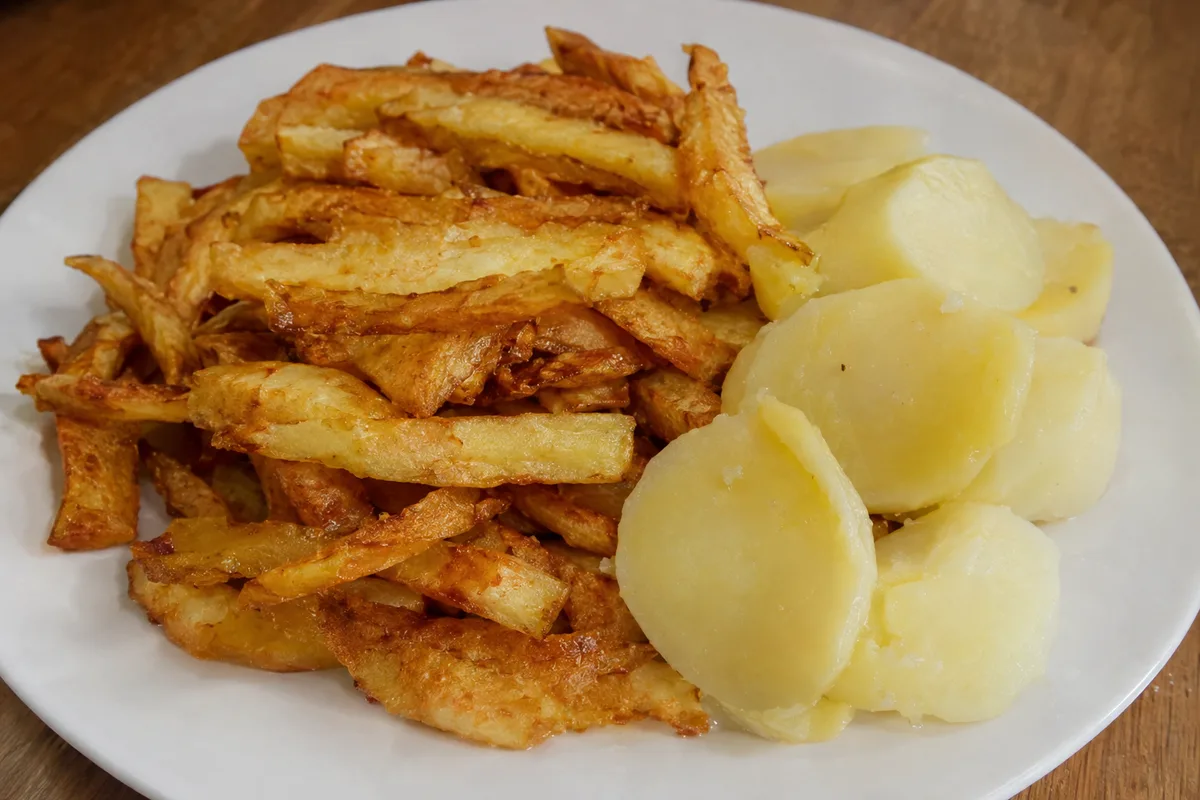
Fat provides about 9 kcal per gram, compared with about 4 kcal per gram from carbohydrate or protein. That does not make fat inherently bad, but it explains why fried chips can add up quickly in a food log. Thick-cut, thin-cut, oven-cooked and takeaway chips may all absorb different amounts of oil.
Salt and serving size matter
Chips are often seasoned generously, and sauces or toppings can add more salt. A high-salt meal may also leave you thirsty and can cause a short-term change on the scales through water retention. That change is not the same as gaining body fat.
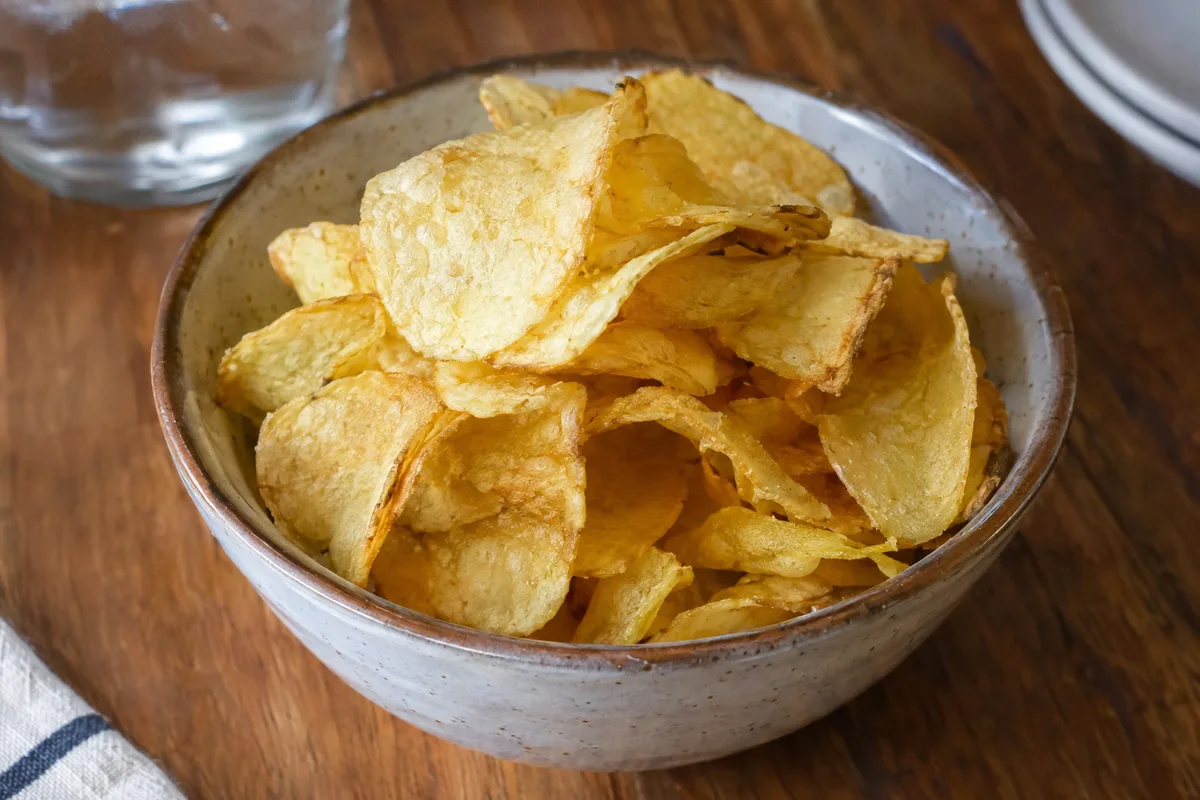
Serving size is easy to underestimate when chips arrive in a large pile or are eaten from a shared container. If you track your food, weighing your usual portion occasionally can help you compare it with what you have been logging. The right amount depends on your appetite, goals and the rest of the meal.
Look at the whole plate
Chips are often served with other fried foods, rich sauces or large portions, so the overall meal may be more relevant than the chips alone. A meal with little protein or fibre may also feel less satisfying for the energy it provides. This can make it harder to stay close to your planned intake.
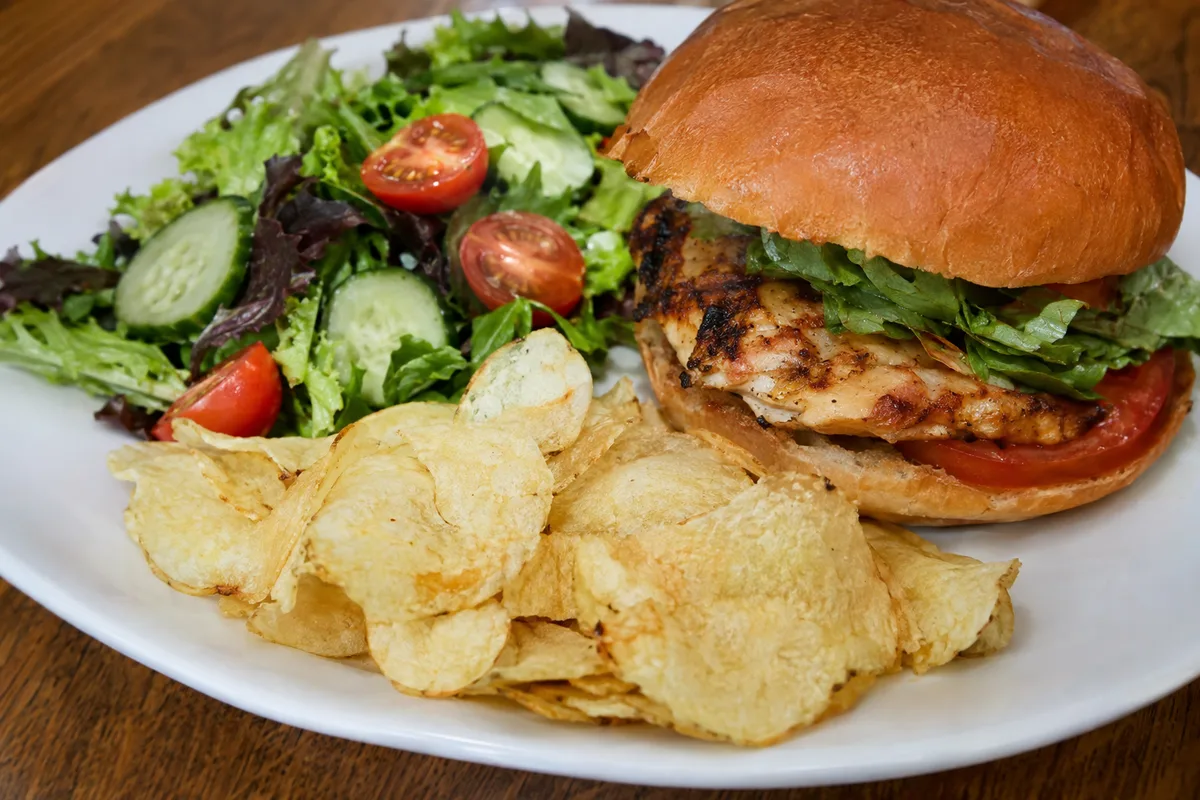
You can build a more balanced plate by pairing a measured portion of chips with a source of protein and plenty of vegetables. Leaving some potato skin on may retain more fibre, while oven cooking or air frying usually requires less added oil than deep frying. The exact result still depends on the recipe and cooking method.
How to include chips without labelling them bad
Calling a food “bad” can encourage all-or-nothing thinking. It is often more useful to decide how often chips suit your routine and what portion fits your food log. You can enjoy them deliberately rather than treating the meal as a failure.
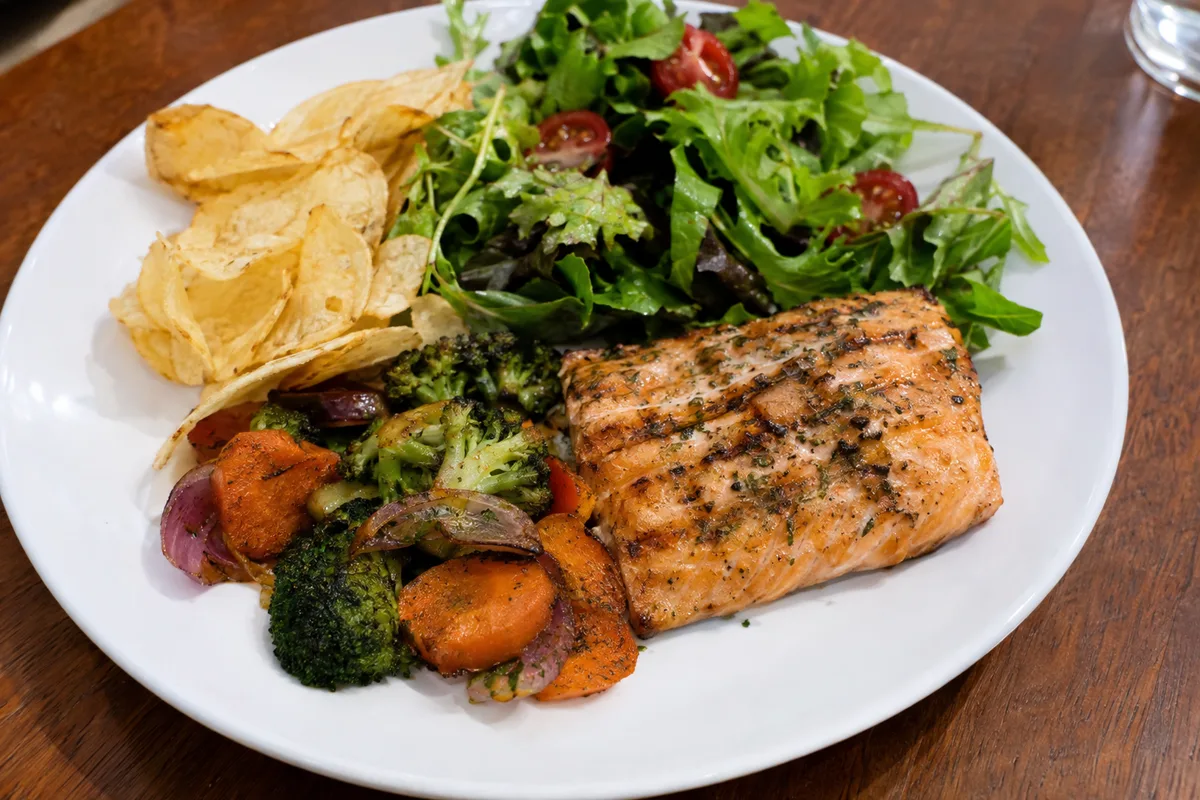
Log the oil, sauces and toppings as well as the potato, especially when cooking at home. For takeaway chips, use the closest available entry and accept that it is an estimate. Consistency over time is usually more informative than trying to make one entry perfectly accurate.