
Green lentils: a practical guide to their nutrition
Green lentils provide plant protein, fibre, carbohydrate and a range of vitamins and minerals. This guide explains what that means for your food log and how to build satisfying meals around them.
What green lentils are
Green lentils are pulses, which are the edible seeds of plants in the legume family. They have an earthy flavour and usually keep their shape when cooked. This makes them useful in salads, soups, stews and warm grain bowls.
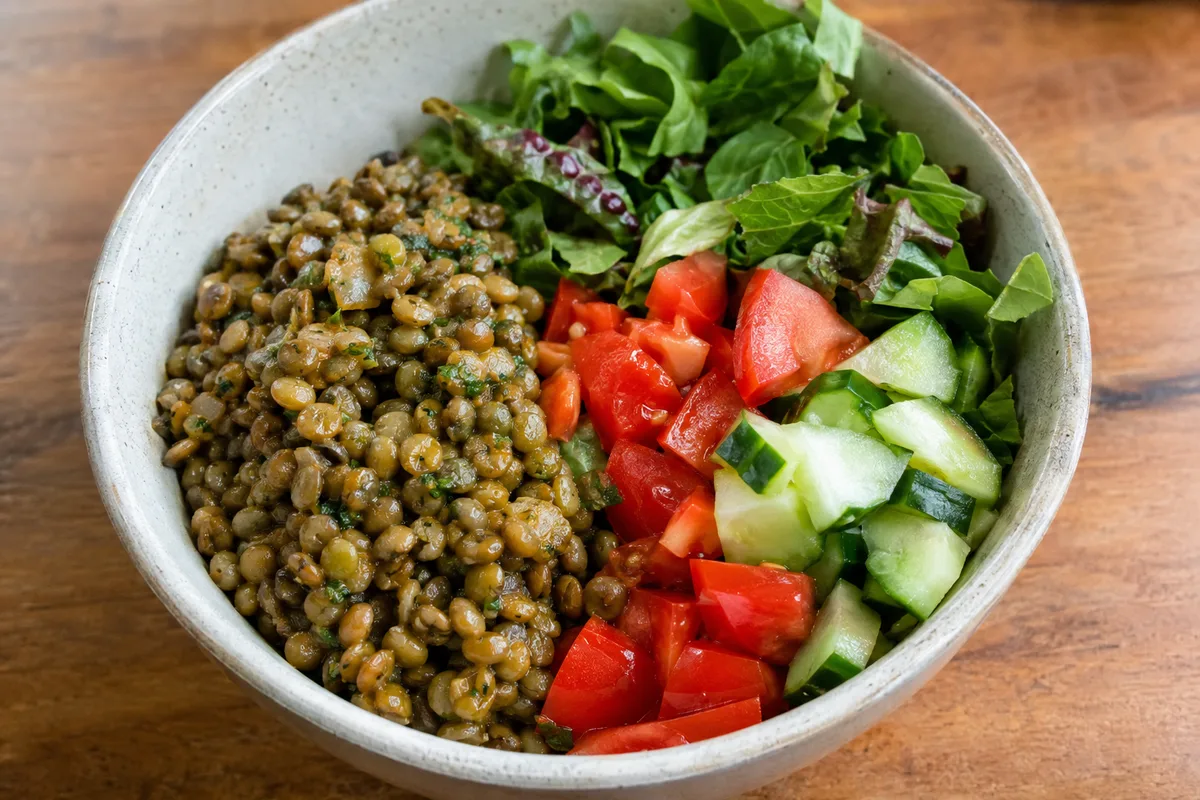
Their nutrition comes mainly from carbohydrate and protein, with very little naturally occurring fat. They also provide fibre and several vitamins and minerals. The exact amounts depend on the variety, portion, cooking method and information used in your food tracker.
- Use in place of some or all of the meat in a stew
- Stir into soup to add texture and substance
- Serve cold with chopped vegetables and a sharp dressing
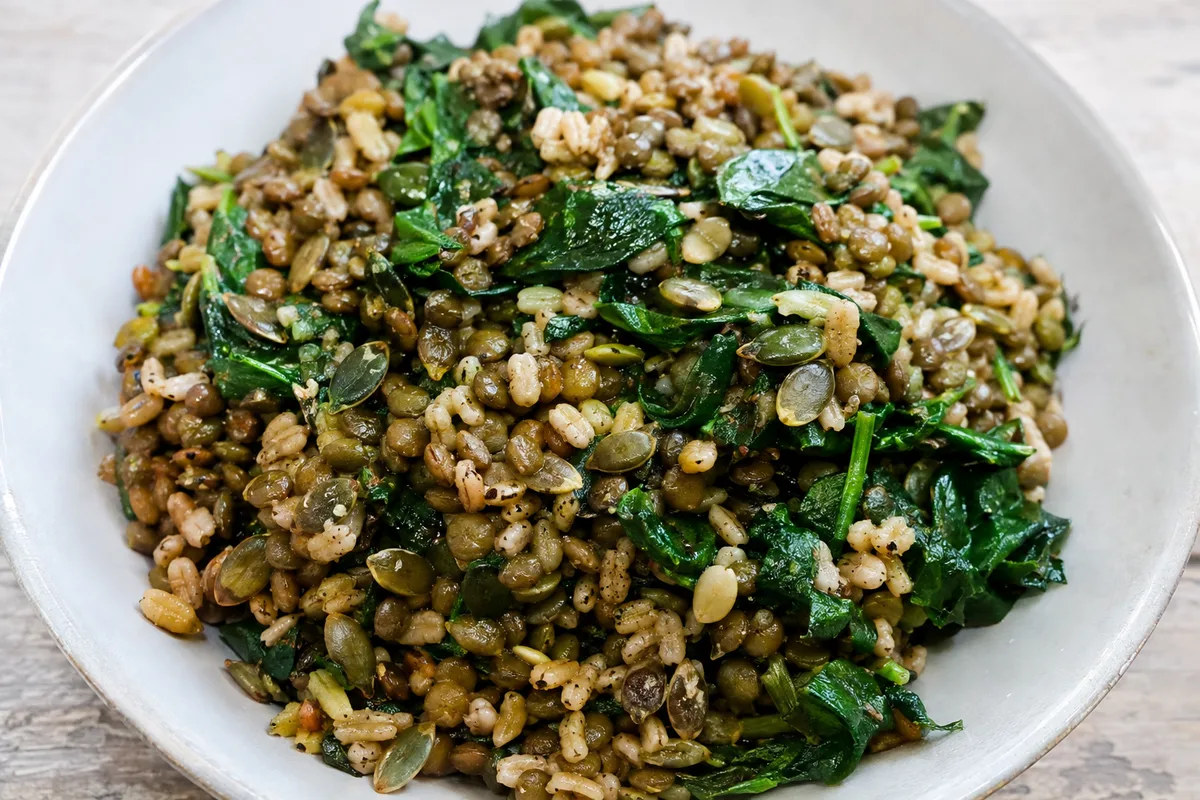
- Add to a grain bowl with greens and a source of fat
Protein, carbohydrate and fibre
Green lentils contain both protein and carbohydrate, so they do not fit neatly into only one food category. The protein contributes to the maintenance and repair of body tissues. The carbohydrate supplies energy, while the fibre adds bulk and slows the pace of digestion.
Fibre is part of the total carbohydrate shown on many nutrition labels, although food apps may display it separately. It is useful to check how your chosen tracker handles fibre rather than assuming every entry is calculated in the same way. If you increase your lentil intake, doing so gradually and drinking enough fluid may feel more comfortable.
- Protein for building and maintaining body tissues
- Carbohydrate as a source of energy
- Fibre for bulk and a more filling texture
- Little naturally occurring fat before oil or dressing is added
Vitamins and minerals in green lentils
Green lentils provide iron, folate, magnesium, potassium and other micronutrients. Iron helps with normal oxygen transport, while folate has a role in normal cell division. Magnesium and potassium support everyday functions involving muscles and nerves.
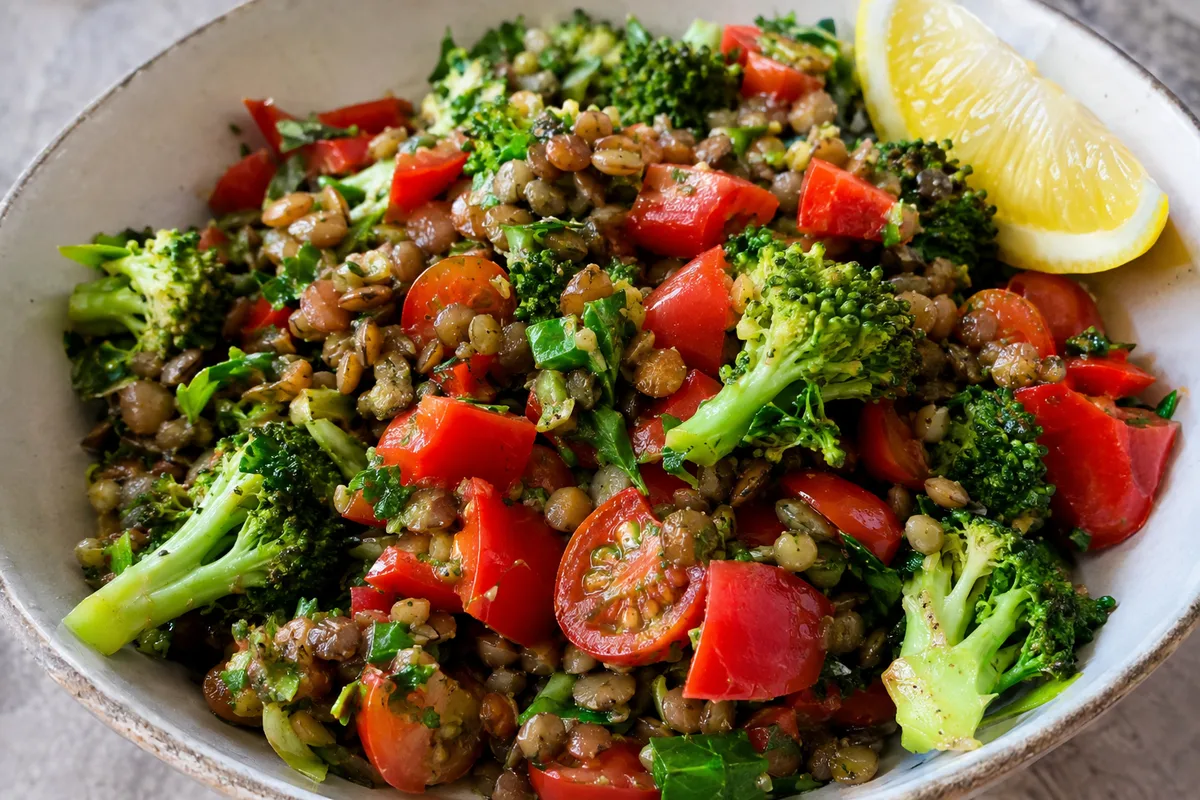
The iron in lentils comes from a plant source and is absorbed differently from iron in animal foods. Pairing lentils with a source of vitamin C can help your body absorb more of it. Peppers, tomatoes, broccoli, citrus fruit and berries are practical options.
- Lentil salad with red pepper and tomatoes
- Lentil stew finished with lemon juice
- Warm lentils served alongside broccoli
- Lentil bowl with cabbage and orange segments
Cooked and dry weights are not interchangeable
Dry lentils absorb water as they cook, so their weight and volume increase. Water adds weight but does not add energy, protein or fibre. A cooked portion therefore has a different nutrition value per gram from the same weight of dry lentils.
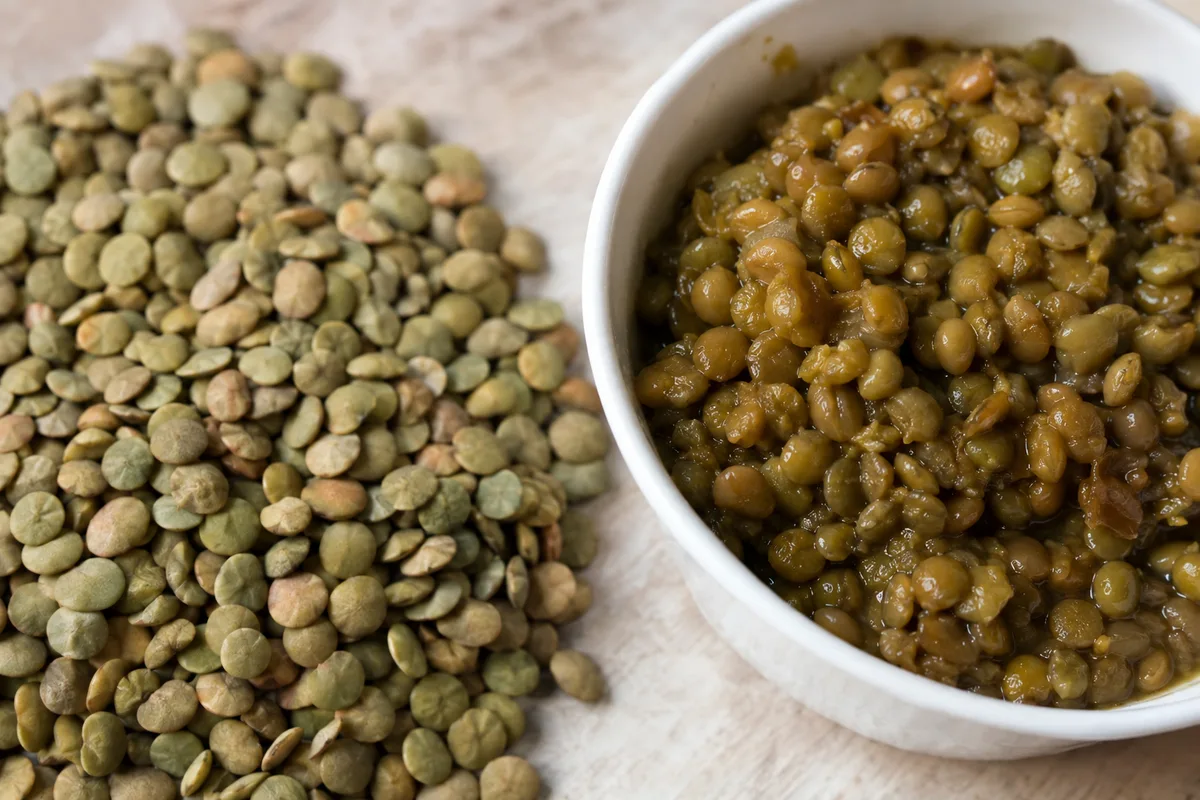
For accurate tracking, match the state of the food to the database entry. Weigh dry lentils and choose a dry entry, or weigh them after cooking and choose a cooked entry. Do not log a cooked weight against a dry-lentil listing.
When cooking several portions, record the total dry amount before cooking and divide the finished dish by the number of portions you actually serve. If other ingredients are added, include them in the recipe entry. Oil, coconut milk, cheese and dressings can change the meal's energy and fat content noticeably.
- Check whether the entry says dry, uncooked, boiled or cooked
- Use the nutrition label when cooking packaged lentils
- Create a saved recipe for a batch you make regularly
- Include cooking oils, sauces and toppings separately
How to build a balanced lentil meal
Lentils can form the centre of a meal, but the rest of the plate still matters. Add vegetables for colour, texture and a broader mix of nutrients. Include a source of fat and, if it suits your needs, another protein-rich food or a grain.
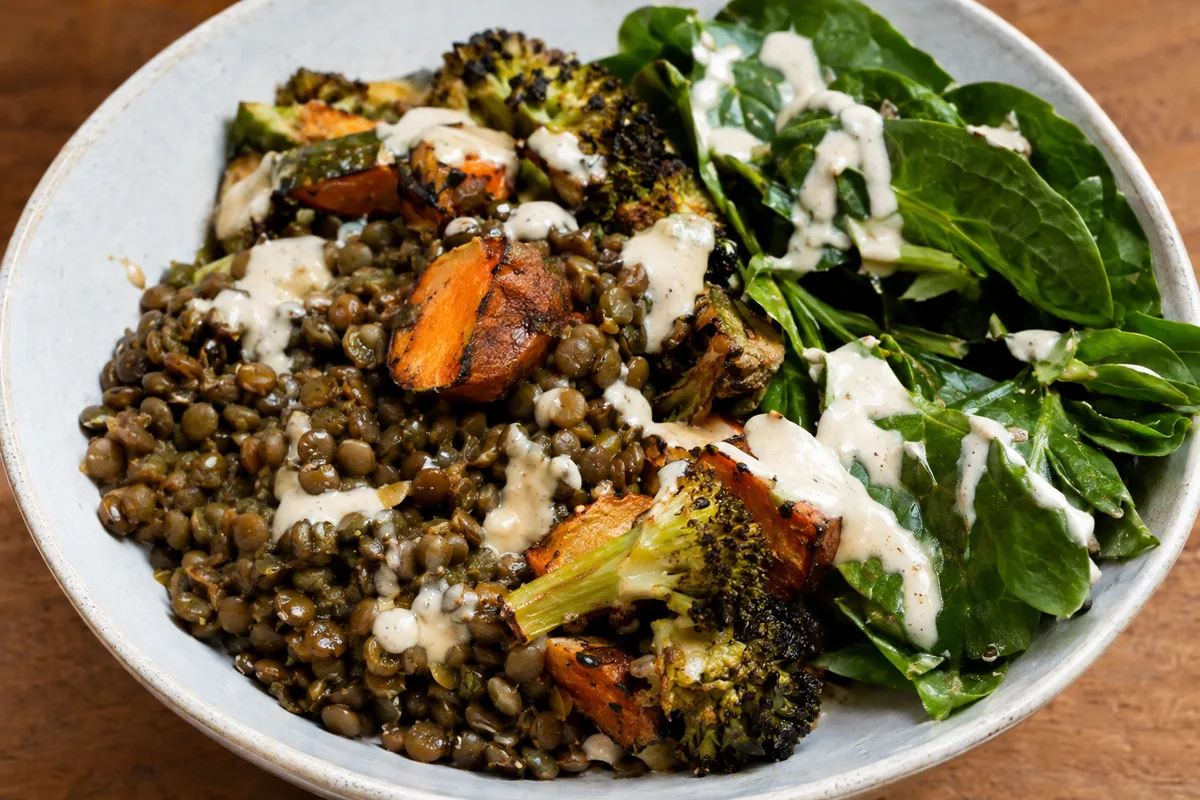
A lentil dish can be adjusted to match your appetite and nutrition targets. More vegetables can increase volume, while grains or bread add carbohydrate. Eggs, yoghurt, tofu, fish or meat can add protein, and nuts, seeds, avocado or oil can add fat.
- Green lentils, roasted vegetables, spinach and tahini
- Lentil soup with wholemeal bread and yoghurt
- Lentil salad with tomatoes, cucumber, herbs and eggs
- Green lentil curry with vegetables and rice
- Warm lentils with fish, greens and lemon dressing
Choosing and preparing green lentils
Dried green lentils usually need rinsing and simmering in water until tender. Cooking time varies with their age, size and the texture you prefer, so follow the packet and check them as they cook. Salt, herbs, spices, onion and garlic can add flavour without changing their basic role in the meal.
Tinned or ready-cooked lentils are convenient when time is short. Drain and rinse them if you want to remove some of the salty liquid, then track the drained amount using a matching entry. Compare labels because added ingredients and serving information can differ between products.
- Rinse dried lentils before cooking
- Simmer until tender but still holding their shape
- Drain well for salads and grain bowls
- Cool cooked lentils promptly before storing
- Track added oil, dressing and sauce as part of the dish