
Wholemeal or white bread: what changes in your carbohydrate log?
White and wholemeal bread both contain carbohydrates, but they differ in how the wheat grain is used. Here is how to compare them accurately and record the bread you actually eat.
White bread is still wheat bread
The phrase “wheat bread” can be confusing because most ordinary white bread is also made from wheat. The useful comparison is usually white bread versus wholemeal bread. Wholemeal flour includes more of the original wheat grain, while white flour has the outer layers and central part removed during milling.
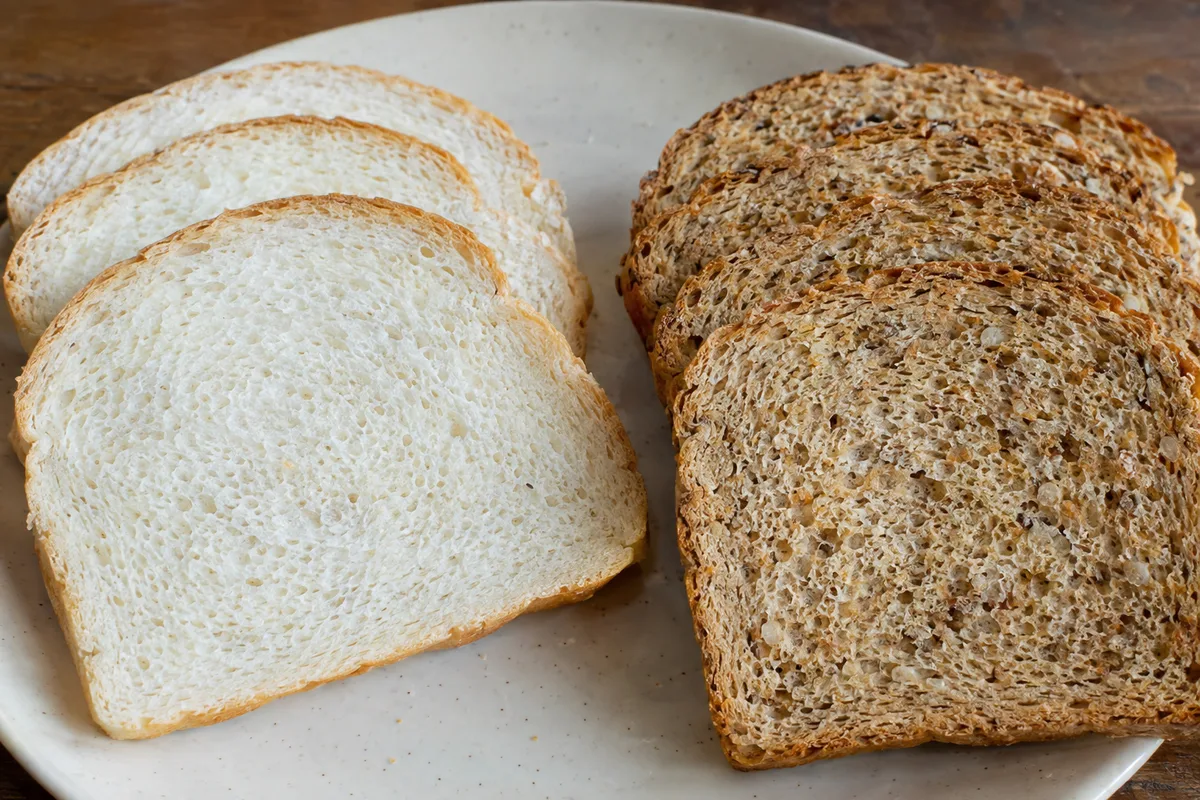
Wholemeal bread is not simply white bread with a darker colour. Its flour changes the amount of fibre and can affect texture, flavour and how filling the bread feels. Brown-looking bread is not always wholemeal, so colour alone is not a reliable guide.
- White bread is generally made with refined wheat flour.
- Wholemeal bread uses flour containing the whole wheat grain.
- Brown bread may contain a mixture of white and wholemeal flours.
- Seeded bread can be based on either white or wholemeal flour.
The carbohydrate difference may be smaller than expected
Both white and wholemeal bread get much of their energy from carbohydrate. For similar weights, their total carbohydrate amounts can be fairly close, although recipes vary. Wholemeal bread is not automatically a low-carbohydrate food.
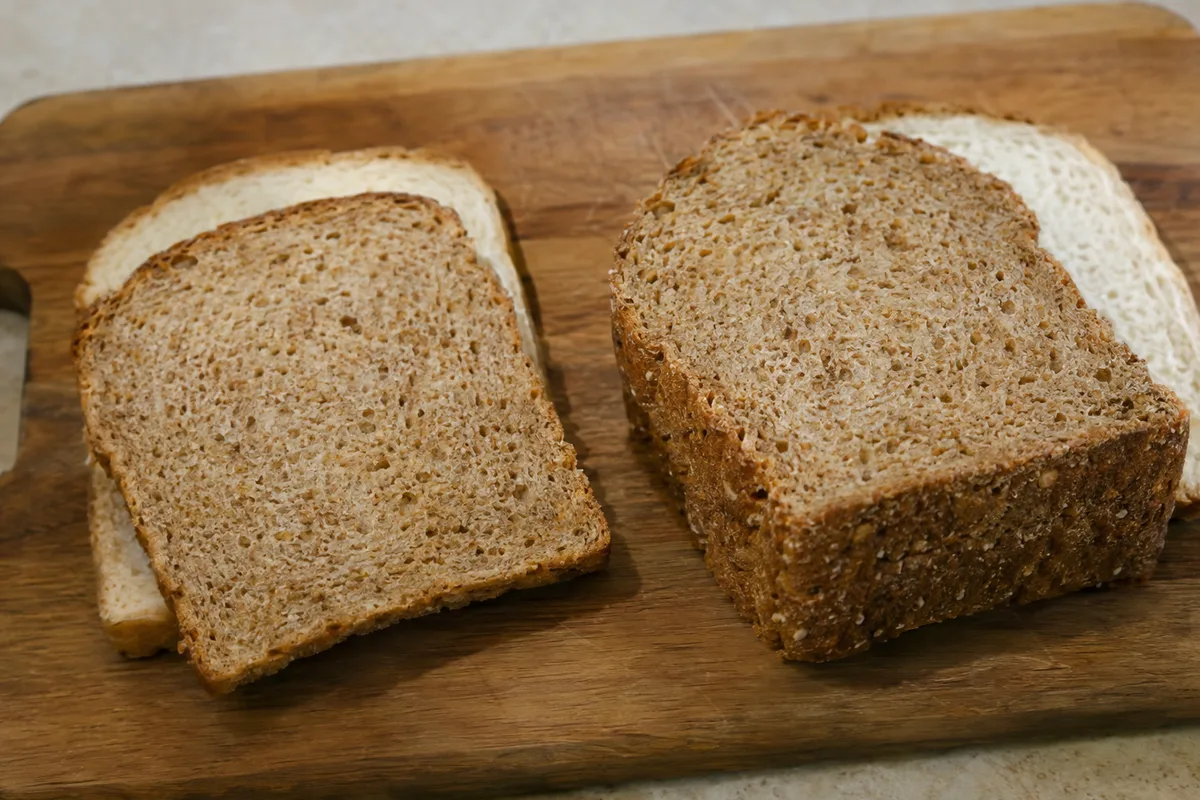
A thick slice may contain more carbohydrate than a thin slice, whatever flour was used. Added seeds, fruit, sweeteners and other ingredients can also alter the figures. When tracking, use the value for the specific loaf and the portion you ate rather than relying on a general entry.
- Compare equal weights if you want a fair like-for-like check.
- Check carbohydrate per slice as well as per 100 grams.
- Notice whether the listed serving matches the size of your slice.
- Record extra bread separately if you have more than the stated serving.
Fibre is the main practical difference
Wholemeal bread usually contains more fibre because more of the grain remains in the flour. Fibre is included within the total carbohydrate information in some tracking systems and shown separately in others. Check how your preferred app or diary handles it before subtracting anything.
A higher-fibre bread may feel more satisfying, but appetite responses differ from person to person. Fibre also adds texture and often makes the loaf denser. The most useful comparison is therefore not just total carbohydrate, but carbohydrate, fibre and portion size together.
- Look for fibre in the nutrition information.
- Compare breads using the same weight.
- Check whether wholemeal flour is the main flour listed.
- Consider how satisfying your usual portion feels.
Read the label before choosing a diary entry
Names such as multigrain, farmhouse or seeded describe style and ingredients, but they do not always mean wholemeal. The ingredients list shows which flour forms the base of the loaf. Ingredients are listed in descending order by weight, so the first flour named is especially useful.
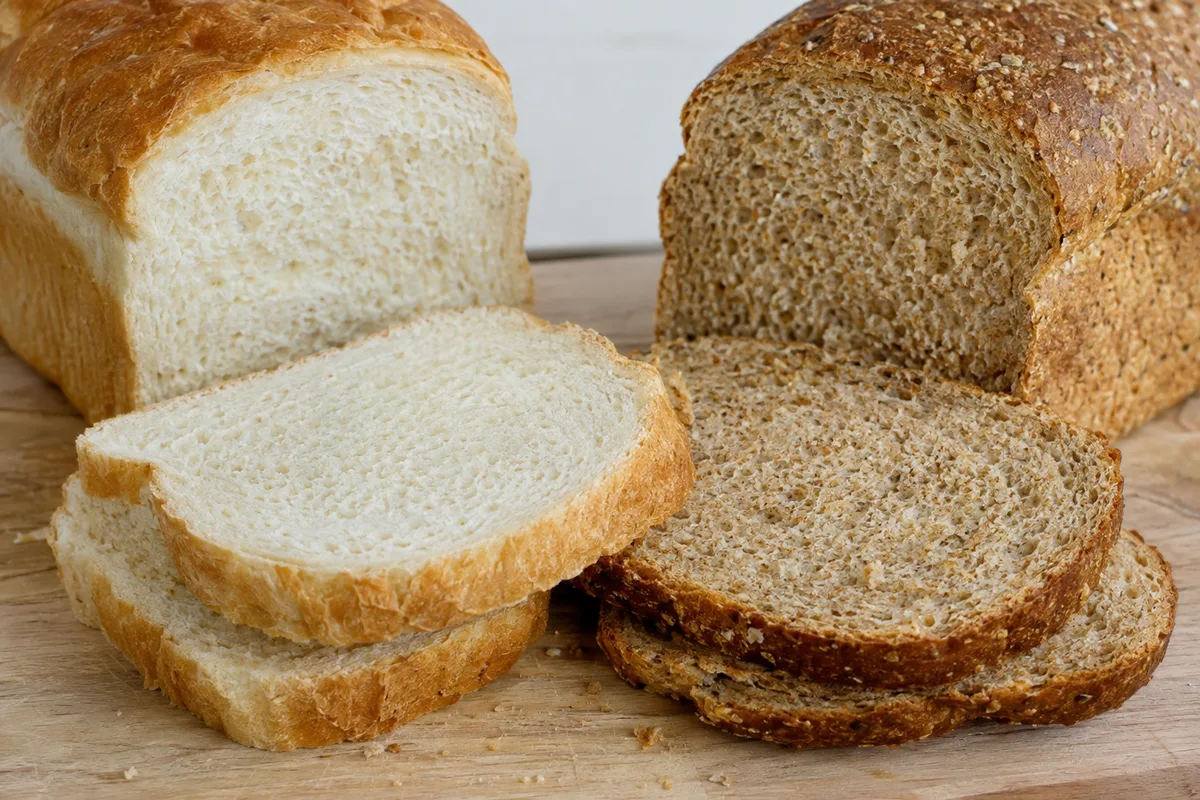
Nutrition information gives a better tracking figure than appearance or marketing language. If the packet lists values per 100 grams and per slice, make sure the slice value matches what you ate. Bread cut at home can vary more than evenly cut packaged slices, so a close estimate may be needed.
- Find the first flour in the ingredients list.
- Confirm whether it says wholemeal wheat flour or wheat flour.
- Use the carbohydrate figure from the same loaf.
- Match the entry to one slice, two slices or the actual weight eaten.
- Check fibre separately if you monitor it.
Choose according to the whole meal
Bread choice is only one part of a meal. Fillings and toppings can change its balance, texture and overall energy more than the difference between two types of bread. Track spreads, cheese, sauces and other additions separately rather than treating a sandwich as bread alone.
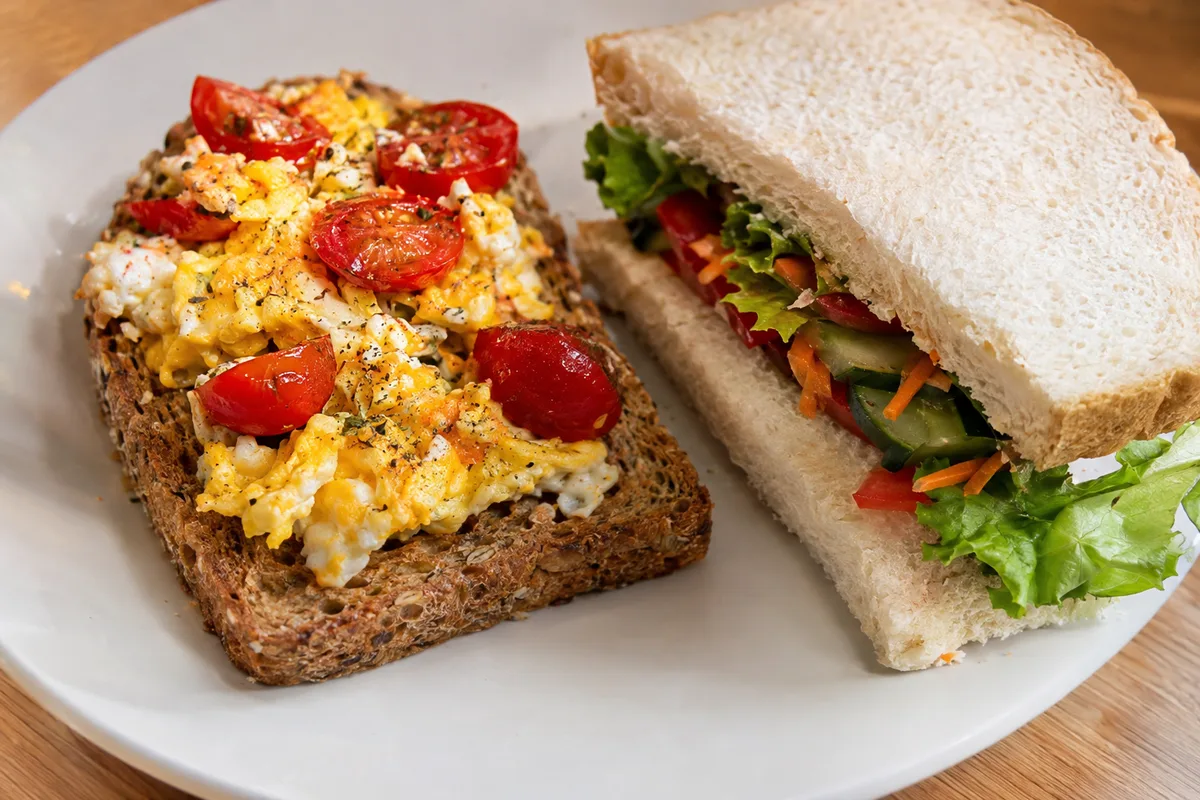
Wholemeal can be a straightforward way to add fibre if you enjoy it. White bread may still suit a particular meal or personal preference, and its carbohydrate should be logged in the same careful way. A consistent portion and an accurate product entry matter more than assuming one colour of bread always has fewer carbohydrates.
- Pair toast with eggs and tomatoes for a more varied meal.
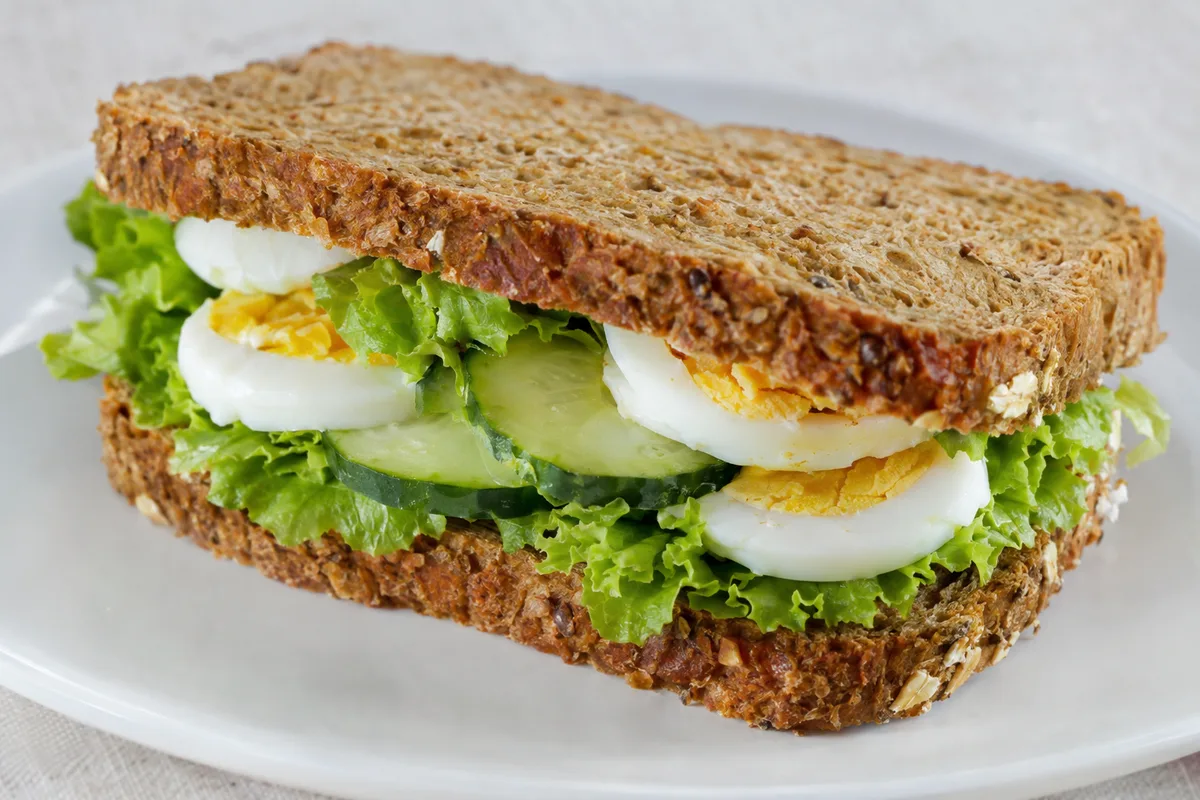
- Add salad vegetables to a wholemeal sandwich.
- Measure generous spreads rather than overlooking them.
- Choose the bread you enjoy and record the portion accurately.