
What 10 Grams of Sugar Looks Like at Halloween
Ten grams of sugar can look very different depending on the Halloween treat. This guide explains the visual benchmark, why portions vary and how to record mixed sweets accurately.
Start with a simple sugar benchmark
Ten grams of granulated sugar is roughly two and a half level teaspoons. This is a useful picture to keep in mind, although spoon measurements vary slightly with crystal size and how the spoon is filled. For accurate tracking, use the amount shown on the food label rather than relying on teaspoons alone.
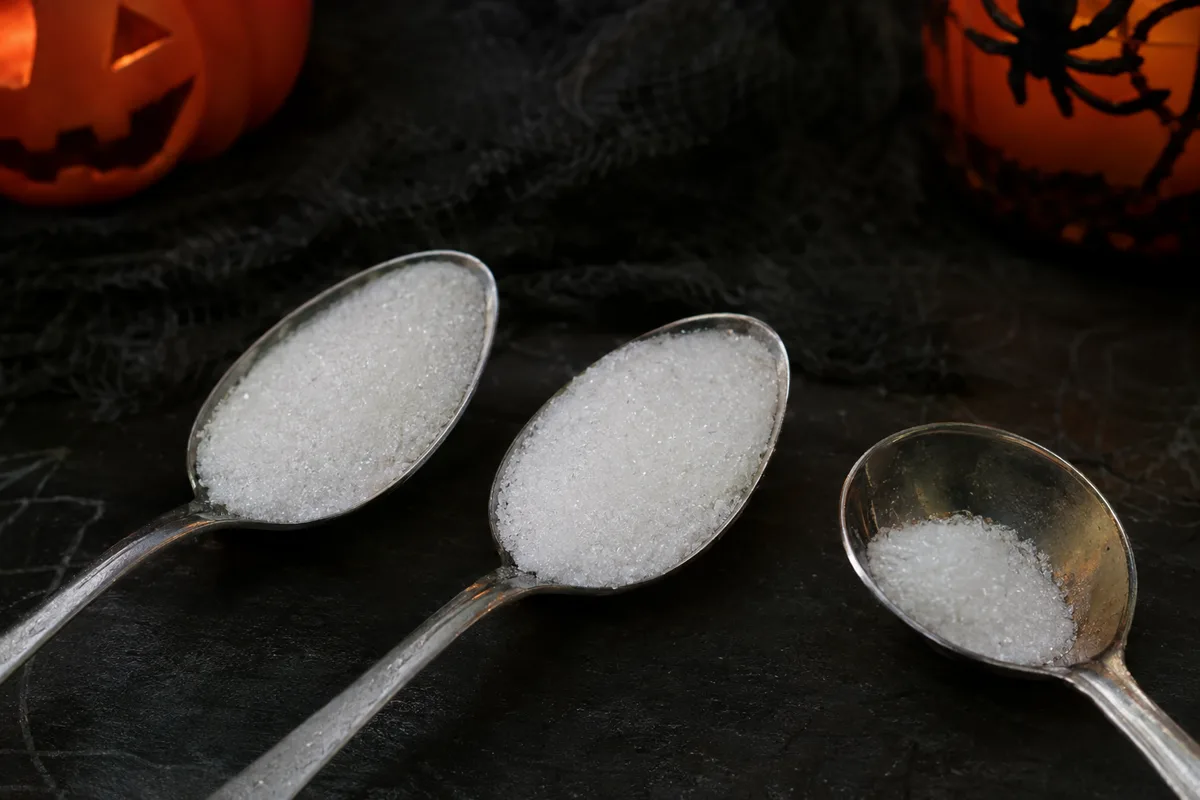
The comparison shows the amount of sugar, not the total size of a sweet containing it. A Halloween treat may also contain starch, fat, protein, water and flavourings. That means a much larger piece of food could still provide the same 10 grams of sugar.
- About two and a half level teaspoons of granulated sugar
- A small mound rather than a heaped spoonful
- A reference amount, not a suggested serving or daily limit
The number of sweets can vary widely
There is no single number of Halloween sweets that always contains 10 grams of sugar. Small gummies, boiled sweets, chews and chocolate pieces use different recipes and come in different sizes. Even similar-looking pieces may have different sugar contents.
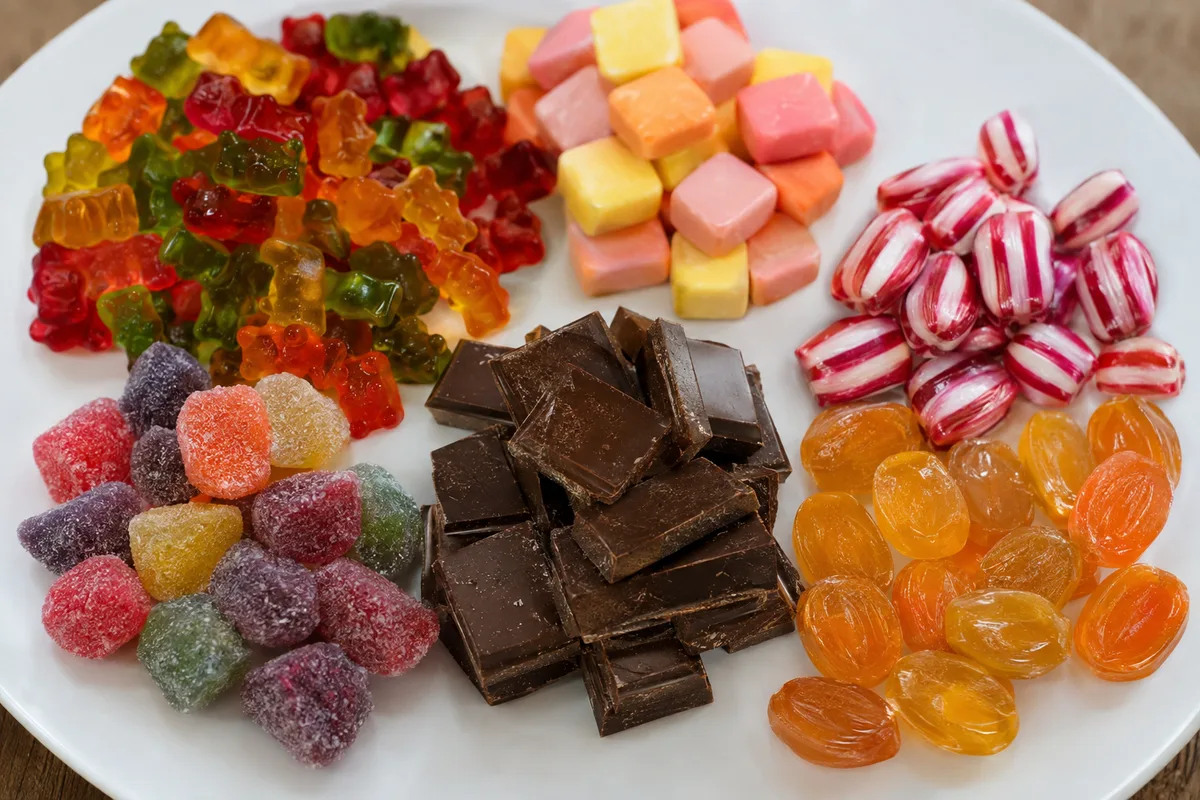
Sugar often makes up a large part of a boiled sweet or gummy, while chocolate also contains a notable amount of fat. A filled chocolate may include biscuit, nuts, caramel or another centre. These differences change how much food is needed to reach 10 grams of sugar.
- Gummies may require several small pieces
- A large chew may account for much of the amount
- Boiled sweets can contain a high proportion of sugar
- Chocolate pieces may look larger because they contain other ingredients
Use the label to find the closest match
On a UK nutrition label, look for the line marked “of which sugars”. It may give sugar per 100 grams and sometimes per portion or piece. Use the figure that matches the amount you actually plan to eat.
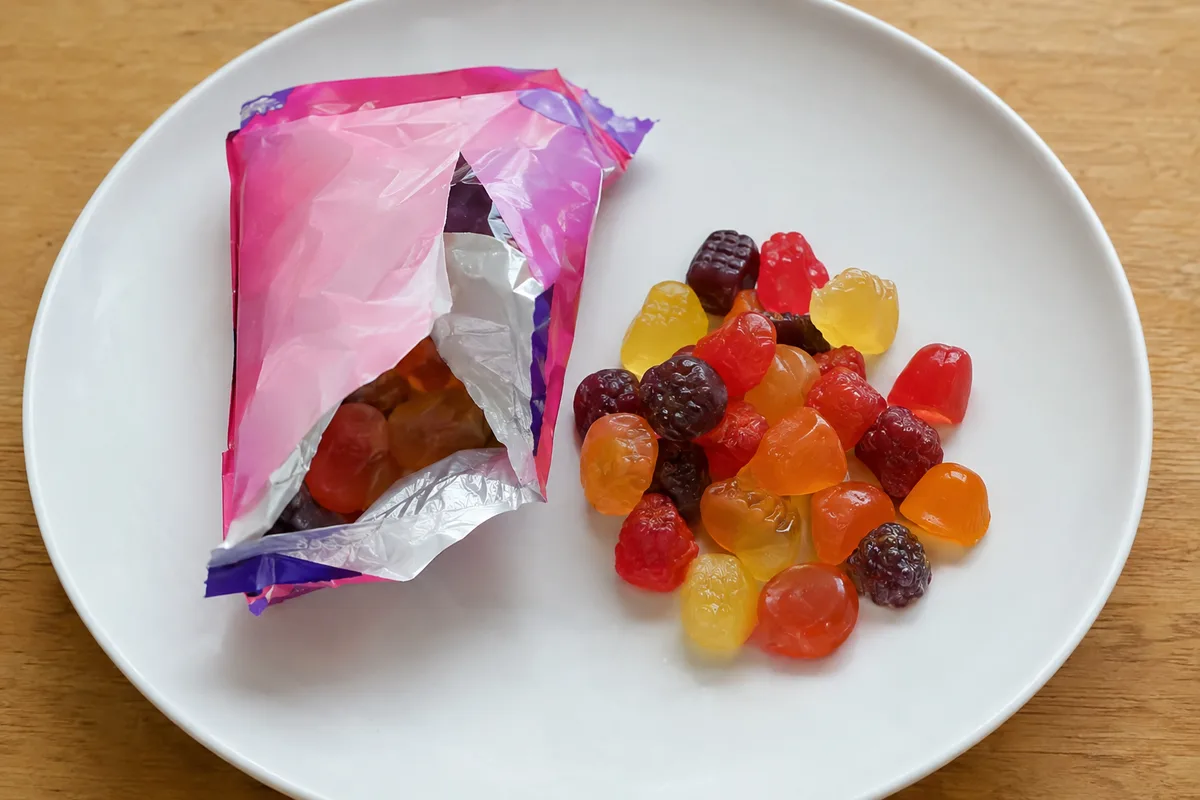
If only the per-100-gram figure is given, multiply it by the weight of your portion and divide by 100. This gives the grams of sugar in that portion. You can then adjust the logged amount until it is close to 10 grams if that is the reference you are exploring.
Serving suggestions are not always the same as your serving. A mini pack might contain one portion, several portions or an amount that is difficult to divide evenly. Record the portion you ate rather than automatically accepting the suggested one.
- Find “of which sugars” rather than total carbohydrate
- Check whether the figure is per 100 grams, per serving or per piece
- Match the listed portion with the amount eaten
- Save frequently eaten sweets in your food log with the correct serving
A mixed Halloween bowl needs piece-by-piece tracking
A handful from a mixed bowl is harder to judge by sight because each sweet contributes a different amount. Several small pieces can contain more or less sugar than one larger piece. Wrapper size is also a poor guide because packaging leaves different amounts of empty space.
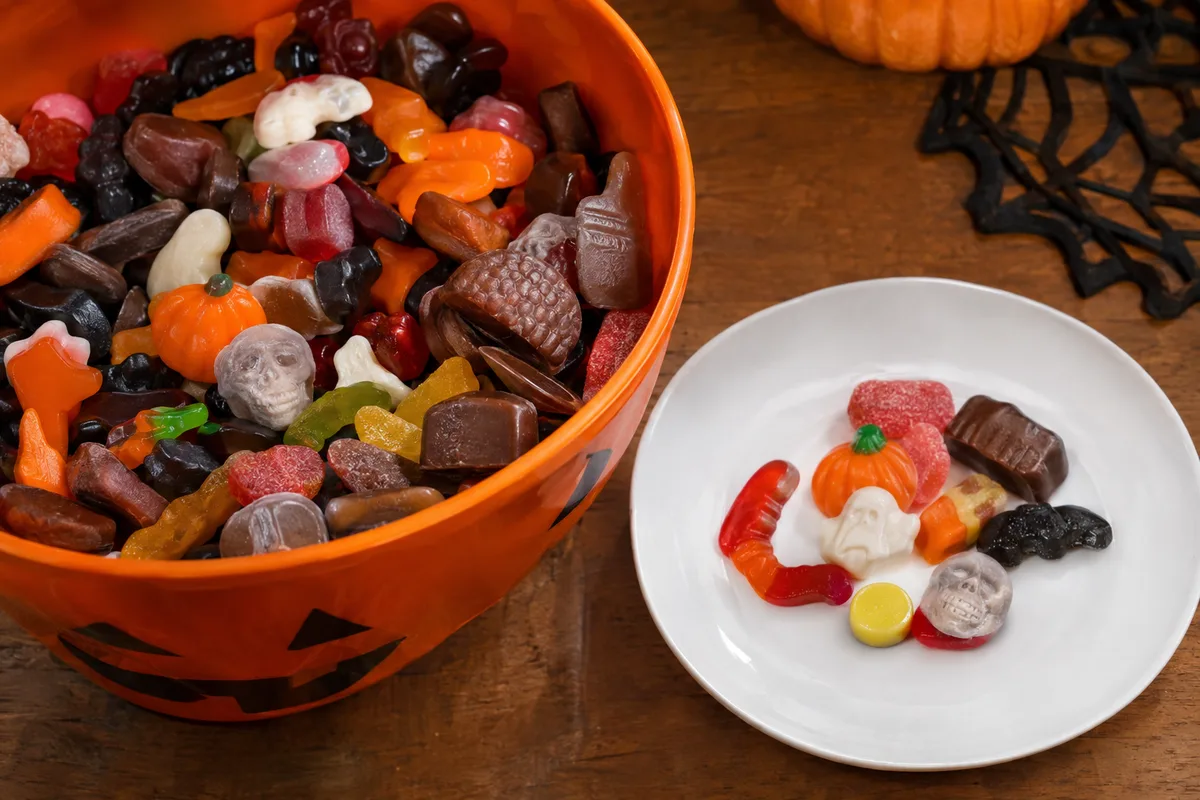
For a closer estimate, identify each type and use its own nutrition information. Add the sugar from the pieces together rather than treating the handful as one standard serving. If exact details are unavailable, choose the closest matching entry in your food log and mark it as an estimate.
- Separate gummies, chews, boiled sweets and chocolates
- Count the pieces of each type
- Use the correct serving entry for each sweet
- Add the entries to see when the total is near 10 grams
Halloween foods beyond sweets count too
Sugar at Halloween may also come from drinks, iced cakes, biscuits, popcorn coatings and sweet dips. Ten grams can be spread across several parts of a snack rather than sitting in one obvious treat. A drink and a small sweet, for example, should be logged separately before their sugar is added together.
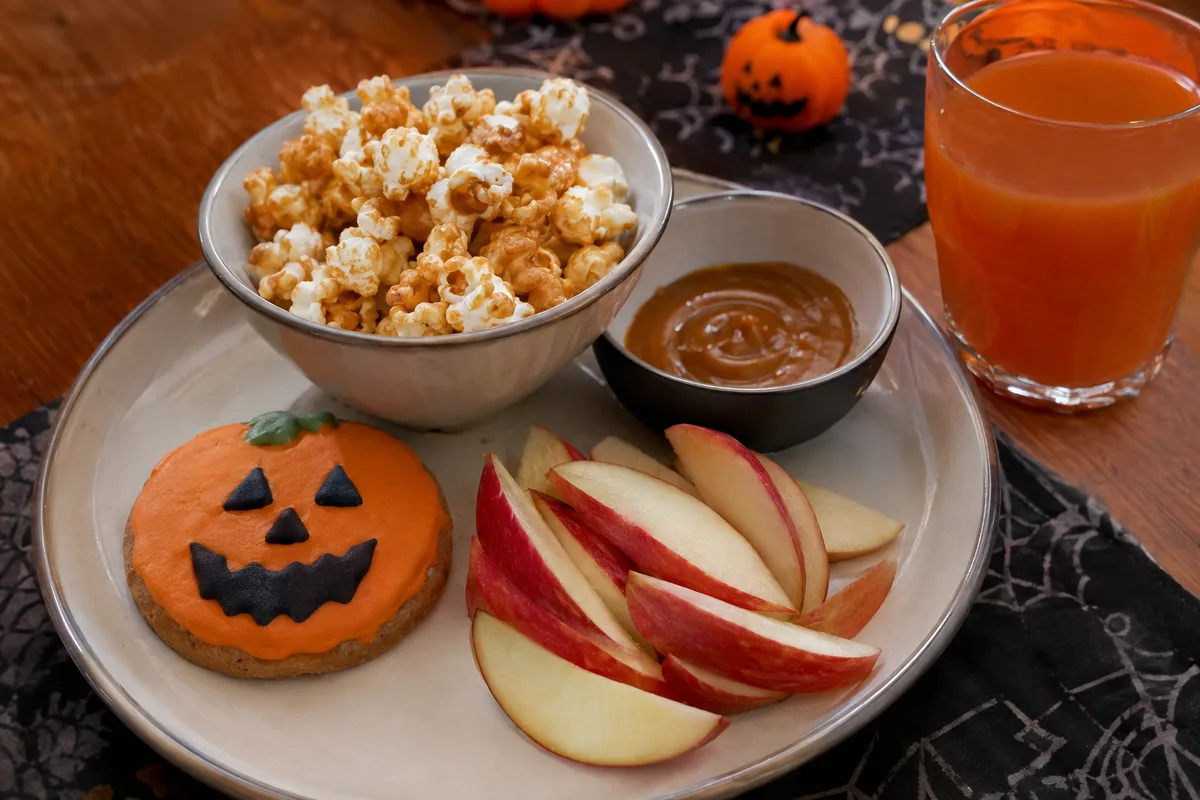
Homemade foods need a different approach because there may be no finished label. Add the sugar from each ingredient in the whole recipe, then divide it according to the portion eaten. Remember that fruit, milk and other ingredients can contribute sugars as well as any granulated sugar added during cooking.
- Fizzy or fruit-flavoured drinks
- Iced biscuits and small cakes
- Caramel-coated or sweetened popcorn
- Sweet dips served with sliced fruit
- Homemade bakes divided by portion
Treat 10 grams as a reference, not a rule
Seeing what 10 grams looks like can make food logging less abstract, but it is not a universal portion target. The amount that fits a person’s day depends on their overall food choices, preferences and needs. Halloween treats can be recorded in the same neutral way as any other food.
Visual estimates are useful when exact information is missing, but they do not need to be treated as precise measurements. Packaging, recipes and piece sizes can change, so check the current label when possible. Consistent, reasonable entries are often more useful than repeatedly trying to create a perfect estimate.
- Log the portion you actually eat
- Use current label information when available
- Mark uncertain entries as estimates
- Review the whole day rather than judging one sweet alone