
What Are Net Carbs, and Should You Track Them?
Net carbs aim to show the carbohydrates that are digested and absorbed rather than passing through largely unchanged. Here is how they are calculated, where the idea is useful and why UK food labels need careful reading.
What net carbs means
Net carbs is an informal term for the carbohydrate in a food after certain components have been deducted. It usually means total carbohydrate minus fibre, with some calculations also subtracting all or part of any polyols. You may also see net carbs described as available or digestible carbs, although those terms are not always used in exactly the same way.
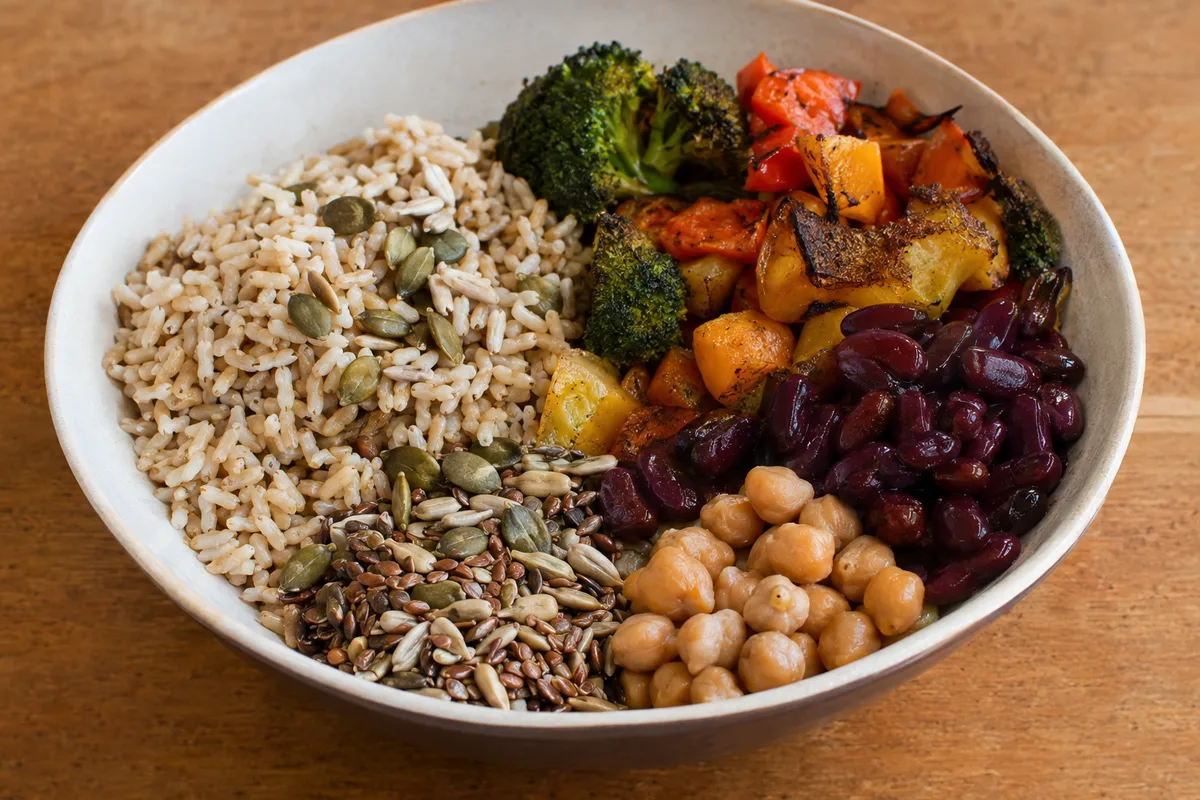
The idea is based on the fact that different types of carbohydrate are handled differently by the body. Sugars and starches are generally digested, while most fibre is not digested in the same way. Polyols, which are sometimes used to sweeten foods, vary in how much is absorbed.
Net carbs are not a separate nutrient sitting inside a food. They are an estimate created from other values on the label. That makes the calculation dependent on both the ingredients and the way the label presents carbohydrate.
- Total carbohydrate includes sugars and starches, and may include fibre depending on the labelling system.
- Fibre is a type of carbohydrate, but it is treated separately on UK nutrition labels.
- Polyols are sweet-tasting carbohydrates that may be listed when they are present.
- Net carbs are calculated rather than directly shown on many labels.
How to calculate net carbs
A common formula is total carbohydrate minus fibre. If a product contains polyols, some net-carb methods also deduct those, either fully or partly. There is no single calculation that works perfectly for every polyol, so the result is best treated as an estimate.

For a whole food without added polyols, the calculation is usually straightforward if the nutrition information includes total carbohydrate and fibre in the same way. Packaged foods can be less simple because the figures may follow different labelling rules. Check whether the values are per serving, per portion or per 100 grams before doing any subtraction.
When logging food, use one consistent method rather than switching between total and net carbs without noticing. Record the portion you actually ate and make sure every figure refers to that same amount. If your app already displays net carbs, check how it defines them before entering a second calculation.
- Start with the carbohydrate value for your actual portion.
- Check whether fibre is already shown separately from carbohydrate.
- Look for polyols if the food contains sweeteners.
- Subtract only the components your chosen tracking method excludes.
- Label the result as an estimate when polyols are involved.
Why UK labels need a different approach
On a typical UK nutrition label, the line marked carbohydrate generally covers sugars and starches that are available for digestion. Fibre is usually listed on its own rather than included within that carbohydrate figure. This means subtracting fibre from the UK carbohydrate value can remove it twice and produce an incorrect result.
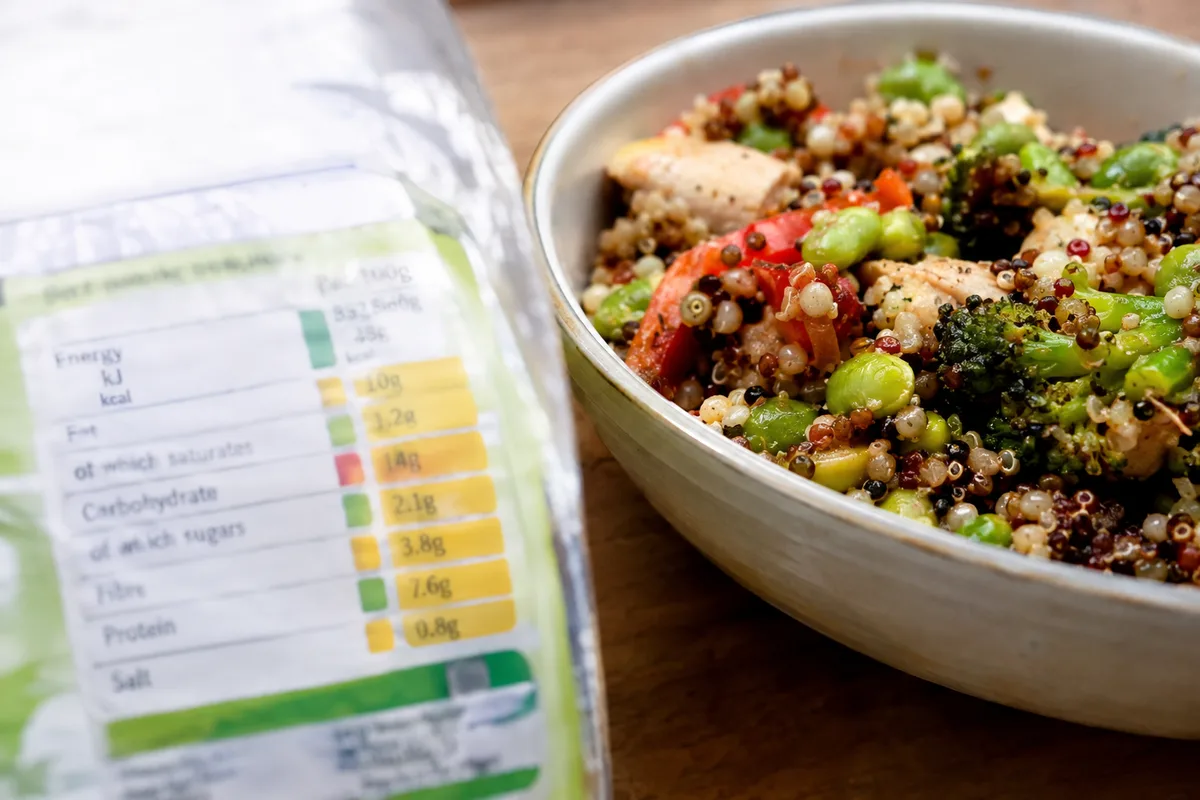
Some apps and online entries are based on labels from other countries, where total carbohydrate may include fibre. That entry may need fibre to be deducted to estimate net carbs. The important step is to identify which labelling system the figures came from rather than assuming every database entry works in the same way.
For many standard UK labels, the carbohydrate figure is already close to what net-carb trackers are trying to find. Foods containing polyols may still need more thought because their contribution varies. If the entry is unclear, keeping the original label values in your diary is often more reliable than forcing a net-carb number.
- UK label: fibre is normally separate, so do not automatically subtract it from carbohydrate.
- Label from another country: check whether total carbohydrate includes fibre.
- Tracking app: inspect the source entry and avoid duplicate deductions.
- Mixed recipe: use ingredient labels that follow the same system where possible.
Foods that make the idea easier to see
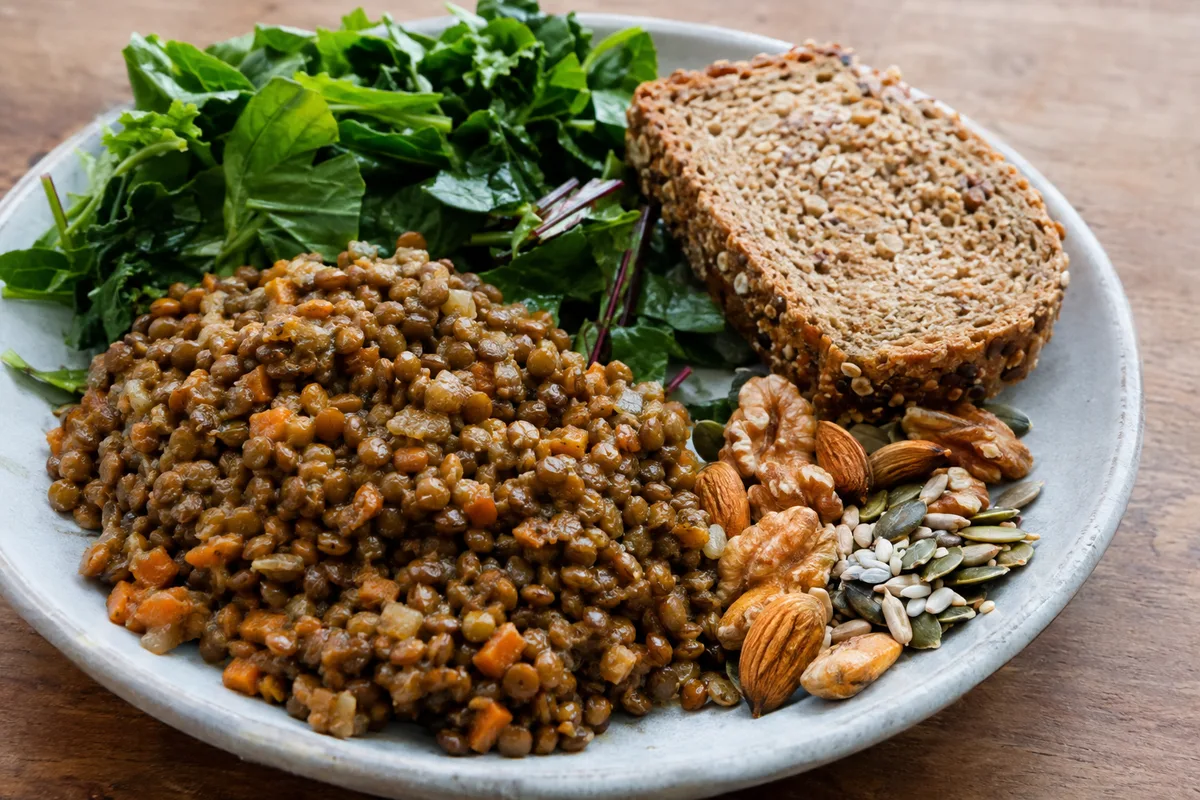
Vegetables, beans, nuts, seeds and whole grains contain fibre alongside other carbohydrates. Their fibre content helps explain why total carbohydrate and digestible carbohydrate are not always identical. On a UK label, however, that fibre will normally already appear on a separate line.
Sweetened snack bars, desserts and chewing gum may contain polyols. These ingredients can make net-carb claims look much lower than the total of all carbohydrate-related ingredients. Because different polyols are absorbed differently, subtracting every gram may oversimplify what happens.
Plain foods are often easier to track because their ingredient lists are short. A bowl containing oats, berries and seeds still includes several types of carbohydrate, but there is less uncertainty about added sweeteners. Highly formulated foods require closer attention to both the ingredients and the labelling method.
- Leafy vegetables and other vegetables provide varying amounts of fibre and available carbohydrate.
- Beans and lentils contain starch as well as fibre.
- Nuts and seeds usually provide fibre, fat and some carbohydrate.
- Oats and other whole grains contain both starch and fibre.
- Foods made with polyols need a more cautious net-carb estimate.
Net carbs do not show the whole food
A net-carb total says little about protein, fat, vitamins, minerals or the overall mix of ingredients. Two foods can show a similar net-carb figure while offering very different meals. Portion size, preparation and what else is eaten with the food also matter when reviewing a diary.

Fibre should not be treated merely as a number to erase. It contributes to fullness, supports regular digestion and adds variety when it comes from a range of plant foods. Tracking it separately can give you more useful information than looking only at a reduced carbohydrate total.
Net carbs also do not tell you how satisfying a meal will be. A plate that includes vegetables, a protein source, a carbohydrate source and some fat gives more context than one isolated figure. Use the calculation as one detail in your log rather than as a complete score for a food.
- Keep fibre visible as its own diary entry where possible.
- Review protein and fat alongside carbohydrate.
- Note portion size and cooking method.
- Look at the full ingredient list for packaged foods.
- Compare complete meals, not just one number.
A consistent way to track them
First decide whether total carbohydrate or net carbs better suits the information you want from your diary. Whichever you choose, write down your definition so that entries stay comparable. Mixing UK label carbohydrate with app-generated net carbs can otherwise create confusing totals.
Use label values where available and select database entries that match the exact food and preparation. Check that fibre and polyols have not already been deducted before changing the number. For homemade meals, calculate each ingredient using the same approach and then divide the finished recipe by the portions served.
There is no need to create a precise-looking figure when the source information is uncertain. Save a note about the label system, ingredients or estimate instead. A consistent, understandable record is more useful than a net-carb total built from incompatible entries.
- Choose total carbohydrate or define exactly what you mean by net carbs.
- Confirm whether fibre is included in the starting figure.
- Treat polyol deductions as estimates rather than fixed rules.
- Keep all values on the same portion basis.
- Add a note when the food entry or label is unclear.