
Can You Guess the Sugar in a Can of Soda?
A can may look like one simple serving, but its sugar content is not always easy to picture. A quick estimate can make the label more meaningful when you track what you drink.
Make your estimate first
Before reading the label, guess how many grams of sugar the whole can contains. Think about its size, sweetness and whether it is a regular or reduced-sugar version, but remember that taste alone is not a reliable guide.
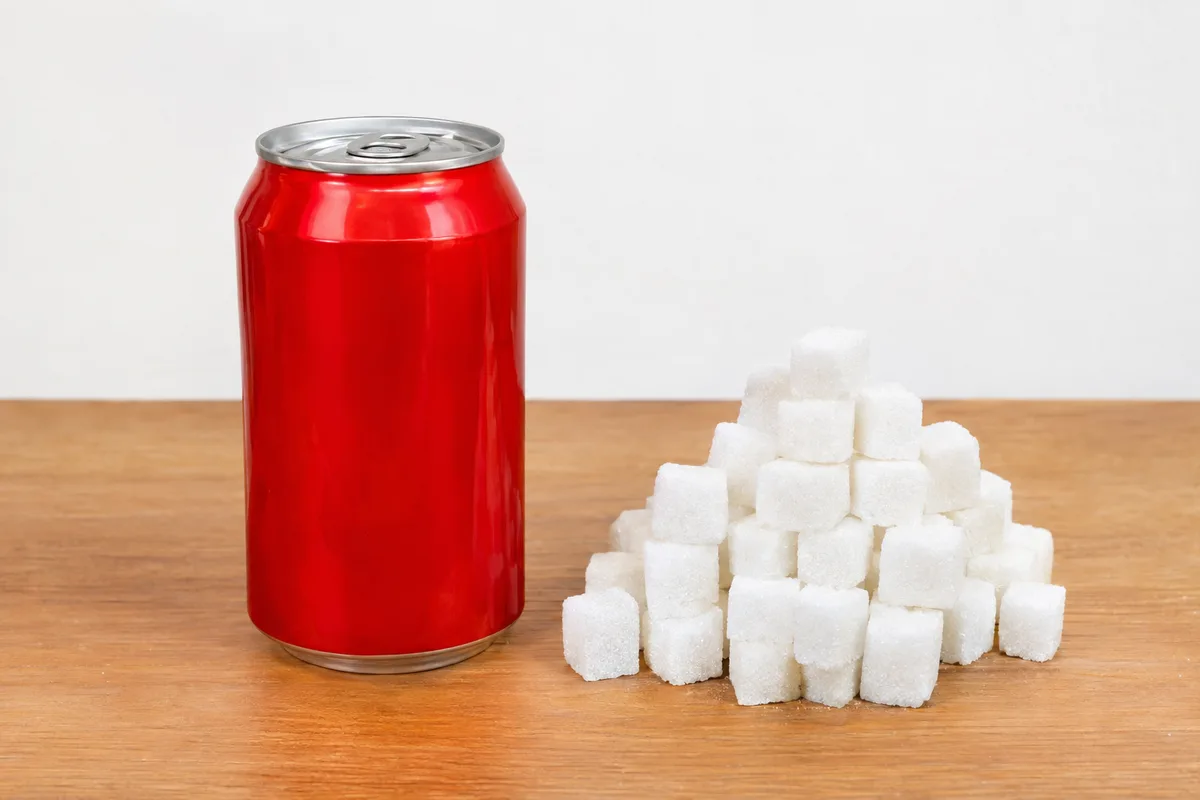
This is not a test you need to get right. Comparing your estimate with the label helps you build a better sense of what sugar amounts look like in drinks.
Read the label carefully
Find the carbohydrate line and look for “of which sugars”. Check whether the figure is given per 100 ml, per serving or for the entire can.
If the label only gives sugar per 100 ml, multiply that figure by the can’s volume and divide by 100. Can sizes and recipes vary, so the total depends on the specific drink in front of you.
Turn grams into something familiar
A level teaspoon of granulated sugar is commonly treated as roughly 4 grams for simple visual comparisons. Dividing the can’s sugar total by four gives an approximate number of teaspoons, although it is only a mental picture rather than a label measurement.
The sugar in soda is dissolved, so you cannot see its volume in the can. Visualising an equivalent amount of granulated sugar can make the gram figure easier to understand and remember.
Log the drink accurately
Record the amount you actually drank, rather than automatically entering one can or one serving. If you drank part of it, adjust the volume or portion in your food tracker.
Also check that you selected the correct version, as regular, reduced-sugar and sugar-free options can have very different entries. Saving the exact item can make future logging quicker while keeping your record consistent.