
How Chickpeas Can Fit into a Weight-Loss Plan
Chickpeas can be a useful part of a weight-loss plan because they provide fibre and protein. The key is to count the full portion and prepare them in a way that suits your calorie target.
Why chickpeas can be satisfying
Chickpeas contain both fibre and protein, which can make a meal feel more substantial. They also require more chewing than many softer carbohydrate foods, helping the meal feel less rushed.
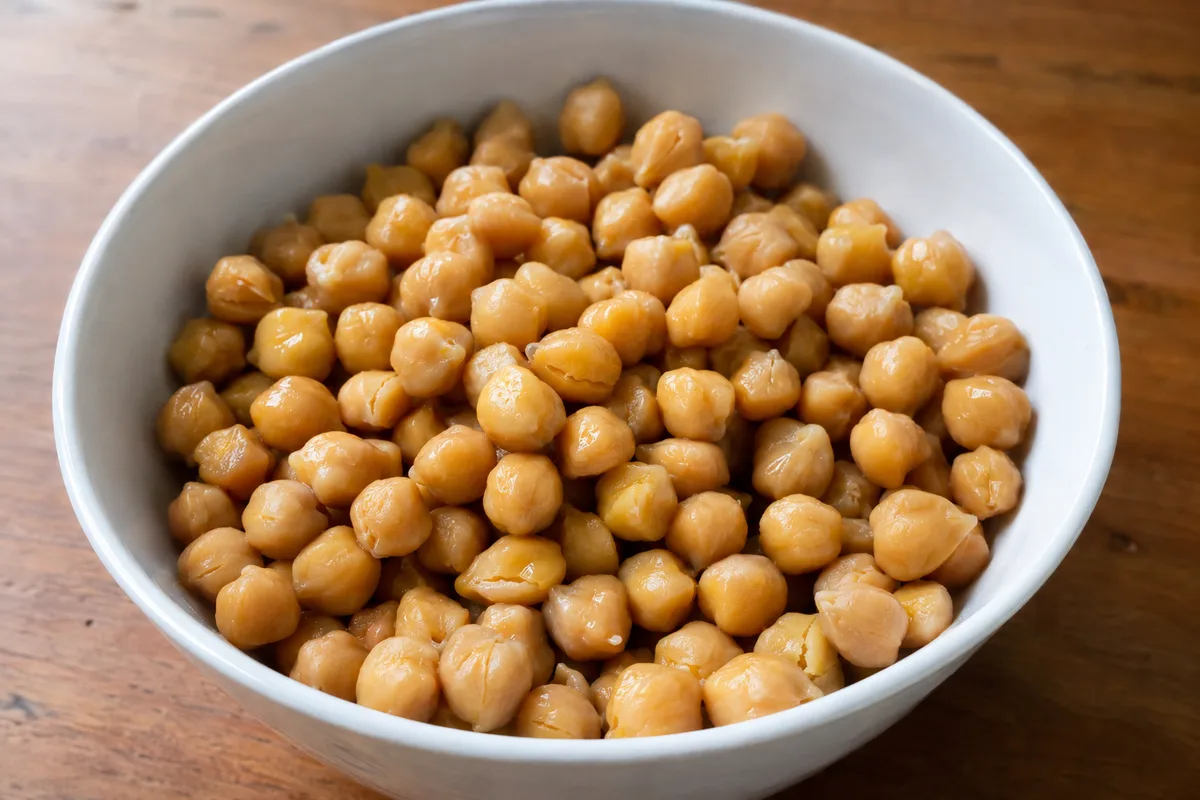
They are not a special weight-loss food, and adding them to your usual meals does not automatically reduce calorie intake. Their value comes from how they fit into your overall eating pattern, portions and daily target.
Track the portion you actually eat
Log chickpeas by weight where possible, checking whether your tracker entry refers to cooked, drained or dry chickpeas. Dry chickpeas weigh more after soaking and cooking, so matching the food state helps you avoid a misleading entry.

If you use tinned chickpeas, drain them before weighing when the nutrition information is based on the drained product. The right serving size depends on your appetite, meal and calorie target rather than a single portion that suits everyone.
Watch what is added
Plain cooked chickpeas have a different calorie total from chickpeas roasted with oil or blended with rich additions. Track cooking oil, dressings, sauces and toppings separately, as these can meaningfully change the meal.
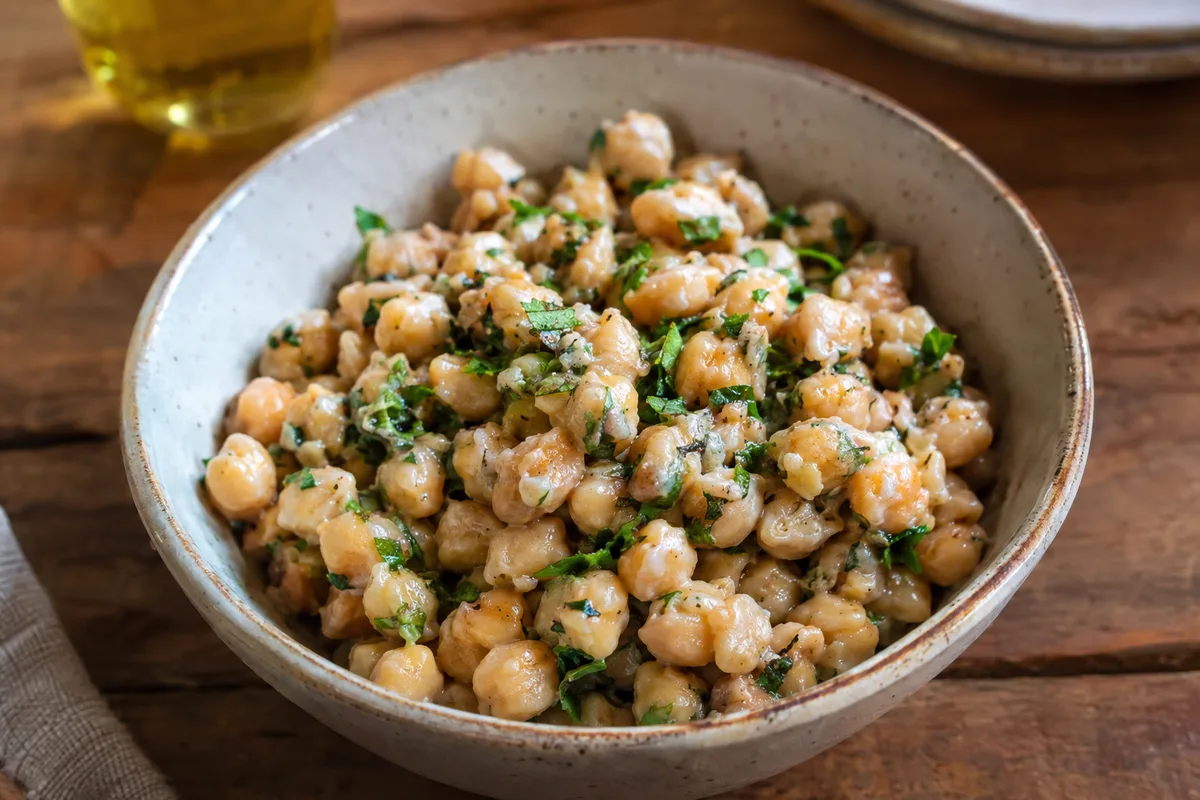
Roasting can create a crisp texture, but oil is easy to overlook when logging. Measure what you use rather than assuming all of it stays in the pan or all of it ends up on one serving.
Build a balanced meal around them
Use chickpeas as the main protein-rich ingredient or as one part of a meal, rather than simply adding them on top of everything else. Pairing them with vegetables and a measured dressing can create volume while keeping the ingredients easy to track.
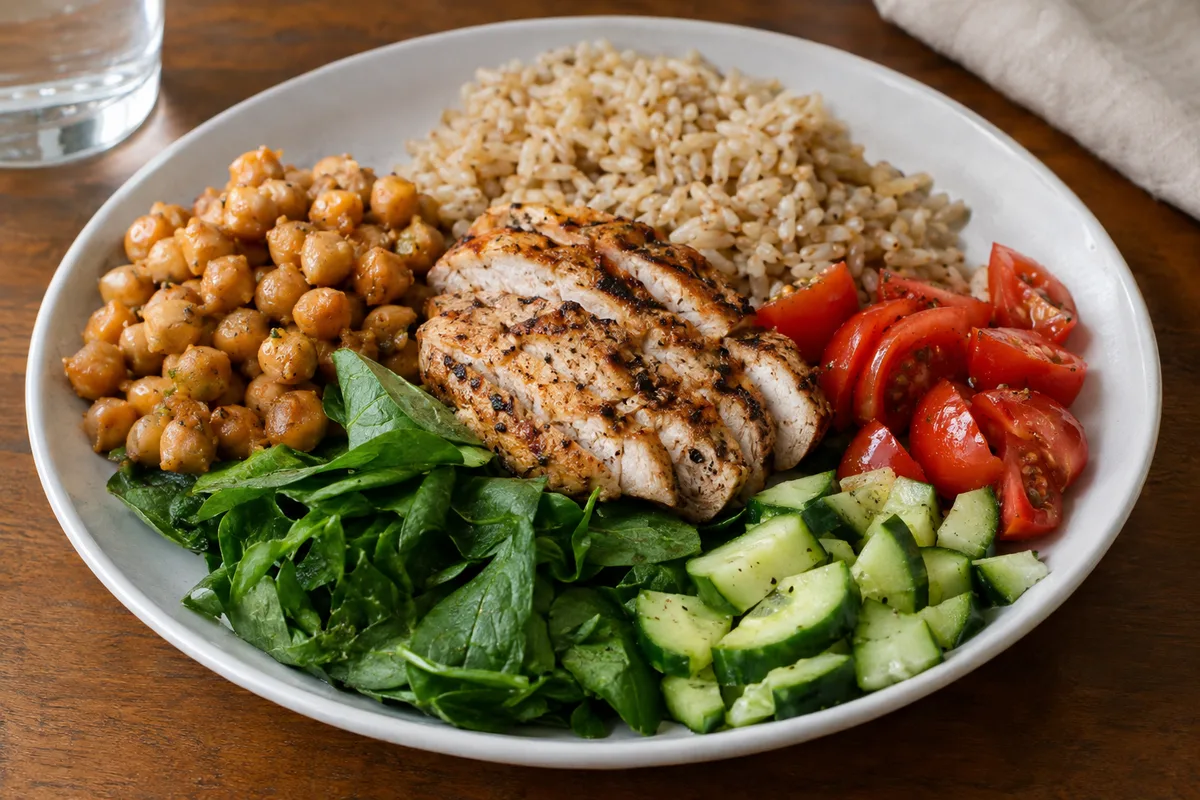
You can also swap chickpeas for some of a more calorie-dense ingredient instead of treating them as an extra. Review your hunger and tracking data over time, then adjust the portion according to what works within your plan.