
Chrysanthemum tea: possible benefits, side effects and what to track
Chrysanthemum tea is a floral infusion often enjoyed for its light taste and calming routine. This guide explains what it may offer, where the evidence is limited and what to consider when tracking it.
What chrysanthemum tea is
Chrysanthemum tea is made by steeping dried chrysanthemum flowers in hot water. It has a floral aroma and a flavour that can range from gently sweet to slightly bitter. The strength depends on the variety, the amount used and how long it is brewed.
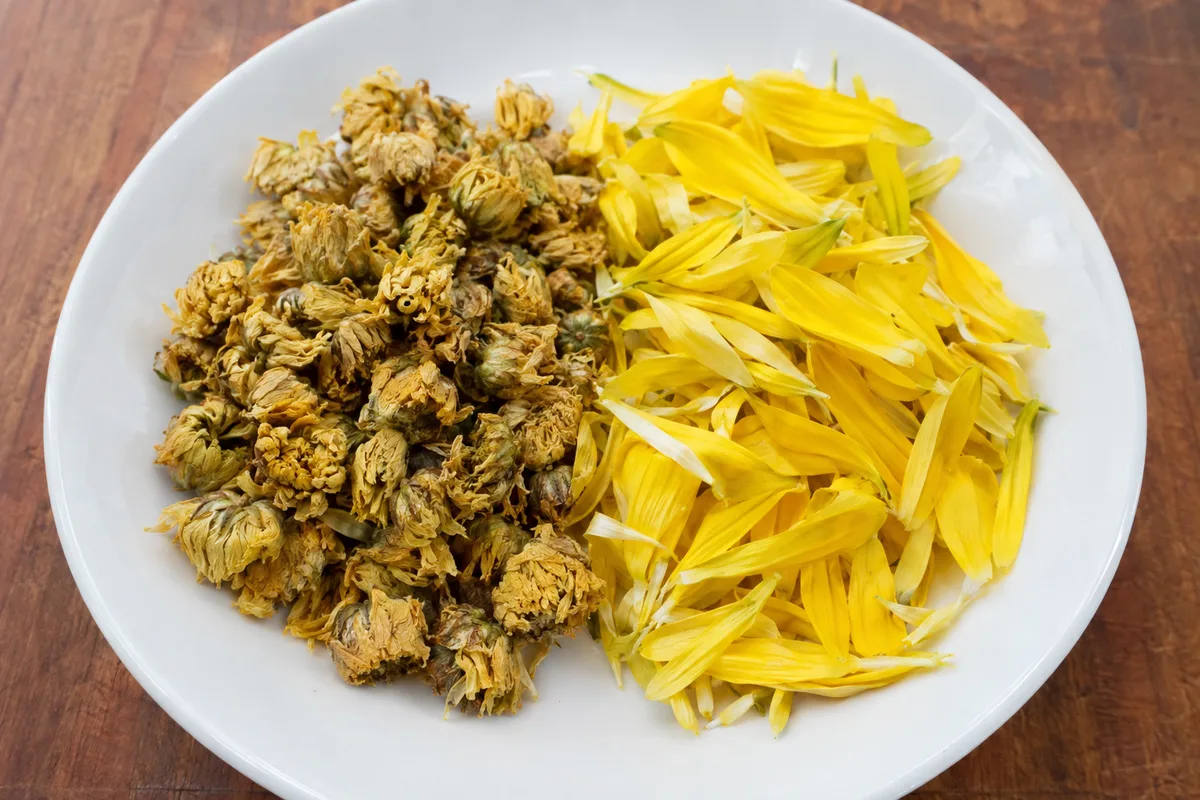
Pure chrysanthemum tea does not contain tea leaves, so it is naturally caffeine-free. Blended versions may include green tea, black tea, sugar, honey or other herbs, which can change both the caffeine and energy content. Check the ingredient list rather than relying on the name alone.
- Dried chrysanthemum flowers and water
- Blends containing tea leaves
- Sweetened ready-made versions
- Infusions with added honey, fruit or herbs
The most realistic benefits
Its clearest everyday benefit is that it provides fluid in a flavourful form. This may make a useful change if you find plain water unappealing. Choosing it without sugar also avoids adding the energy found in many sweet drinks.
Chrysanthemum flowers contain natural plant compounds, including polyphenols. These compounds can be studied in laboratories, but that does not show that a cup of tea will produce a particular result in the body. Research on the effects of drinking chrysanthemum tea is limited, so strong health promises are not justified.
The warm drink and floral scent may also feel soothing as part of a quiet break. That experience can be worthwhile even without a measurable health effect. It is better to view the tea as an enjoyable drink than as a remedy.
- Adds to daily fluid intake
- Offers a caffeine-free option when made only with flowers
- Provides flavour without added sugar when served plain
- Can form part of a relaxing food and drink routine
How it fits into food tracking
Plain chrysanthemum flowers steeped in water usually contribute little energy because most of the flowers are not eaten. The exact amount depends on the product and preparation, so use label information when it is available. A basic unsweetened infusion may not need a detailed entry unless you prefer to record every drink.
Added ingredients matter more than the flowers when you track energy or nutrients. Honey, sugar, syrups and sweetened bottled preparations can change the entry substantially. Log the amount used from the recipe or packaging rather than selecting a generic sweet tea entry.
Also check whether the blend contains ordinary tea leaves or another source of caffeine. This matters if you track caffeine or notice that it affects sleep or comfort. The word chrysanthemum on the front of a pack does not always mean the drink contains flowers alone.
- Record added sugar, honey or syrup separately
- Use the serving information for prepared drinks
- Note any tea leaves if you track caffeine
- Save a regular recipe if you make it the same way each time
Possible side effects
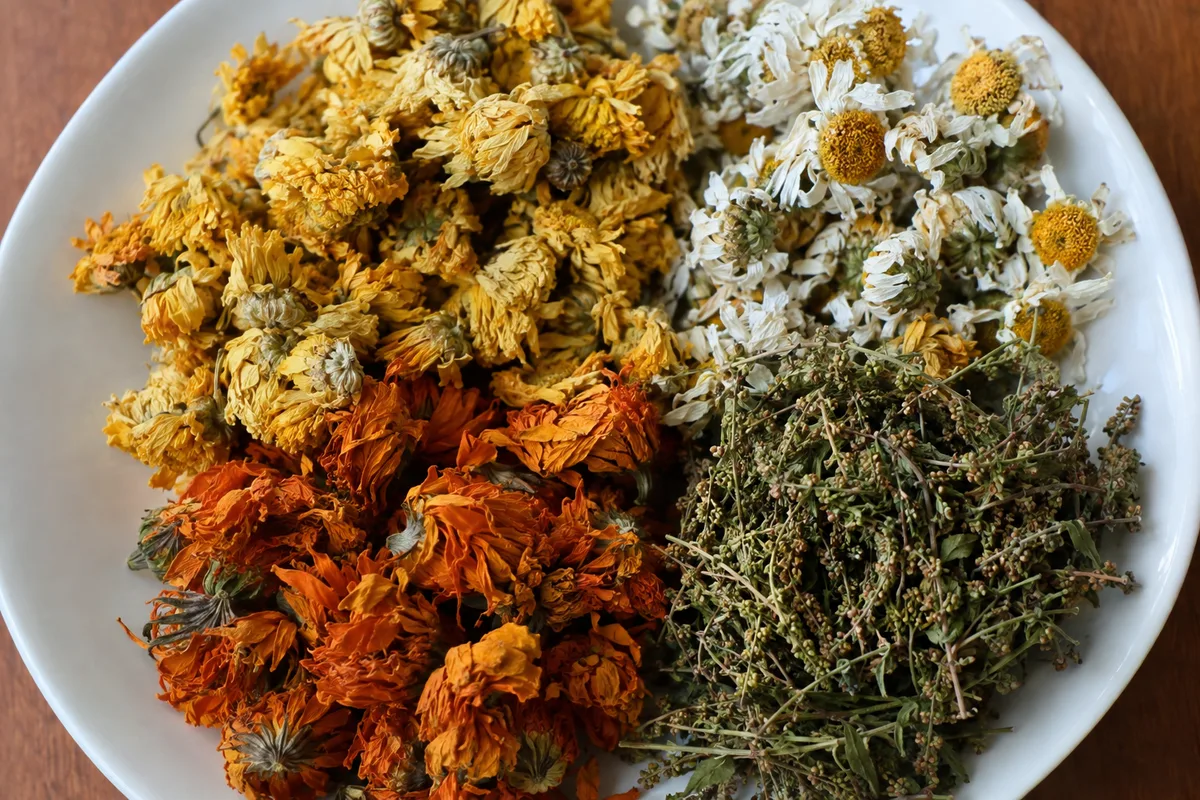
Some people may react badly to chrysanthemum flowers, particularly if related plants such as daisies, marigolds or ragweed have caused problems before. Warning signs can include itching, a rash, swelling or difficulty breathing. Stop drinking it if symptoms appear, and seek urgent help for swelling around the mouth or breathing difficulty.
The tea may also cause mild stomach discomfort in some people. A strong brew or a large serving may be harder to tolerate than a weaker cup, although the amount varies from person to person. Trying a small serving first can help you judge how it feels.
Plant material can also contain dust, pollen or unwanted residues if it has been stored or handled poorly. Use flowers intended for making drinks rather than decorative flowers. Follow the storage and preparation instructions supplied with the ingredient.
- Itching or a new rash
- Swelling around the lips or mouth
- Breathing difficulty
- Stomach discomfort after drinking it
When extra caution makes sense
Herbal drinks can affect people differently, and natural does not automatically mean suitable for everyone. If you regularly take medication or other herbal preparations, ask a pharmacist or clinician whether chrysanthemum tea is appropriate for you. Avoid changing any established care routine because of claims made about the tea.
During pregnancy or breastfeeding, it is sensible to ask a qualified professional before making concentrated herbal drinks a regular habit. Safety information for many flower-based infusions is limited. Occasional food-level use and concentrated extracts are not necessarily equivalent.
Be particularly cautious if related flowers have previously caused itching, swelling or breathing problems. A tea blend may also contain several ingredients, making it harder to identify the cause of a reaction. Reading the full ingredient list helps you avoid known triggers.
- Check every ingredient in a blend
- Ask about possible interactions with regular medication
- Treat concentrated extracts differently from ordinary tea
- Avoid retrying it after a clear adverse reaction without professional advice
Preparing a simple cup
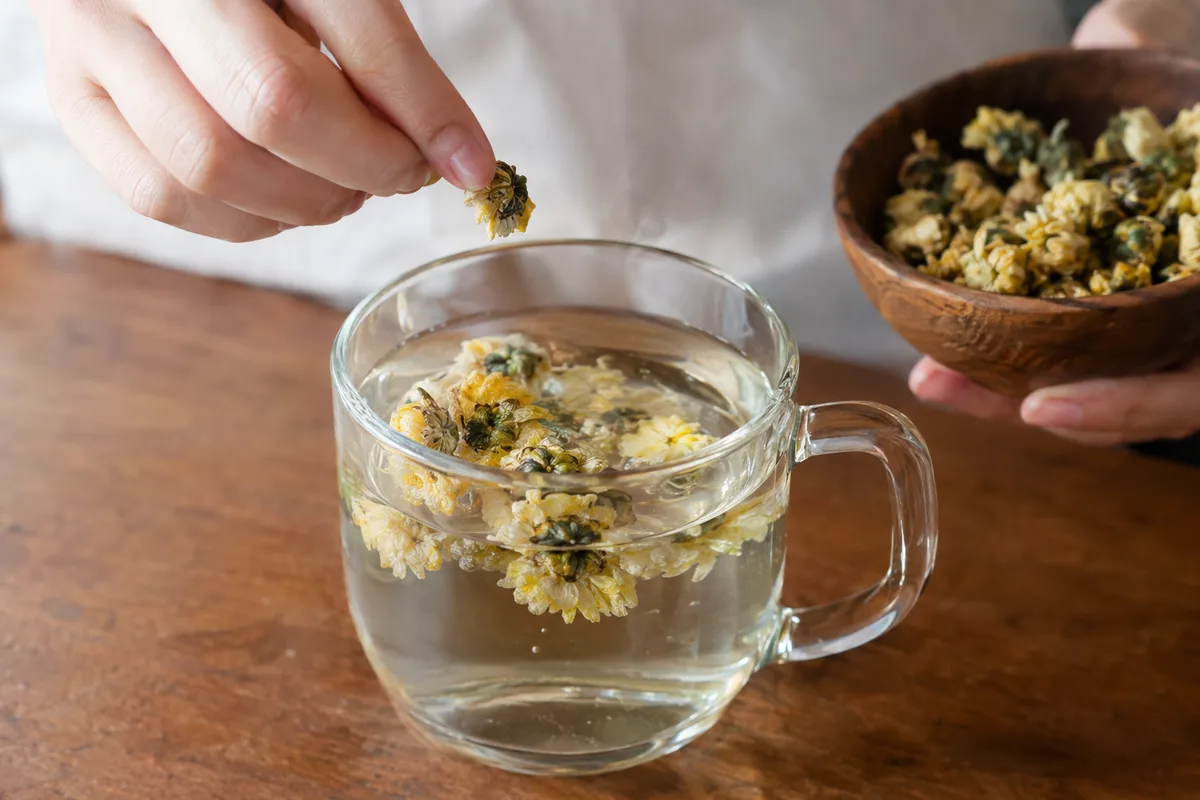
Place dried chrysanthemum flowers intended for drinking in a cup or teapot and add hot water. Steep according to the supplier's directions, as flower size and strength vary. A shorter brew is usually lighter, while a longer brew can taste more bitter.
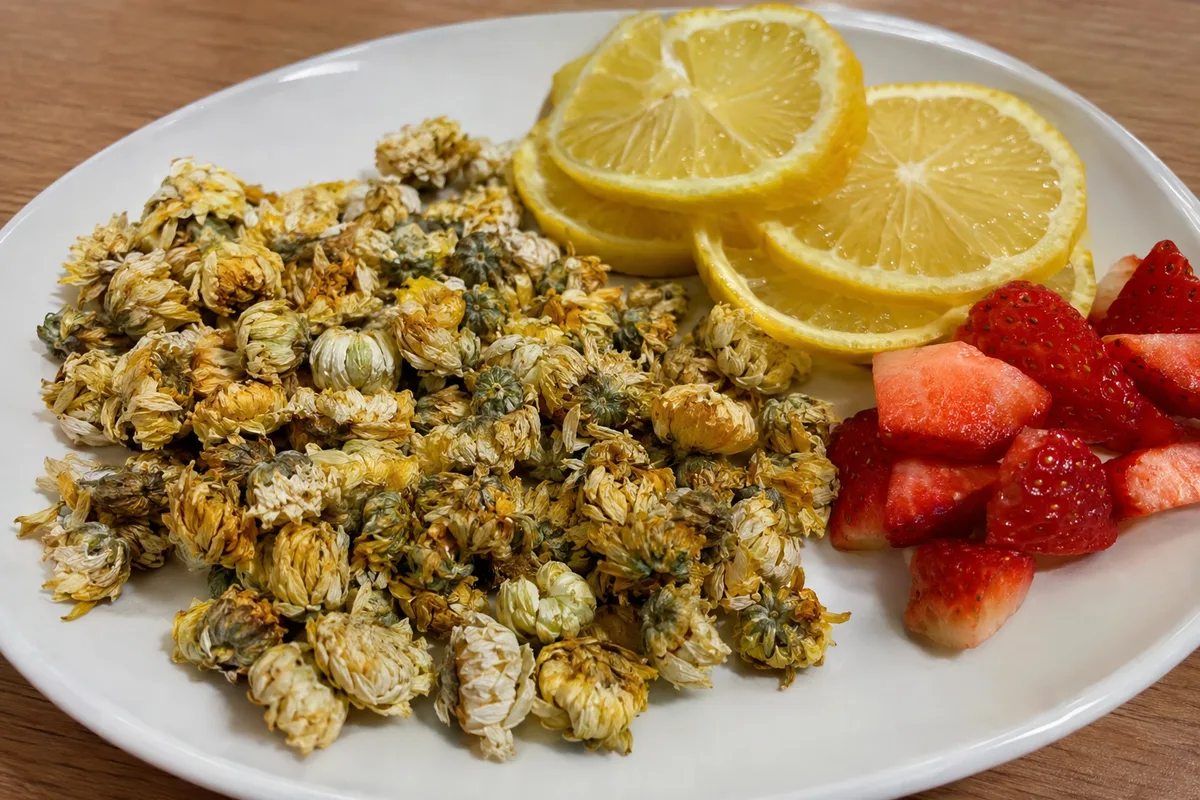
Taste it plain before deciding whether it needs sweetening. Citrus slices or a small amount of fresh fruit can alter the flavour, although anything eaten or added should be included in your food log. If you add a sweetener, measure or estimate the amount consistently.
Chrysanthemum tea can be served warm or cooled after brewing. Prepared tea should be handled like other fresh drinks and not left standing for long periods. Make only the amount you expect to use and follow any storage instructions on the pack.
- Begin with the stated brewing directions
- Adjust steeping time to suit your taste
- Track any sweetener or fruit you add
- Check blends for caffeine-containing tea leaves