
Are Sesame Sticks a Healthy Snack?
Sesame sticks sound simple, yet many are made mainly from flour and oil rather than whole sesame seeds. Here is how to assess them in your food log and build a more satisfying snack.
What sesame sticks are made from
Sesame sticks are crunchy baked or fried snacks, usually made from wheat flour, sesame seeds and oil. They may also contain salt, flavourings and a small amount of sweetener. Recipes vary, so the ingredient list gives a clearer picture than the name on the packet.
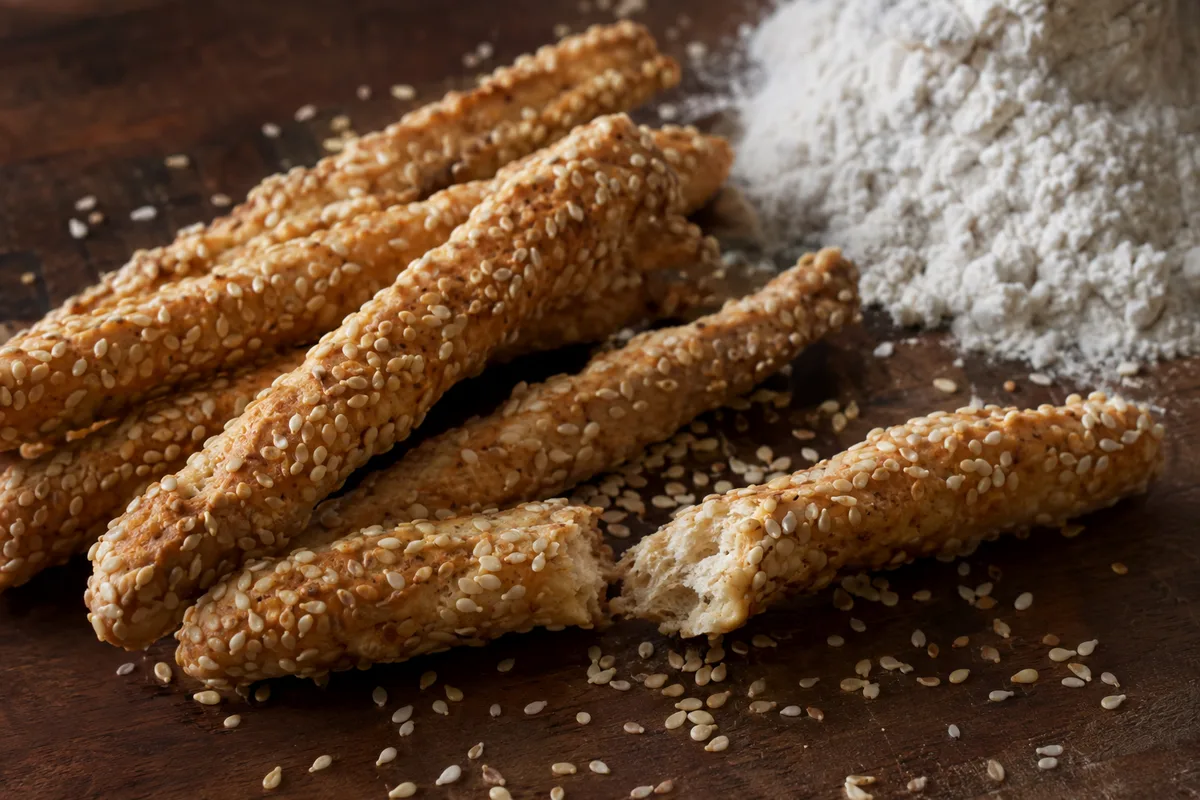
Although sesame seeds contain fibre, protein and unsaturated fats, sesame sticks are not the same as eating plain seeds. Flour and added oil often make up much of each stick, while the visible seeds may be a smaller part. This can make them easy to eat quickly without being especially filling.
- Look for wholegrain flour near the start of the ingredient list
- Check where sesame seeds appear in the ingredient list
- Notice whether oil is one of the main ingredients
- Compare plain and strongly flavoured varieties for added salt and sugar
How they fit into a food log
Sesame sticks can be quite energy-dense because they are dry and contain added fat. Fat provides about 9 kcal per gram, compared with about 4 kcal per gram from protein or carbohydrate. A modest-looking handful can therefore contribute more energy than its size suggests.
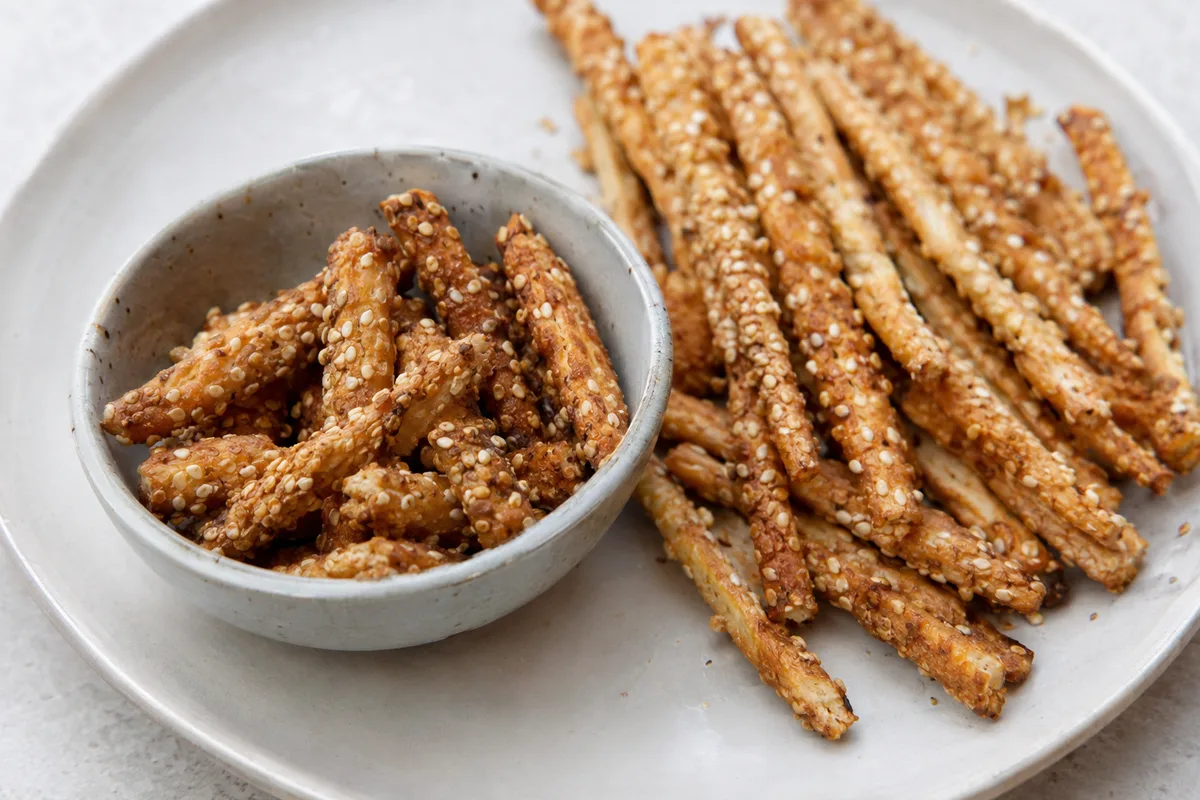
When logging them, use the nutrition information for the exact variety you ate because recipes differ. Record the amount served rather than relying on a vague entry such as “one snack”. If you pour some into a bowl before eating, it is easier to see the portion and log it consistently.
- Choose the matching brand or recipe entry when available
- Check whether the listed serving matches the amount you ate
- Include dips or other foods eaten alongside the sticks
- Save your usual serving in your tracker for easier logging
Protein, fibre and fullness
Sesame sticks may provide some protein and fibre, but the amount depends on the recipe. Versions based mainly on refined flour may offer less fibre than the sesame name suggests. Compare the nutrition panel rather than assuming they have the same qualities as whole sesame seeds.
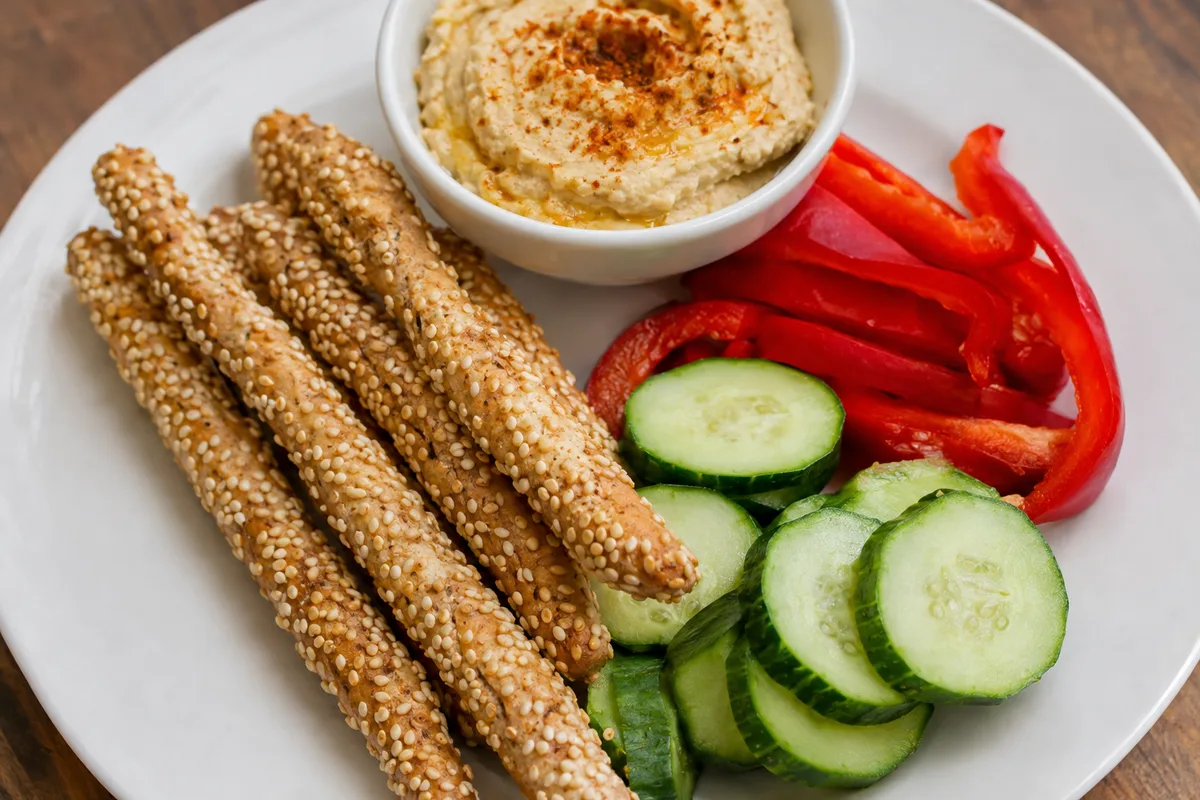
On their own, sesame sticks may not keep you satisfied for long. Combining them with a source of protein, fibre or moisture can make the snack feel more substantial. This also adds variety without requiring a much larger portion of sticks.
- Serve them with hummus and sliced peppers
- Add a small portion to plain yoghurt with cucumber and herbs
- Pair them with fruit and a protein-rich food
- Use them as a crunchy topping on a bean and vegetable salad
Salt and flavourings
Salt is often part of the appeal of sesame sticks, especially in seasoned varieties. The amount can differ considerably between products, so compare the salt figure per 100 grams as well as per serving. Per 100 grams gives a like-for-like comparison when the suggested servings are different.
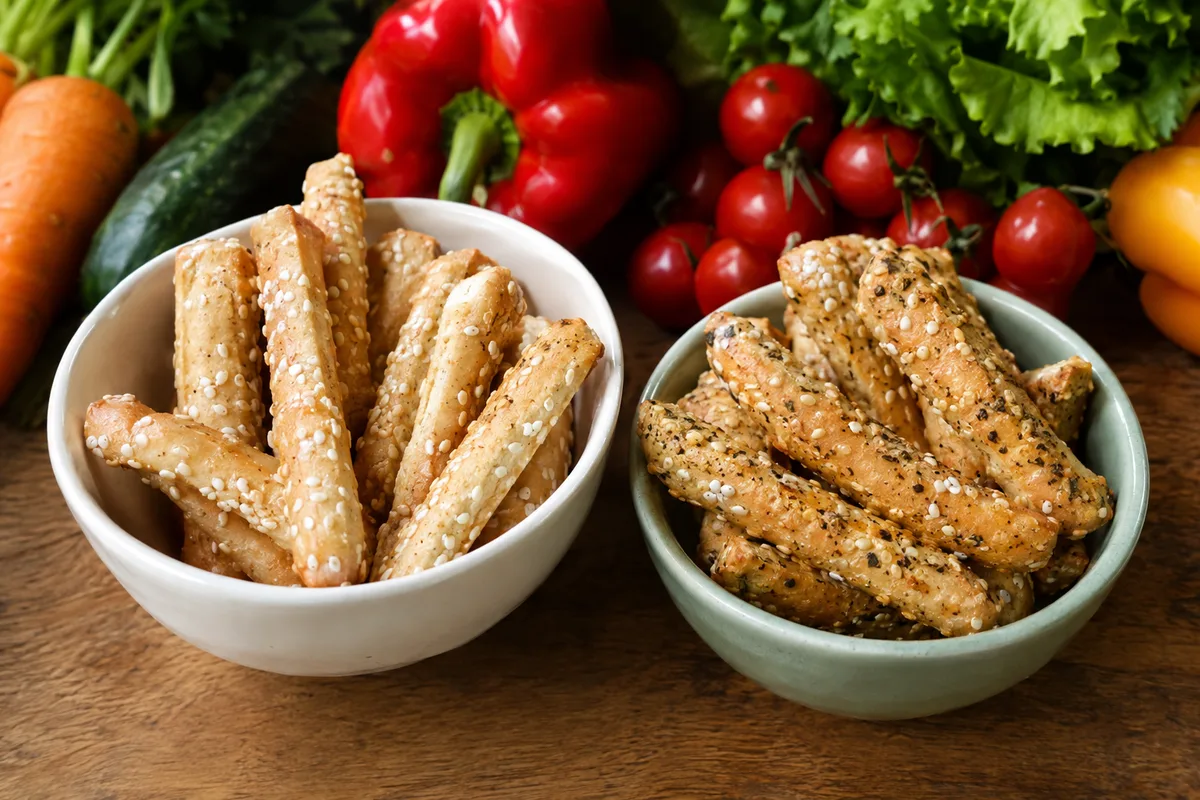
Flavours such as cheese-style, barbecue or spicy coatings can add more salt, sugar or oil. That does not mean they must be avoided, but it is useful to know what contributes to the taste. If the rest of your day already includes several salty foods, a plainer snack may offer better balance.
- Compare salt per 100 grams across similar products
- Check whether a seasoning mix appears high in the ingredient list
- Balance salty sticks with unsalted foods at the same snack
- Avoid assuming that organic or natural wording means lower salt
The practical verdict
Sesame sticks can fit into a varied diet, but they are better viewed as a savoury snack than as a concentrated source of sesame seeds. Their overall value depends on the ingredients, the portion and what else you eat with them. There is no single ideal portion because energy needs and eating patterns differ from person to person.
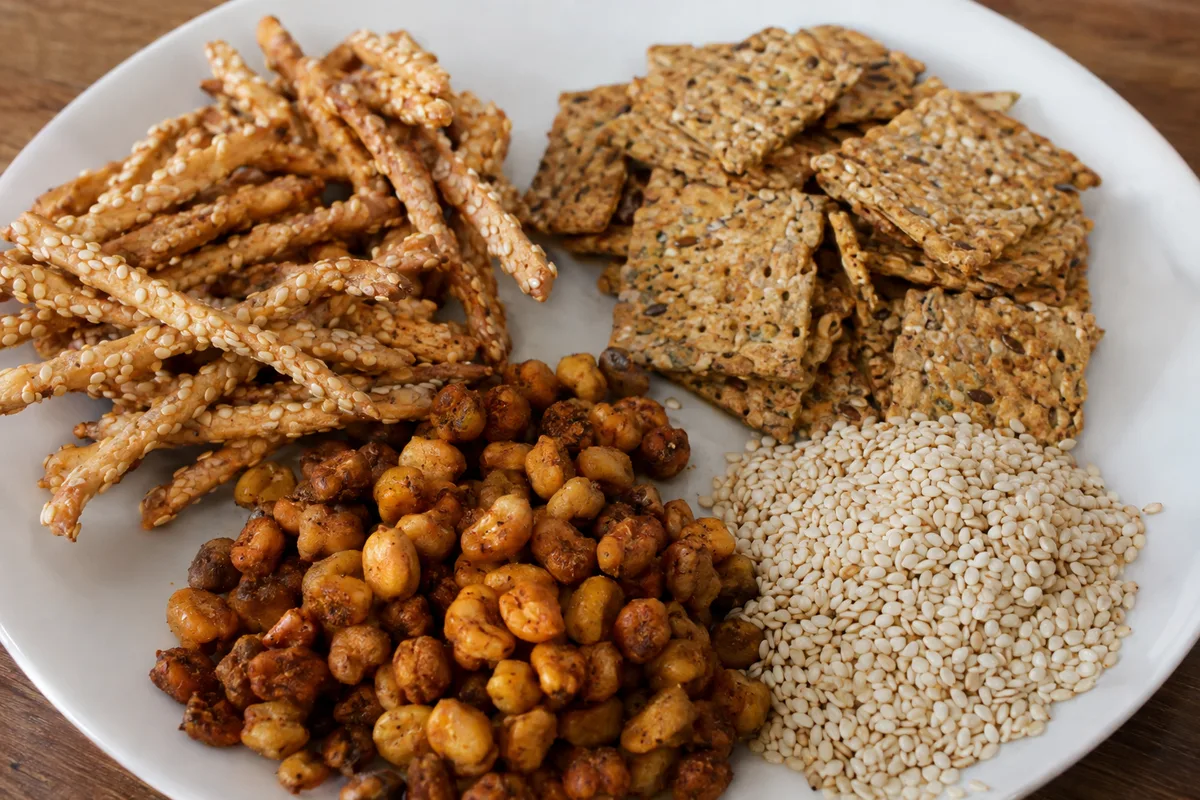
If you enjoy them, keep them in your food log and judge them in the context of the whole day. A measured serving paired with fruit, vegetables or a protein-rich food is likely to feel more complete than eating directly from the packet. For more fibre and less added oil, plain sesame seeds, wholegrain crackers or roasted pulses may be useful alternatives.
- Keep sesame sticks if you enjoy them and the portion suits your day
- Choose a wholegrain version when available
- Pair crunch with a filling food rather than simply eating more sticks
- Rotate them with nuts, seeds, wholegrain crackers or roasted pulses