
Are Wraps Healthier Than Bread? It Depends on What You Choose
A wrap can look lighter than a sandwich, but appearance does not reveal its energy, fibre or salt content. Here is how to compare wraps and bread while keeping your food log useful.
There is no automatic winner
Neither wraps nor bread are healthier in every situation. Both are mainly grain-based foods, and their nutrition depends on the ingredients, size and portion you choose. The rest of the meal matters too, including the filling, spread and side dishes.
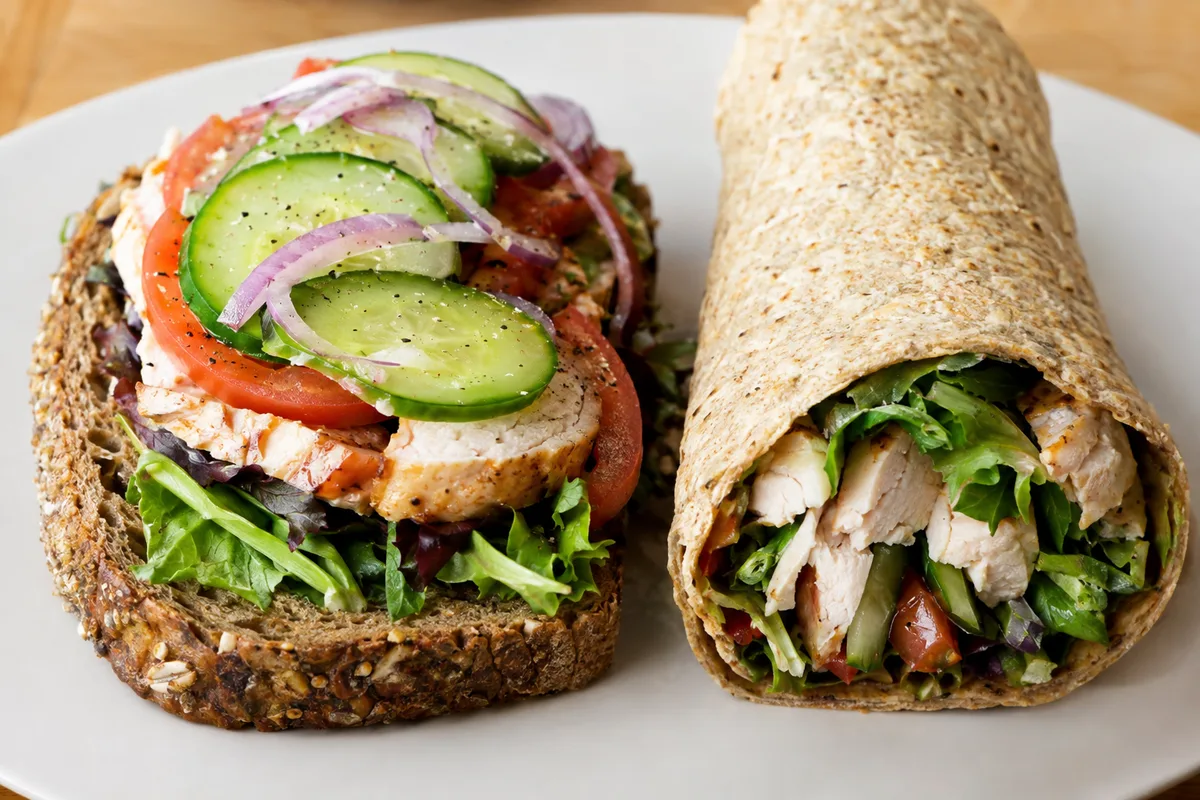
A wrap may suit a packed lunch because it holds loose fillings neatly, while bread may make portions easier to judge. Wholegrain versions of either can provide more fibre than refined versions. The better choice is the one that matches your preferences and what you want from the meal.
- Compare the portion you will actually eat
- Look for fibre-rich grains if fibre is a priority
- Check energy, protein, fibre and salt on the label
- Include the fillings and spreads in your comparison
Why a wrap can be more substantial than it looks
A wrap is thin, so it can appear smaller or lighter than bread. However, it may be made from a fairly large amount of dough that has been rolled and pressed flat. Some wraps also contain added oil, which can increase their energy content.
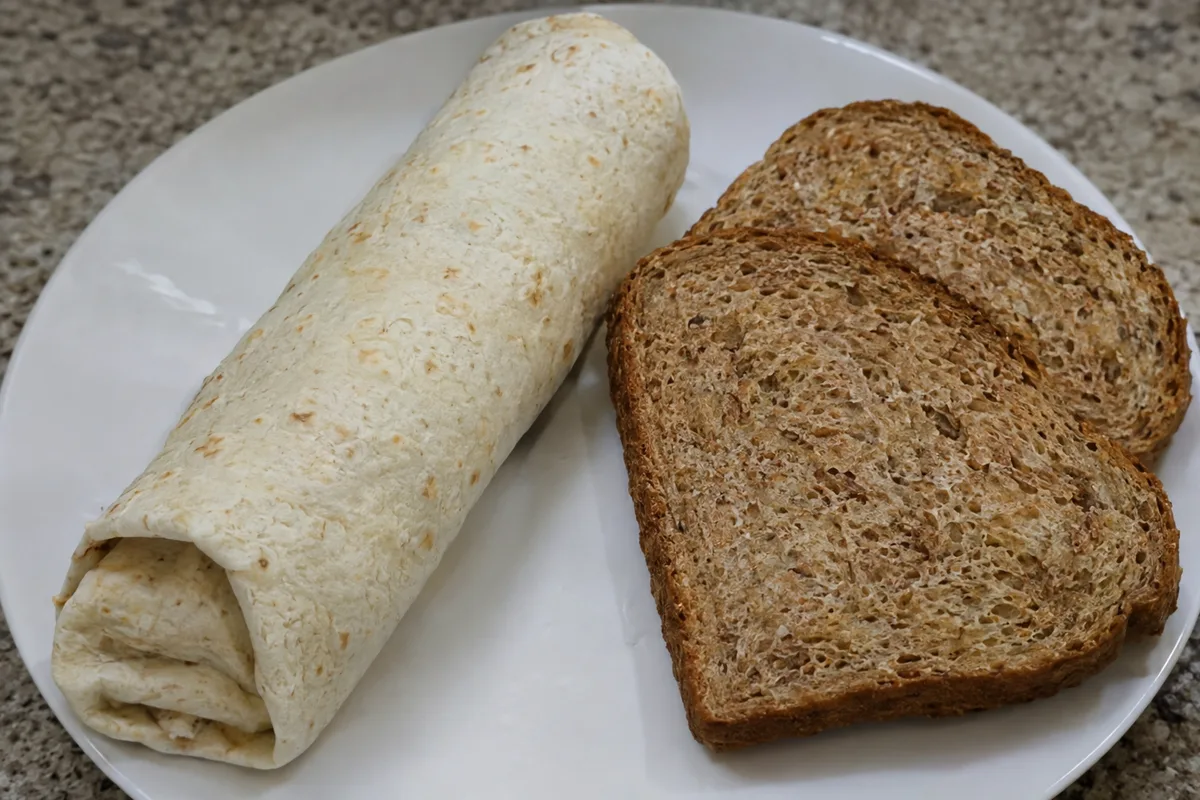
Bread is usually divided into visible slices, making the serving easier to recognise. With wraps, sizes vary widely and one large wrap may not match your usual bread portion. This does not make wraps a poor choice, but it does mean that shape is not a useful guide.
- Place the wrap beside your usual bread portion
- Compare the weight of the portions shown on the labels
- Check whether the label refers to one wrap or part of the pack
- Log the size and type you actually ate
Compare like with like in your food log
When checking labels, compare the portion you plan to eat rather than relying only on figures per standard weight. Figures per standard weight are useful for comparing similar products, but they may not reflect your meal. A large wrap and a small slice of bread are not equal portions.
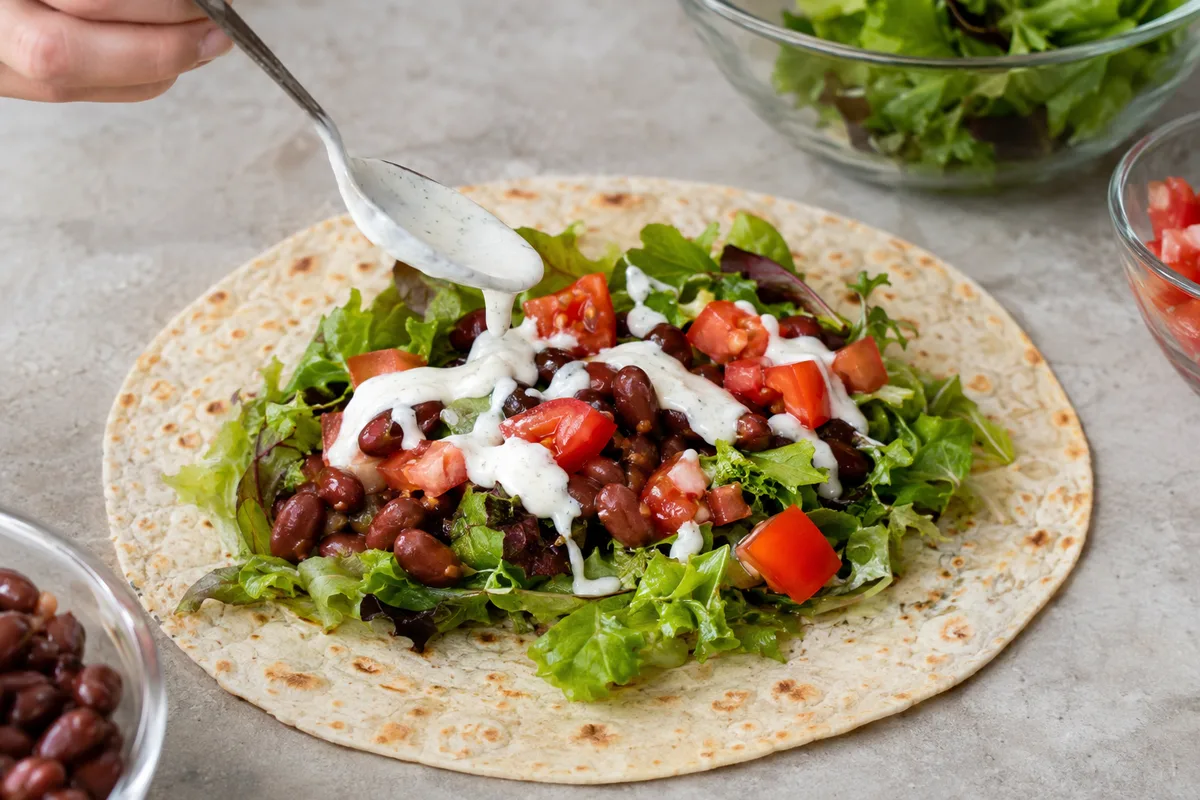
Start with energy if that is what you track, then look at protein, fibre and salt for a fuller picture. Read the ingredients list as well, because colour alone does not prove that a product is wholegrain. Wholemeal flour or another whole grain listed prominently can be a more useful clue.
- Energy for your actual portion
- Protein and fibre for the whole meal
- Salt in both the base and filling
- Whole grains in the ingredients list
- Any oil, seeds or added ingredients that affect your log
The filling often changes the answer
The wrap or bread is only one part of a sandwich-style meal. Generous amounts of dressing, cheese or creamy spread can contribute more energy and salt, while vegetables add volume and fibre. The same filling can produce a similar meal whether it sits in bread or a wrap.
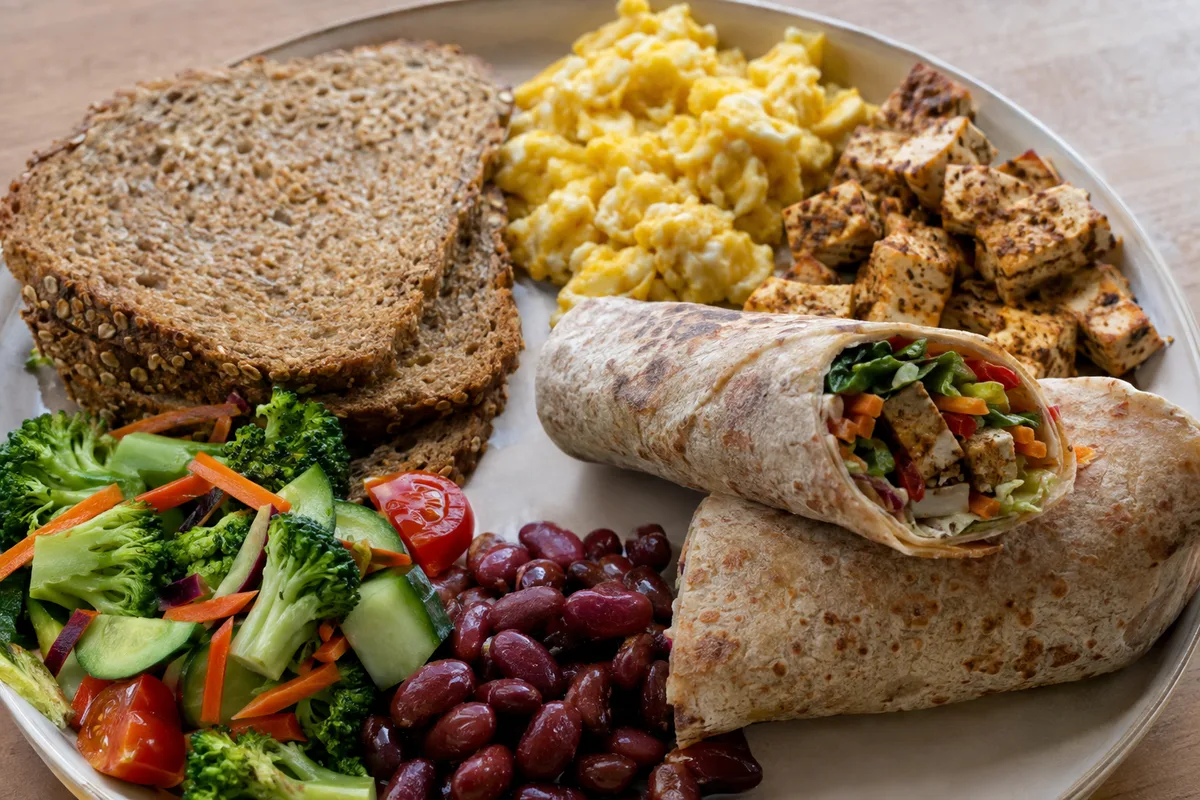
For a balanced filling, combine a protein-rich food with vegetables and a spread or sauce you enjoy. You do not need to remove every higher-energy ingredient, but measuring or logging it separately can improve accuracy. This is particularly helpful with oils, dressings and spreads that are easy to overlook.
- Beans, salad leaves and tomato with a yoghurt-based dressing
- Chicken, cucumber and grated carrot with mustard
- Egg, spinach and sliced peppers with a light spread
- Hummus with roasted vegetables and fresh herbs
Choose according to what you want from the meal
If fibre is your priority, compare wholemeal or wholegrain options rather than assuming one shape is better. If you want more protein, the filling usually offers more scope than switching between bread and a wrap. If you are watching salt, check both the base and any cured, pickled or packaged fillings.
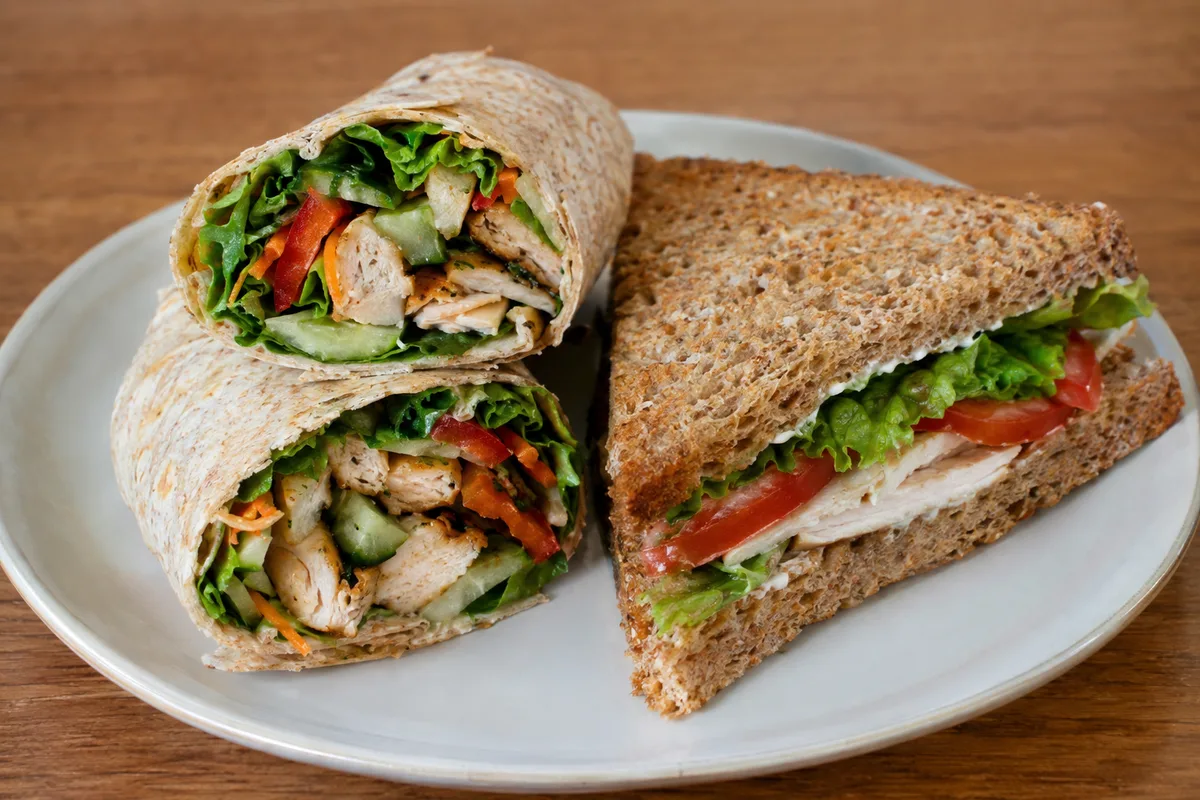
Texture and satisfaction matter because a meal should be enjoyable as well as easy to log. Some readers prefer the chew and structure of bread, while others like a wrap filled with plenty of vegetables. Your usual eating pattern gives more useful context than judging one meal in isolation.
- For more fibre: compare wholegrain options and add vegetables or beans
- For more protein: build the filling around eggs, fish, poultry, tofu or pulses
- For less salt: compare labels and use fresh fillings more often
- For a smaller portion: choose a smaller wrap or fewer slices, then add a filling that satisfies you
A practical verdict for everyday tracking
Wraps are not automatically lighter or more nutritious than bread, and bread is not automatically the better option. The most useful comparison is between the exact products and portions available to you. Once fillings and spreads are included, either can form part of a balanced meal.
Save the wrap or bread you use regularly in your food log with the correct serving details. If the size changes, adjust the entry rather than reusing a familiar portion without checking. Over time, this makes your records more consistent without turning lunch into a complicated calculation.
- Pick the base you prefer
- Check the serving size on the pack
- Log the wrap or bread separately from the filling
- Adjust the entry when the product or portion changes