
How to Peel and Cube Sweet Potatoes Ahead of Cooking
Peeling and cubing sweet potatoes ahead can make a later meal quicker to assemble. Here is how to cut, store and use them while keeping their texture and colour in good condition.
Choose sweet potatoes that are easy to prepare
Firm sweet potatoes are easier to peel and cut neatly than soft or damaged ones. Look for smooth areas without wet patches, deep splits or signs of decay. Uneven shapes are still usable, although they may take a little more trimming.
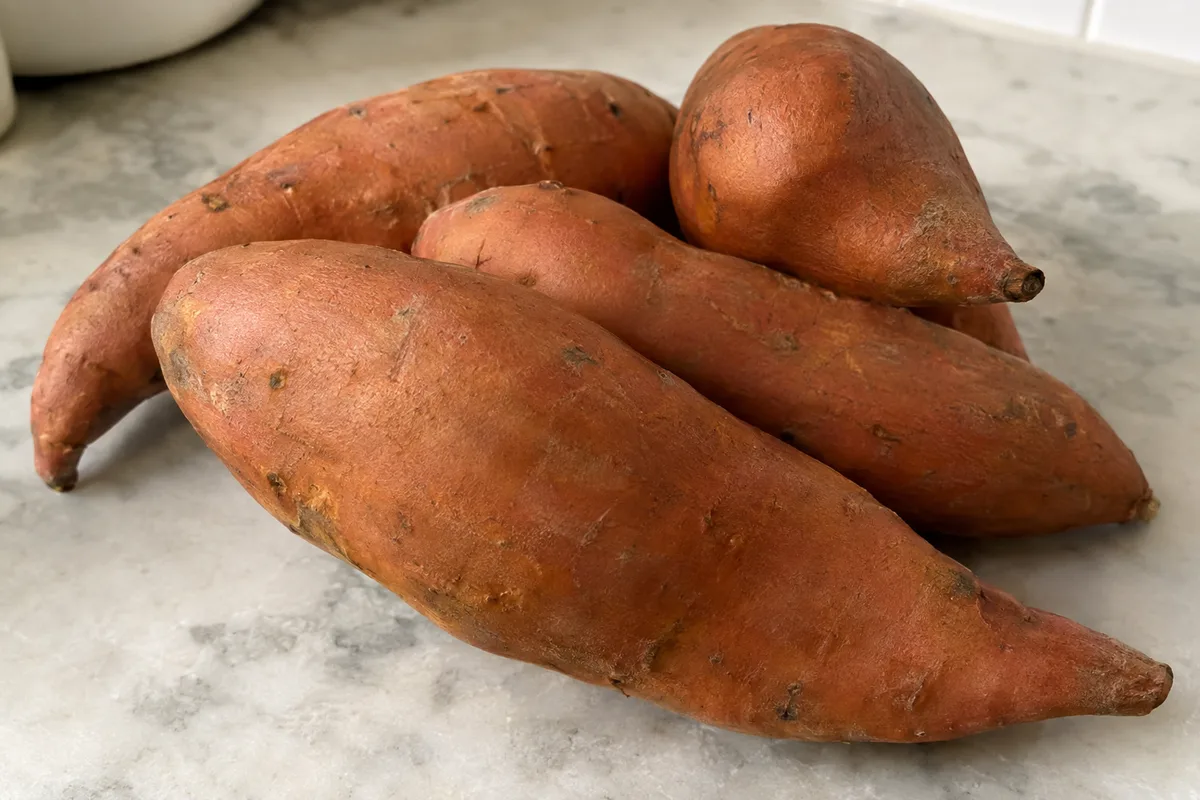
Rinse away any soil before peeling so it does not transfer to the flesh or chopping surface. Dry the sweet potatoes to make them less slippery to hold. Clear enough space to work without crowding the board.
- Choose firm sweet potatoes with no wet or soft areas
- Wash off visible soil before peeling
- Dry the skin before cutting
- Trim away thin ends or damaged patches
Peel and cube them evenly
Remove the skin with a vegetable peeler or a small knife, taking off only a thin layer of flesh. Sweet potatoes can be firm, so work slowly and keep your fingers away from the blade. If a whole potato feels awkward, cut it into shorter sections before making cubes.
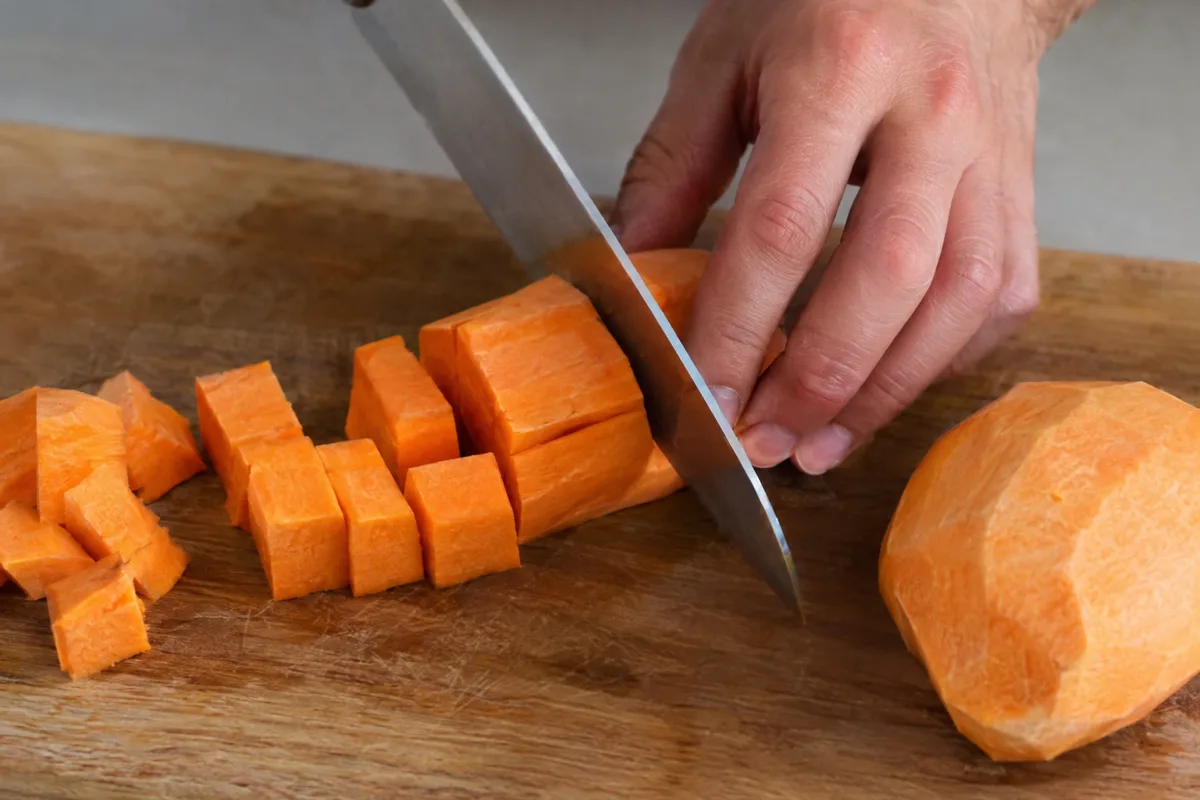
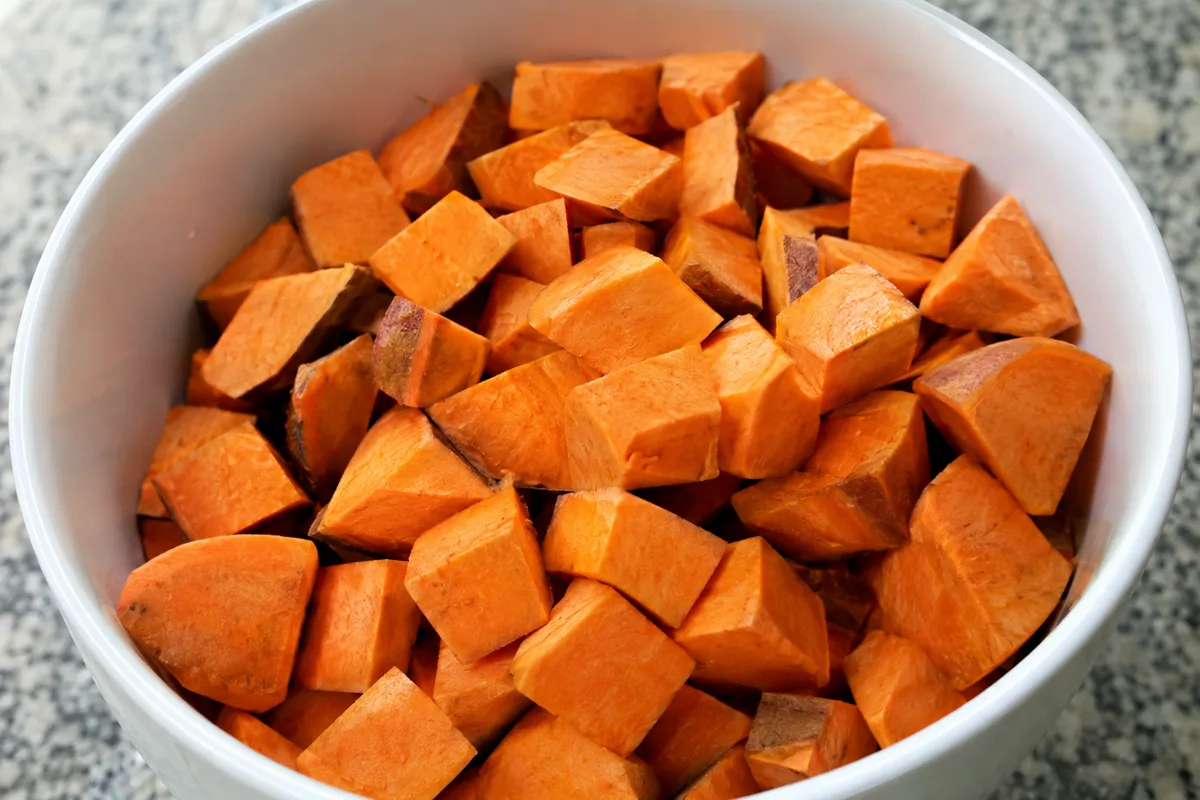
Slice each peeled section into thick slabs, cut the slabs into strips, then cut across the strips. Aim for cubes of a similar size rather than perfect shapes. Even pieces are more likely to soften at roughly the same rate during cooking.
- Cut off the ends to create stable flat surfaces
- Divide large sweet potatoes into manageable sections
- Cut sections into slabs, then strips, then cubes
- Keep the cubes similar in size for more even cooking
Keep the cubes covered with cold water
Peeled sweet potato flesh can dry out and darken when exposed to air. Place the cubes in a clean container and cover them fully with cold water. The water forms a barrier between the cut surfaces and the air.
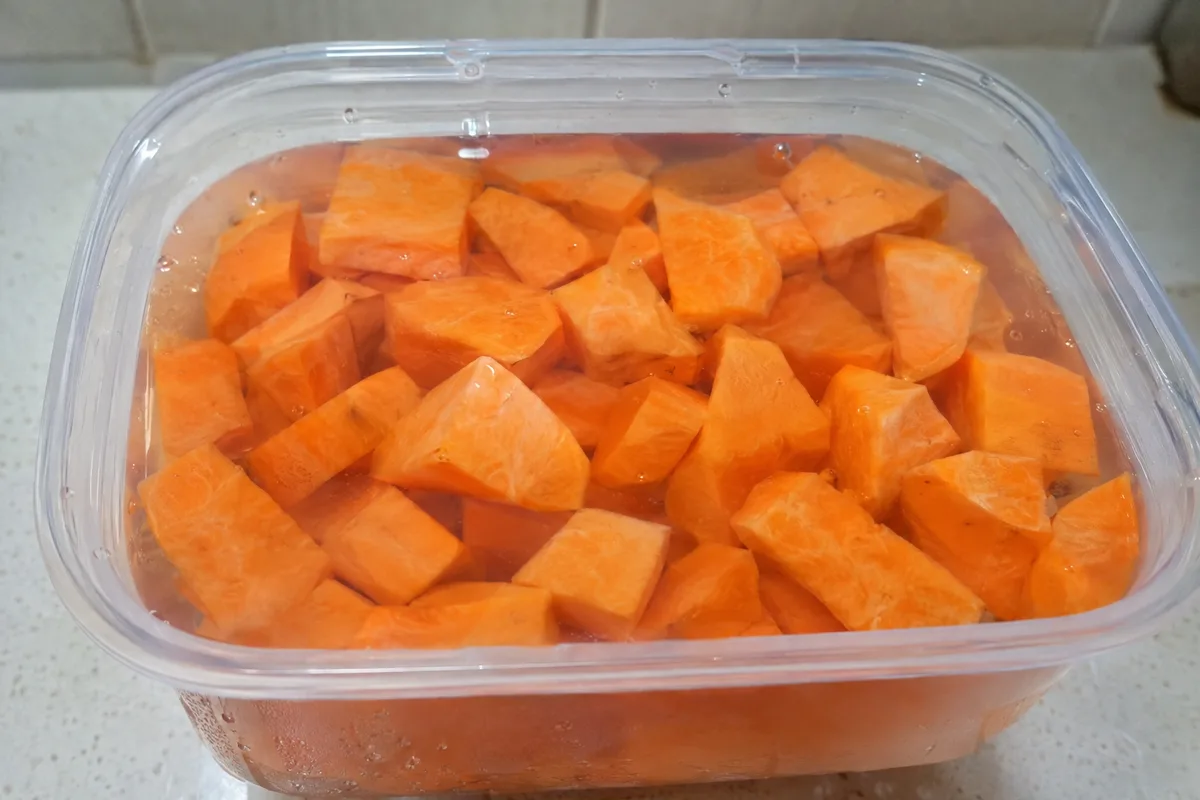
Cover the container and put it in the fridge promptly. This method is best for short-term preparation rather than long storage. How long the cubes remain at their best depends on their freshness, the fridge temperature and how cleanly they were prepared.
- Use enough cold water to cover every cube
- Press down any pieces floating above the surface
- Cover the container before refrigerating
- Use the prepared cubes as soon as practical
Drain and dry before cooking
Pour away the storage water and rinse the cubes briefly with fresh cold water. Drain them thoroughly, then pat the surfaces dry with a clean kitchen towel. Drying is especially important if you plan to roast or air-fry them.
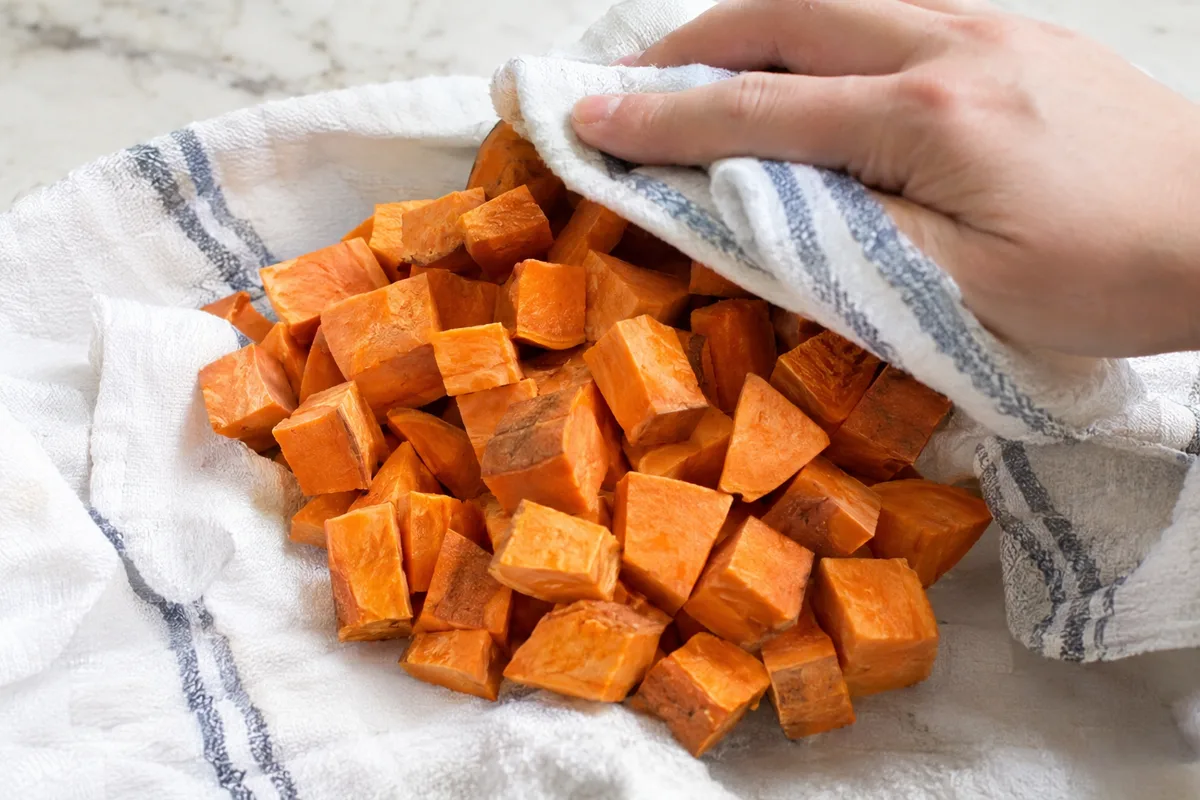
Wet cubes release steam and may take longer to brown at the edges. For boiling, steaming or adding to a liquid-based dish, a little surface moisture matters less. Do not reuse the storage water in the recipe, as it may contain released starch and small particles.
- Drain off all the storage water
- Rinse the cubes briefly
- Pat dry for roasting or air-frying
- Leave slightly damp only when they are going into water or sauce
Check them before they go into the pan
Prepared cubes should still feel firm and smell fresh. Slight surface darkening does not always mean they are unusable, but a slippery texture, strong smell or widespread softness means they should be discarded. When in doubt, leave them out of the meal.
Cook the cubes using the method you had planned, checking larger pieces for tenderness. If some cubes are noticeably bigger, cut them down before cooking. Add oil and dry seasonings after draining so they coat the flesh rather than the storage water.
- Look for firm flesh and a fresh, mild smell
- Discard cubes that feel slippery or unusually soft
- Trim larger pieces so the batch cooks evenly
- Season only after draining and drying