
Regular potatoes or sweet potatoes: which fits your food log?
Regular and sweet potatoes can both form part of a balanced meal, but they differ in flavour, texture and some nutrients. Here is how to compare them fairly and log them with fewer surprises.
They are different foods, but both are useful staples
Regular potatoes and sweet potatoes come from different plant families, despite sharing part of a name. Regular potatoes tend to have a mild, savoury flavour and a fluffy or waxy texture, depending on the variety. Sweet potatoes are usually sweeter, with flesh that may be orange, cream or purple.
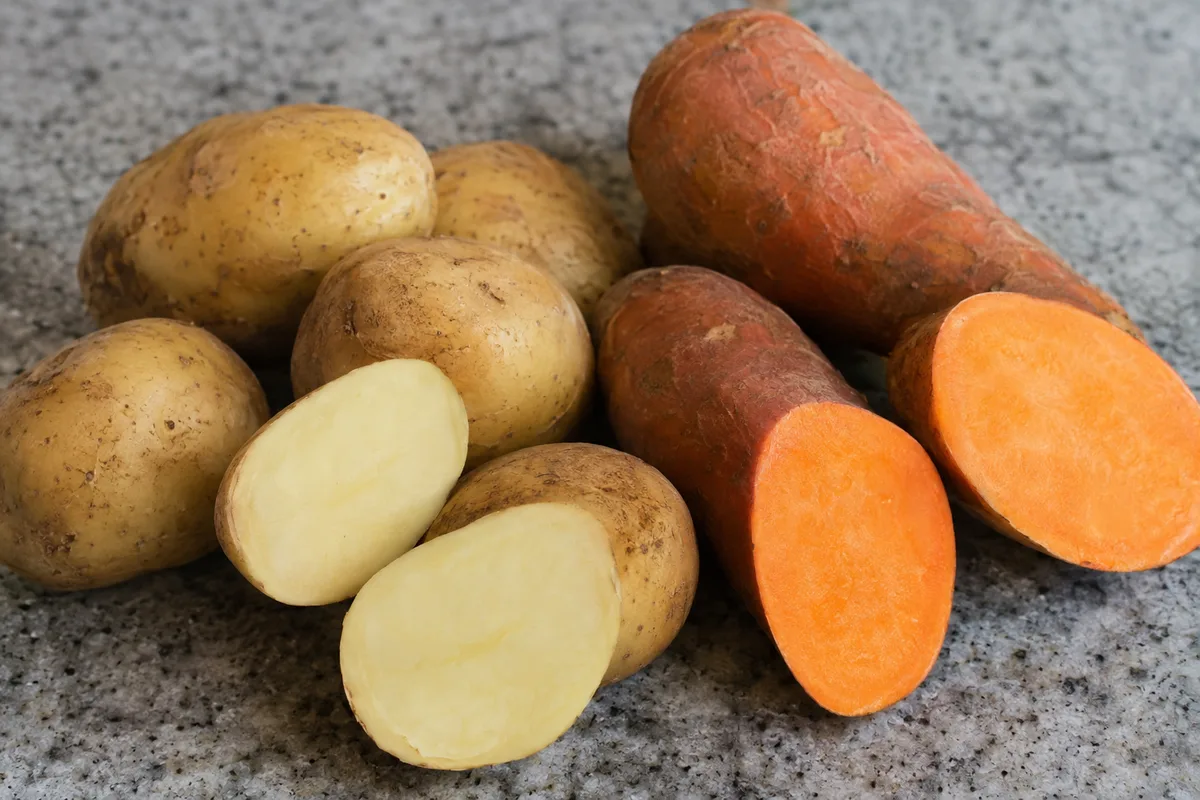
Both provide carbohydrate, fibre and a range of vitamins and minerals. Neither is automatically the better choice for every meal or every person. Your portion, cooking method and toppings often make more difference to your food log than the name of the potato.
- Choose regular potatoes for a neutral flavour that works with many savoury dishes.
- Choose sweet potatoes when you want a sweeter taste and softer texture.
- Use either as the carbohydrate part of a meal alongside vegetables and a protein source.
- Alternate between them if you enjoy both and want more variety.
How their nutrients compare
Orange sweet potatoes are known for beta-carotene, a pigment that the body can turn into vitamin A. Regular potatoes provide vitamin C and potassium, while sweet potatoes also contribute these nutrients in different amounts. The exact nutritional profile varies with the variety, growing conditions and preparation.
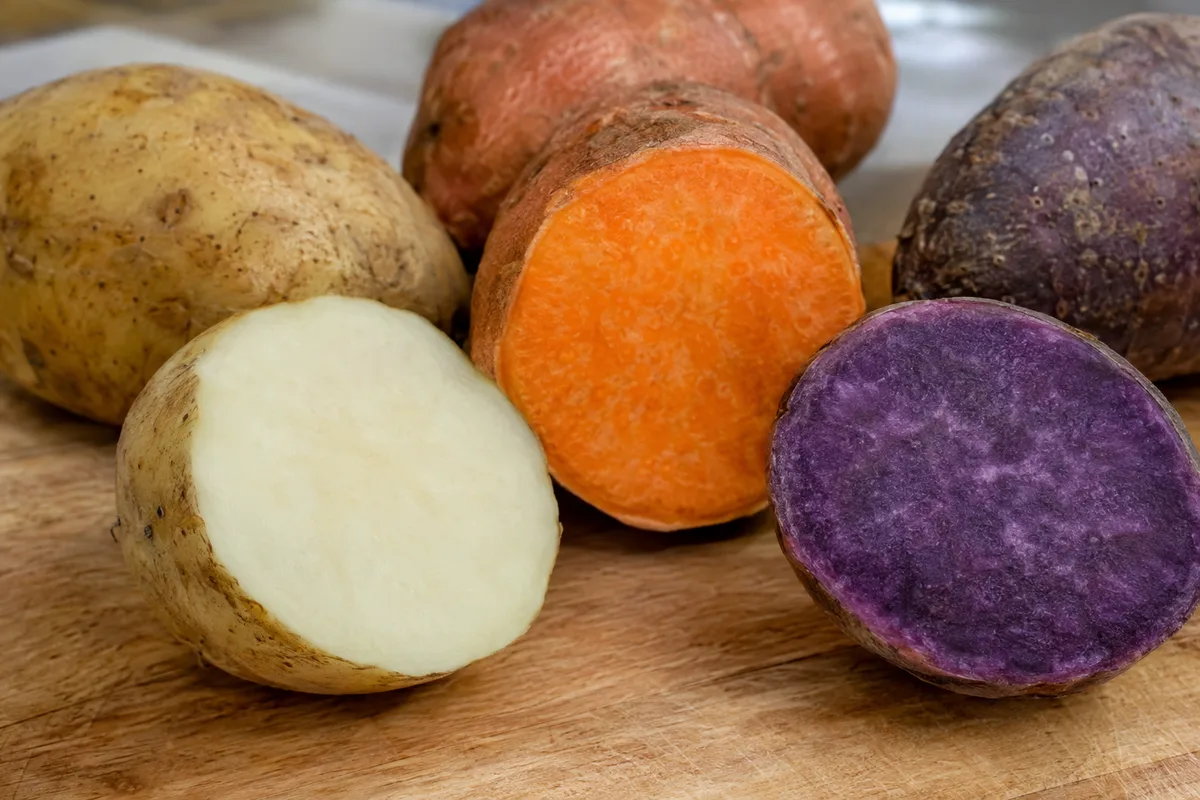
Both types can provide fibre, particularly when the skin is eaten. Sweet potatoes are not always higher in fibre, and regular potatoes are not nutritionally empty. A food database entry for the exact type and preparation gives a more useful comparison than a broad claim that one is healthier.
- Orange flesh usually signals more beta-carotene.
- Purple flesh contains different natural plant pigments.
- Regular potato varieties differ in texture and nutrient content.
- Keeping the edible skin can add fibre to either type.
Calories depend on preparation and portion
Plain regular and sweet potatoes can be fairly similar as carbohydrate foods, but database values are not identical. The amount on your plate still matters, and a large portion will contribute more energy than a small one. Check that your logged amount matches what you actually ate.
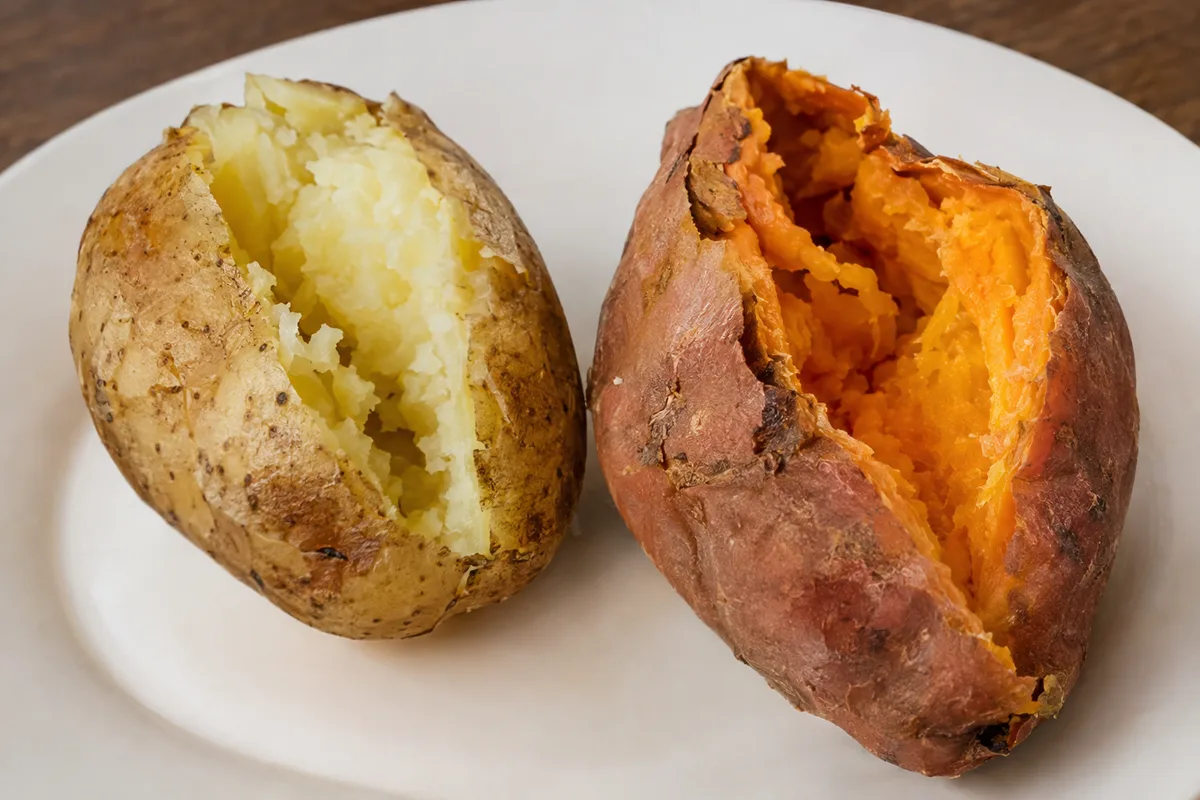
Cooking can change the potato's water content, so the same food may have a different value per gram when raw, boiled, baked or roasted. Added oil, butter, cheese and sauces also contribute energy. This is why comparing plain baked sweet potato with fried regular potato does not reveal much about the potatoes themselves.
- Match raw weight with a raw database entry.
- Match cooked weight with the correct boiled, baked, steamed or roasted entry.
- Log cooking fats and toppings separately when they are not included in the entry.
- Use the edible amount rather than including peel or scraps you did not eat.
Cooking method changes the eating experience
Boiling or steaming keeps both types soft and usually requires no added fat. Baking produces a drier outside and a soft centre, while roasting encourages browning and may involve oil. Mashing can be simple or rich, depending on what is mixed in.
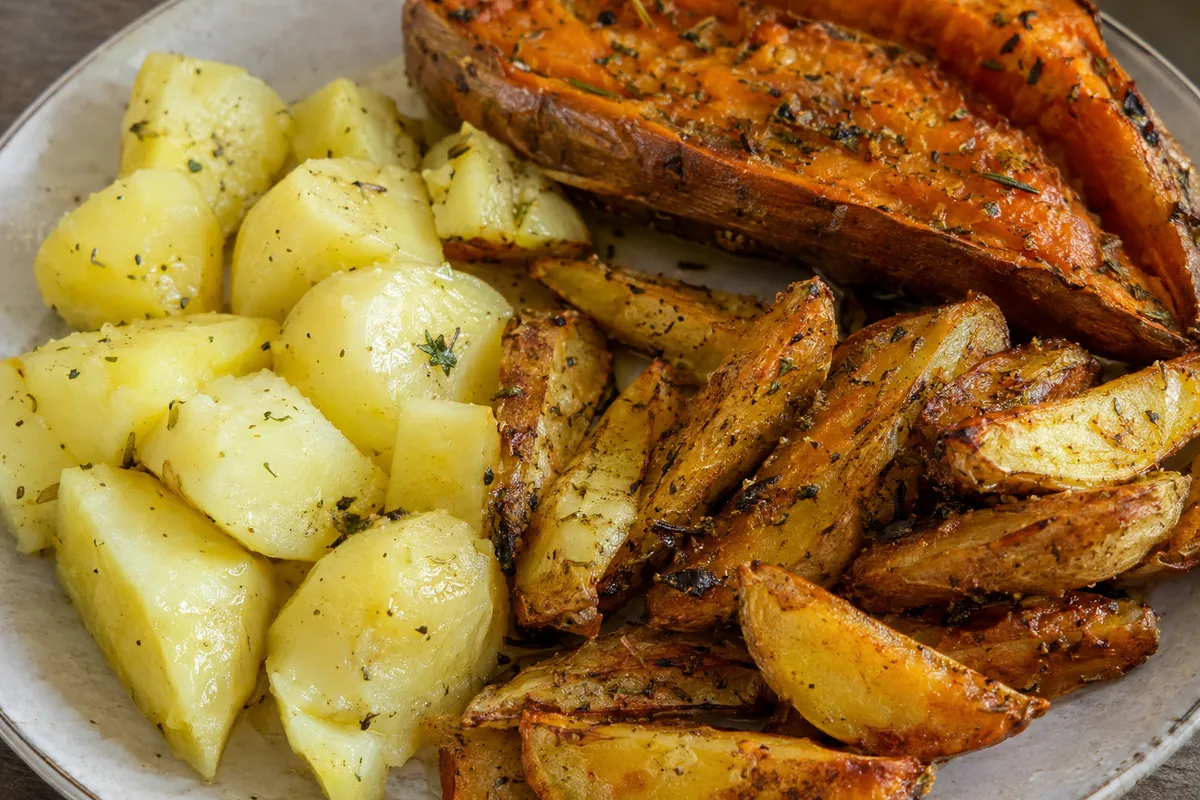
Regular potatoes often become crisp more easily when roasted, whereas sweet potatoes may soften and brown quickly because of their natural sugars. Neither result is inherently better. Choose the method that suits the meal, then record all the ingredients used.
- Boil regular potatoes for salads, mash or simple side dishes.
- Bake sweet potatoes whole for a soft filling meal base.
- Roast either type with a measured amount of oil and seasonings.
- Mash with milk, yoghurt or another addition, logging it separately.
Build a balanced plate around either one
A potato on its own may not keep a meal interesting or satisfying for long. Pair it with a protein source, vegetables and a little fat according to your preferences. This creates more variety in flavour, texture and nutrients.
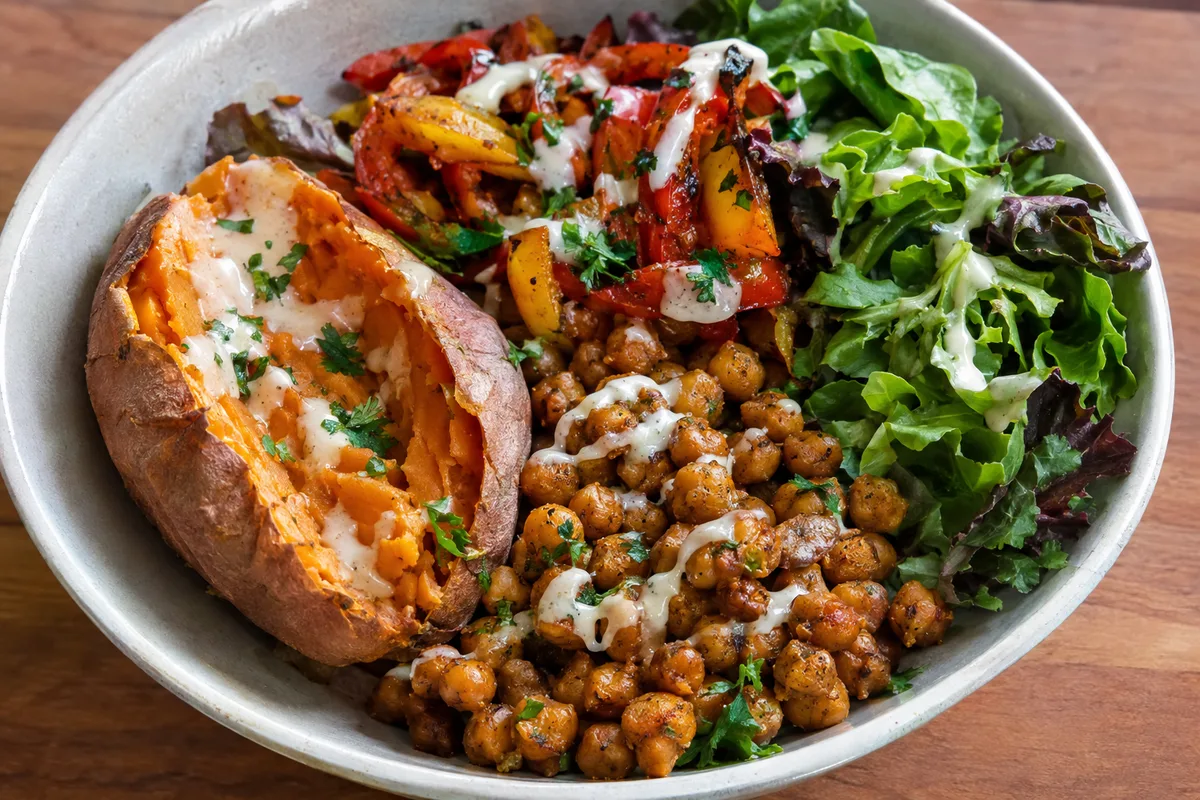
Think of regular or sweet potato as one part of the meal rather than a direct test of which food wins. A baked potato with beans and salad offers a different overall meal from sweet potato fries with a creamy dip. Your log is most useful when it captures the complete plate.
- Regular potato with lentils, spinach and a spoonful of yoghurt.
- Sweet potato with chickpeas, peppers and a tahini dressing.
- Boiled potatoes with eggs, green beans and tomatoes.
- Baked sweet potato with cottage cheese and a crunchy salad.
How to choose between them
Start with taste, availability and the dish you are making. Regular potatoes may suit meals where you want a neutral base, while sweet potatoes can add colour and sweetness. There is no need to replace one with the other unless that swap helps you enjoy the meal.
When tracking, compare like with like and look beyond a single nutrient. Check the portion, preparation, skin and added ingredients before drawing conclusions from the totals. The best choice is the one that fits your meal and can be logged consistently.
- Pick the variety you genuinely prefer.
- Compare plain versions prepared in the same way.
- Keep portions consistent when testing which feels more satisfying.
- Save accurate entries for meals you repeat often.