
How to Progress Your Side Plank Safely
A side plank can be adjusted to suit your current strength and control. Progress comes from holding a sound position before adding time, movement or load.
Begin with a position you can control
Start on your side with your elbow beneath your shoulder and your forearm resting on the floor. Bend your knees and lift your hips so your body forms a straight line from your head to your knees.
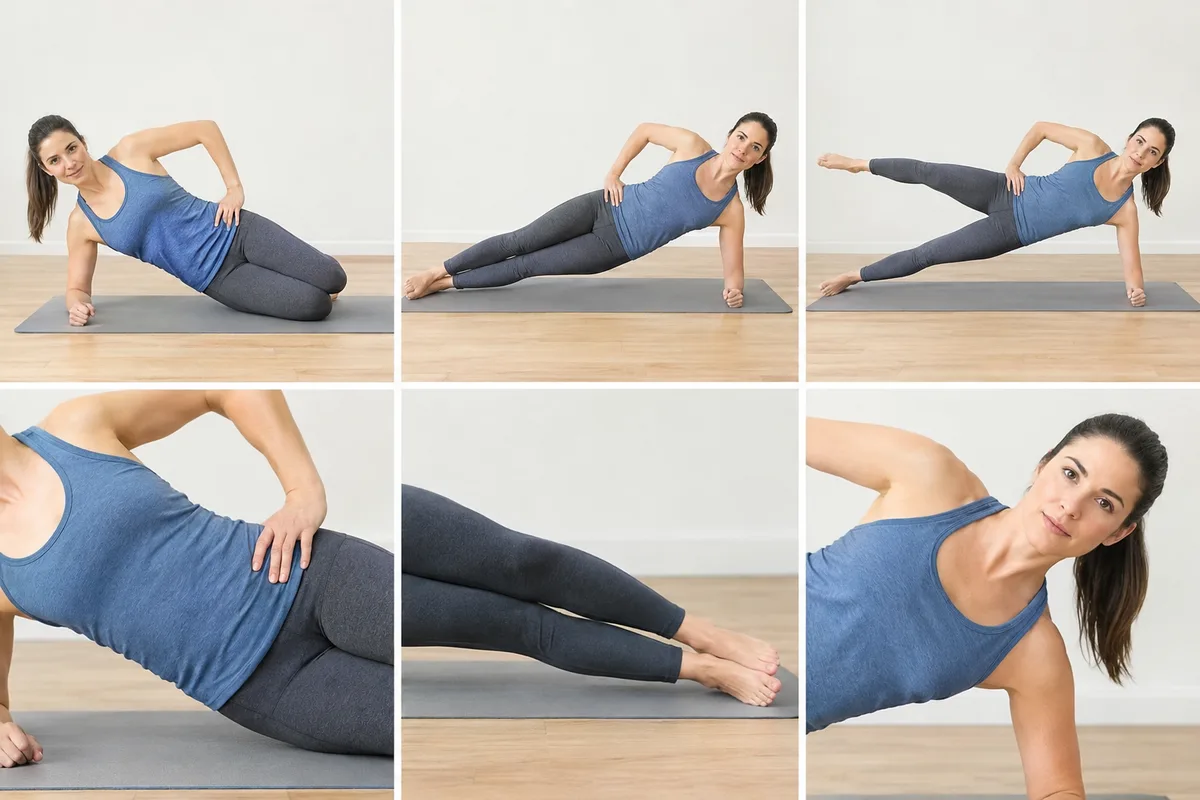
Keep your neck comfortable, gently brace your middle and avoid letting your shoulder collapse towards your ear. End the hold when your hips drop, your body twists or you can no longer breathe steadily.
Build time before adding difficulty
Choose a hold length that lets you maintain the same position from start to finish. Add a little time only when several holds feel controlled on both sides, as the right duration depends on the person.
Rest between attempts rather than forcing a tired position. If one side feels less steady, use the same manageable variation on both sides and let control guide your progress.
Move to a full side plank
When the bent-knee version feels secure, straighten your legs and support yourself through your forearm and the sides of your feet. You can place the top foot in front of the lower foot for a wider base before trying stacked feet.
Press the floor away, lift through the underside of your waist and keep your ribs and hips facing forwards. Return to the easier version if you cannot maintain alignment without holding your breath or rushing.
Add movement one change at a time
Once a full hold is steady, try lifting the top arm, raising the top leg or slowly lowering and lifting the hips. Introduce only one new challenge at a time so you can tell whether your position remains controlled.
Extra load is a later option, not a requirement for progress. Stop if you feel sharp pain, numbness or discomfort that does not settle, and seek guidance from a qualified exercise professional if you are unsure which variation suits you.