
The Plank Exercise: A Simple Guide to Form and Progress
The plank is a still exercise that asks your body to hold a firm, straight position. It needs no complicated routine, but careful form matters more than chasing a long time.
What a plank involves
A plank is an exercise where you support your body while keeping your middle steady. In a forearm plank, your elbows and forearms rest on the floor while your toes provide the other contact point.
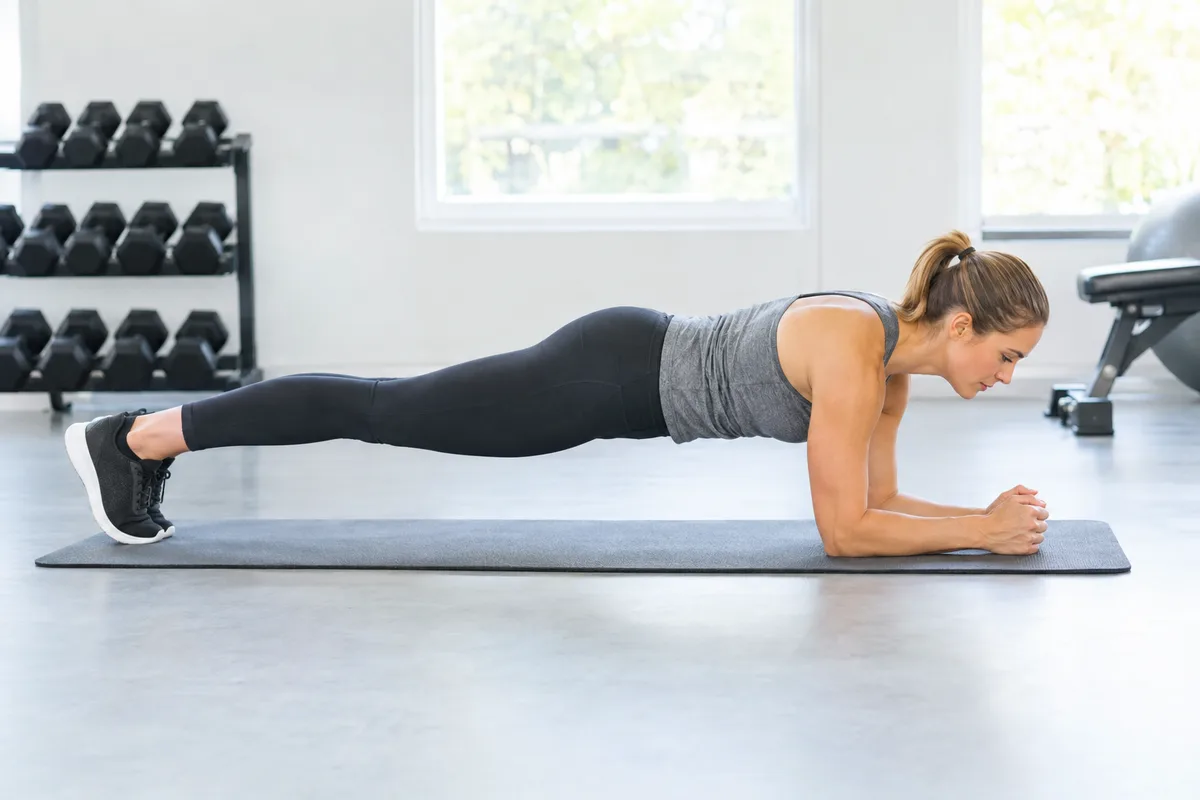
Although you stay in one position, several areas work together to stop your hips from dropping or lifting. You may notice effort around your stomach, back, shoulders, arms and legs, depending on the version and your form.
Setting up with good form
Place your elbows below your shoulders and extend your legs behind you. Keep your head in line with your body, look towards the floor and aim for a straight shape from your shoulders to your heels.
Gently tighten your middle and squeeze your legs and buttocks without holding your breath. Stop the set when you can no longer keep the position steady, rather than continuing with raised hips, a sagging middle or tense shoulders.
Making the exercise suit you
For an easier starting point, place your knees on the floor while maintaining a straight line from your head to your knees. You can also plank with your hands on a stable raised surface, which reduces how much body weight you support.
To increase the challenge, build up the holding time gradually or add another controlled set. Side planks and straight-arm planks provide different options, but a harder variation is only useful when you can hold it with steady form.
Tracking planks alongside food
Record the variation, number of sets and length of each hold so you can see how your ability changes. Notes about form and effort can be more useful than comparing one session with another by time alone.
Calorie burn from planks depends on the person, the variation, the effort and the duration, so tracker estimates are only rough guides. Treat the plank mainly as a strength and control exercise, and avoid using a short hold as a reason to make a precise adjustment to your food log.