
Salad Ingredients That Can Make Weight Loss Harder
A salad is not automatically low in calories, especially once dressings, fried toppings and generous extras are added. This guide explains what to watch in your food log and how to make practical swaps without settling for a dull meal.
Why some salads are more substantial than they look
Vegetables usually form a light base, but the ingredients added around them can change the meal quickly. Dressing, cheese, fried toppings, nuts and creamy mixtures all add energy in relatively small portions. None of these foods is automatically bad, but combining several can make a salad harder to fit into your target.
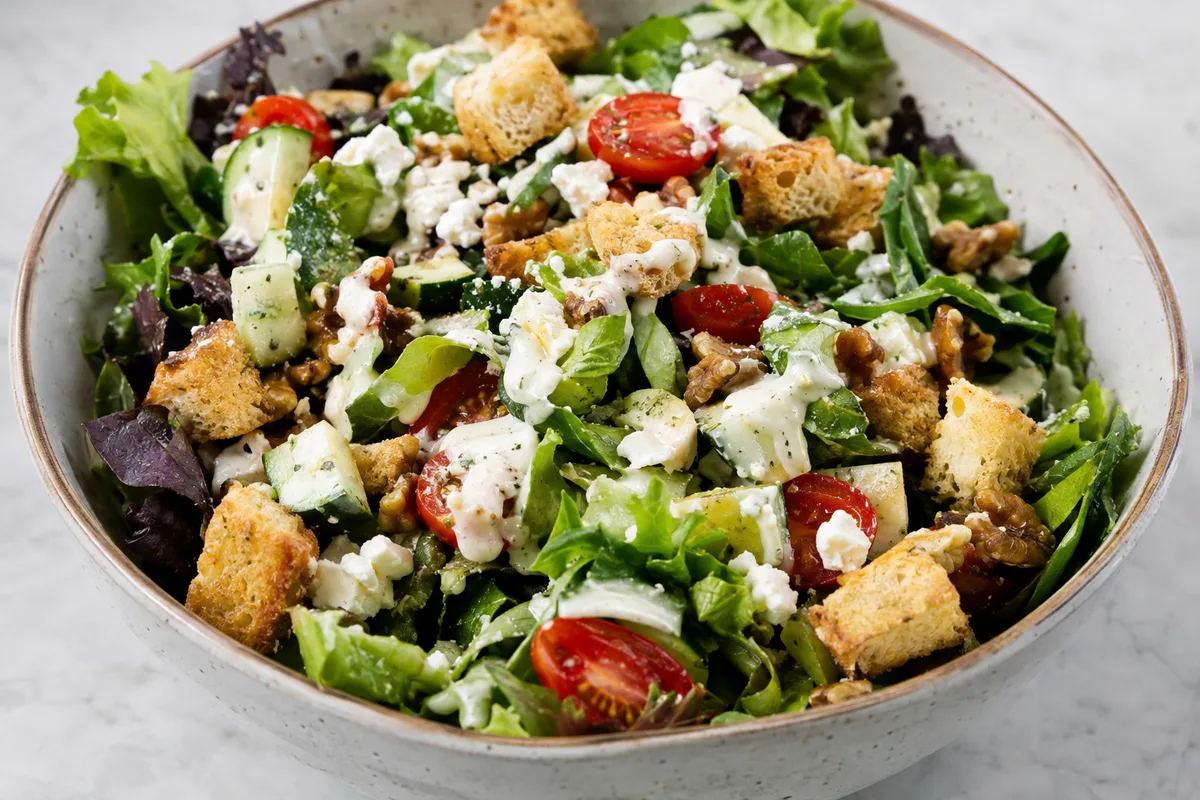
Your food log can help you spot whether the leaves and vegetables are the main event or simply a base for richer extras. Look at the full bowl rather than judging it by the word salad. The ingredients worth checking most carefully are those poured, scattered or spooned on without being measured.
- Log dressing separately from the vegetables
- Include oils used for roasting or frying ingredients
- Record toppings such as cheese, nuts and crunchy pieces
- Check whether a listed portion matches the amount you ate
Heavy dressings and generous pours
Creamy dressings and oil-based vinaigrettes can contribute a large share of a salad's energy. Oil contains about 9 kcal per gram, compared with about 4 kcal per gram for protein or carbohydrate. A free-handed pour can therefore make your logged portion difficult to estimate.
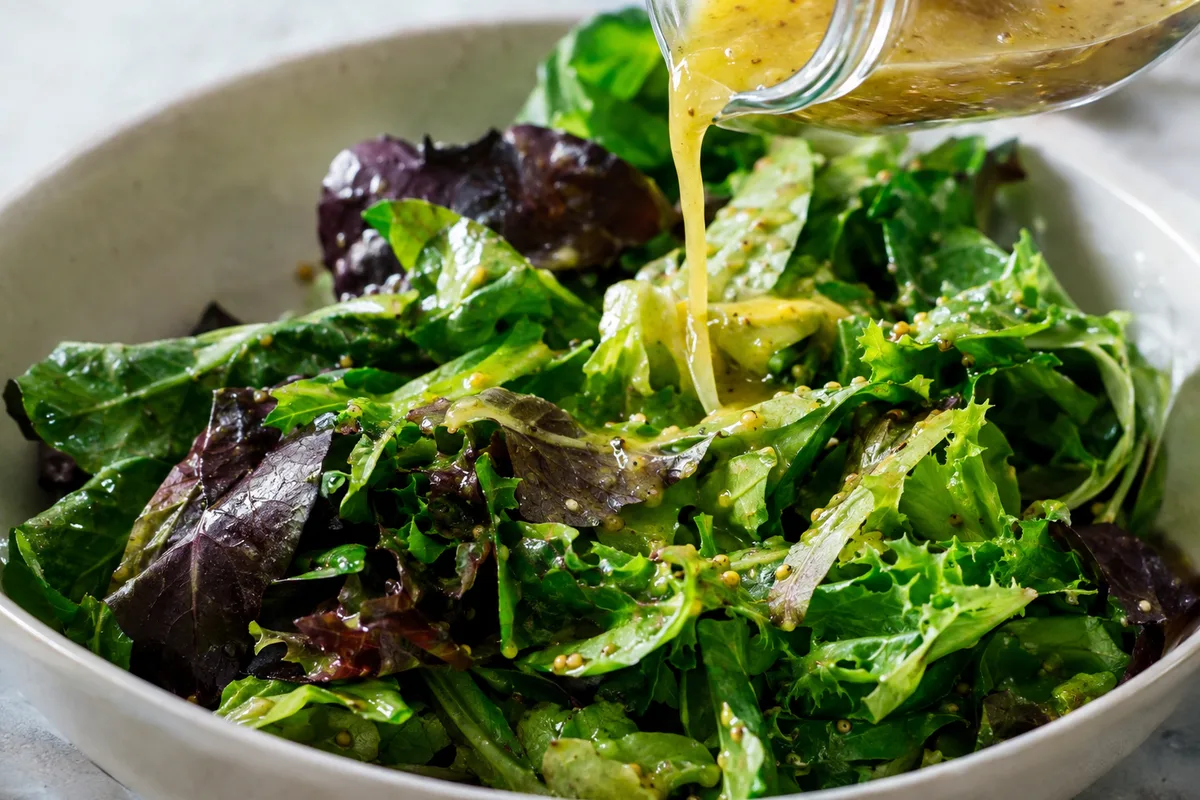
You do not need to eat salad dry. Use enough dressing to enjoy the meal, but measure it before adding more and toss the salad thoroughly so it spreads. Sharp or fresh flavours can also make a smaller amount feel more noticeable.
- Try lemon juice, vinegar or mustard for stronger flavour
- Thin a creamy dressing with plain yoghurt or a little water
- Serve dressing on the side and dip each forkful lightly
- Measure oil rather than pouring directly from the bottle
Fried and crunchy toppings
Crispy chicken, fried cheese, tortilla strips, croutons and battered vegetables may sound like small additions. Their coatings often absorb fat, while the crisp texture makes it easy to keep adding them. A salad built around several fried items can end up closer to a rich main course than a vegetable-led meal.
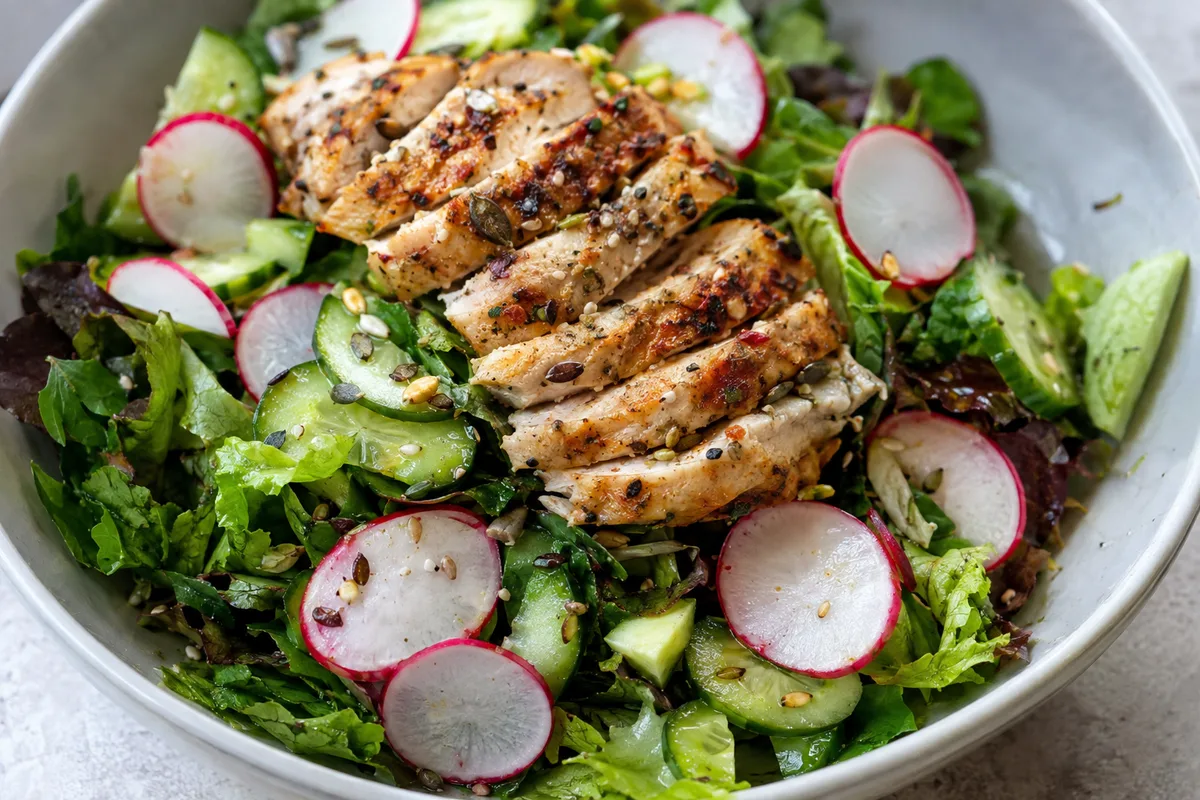
Crunch does not have to come from frying. Fresh vegetables, toasted pulses or a modest portion of seeds can provide texture while making the ingredients easier to track. If a favourite fried topping matters to you, keep it and simplify the other extras.
- Use sliced radish, cucumber or pepper for fresh crunch
- Choose grilled chicken instead of breaded chicken
- Swap fried tortilla strips for sweetcorn or beans
- Use a measured sprinkle of seeds instead of several crunchy toppings
Cheese, nuts and avocado can still add up
Cheese, nuts, seeds and avocado provide flavour, texture and useful nutrients, but they are energy-dense. Portions can grow when cheese is crumbled by hand, nuts are tipped from a bag or avocado is added alongside an oily dressing. The issue is often the combination rather than any single ingredient.
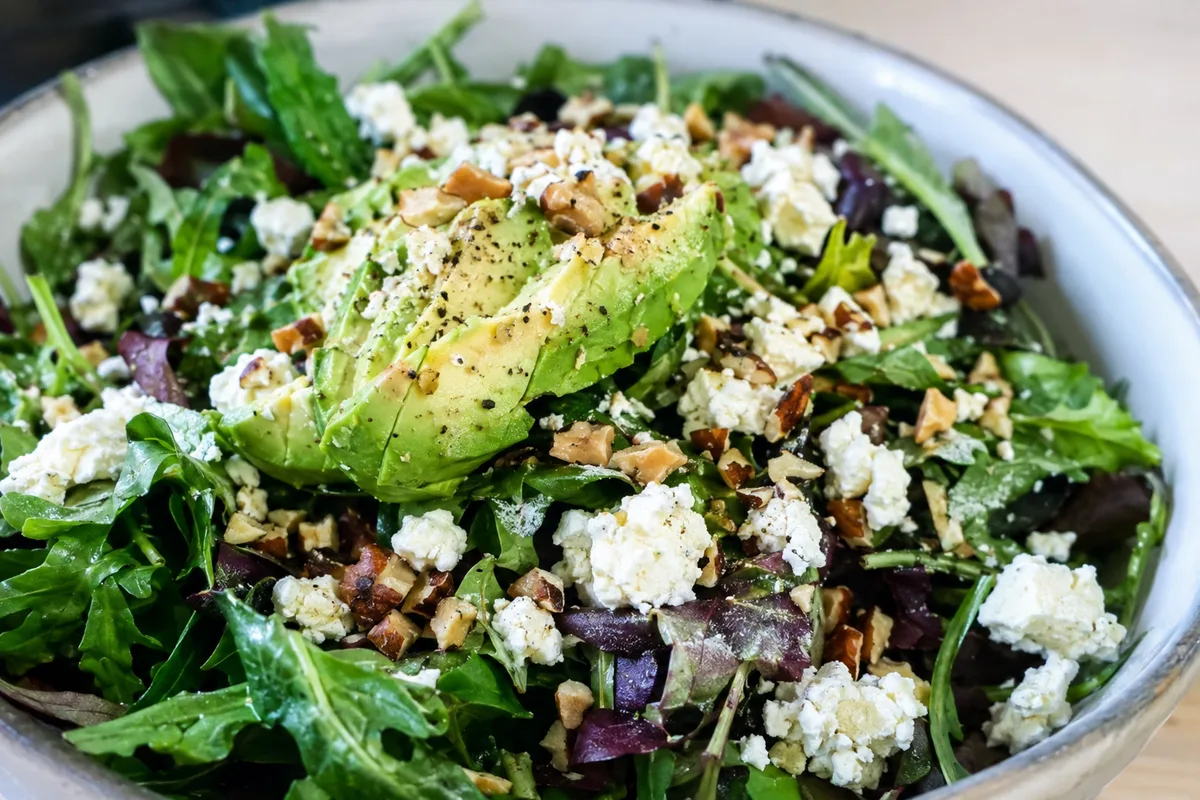
Choose the rich ingredient that contributes most to the salad and measure that portion. A strong-flavoured cheese may stand out with less, while chopped nuts can spread across more forkfuls. When using avocado, you might prefer a lighter dressing rather than adding both generously.
- Pick cheese, nuts or avocado as the main rich extra
- Chop nuts finely so a measured portion spreads further
- Use a strongly flavoured cheese rather than a large mild portion
- Pair avocado with lemon juice, herbs or vinegar instead of extra oil
Sweet extras and processed additions
Dried fruit, sweetened dressings, glazed nuts and fruit-based sauces can add sweetness in concentrated forms. They may be easy to overlook because each one appears to be a small garnish. Logging them individually shows whether several sweet extras are appearing in the same bowl.
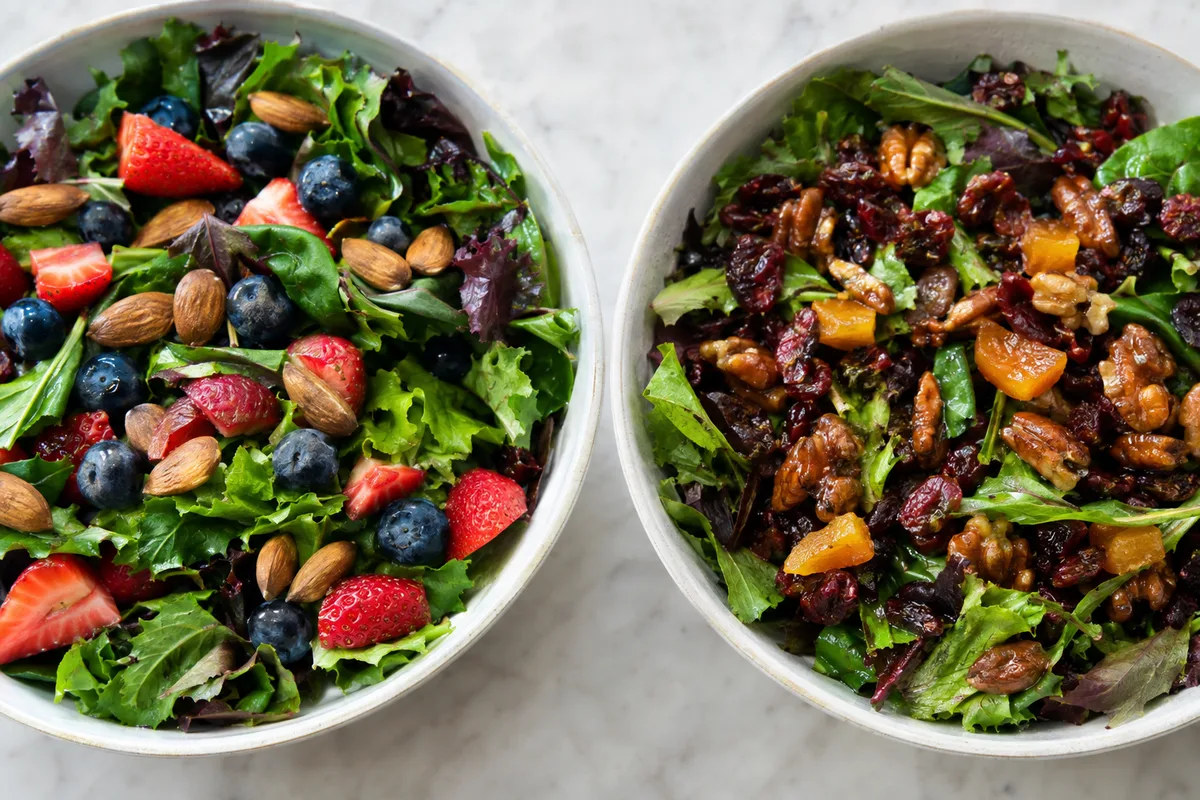
Processed meat and creamy prepared fillings can also bring extra fat, sauces and coatings. Plain cooked meat, fish, eggs, beans or lentils are often simpler to estimate because you can see what has been added. Check the label or recipe when a filling arrives already mixed with mayonnaise, glaze or oil.
- Choose fresh fruit instead of a large handful of dried fruit
- Use plain nuts rather than glazed varieties
- Pick an unsweetened dressing when the salad already contains fruit
- Log creamy fillings and sauces as separate ingredients where possible
Build a salad that keeps you satisfied
Simply removing every higher-calorie ingredient can leave you with a meal that is too small or unsatisfying. Start with plenty of varied vegetables, then include a clear source of protein and a measured flavourful extra. The best amounts depend on your appetite, activity and personal calorie target.
Review the meal in your food log before deciding that one ingredient is the problem. If the total is higher than expected, change one or two additions rather than stripping the salad back to leaves. A satisfying, repeatable meal is more useful than a very light salad that leaves you looking for something else soon afterwards.
- Begin with leaves and several colourful vegetables
- Add protein such as eggs, chicken, fish, beans, lentils or tofu
- Choose one measured rich topping for flavour and texture
- Add dressing deliberately and record the amount
- Adjust portions using your own food log and calorie target