
The Plate Diet: What It Means and How to Use It
The plate diet is a visual way to balance vegetables, protein and starchy carbohydrates at a meal. Here is how the approach works, where food tracking fits and why portions still depend on the person.
What the plate diet actually is
The plate diet, often called the plate method, is a way to plan meals by dividing the plate into broad food groups. Around half is used for vegetables, one quarter for a protein-rich food and one quarter for a starchy carbohydrate. It is a visual guide rather than a fixed menu or a precise prescription.
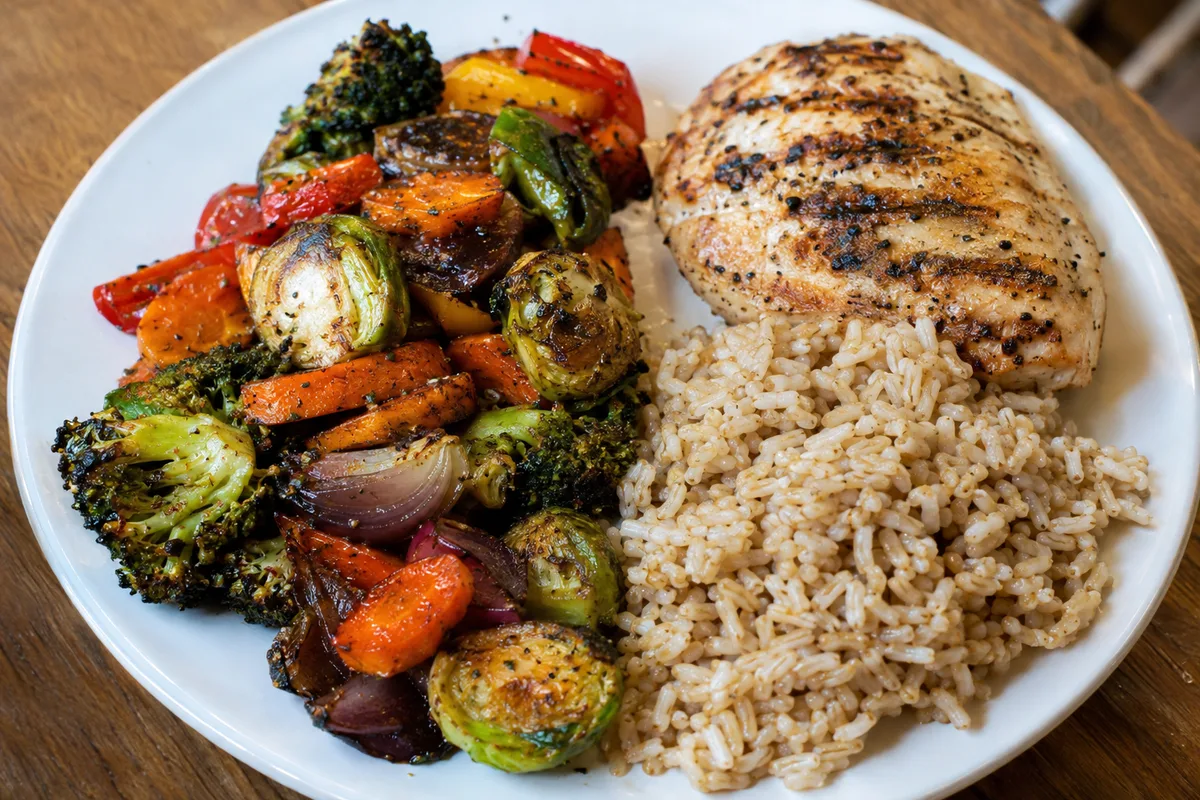
The idea is to make a varied meal easier to assemble without weighing every ingredient first. It can be useful when cooking at home, choosing from a buffet or ordering a meal away from home. Drinks, sauces, cooking fats and extras still count in your food record even though they may not occupy a clear section of the plate.
- Half a plate of vegetables or salad
- A quarter plate of protein-rich food
- A quarter plate of starchy carbohydrate
- A small amount of sauce, dressing or cooking fat if wanted
How to build the vegetable half
Vegetables usually take up the largest area because they add colour, flavour, fibre and variety. You can use one vegetable or combine several, and they may be raw, roasted, steamed, grilled or added to a mixed dish. The plate guide does not require plain vegetables.
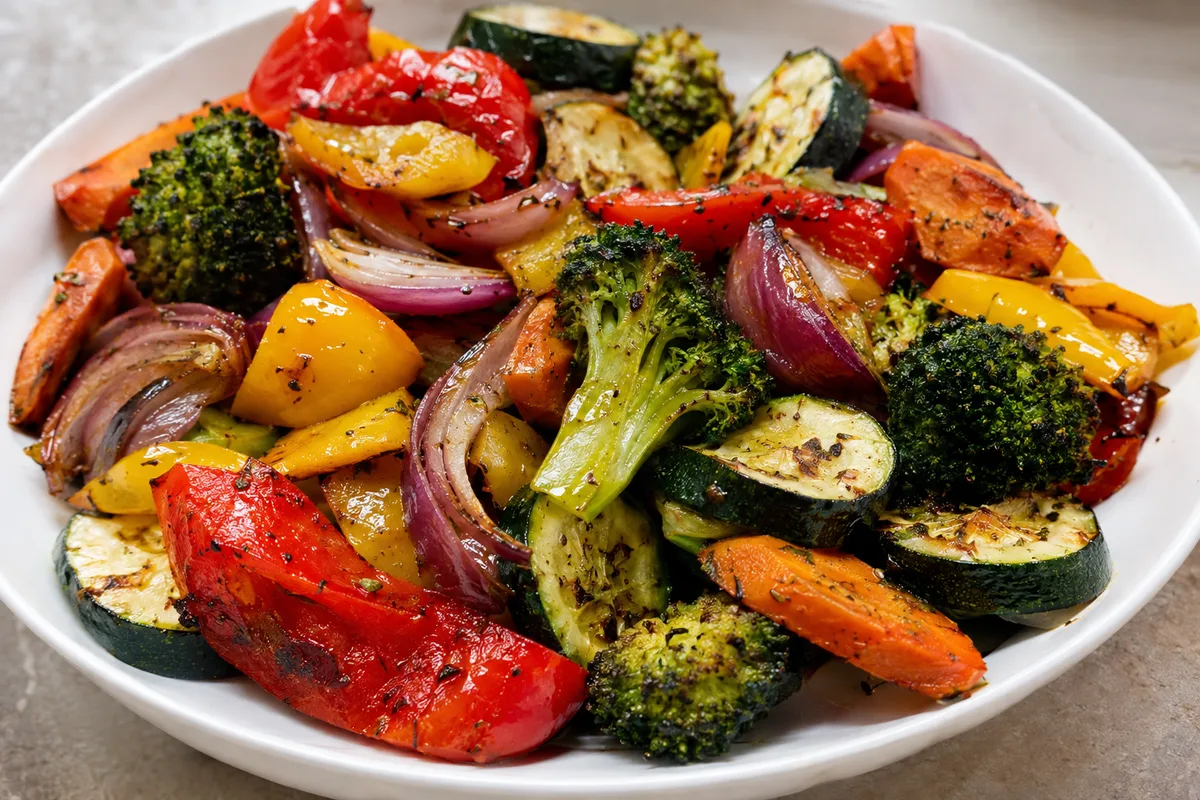
Try to vary the types you eat rather than relying on the same side at every meal. Leafy vegetables, roots, mushrooms, peppers, tomatoes and members of the cabbage family all bring different textures. Cooking oil, cheese, dressings and creamy sauces can change the meal's energy content, so include them when tracking.
- Roasted peppers, courgettes and onions
- Steamed broccoli and carrots
- A mixed tomato, cucumber and leaf salad
- Stir-fried cabbage, mushrooms and green beans
Choosing the protein section
The protein quarter can contain animal-based or plant-based foods. Protein helps make a meal more substantial, but the plate method does not set one correct serving for everyone. Your appetite, body size, activity, goals and the rest of your day's food all matter.
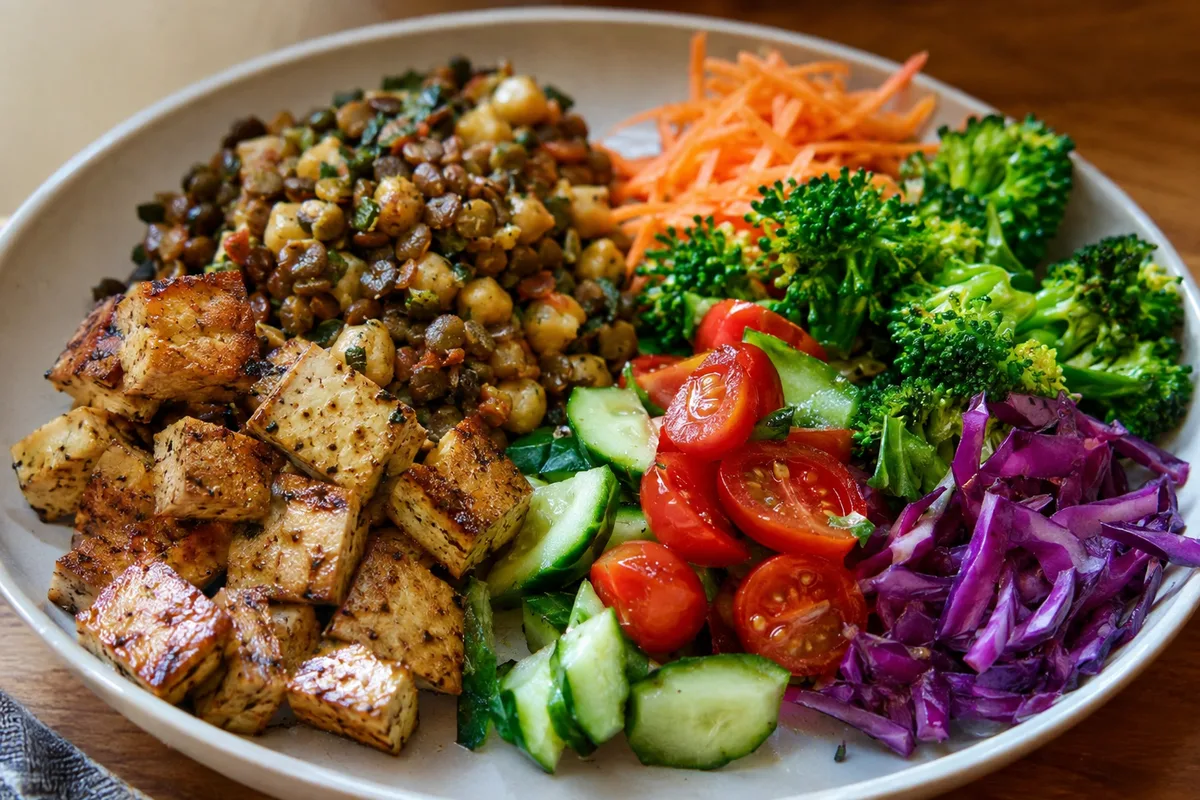
Beans, lentils and other pulses contain both protein and carbohydrate, so they do not fit perfectly into a single section. That is not a problem; the plate is a guide, not a test. Log the actual food and amount you eat rather than changing the entry to make the plate look neater.
- Eggs or an omelette
- Fish, chicken or lean meat
- Tofu or tempeh
- Beans, lentils or chickpeas
- A combination of pulses and another protein-rich food
Making room for starchy carbohydrates
The final quarter is usually given to a starchy carbohydrate such as potatoes, rice, pasta, bread or grains. These foods can support an active day and make meals satisfying. Wholegrain or higher-fibre versions can add texture and fibre, but they are not compulsory at every meal.
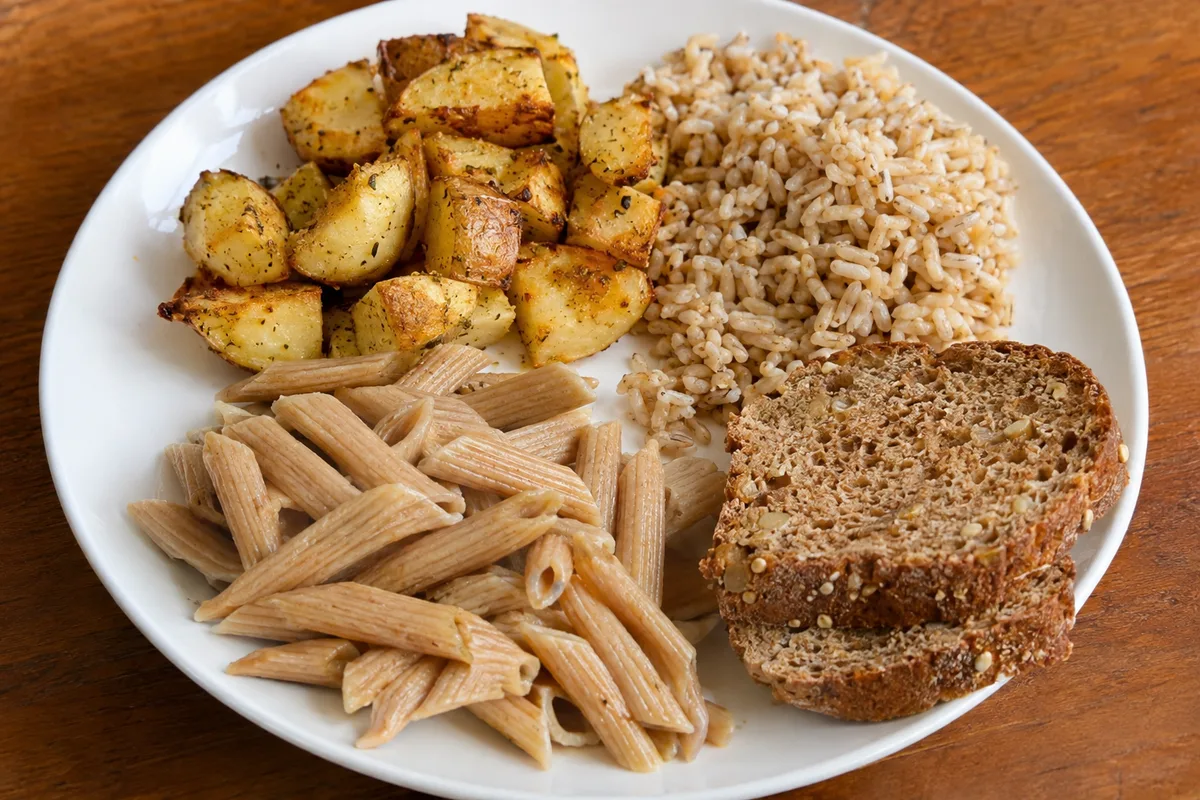
The quarter-plate shape does not produce the same amount of food on every plate. A deep bowl, a large dinner plate and a packed wrap can all hold very different quantities. If you track your intake, record the portion you served rather than assuming the visual section always has the same value.
- Boiled, baked or roasted potatoes
- Rice, pasta or noodles
- Couscous, barley or other grains
- Bread, pitta or a wrap
- Sweet potato or corn
Using the method with mixed meals
Many meals do not arrive as three separate piles. Stews, curries, pasta dishes, sandwiches and traybakes mix the food groups together, but the same idea can still help. Look at the main ingredients and ask whether vegetables, protein and a starchy food are all represented.
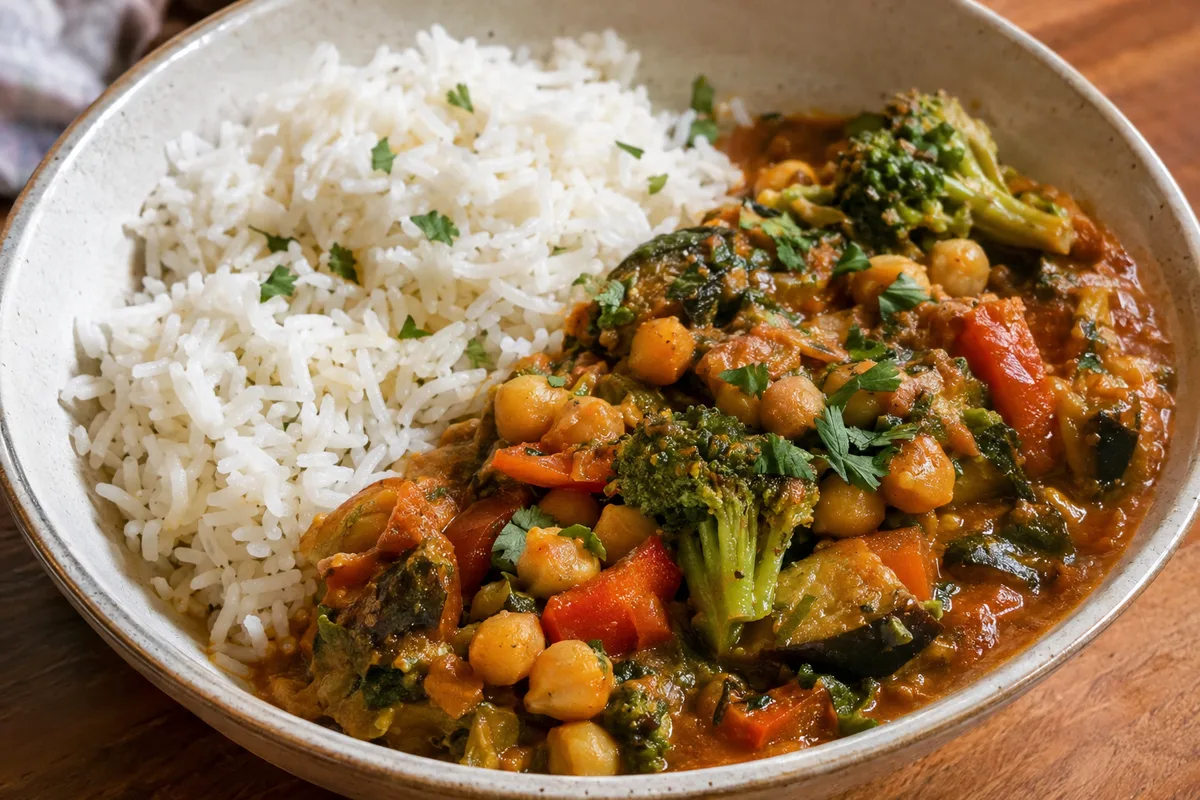
For a pasta dish, you might use plenty of vegetables in the sauce, include a protein-rich ingredient and treat the pasta as the starchy part. For a sandwich, the bread fills the carbohydrate role while the filling can provide protein and salad. You do not need to take the meal apart before eating it.
- Add vegetables and a protein-rich ingredient to pasta or noodles
- Serve a vegetable side with a sandwich or wrap
- Include pulses, vegetables and potatoes or grains in a stew
- Balance a curry with vegetables, protein and a suitable portion of rice or bread
How it fits with food tracking
The plate method gives you a quick structure, while tracking provides more detail about ingredients and portions. Used together, they can show whether a meal looks balanced and how it fits into the rest of your day. Neither method can tell you that one plate arrangement is right for every person.
Treat the sections as a starting point and adjust them using your records, appetite and routine. A more active day may call for a different balance from a quiet one, and breakfast may not look like an evening meal. Fruit, snacks, drinks, sauces and cooking ingredients can be logged separately when they do not fit naturally on the plate.
Avoid trying to force every meal into perfect fractions. Over time, the overall pattern matters more than making each plate look exact. If the approach regularly leaves you hungry, overfull or unable to enjoy normal meals, use a more flexible balance that suits you.
- Log sauces, oils, dressings and drinks as well as the main foods
- Use your usual serving plate so the visual guide reflects real meals
- Check your weekly pattern instead of judging one unusual meal
- Adjust the proportions for appetite, activity and personal goals